Artwork
Der Berg
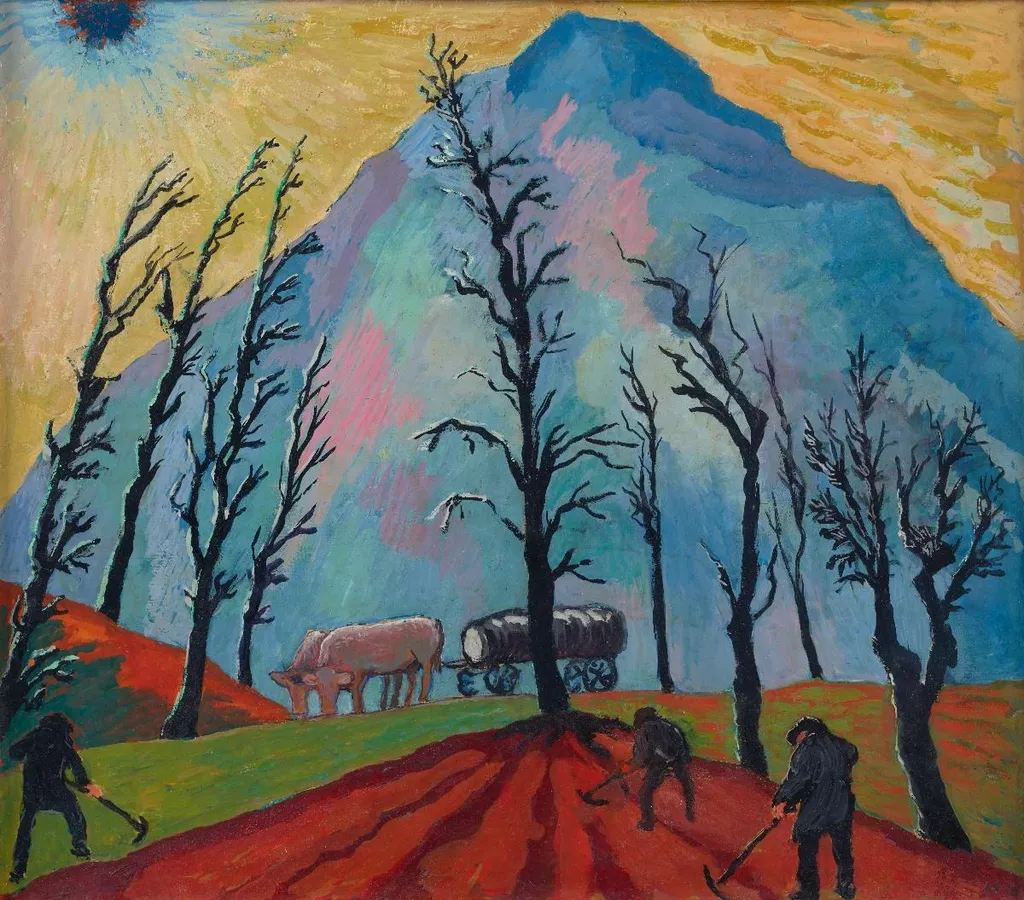
Der Berg is an unspecified painting by Marianne von Werefkin. It dates from 1919 and is held in the collection of the Kunsthaus Zürich.
About this work
Overview
Marianne von Werefkin painted *Der Berg* in 1919 during her time in Switzerland, following her departure from Germany.
Marianne von Werefkin painted *Der Berg* in 1919 during her time in Switzerland, following her departure from Germany. The work reflects her engagement with Expressionism, emphasizing emotional resonance over naturalistic representation. It is part of the permanent collection at Kunsthaus Zürich, where it stands as a significant example of early 20th-century modernist landscape painting by a female artist often overshadowed by her male contemporaries.
Subject & Meaning
The painting presents a rural landscape dominated by a distant mountain, a flat field, and sparse trees. A cow and an implied cart suggest quiet human activity, but the scene is not a literal depiction. Rather, the elements are arranged to evoke inner feeling—nature as a force, not a backdrop. The absence of clear narrative invites contemplation of solitude, endurance, or the relationship between land and labor.
Technique & Style
Werefkin employed vigorous, visible brushwork and non-naturalistic color to convey emotional intensity. Bold swaths of blue, red, and yellow define form and space, rejecting traditional perspective in favor of rhythmic composition. The paint is applied with physicality, creating texture that enhances the sense of movement. Her approach aligns with Expressionist principles, prioritizing subjective experience over optical accuracy.
History & Provenance
Created in 1919, *Der Berg* emerged after Werefkin had settled in Zürich, where she continued to develop her style away from the Munich art scene. The painting entered the Kunsthaus Zürich collection in the decades following its creation, likely through direct acquisition or donation. Its preservation in a major Swiss institution underscores its recognition within European modernism, despite Werefkin’s relative marginalization in art historical narratives.
Context
In the aftermath of World War I, Werefkin’s work reflected broader cultural shifts toward introspection and abstraction. Her use of color and simplified forms paralleled contemporaneous developments in German Expressionism and Swiss modernism, yet she maintained a distinct voice shaped by her Russian heritage and feminist perspective. Unlike many male peers, she often painted landscapes as psychological spaces rather than mere scenery.
Legacy
Though long overlooked, *Der Berg* and Werefkin’s broader oeuvre have gained renewed scholarly attention in recent decades. The painting exemplifies how female artists contributed to Expressionism’s formal innovations. Its presence in a major public collection affirms its importance as a document of early modernist landscape painting, challenging traditional narratives that excluded women from the movement’s core.
Artist & collection
Artist
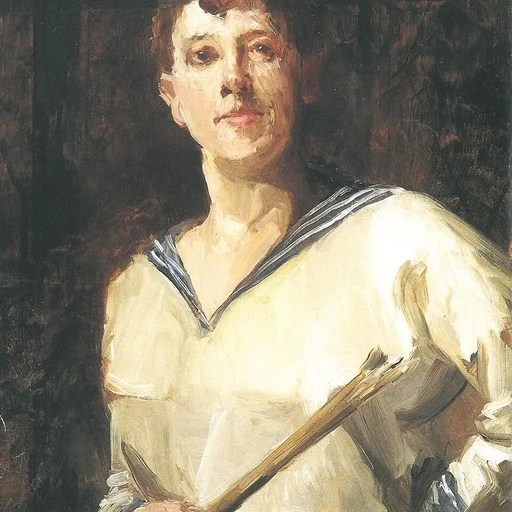
Mariamna Vladimirovna Veryovkina (10 September 1860 – 6 February 1938), commonly known as Marianne von Werefkin, was a Russian-born painter, active in Germany and Switzerland during the late Belle Époque and interwar periods.

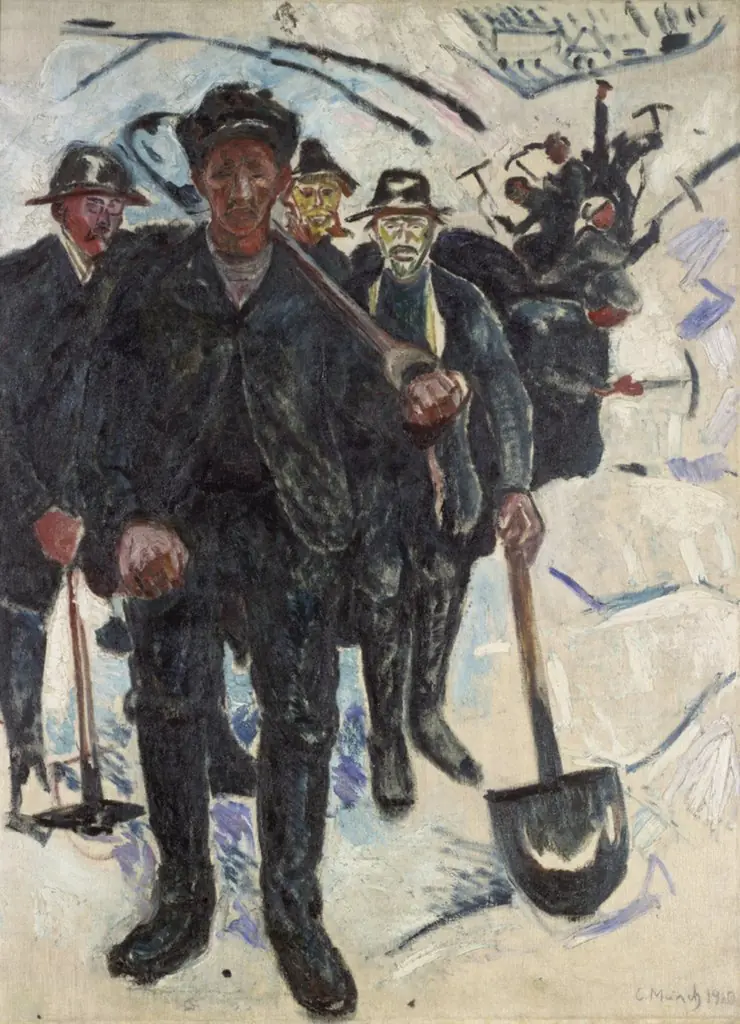 Workers in Snow
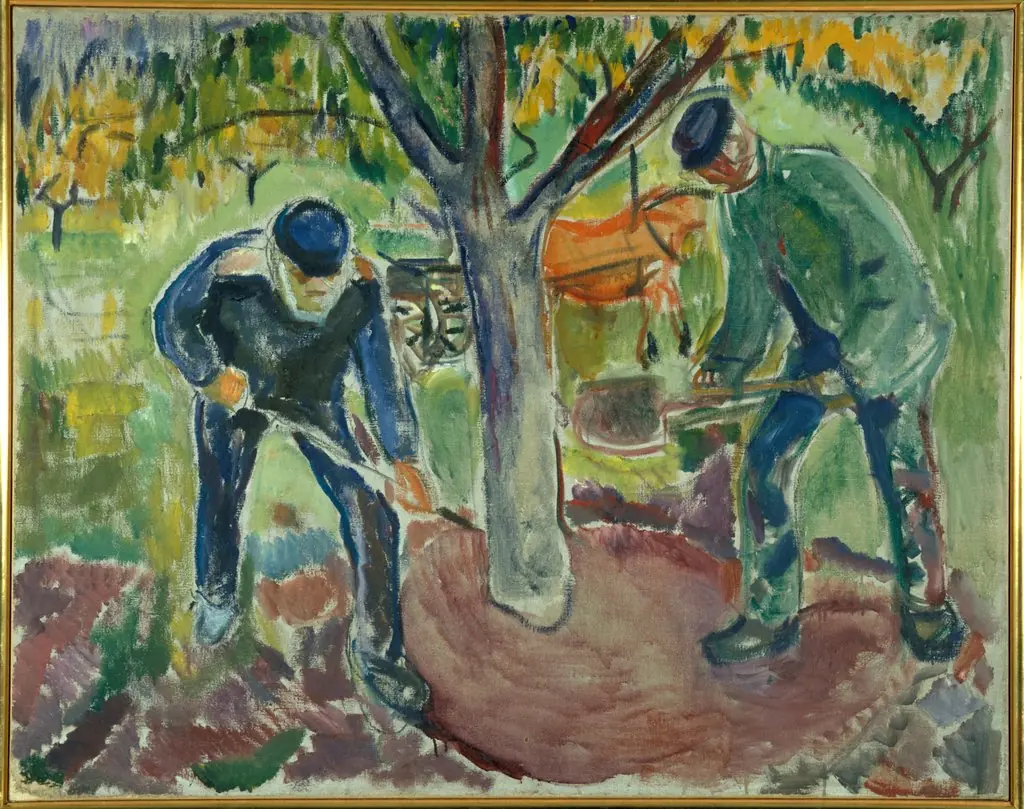 Workers in the Garden
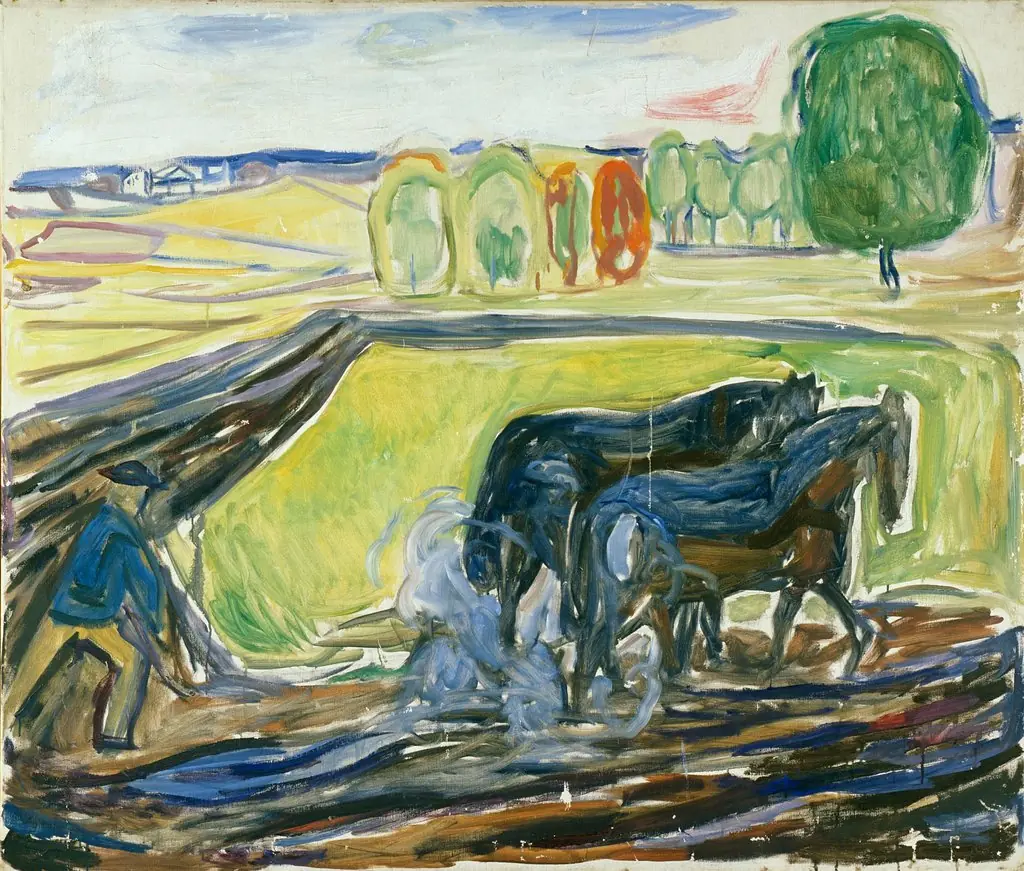 Two Black Horses at the Plough
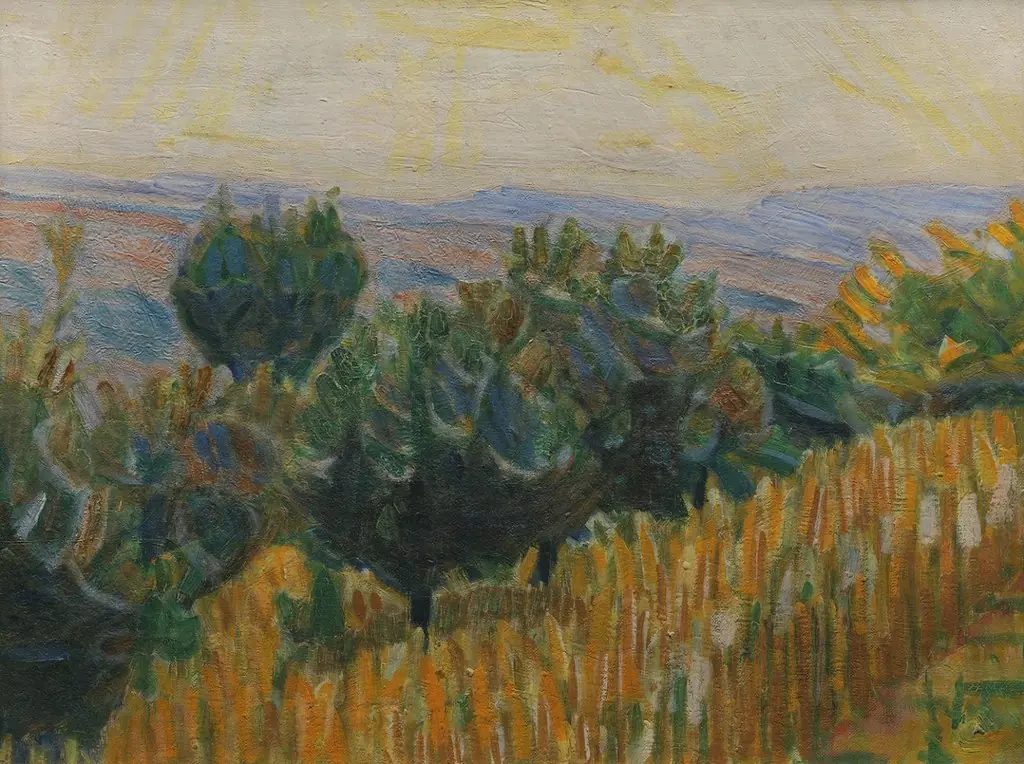 The Vine against the Light. A wheat field in the foreground. Villa Linda, Florence
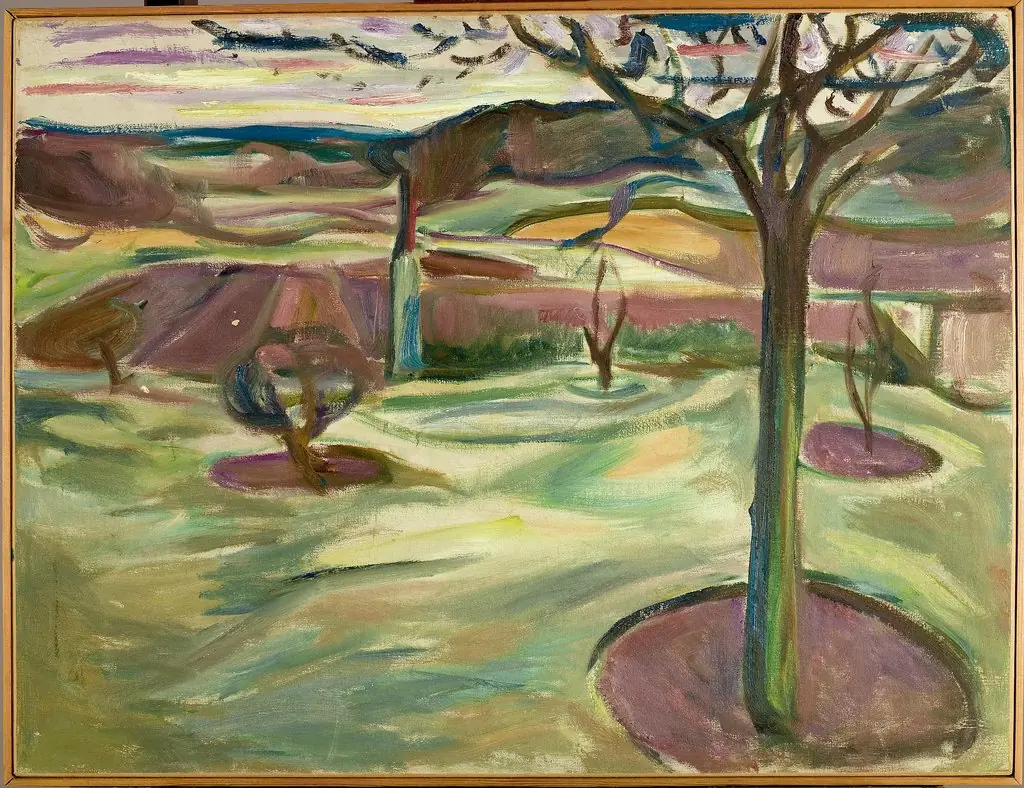 Early Spring
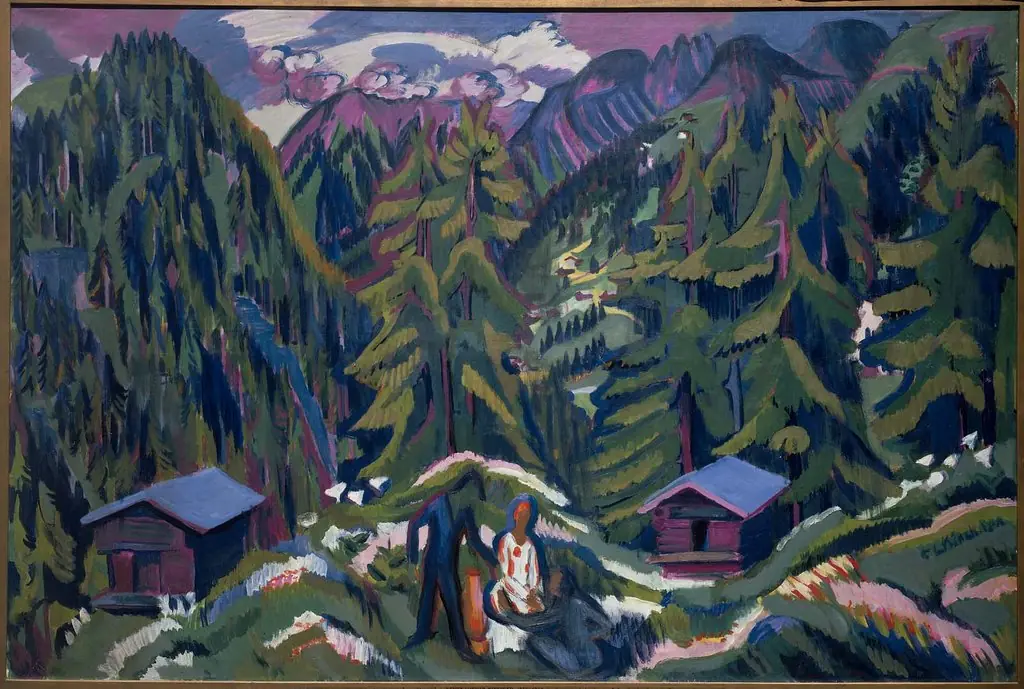 Mountain Landscape from Clavadel
 The Vine against the Light. A wheat field in the foreground. Villa Linda, Florence
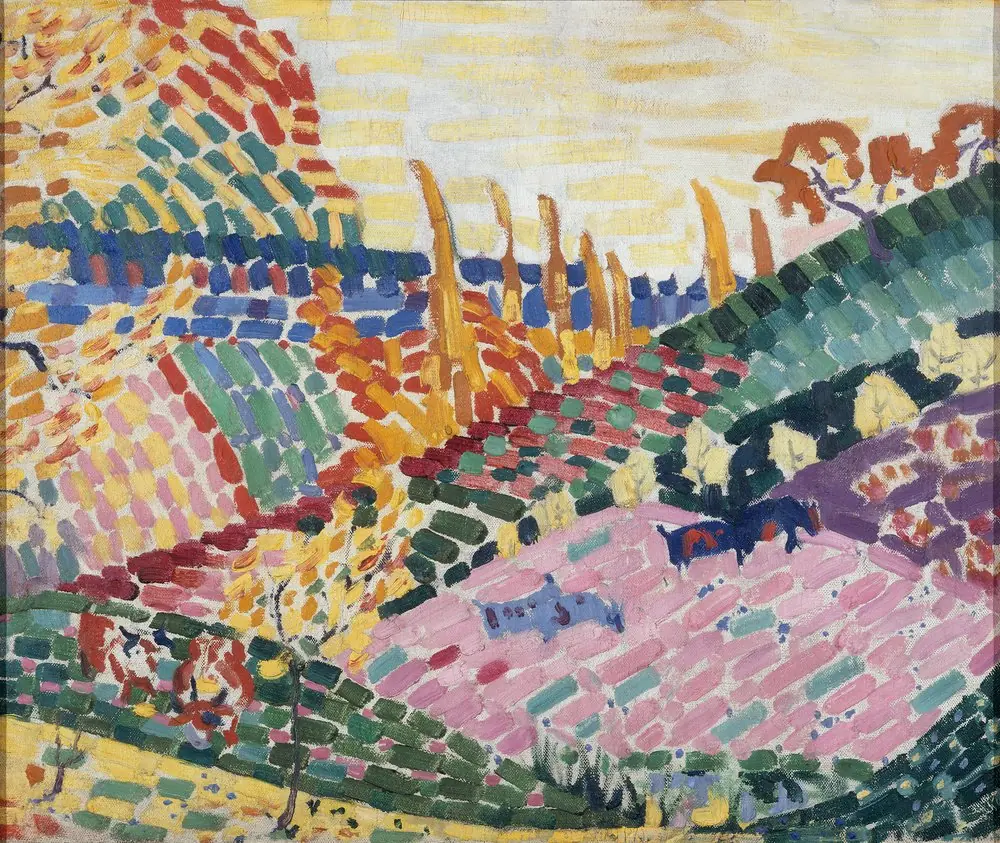 Landscape with Cows
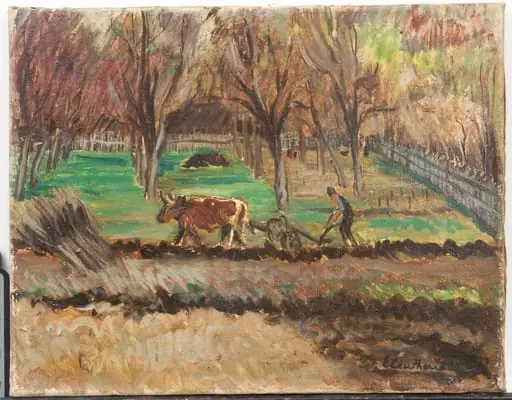 La arat
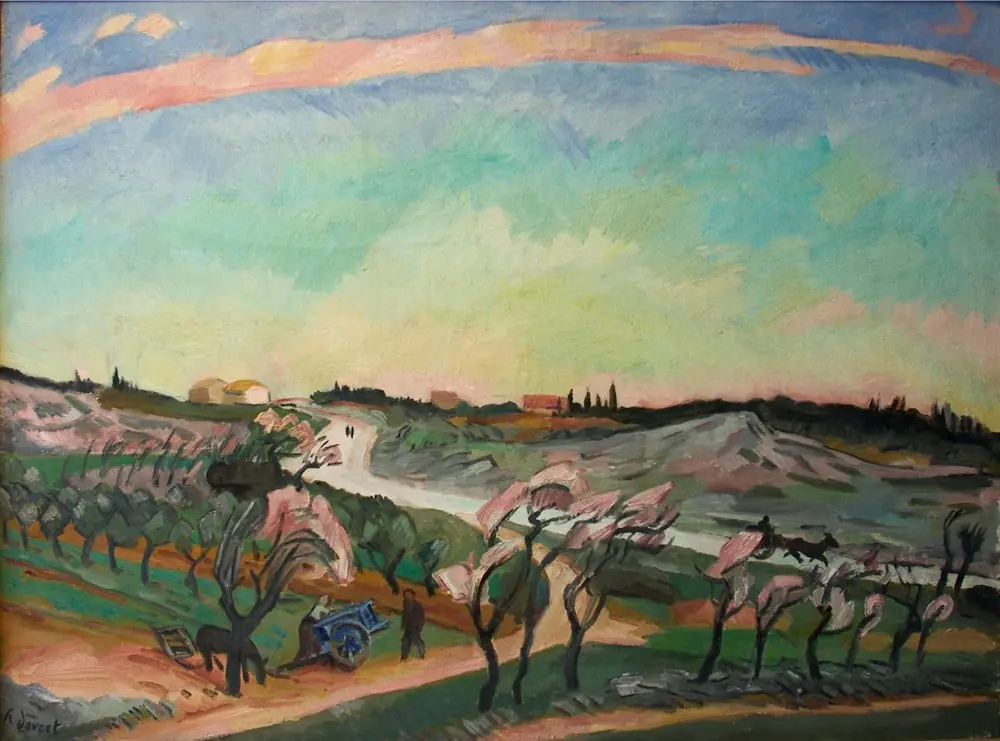 The Road to Nimes