Artwork
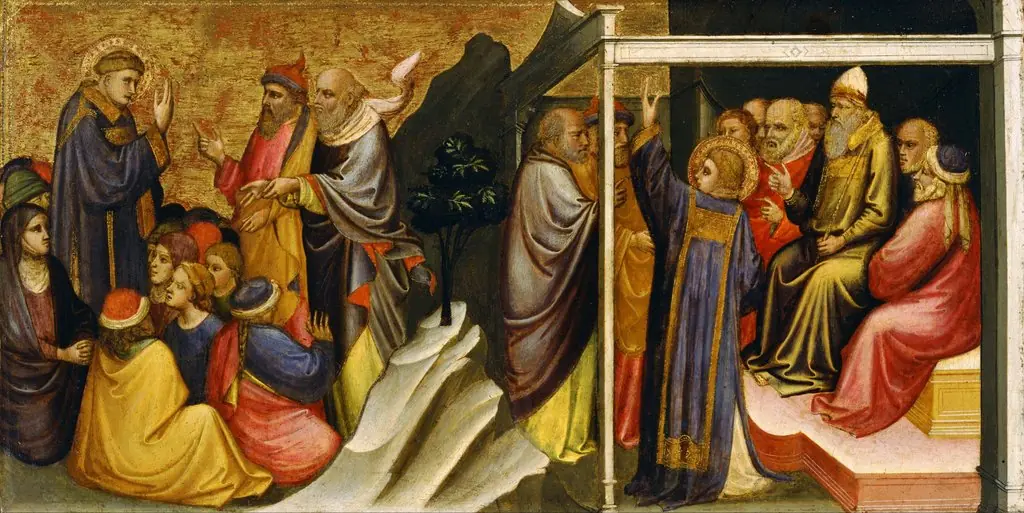
Predella Panel Representing the Legend of St. Stephen: Devils Agitating the Sea as Giuliana Transports the Body of St. Stephen from Jerusalem to Constantinople
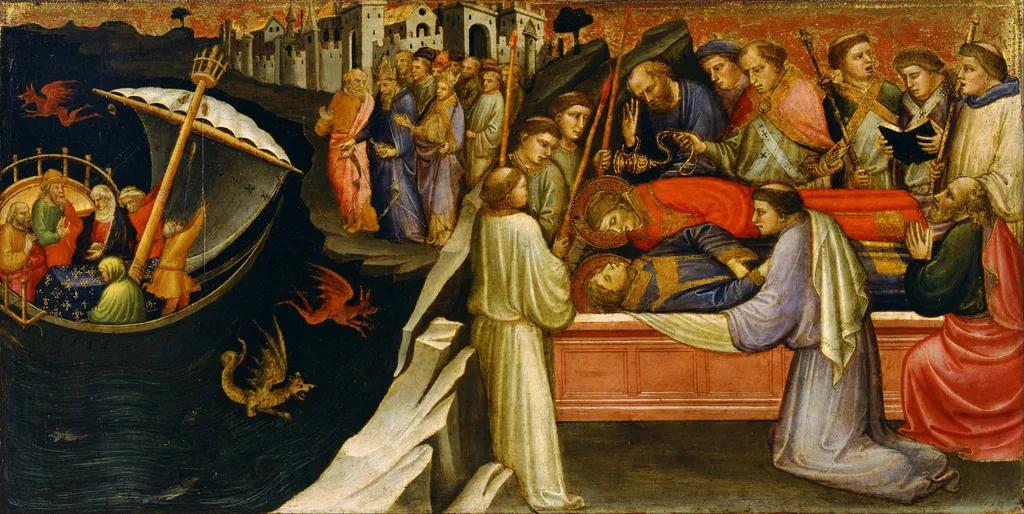
Predella Panel Representing the Legend of St. Stephen: Devils Agitating the Sea as Giuliana Transports the Body of St. Stephen from Jerusalem to Constantinople is an unspecified painting by the Early Renaissance artist Mariotto di Nardo. It dates from 1408 and is held in the collection of the National Museum of Western Art.
About this work
Overview
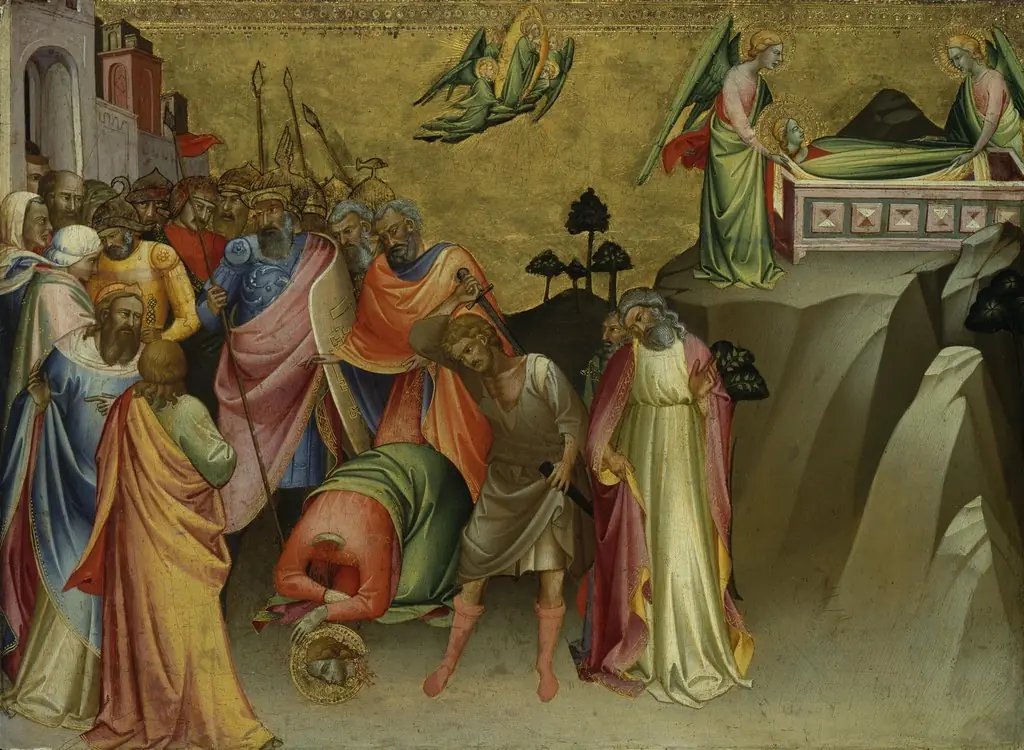
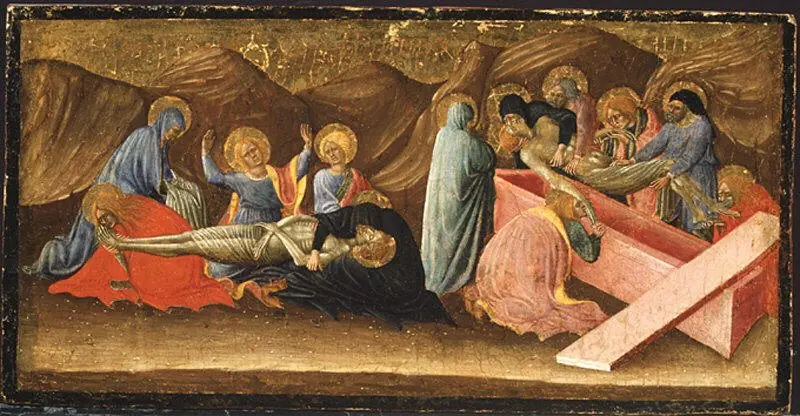
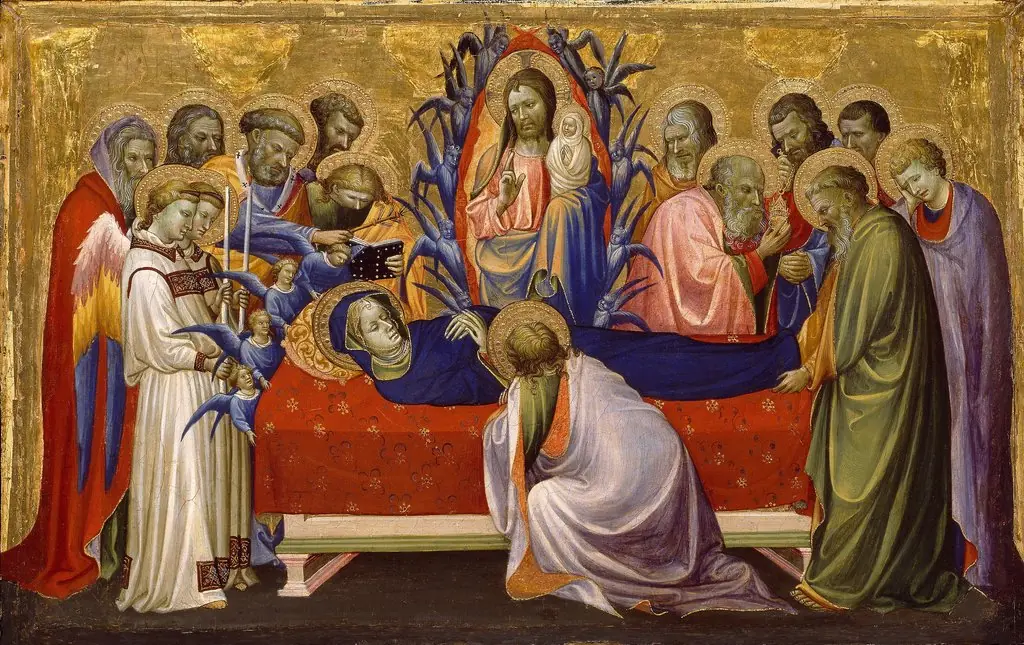
Created in 1408, this predella panel illustrates episodes from the legend of Saint Stephen, focusing on the transport of his relics from Jerusalem to Constantinople and their later burial beside Saint Lawrence in Rome. Executed by Florentine artist Mariotto di Nardo, the work belongs to the early Renaissance period while retaining the decorative qualities of the Florentine Gothic style.
Subject & Meaning
The composition splits into two narrative moments: a solemn group surrounding Stephen’s body on a bed, and a separate scene of a boat journey. Figures in liturgical robes attend the saint’s corpse, whose head is crowned with a halo, emphasizing his martyrdom. The maritime episode underscores the veneration of relics and the spread of Stephen’s cult across the Christian world.
Technique & Style
The palette contrasts bright whites and reds with a deep crimson shroud, while a reddish sky and stylized cityscape provide a dramatic backdrop.
Di Nardo employs tempera on panel, a medium typical of the era, allowing for vivid coloration and fine detailing. The palette contrasts bright whites and reds with a deep crimson shroud, while a reddish sky and stylized cityscape provide a dramatic backdrop. Linear outlines and ornamental patterns reflect the lingering Gothic aesthetic, yet the spatial arrangement hints at emerging Renaissance concerns with narrative clarity.
History & Provenance
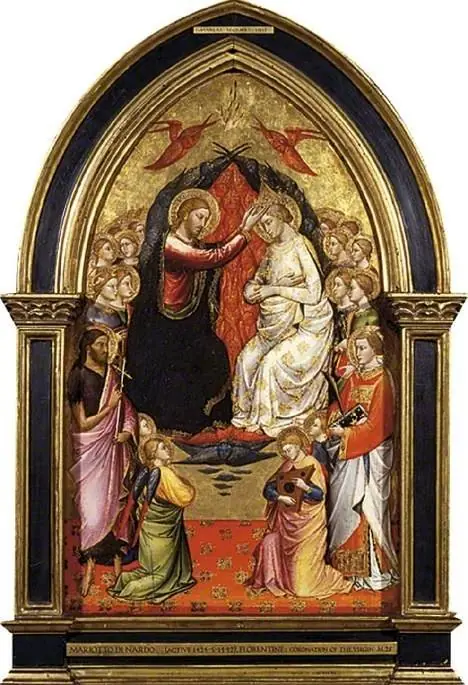
Active between 1388 and 1424, Mariotto di Nardo contributed to major Florentine commissions such as the Duomo, Santa Maria Maggiore, and Orsanmichele, working in fresco, panel painting, and manuscript illumination. The predella panel eventually entered the collection of the National Museum of Western Art, where it remains displayed as part of its early Italian holdings.
Context
The work aligns with a broader medieval tradition of illustrating saints’ lives on predella panels, which served as narrative bases for larger altarpieces. Its focus on relic translation reflects contemporary devotional practices that emphasized the physical movement of holy remains as a means of sanctifying new locales.
Artist & collection
Artist
Mariotto di Nardo di Cione (fl. 1388–1424) was a Florentine painter in the Florentine Gothic style. He worked at the Duomo of Florence, the church of Santa Maria Maggiore, and the Orsanmichele. He created both frescoes…