Artwork
Study of a Night-Blooming Cereus
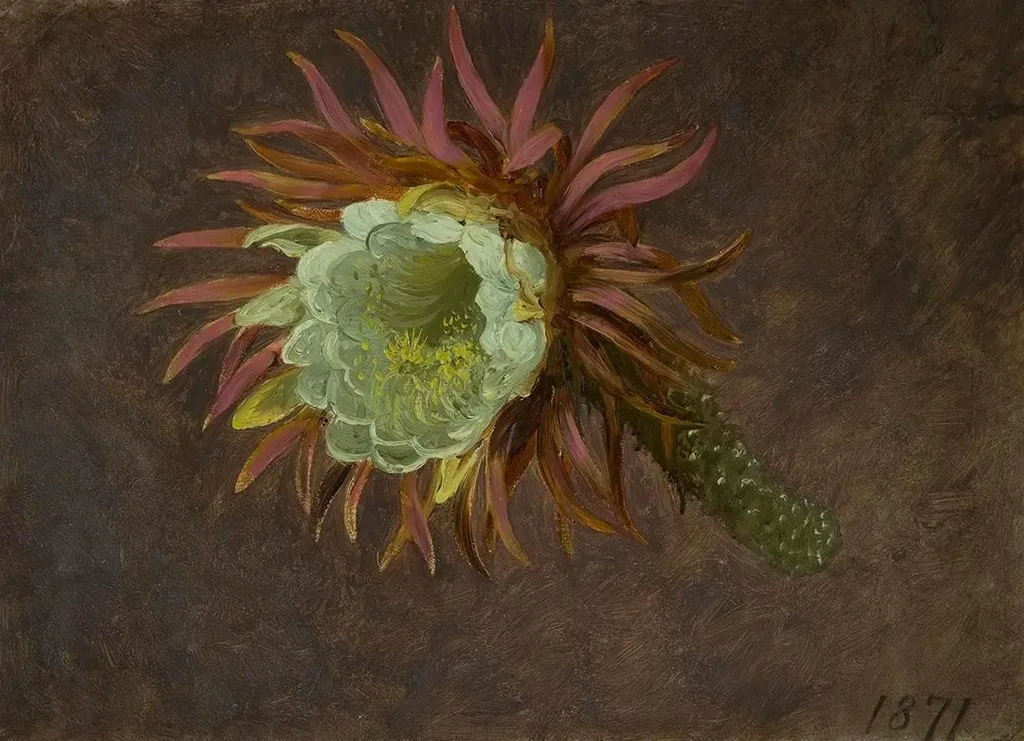
Study of a Night-Blooming Cereus is an unspecified painting by the American Impressionist artist Martin Johnson Heade. It dates from 1871 and is held in the collection of the Crystal Bridges Museum of American Art.
About this work
Overview
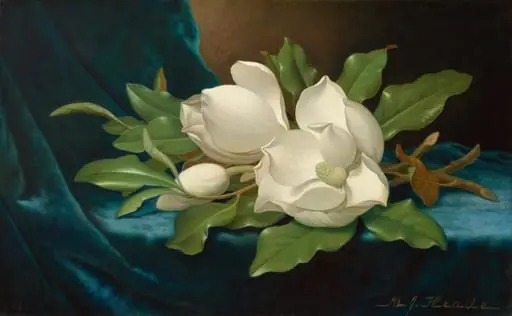
Martin Johnson Heade’s 1871 oil painting, *Study of a Night‑Blooming Cereus*, presents an intimate view of a single white flower against a deep, almost black background. The composition isolates the bloom, emphasizing its delicate petals, yellow throat, and the green stem that supports it, while surrounding foliage in muted pink and brown tones adds subtle context.
Subject & Meaning
The work focuses on a night‑blooming cereus, a cactus that opens its large white flowers after dark. Heade’s rendering captures the fleeting moment of the flower’s full opening, reflecting his interest in transient natural events and the scientific observation of botanical forms.
Technique & Style
Executed with meticulous brushwork, the painting displays Heade’s characteristic precision. Fine detailing conveys the texture of the petals and the subtle gradations of light, while the dark ground heightens contrast, allowing the luminous white bloom to dominate the visual field.
History & Provenance
Created during the American Impressionist period, the piece aligns with Heade’s broader oeuvre of botanical studies and landscapes. Heade, a Pennsylvania‑born artist trained by folk painter Edward Hicks, had by the 1870s established a reputation for combining scientific exactness with a painterly approach.
Context
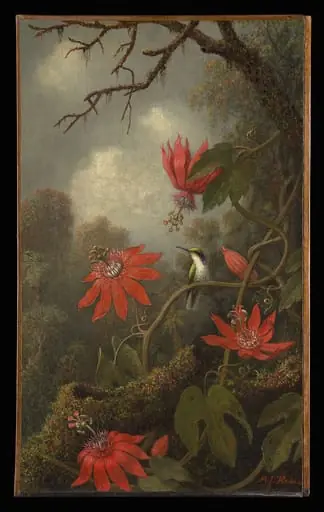
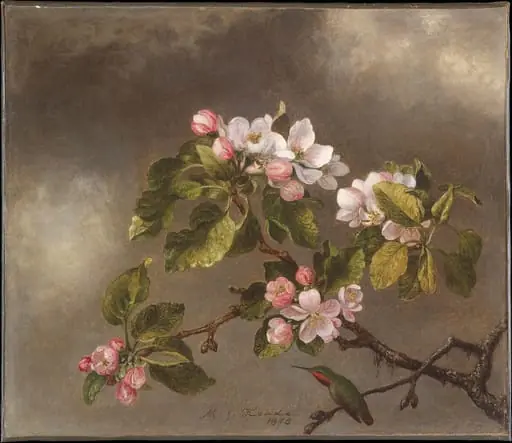
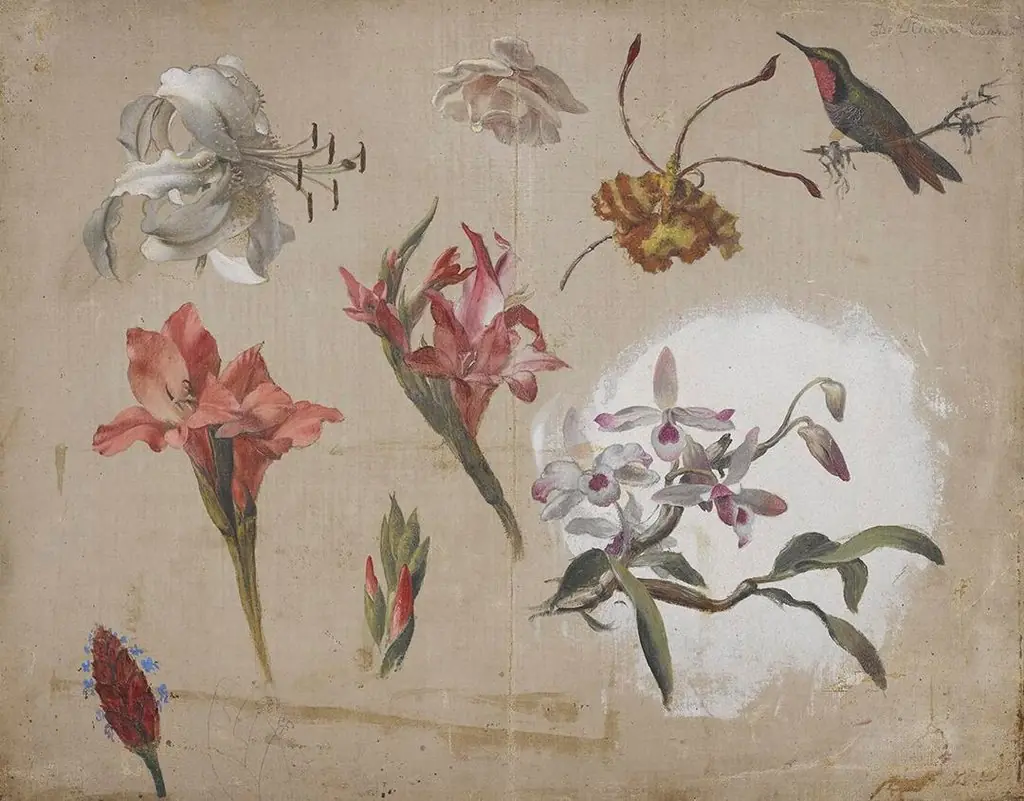
Heade’s botanical subjects, including orchids and hummingbirds, set him apart from the more romanticized nature scenes of his contemporaries. This painting exemplifies his departure from sentimentality, favoring a clear, observational perspective that bridges folk traditions and emerging Impressionist sensibilities.
Artist & collection

Museum
Crystal Bridges Museum of American Art
Continue through works from the same source collection.