Artwork
Christ on the cross between the virgin and St. John
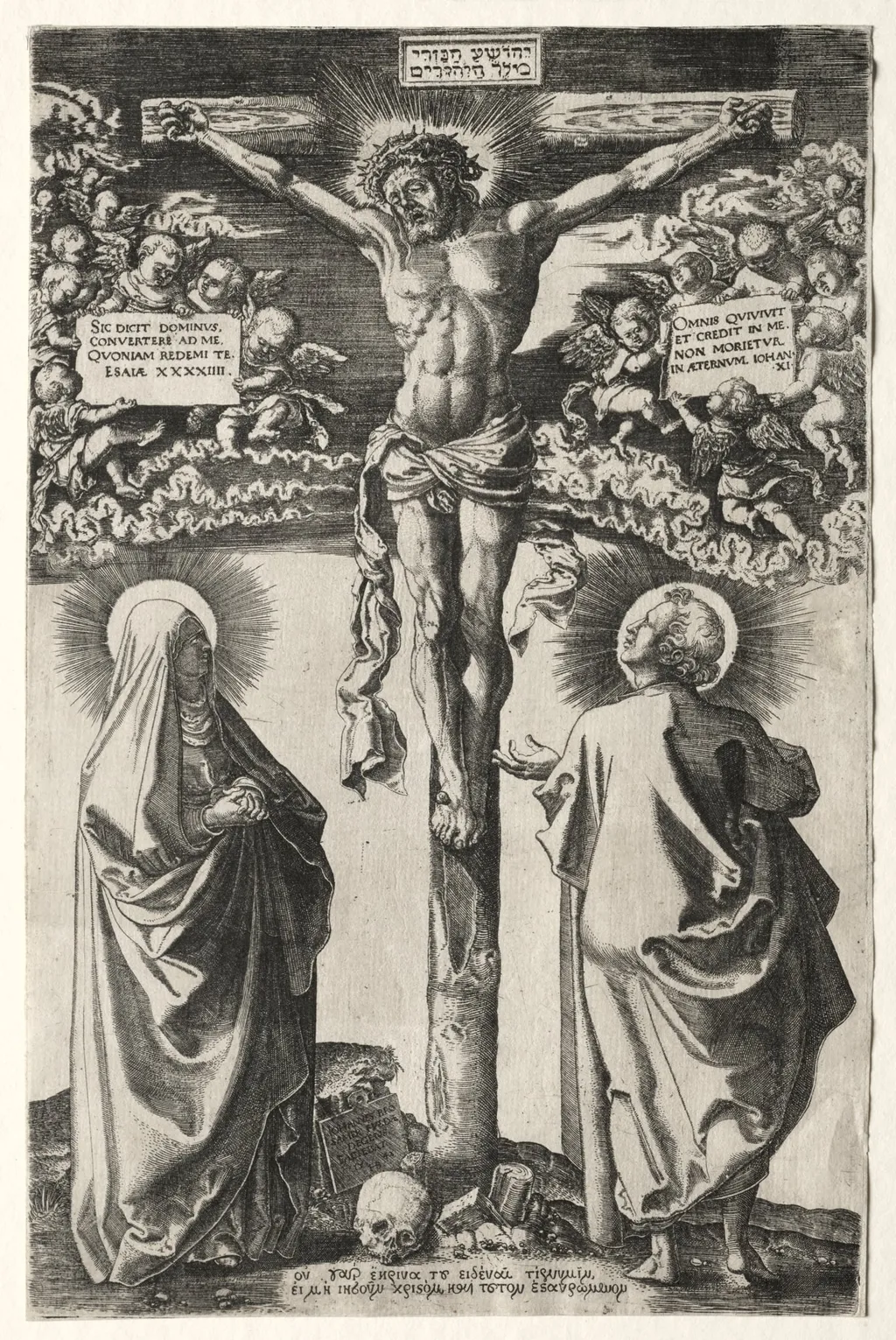
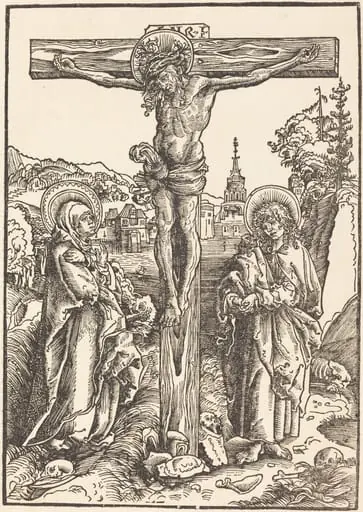
Christ on the cross between the virgin and St. John is a print by the Renaissance artist Hans Brosamer. It dates from 1542 and is held in the collection of the Cleveland Museum of Art.
About this work
Overview
Created in 1542 by Hans Brosamer, this black-and-white print depicts the crucifixion of Christ flanked by the Virgin Mary and Saint John.
Created in 1542 by Hans Brosamer, this black-and-white print depicts the crucifixion of Christ flanked by the Virgin Mary and Saint John. Executed as a woodcut, it belongs to the tradition of Northern Renaissance religious imagery. The work is part of the collection at The Cleveland Museum of Art, where it is preserved as an example of 16th-century printmaking used to convey theological narratives to a broad audience.
Subject & Meaning
The scene centers on Christ’s sacrifice, with the Virgin Mary and Saint John as mournful witnesses. Their gestures—clasped hands and open palms—signal grief and acceptance. Below the cross, a skull references Golgotha, the Place of the Skull, symbolizing Adam’s burial site and the redemption of original sin. Latin inscriptions on scrolls reinforce scriptural context, aligning the image with devotional practices of the time.
Technique & Style
Brosamer employed chiaroscuro through bold contrasts of ink and paper to model form and depth. The figures are sharply defined against a densely populated background filled with angels and tiny figures, creating a sense of spiritual atmosphere. The woodcut technique allowed for fine linear detail, particularly in drapery and facial expressions, while the monochrome palette emphasizes emotional gravity over color.
History & Provenance
The print was produced during the Protestant Reformation, a period when religious imagery remained widely circulated despite doctrinal shifts. Though Brosamer worked in Germany, his prints reached audiences across Europe. The Cleveland Museum of Art acquired the work in the 20th century, where it has since been studied for its technical precision and role in devotional culture.
Context
In the mid-16th century, printed religious scenes like this one served as affordable alternatives to painted altarpieces, especially in regions affected by iconoclasm. Brosamer’s composition reflects both Catholic iconography and emerging Protestant emphasis on personal meditation. The inclusion of Latin texts suggests an educated audience, while the visual clarity catered to wider literacy in biblical stories.
Legacy
Brosamer’s print exemplifies how woodcuts sustained religious imagery during a time of upheaval. Its compositional clarity and emotional restraint influenced later devotional prints in Northern Europe. Though not widely known today, it remains a significant artifact of how visual culture mediated faith in the Reformation era, bridging artistic tradition and spiritual practice.
Artist & collection

Artist
Hans Brosamer was a German draughtsman, printmaker and painter of the Renaissance period. His life has left hardly any documentary trace, other than his prints, but he was active in Fulda from 1536 to 1545, and later worked in Erfurt.

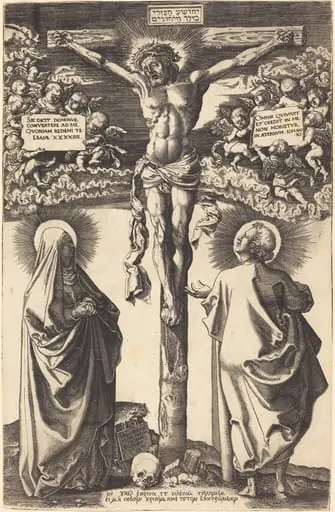
 Christ on the Cross Between the Virgin and Saint John
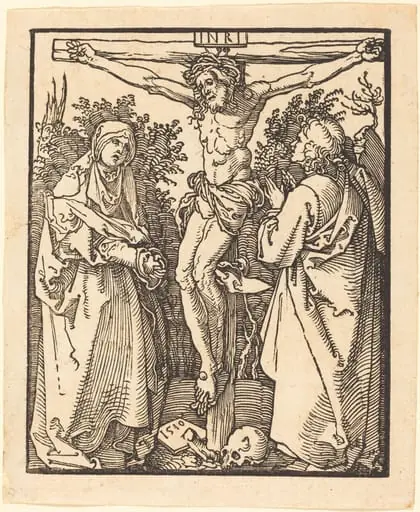 Christ on the Cross with Mary and Saint John
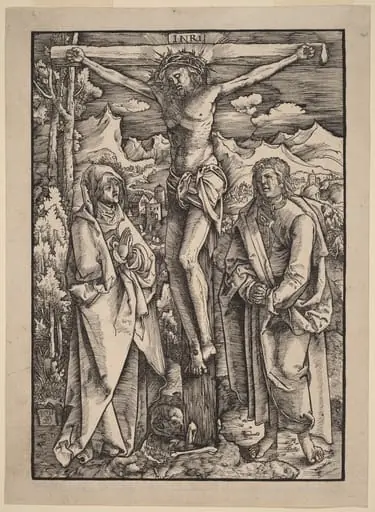 Christ on the Cross between the Virgin and Saint John
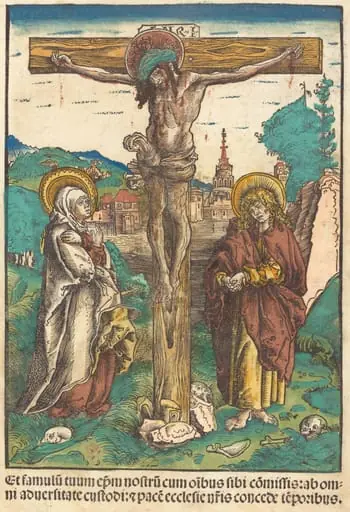 Christ on the Cross Between the Virgin and Saint John
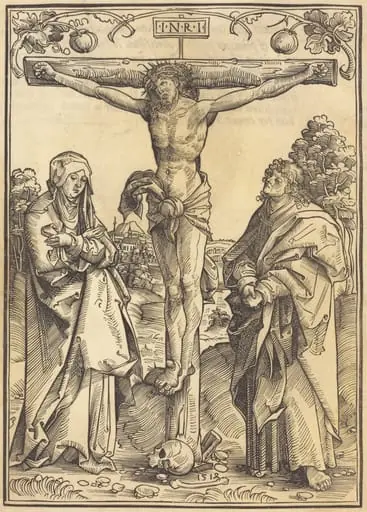 Christ on the Cross with the Virgin and Saint John the Evangelist
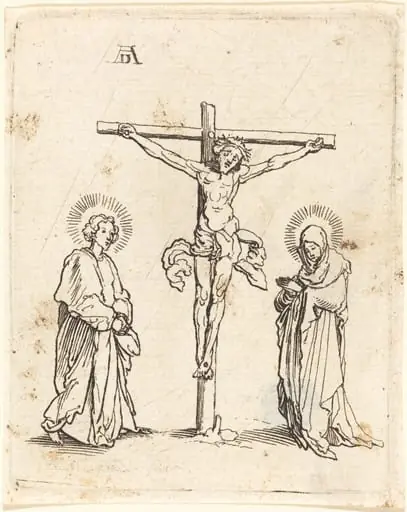 Christ on the Cross Between Saint John and Mary
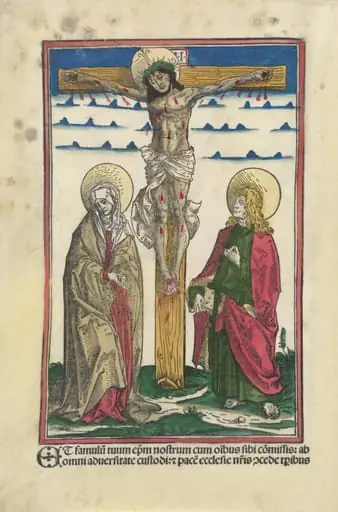 Christ on the Cross with the Virgin and Saint John
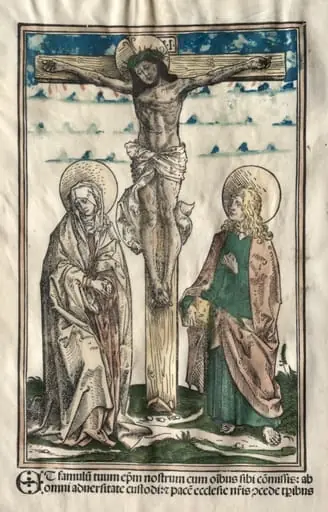 Christ on the Cross between Mary and John