Artwork
The Death of the Virgin
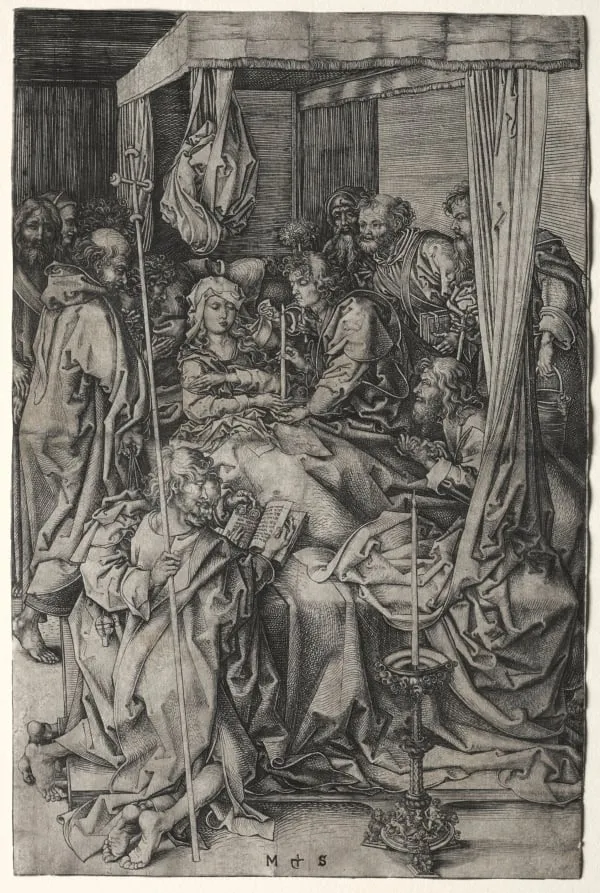
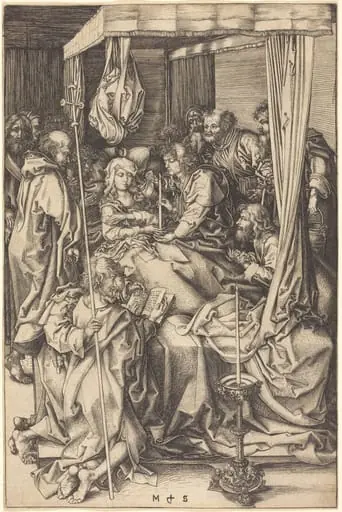
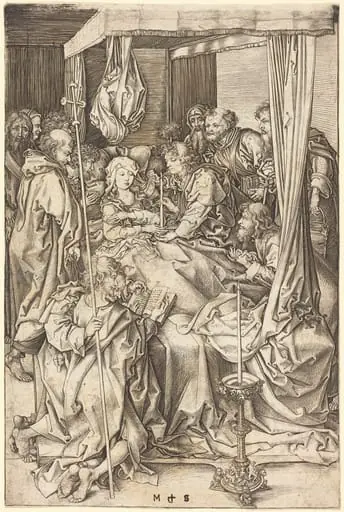
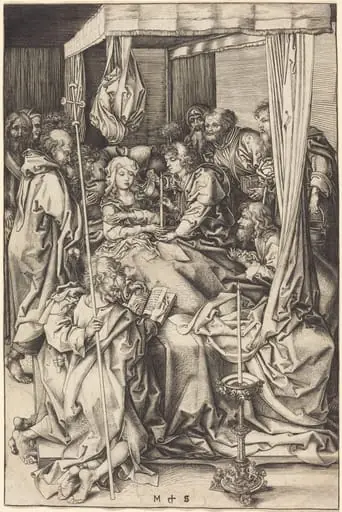
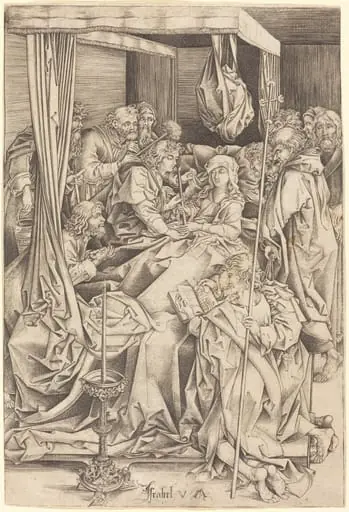
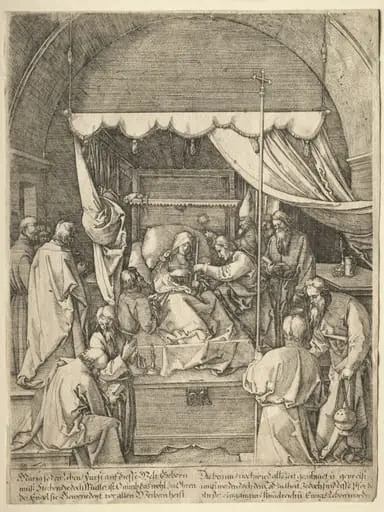
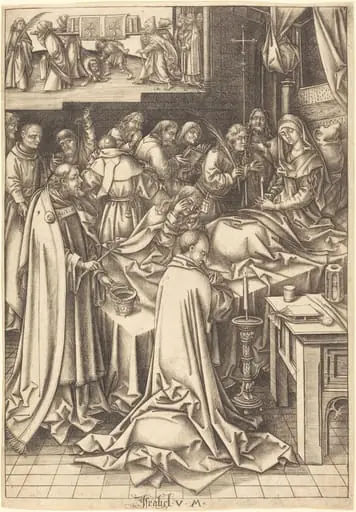
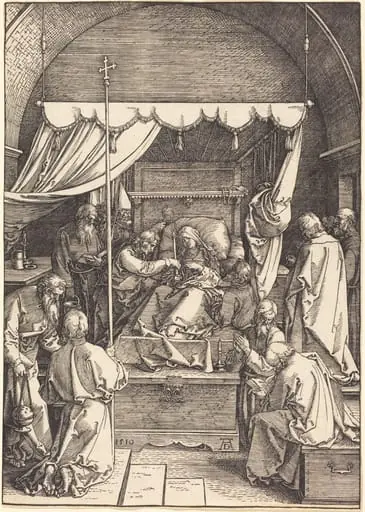
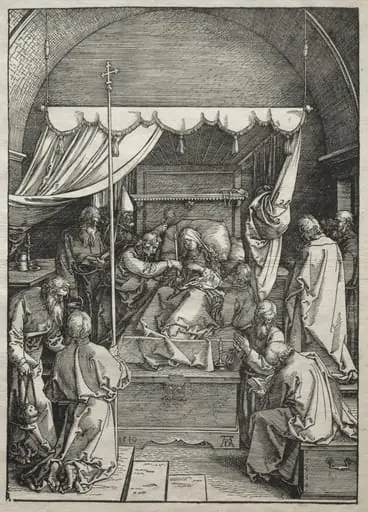
The Death of the Virgin is a print by the Renaissance artist Martin Schongauer. It dates from 1472 and is held in the collection of the Cleveland Museum of Art.
About this work
Overview
The composition emphasizes intimacy over spectacle, focusing on the stillness of the moment and the emotional presence of those surrounding her.
This engraving depicts the death of the Virgin Mary, drawn from the apocryphal Gospel of Pseudo-Matthew. It is one of four known prints in a proposed series illustrating key moments in her life, alongside The Nativity, The Adoration of the Magi, and The Flight into Egypt. The scene captures the apostles gathered around her deathbed, rendered with quiet solemnity. The composition emphasizes intimacy over spectacle, focusing on the stillness of the moment and the emotional presence of those surrounding her.
Subject & Meaning
Mary is portrayed as youthful and serene, reflecting the theological belief in her perpetual purity and exemption from the physical decay of aging. The apostles, each expressing grief in subtle ways—through clasped hands, bowed heads, or silent vigil—serve as witnesses to her passing. The flickering candle, held by Saint John, symbolizes the soul’s transition and the fragility of life. The scene is not one of triumph but of tender farewell, grounding the sacred in human emotion.
Technique & Style
The artist employs fine, controlled lines to model form and texture, using cross-hatching to suggest depth and shadow without heavy contrast. The figures are arranged in a tight, almost circular composition around the bed, drawing the viewer’s eye to Mary’s still form. The dim interior is rendered with restrained tonal variation, enhancing the quietude of the moment. Details in robes and facial expressions are meticulously rendered, conveying individual emotion within a unified mood.
History & Provenance
The print is part of a small, incomplete series attributed to Martin Schongauer, likely produced in the 1470s. It circulated among religious communities and collectors in the late 15th century, valued for its devotional clarity and technical precision. The other three prints in the series are held in major collections, suggesting the set was once more complete. This engraving entered its current collection in the 20th century, its provenance tracing back through European private holdings.
Context
In late medieval devotion, the Dormition of the Virgin was a widely venerated subject, though not part of canonical scripture. Artists often depicted it to emphasize Mary’s unique holiness and the apostles’ role as her earthly guardians. Schongauer’s version aligns with Northern European traditions that favored intimate, emotionally restrained scenes over dramatic spectacle. The absence of heavenly figures reinforces the earthly, human dimension of the event.
Legacy
Schongauer’s treatment of the subject influenced later Northern Renaissance artists, particularly in the use of quiet psychological realism. The engraving’s emphasis on domestic solemnity prefigured the devotional intimacy seen in works by Dürer and others. Though not widely reproduced in later centuries, it remains a significant example of how printmaking could convey theological ideas through restrained, human-centered imagery.
Artist & collection

Artist
Martin Schongauer, also known as Martin Schön or Hübsch Martin by his contemporaries, was an Alsatian engraver and painter.