Artwork
The First of the Foolish Virgins
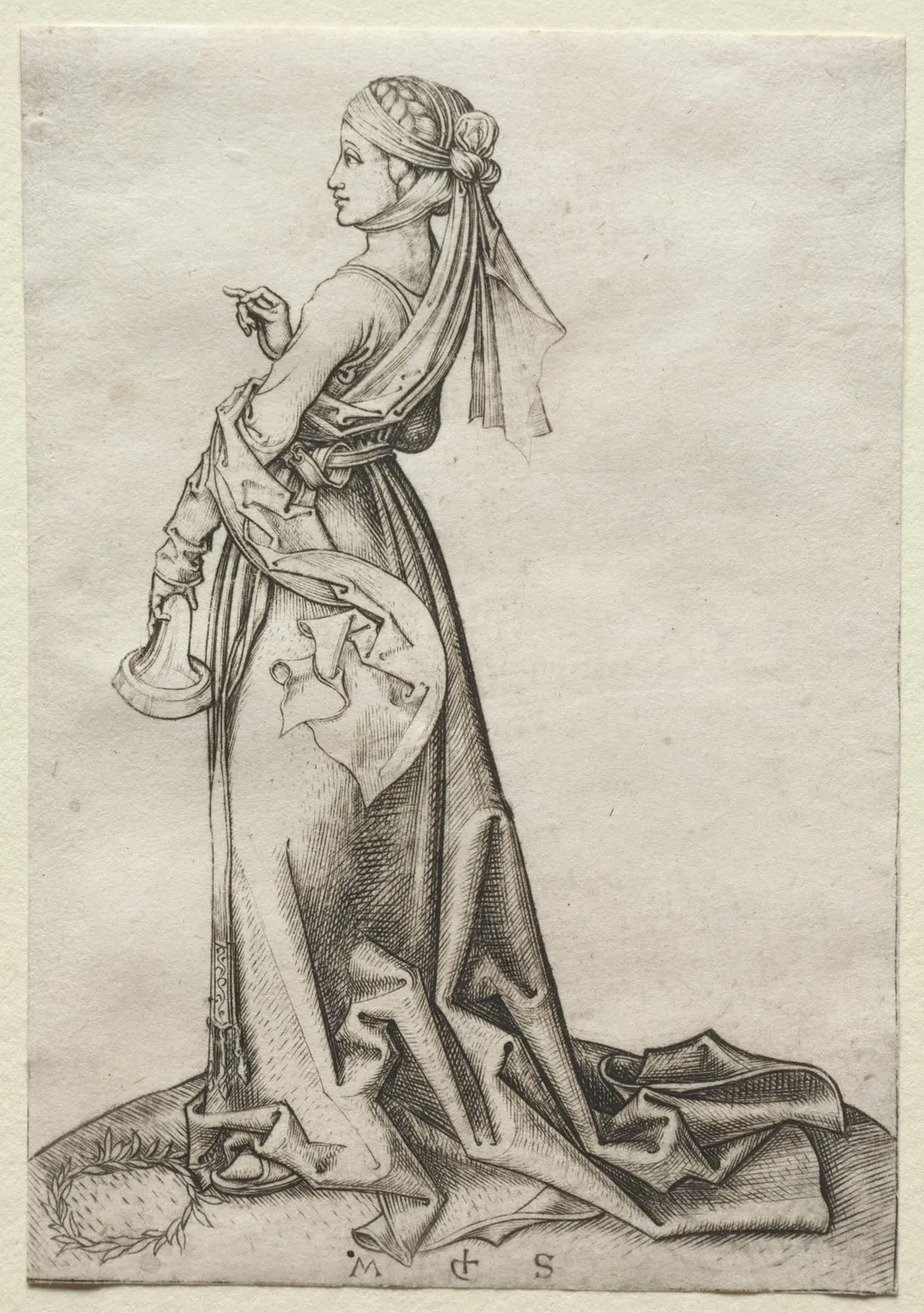
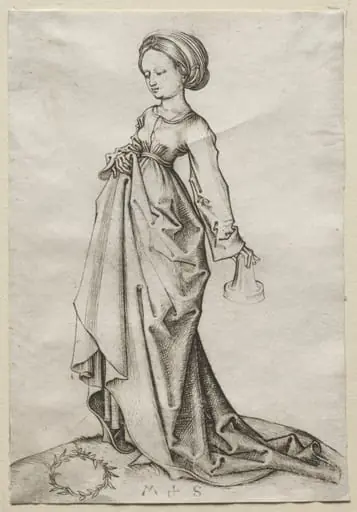
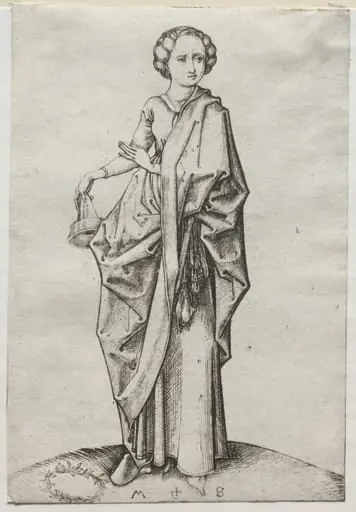
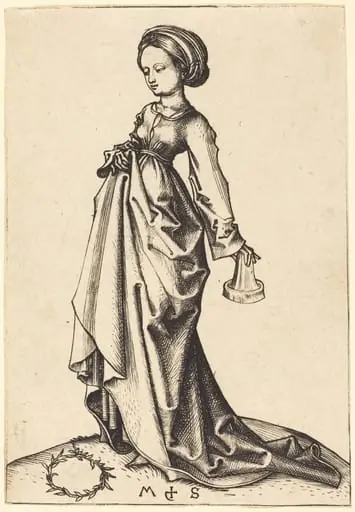
The First of the Foolish Virgins is a print by the Renaissance artist Martin Schongauer. It dates from 1474 and is held in the collection of the Cleveland Museum of Art.
About this work
Overview
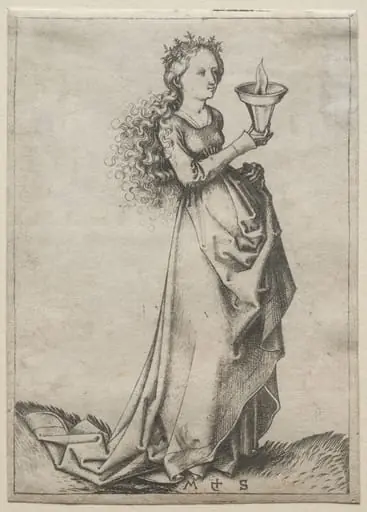
Martin Schongauer’s engraving titled *The First of the Foolish Virgins* was produced in 1474. Executed as a copperplate print, the image is part of the Cleveland Museum of Art’s collection. It portrays a solitary female figure illuminated by a lit oil lamp, set against a modest interior that includes a draped cloth and a small plant at her feet.
Subject & Meaning
The work references the biblical parable of the ten virgins, in which five wise and five foolish brides await a bridegroom. Schongauer’s figure represents one of the foolish virgins, captured at the moment she prepares to depart, her lamp symbolizing the preparedness—or lack thereof—central to the moral of the story.
Technique & Style
Schongauer employs intricate line work and delicate cross‑hatching to model the folds of the woman’s robe, creating a convincing sense of volume. The chiaroscuro achieved through fine shading gives the lamp’s flame a luminous quality, while the overall composition reflects the Northern Renaissance emphasis on detail and texture.
History & Provenance
Created in the late 15th century, the engraving entered the Cleveland Museum of Art’s holdings in the 20th century, where it remains on display. Schongauer’s prints were widely circulated during his lifetime, influencing contemporaries and later artists who adopted his meticulous approach to engraving.
Artist & collection

Artist
Martin Schongauer, also known as Martin Schön or Hübsch Martin by his contemporaries, was an Alsatian engraver and painter.