Artwork
The First Wise Virgin
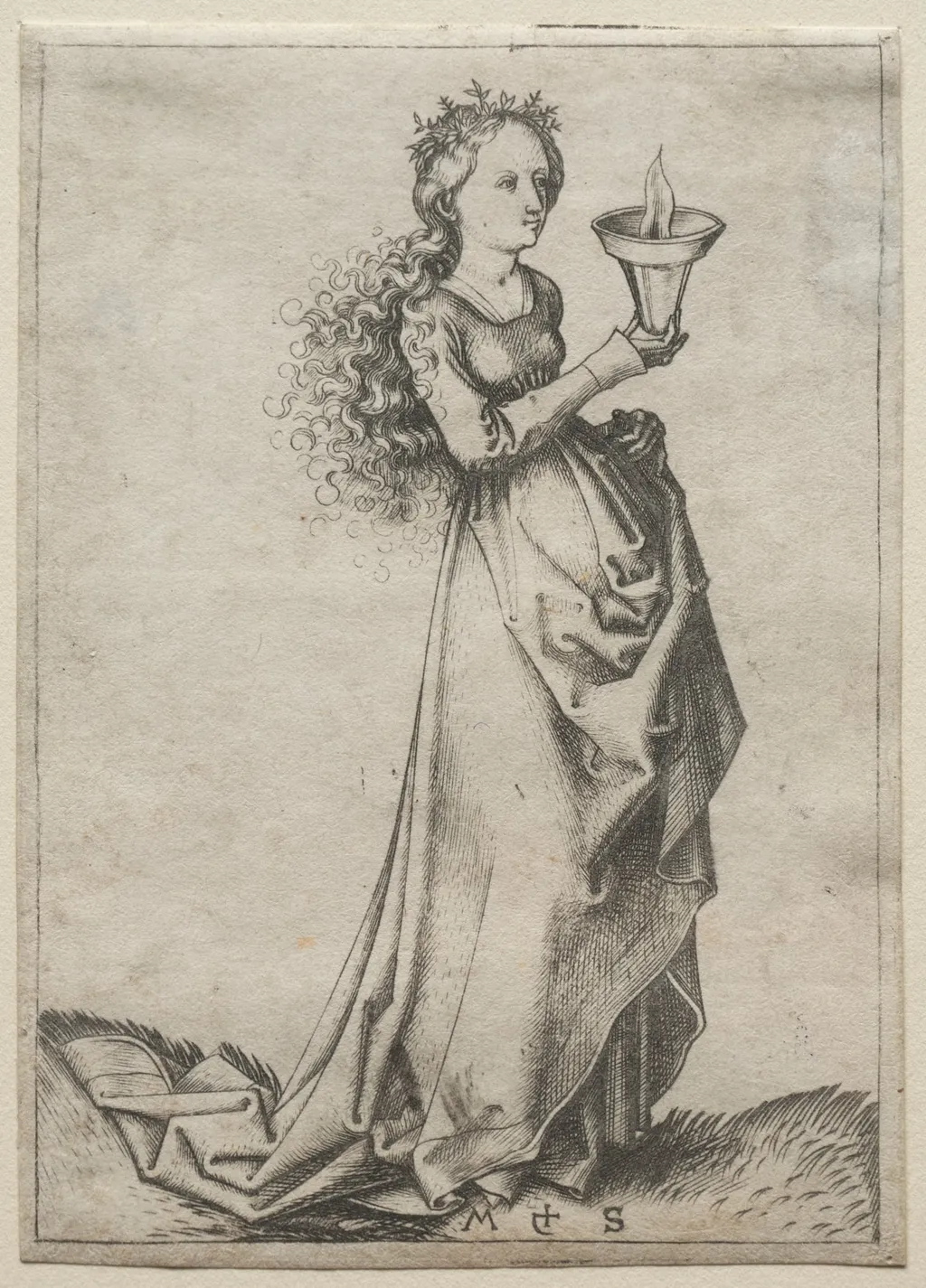
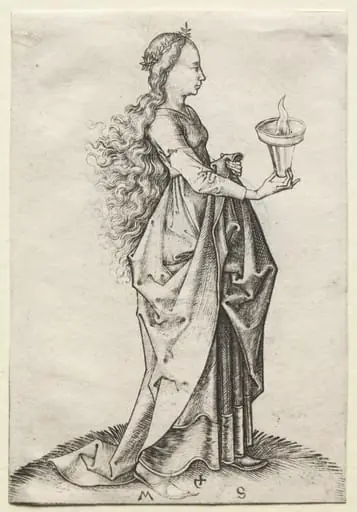
The First Wise Virgin is a print by the Renaissance artist Martin Schongauer. It dates from 1474 and is held in the collection of the Cleveland Museum of Art.
About this work
Overview
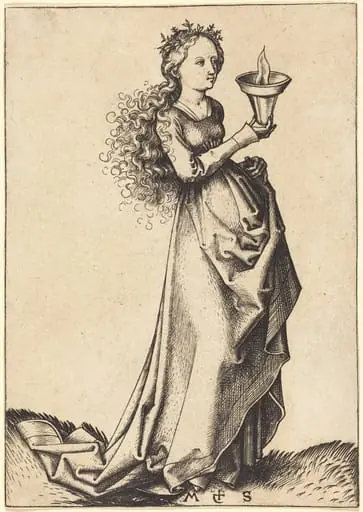
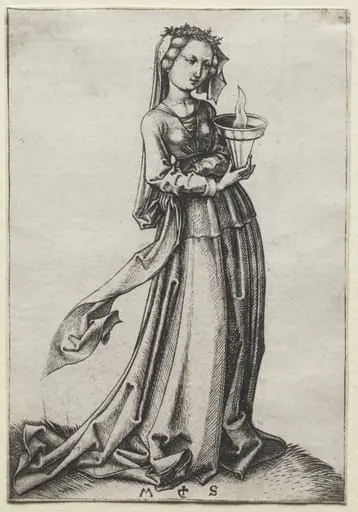
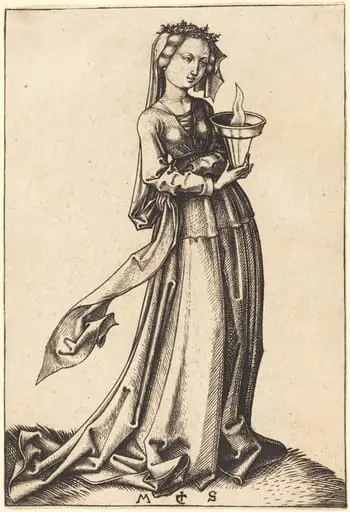
Created in 1474 by Martin Schongauer, this black-and-white drawing depicts a solitary female figure holding a lit candle. Executed in pen and ink, it is part of a series illustrating the Parable of the Ten Virgins from the Gospel of Matthew. The work is currently held in the collection of The Cleveland Museum of Art, where it is valued for its early Renaissance sensitivity to form and expression.
Subject & Meaning
The figure represents one of the five wise virgins from the biblical parable who prepared for the bridegroom’s arrival by keeping their lamps filled with oil.
The figure represents one of the five wise virgins from the biblical parable who prepared for the bridegroom’s arrival by keeping their lamps filled with oil. The lit candle symbolizes spiritual readiness, while her composed demeanor reflects inner vigilance. The scattered cloth and uneven ground suggest a humble, earthly setting, reinforcing the theme of moral preparedness amid worldly distractions.
Technique & Style
Schongauer employed fine pen lines to model the figure’s drapery and facial features with subtle gradations of tone. The flowing robe, tightly curled hair, and delicate wreath are rendered with precision, demonstrating his skill in translating three-dimensional form onto paper. The background is minimally suggested, focusing attention on the figure’s stillness and the candle’s glow as the central visual and symbolic anchor.
History & Provenance
The drawing was likely made as a preparatory study for a larger altarpiece or stained-glass design, common in Schongauer’s practice. It entered the Cleveland Museum of Art’s collection in the 20th century, having passed through private European collections since the 15th century. Its survival in good condition offers rare insight into the working methods of a Northern Renaissance printmaker.
Context
Created during the transition from late Gothic to early Renaissance styles in the Rhineland, the work reflects a growing interest in individualized human expression and naturalistic detail. Schongauer’s focus on emotional restraint and physical presence aligns with broader trends in Northern Europe, where religious subjects were increasingly rendered with psychological depth and tactile realism.
Legacy
Schongauer’s drawings influenced generations of Northern artists, including Albrecht Dürer, who admired his linear clarity and emotional nuance. This particular image remains a key example of how religious symbolism was translated into intimate, human-centered compositions. Its preservation allows continued study of early printmaking techniques and devotional imagery in the decades before the Reformation.
Artist & collection

Artist
Martin Schongauer, also known as Martin Schön or Hübsch Martin by his contemporaries, was an Alsatian engraver and painter.