Artwork
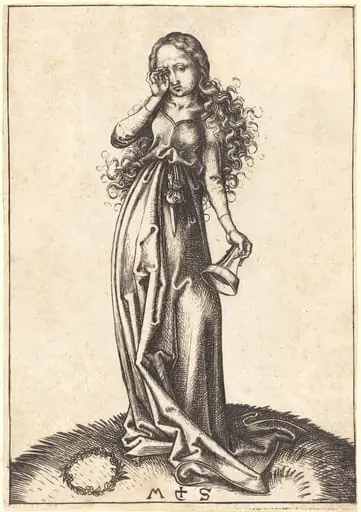
Foolish Virgin
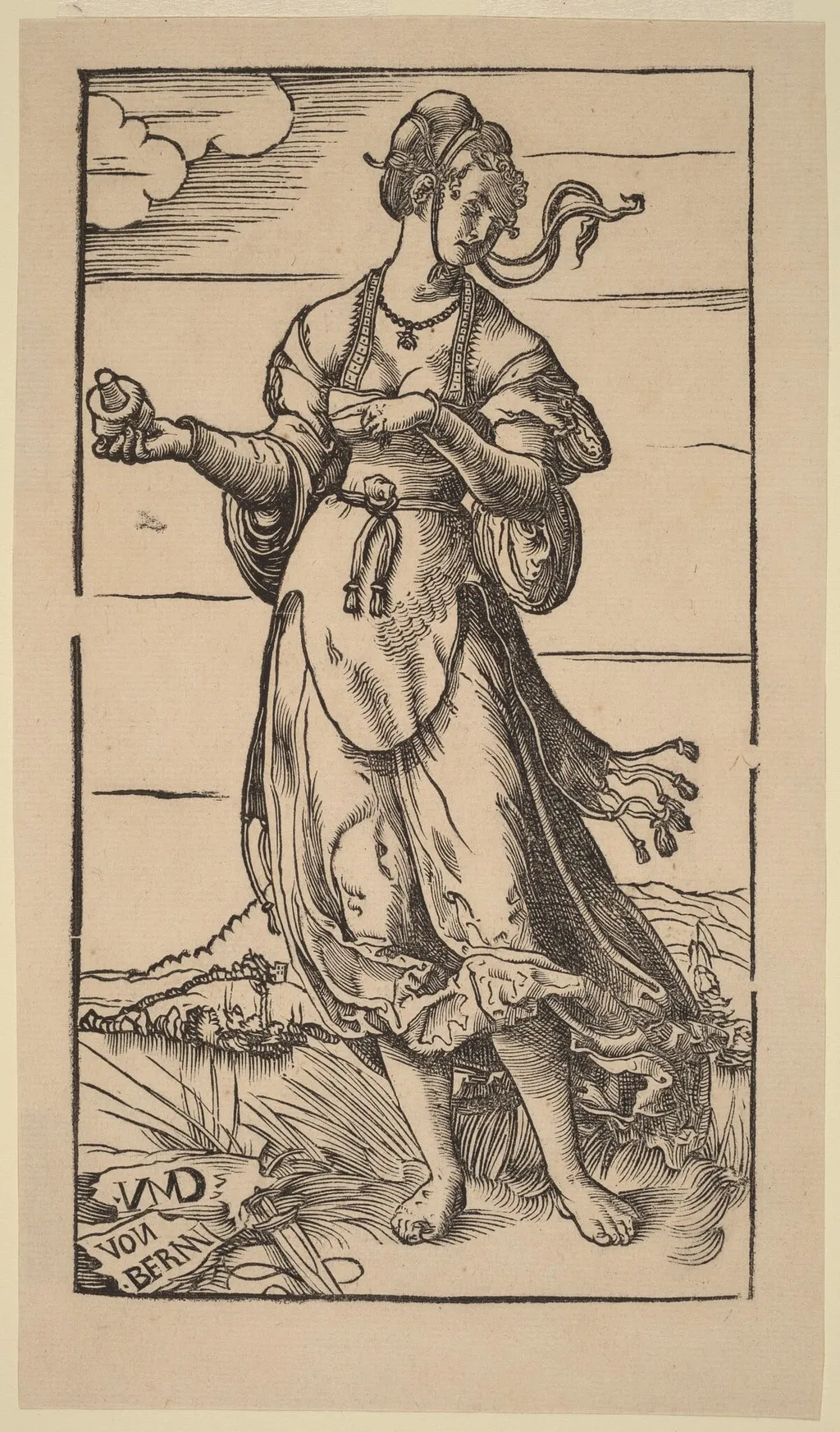
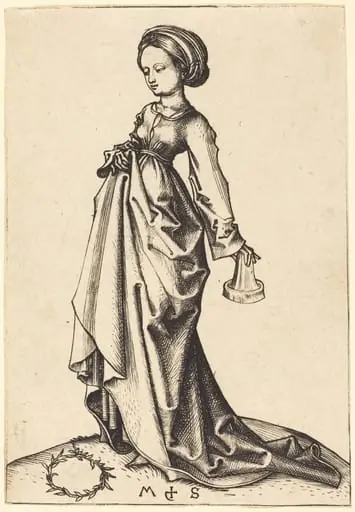
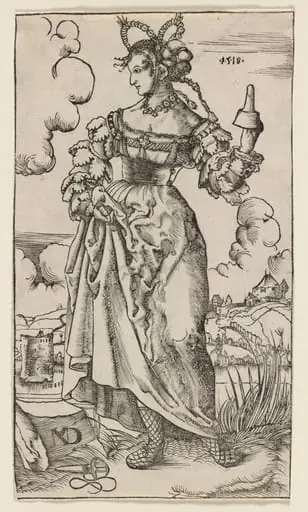
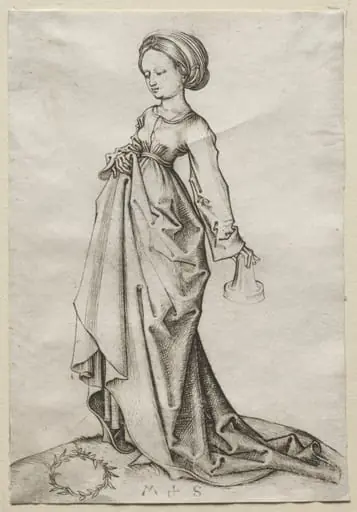
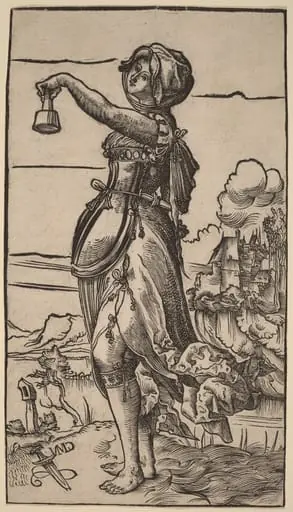
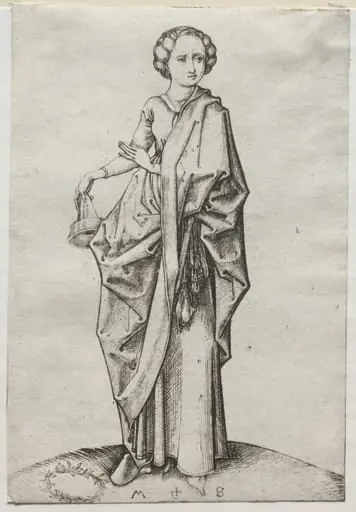
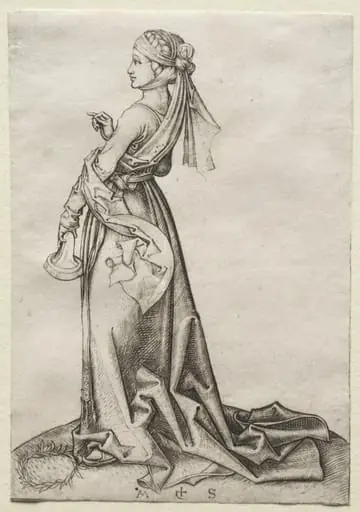
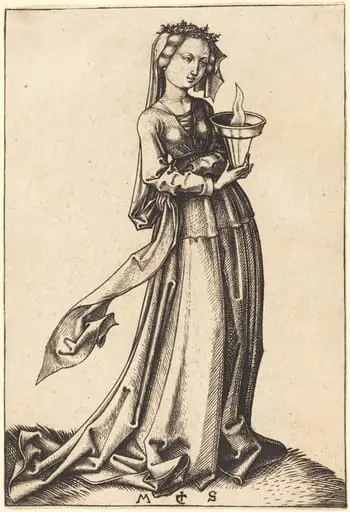
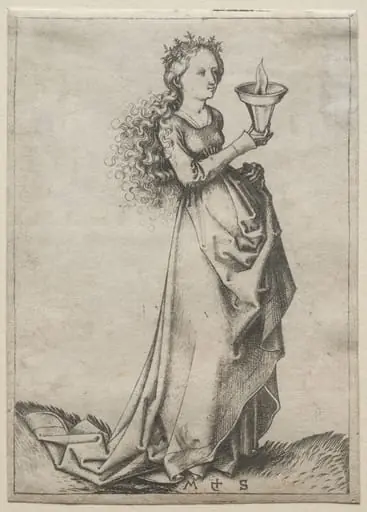
Foolish Virgin is an ink print by the Renaissance artist Niklaus Manuel I. It dates from 1518 and is held in the collection of the National Gallery of Art.
About this work
Overview
The technique relies on incised lines carved into a wooden block, a common method for reproductive and devotional imagery in early 16th-century Europe.
Foolish Virgin is a 1518 woodcut by Swiss artist Niklaus Manuel Deutsch. Executed on laid paper, the print depicts a solitary female figure standing atop a coiled dragon. The composition is stark yet deliberate, with minimal background elements suggesting a nocturnal sky. The technique relies on incised lines carved into a wooden block, a common method for reproductive and devotional imagery in early 16th-century Europe.
Subject & Meaning
The figure represents one of the Ten Virgins from the Gospel of Matthew, specifically the foolish one who failed to prepare for the Bridegroom’s arrival. Her calm demeanor contrasts with the serpent beneath her, symbolizing spiritual complacency. The bell and book in her hands may allude to neglected duties—calling the faithful and studying scripture—while the dragon embodies sin or divine judgment awaiting the unprepared.
Technique & Style
Manuel employed sharp, clean lines typical of woodcut engraving to define the woman’s flowing garments and the dragon’s scaled body. The contrast between the smooth, serene contours of the figure and the jagged, tangled form of the beast enhances the narrative tension. The background is reduced to a crescent moon and faint cloud lines, directing focus to the central confrontation and emphasizing the print’s symbolic rather than naturalistic intent.
History & Provenance
Created during Manuel’s active years in Bern, the print likely circulated among religious audiences during the early Reformation. As a reform-minded artist and politician, Manuel used visual art to convey moral lessons aligned with Protestant critiques of Catholic complacency. The work’s survival in private and institutional collections suggests its resonance in Swiss Reformed circles, though its exact early ownership remains undocumented.
Context
Foolish Virgin emerged amid rising tensions between Catholic tradition and Protestant reform in Switzerland. Manuel, a supporter of Huldrych Zwingli, produced images that criticized spiritual negligence and idolatry. This print fits within a broader genre of didactic woodcuts used to educate laypeople, replacing elaborate altarpieces with accessible, morally charged imagery suited to the reformers’ emphasis on scripture and personal responsibility.
Legacy
The print remains a rare surviving example of Swiss Reformation-era graphic art that blends theological allegory with graphic clarity. While not widely reproduced, it influenced later Protestant visual culture by demonstrating how woodcuts could convey complex moral narratives without reliance on ecclesiastical authority. Its preservation in major print collections underscores its value as a document of early Reformation visual rhetoric.
Artist & collection