Artwork
The Passion: The Entombment
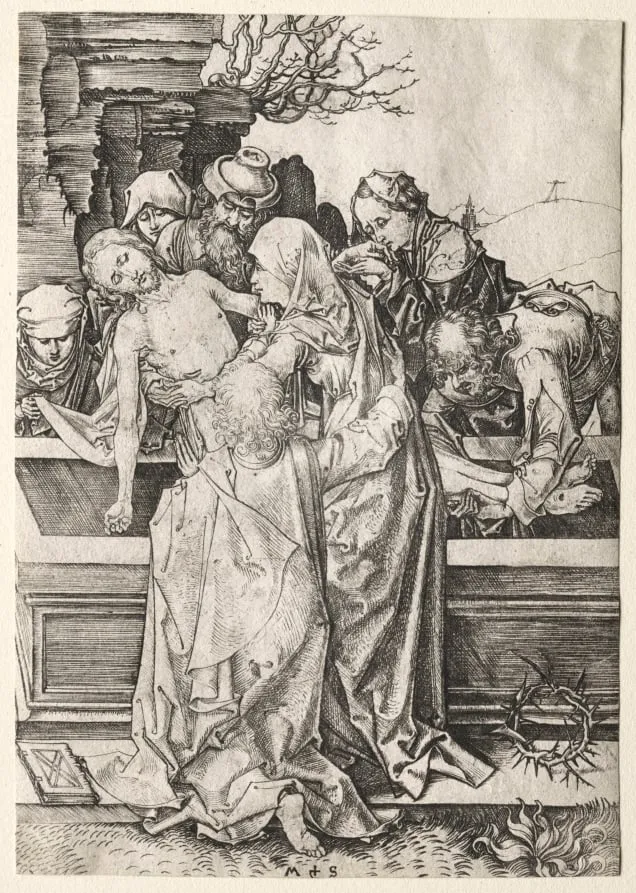
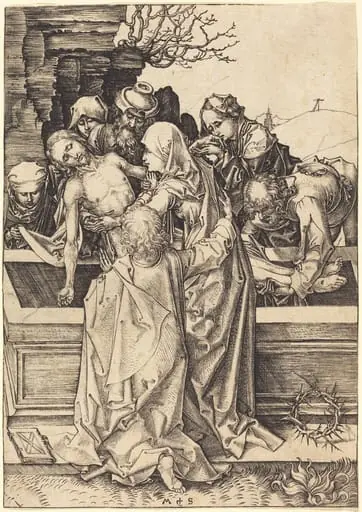
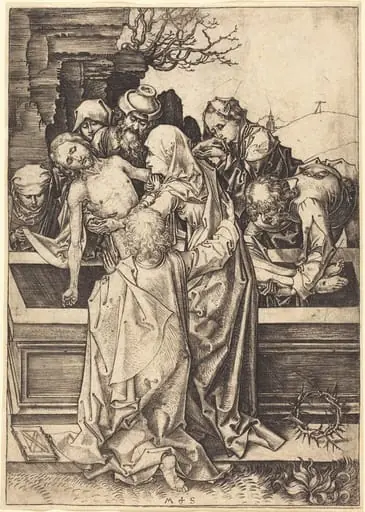
The Passion: The Entombment is a print by the Renaissance artist Martin Schongauer. It dates from 1480 and is held in the collection of the Cleveland Museum of Art.
About this work
Overview
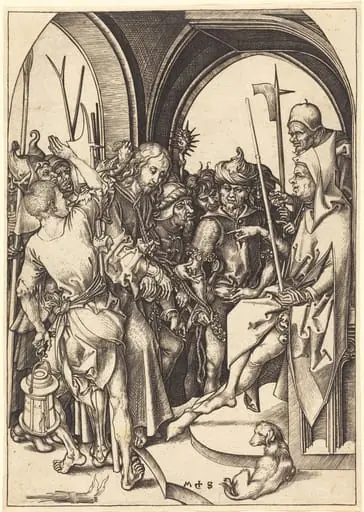
Martin Schongauer created a series of twelve engravings depicting the Passion of Christ around 1480, his most extensive print cycle.
Martin Schongauer created a series of twelve engravings depicting the Passion of Christ around 1480, his most extensive print cycle. This particular scene, The Entombment, captures Christ’s burial with intense emotional gravity. The work is notable for its dense composition and masterful use of line to convey depth and drama without color. Its widespread reproduction across Europe made it one of the most disseminated religious images of the late 15th century.
Subject & Meaning
The scene portrays Christ’s body being lowered into a stone sarcophagus by Joseph of Arimathea and Nicodemus, while the Virgin Mary and Saint John stand turned away, their grief implied through posture rather than facial expression. Surrounding figures—mourners and tormentors—react with varied expressions of sorrow and brutality. The composition emphasizes solemnity and human suffering, reinforcing the theological weight of Christ’s burial as a moment of quiet tragedy.
Technique & Style
Schongauer employed fine, deeply incised lines to model form and generate dramatic contrasts of light and shadow. His precise engraving technique allowed for intricate detail in facial expressions and drapery, creating a sense of tactile realism. Unlike later painters who used sfumato to blur edges, Schongauer relied on sharp, controlled strokes to heighten emotional intensity, making each figure distinct within the crowded scene.
History & Provenance
Produced around 1480, this engraving was widely copied by other artists and printmakers throughout Europe, particularly in Germany and the Netherlands. Its popularity stemmed from both its emotional power and the accessibility of print media. Original impressions survive in major collections, and numerous derivative versions attest to its influence on Northern Renaissance visual culture before the advent of oil painting’s dominance.
Context
In the late 15th century, devotional imagery focused on Christ’s suffering as a means of fostering personal piety. Schongauer’s prints responded to this spiritual climate, offering viewers a visceral encounter with sacred narrative. The crowded, emotionally charged scenes mirrored contemporary sermons and Passion plays, bridging liturgical themes with the growing market for private religious art among the urban middle class.
Legacy
Schongauer’s Entombment set a precedent for the depiction of Christ’s burial in Northern European art. Its compositional density and expressive figures influenced later engravers and painters, including Dürer, who admired his technical precision. Though later artists softened forms with chiaroscuro and sfumato, Schongauer’s stark, linear intensity remained a touchstone for conveying sacred pathos through print.
Artist & collection

Artist
Martin Schongauer, also known as Martin Schön or Hübsch Martin by his contemporaries, was an Alsatian engraver and painter.