Artwork
The Entombment
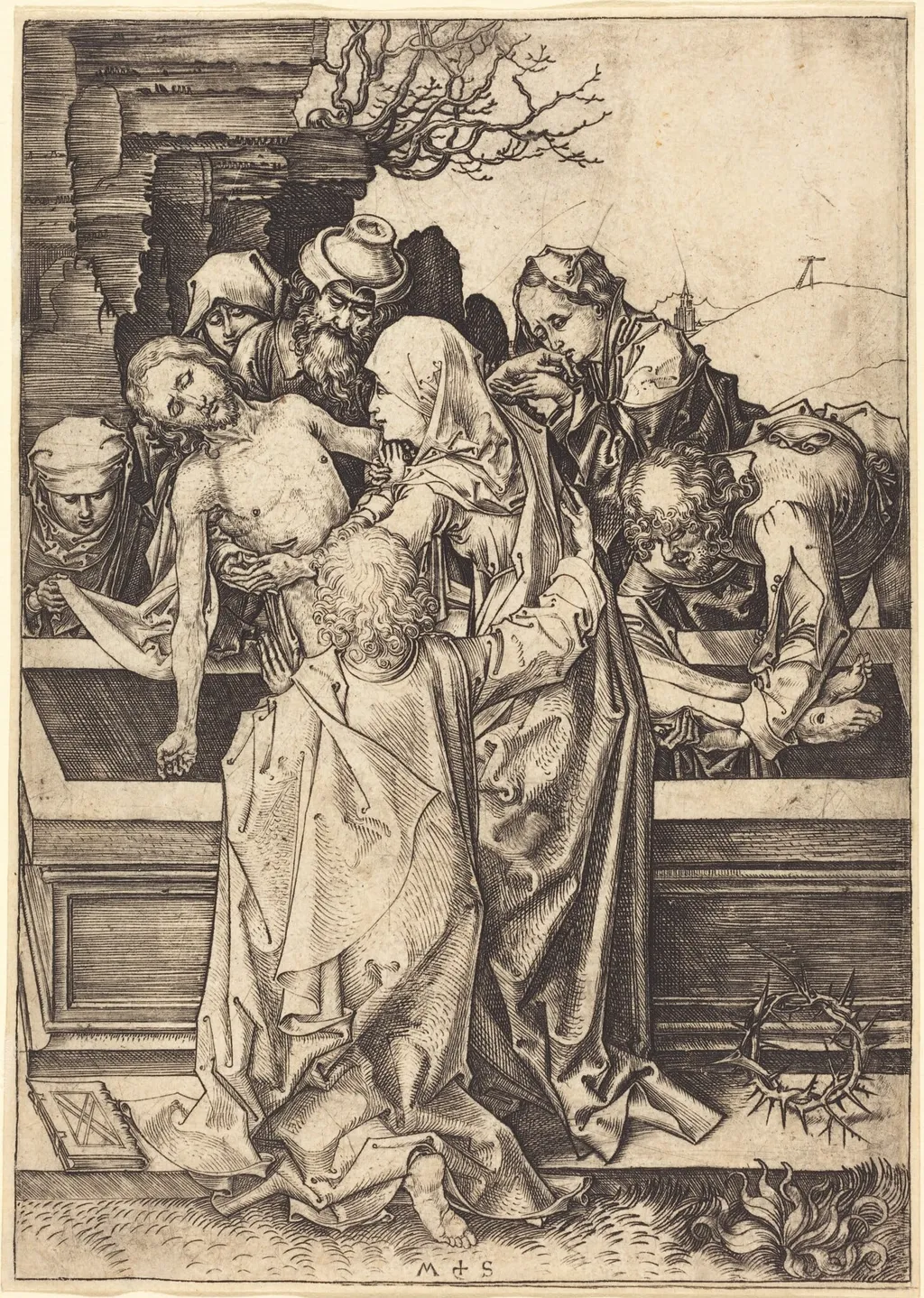
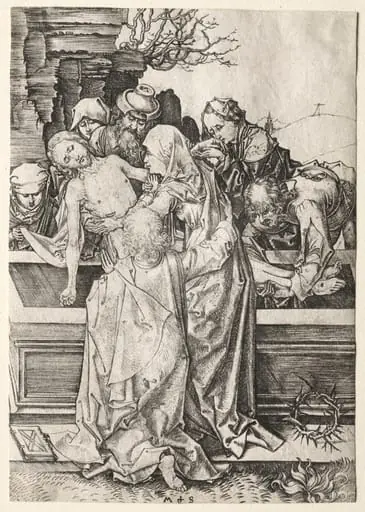
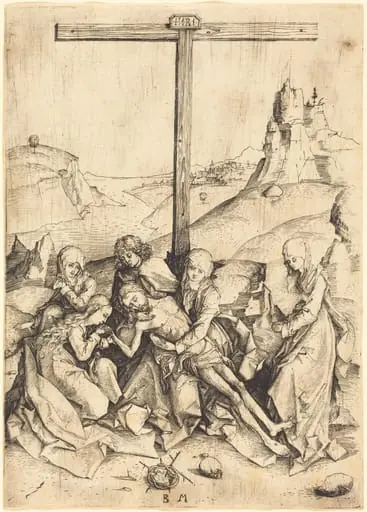
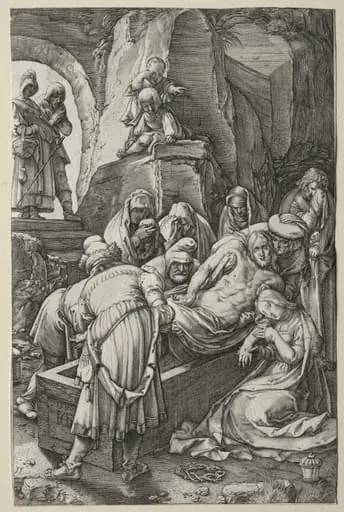
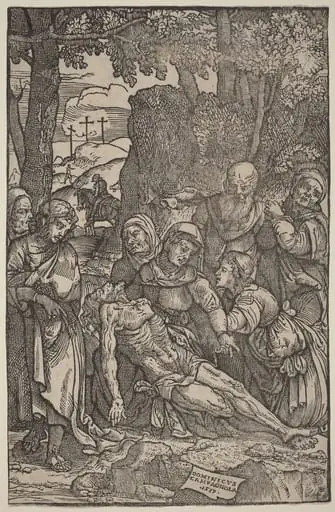
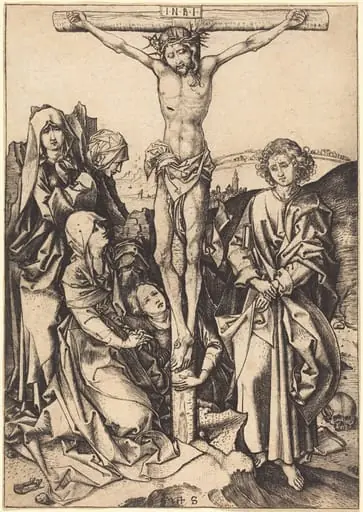
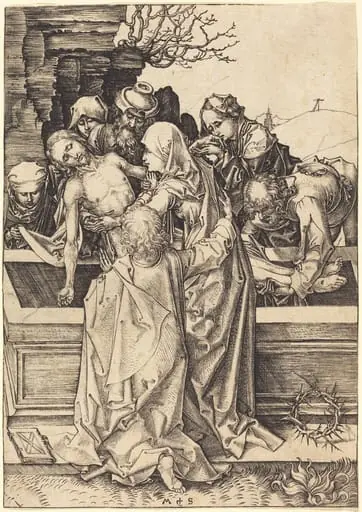
The Entombment is an ink print by the Renaissance artist Martin Schongauer. It dates from 1480 and is held in the collection of the National Gallery of Art.
About this work
Overview
His work bridges the traditions of goldsmithing and painting, translating meticulous craftsmanship into the medium of print with unprecedented precision.
Martin Schongauer’s engraving *The Entombment*, dated circa 1480, captures the moment Christ’s body is prepared for burial. Executed in fine line on copper, it belongs to a corpus of 116 engravings that established Schongauer as a pivotal figure in early Northern printmaking. His work bridges the traditions of goldsmithing and painting, translating meticulous craftsmanship into the medium of print with unprecedented precision.
Subject & Meaning
The scene portrays Christ’s lifeless form being gently lowered into a shroud by mourners, their gestures quiet and reverent. No dramatic gestures or overt grief interrupt the solemnity; instead, the focus lies in the physicality of the act—handling the body with care. The absence of overt emotion underscores a contemplative tone, aligning with devotional practices that emphasized quiet meditation on Christ’s sacrifice.
Technique & Style
Schongauer employed fine, controlled lines to model form through cross-hatching, creating subtle gradations of light and shadow. The texture of linen is rendered with delicate, intersecting strokes that suggest softness despite the hardness of the copper plate. His skill in manipulating line mimics tonal effects, allowing the engraving to achieve a sculptural depth rare in prints of the period, and demonstrating his background in metalwork.
History & Provenance
Created during Schongauer’s time in Colmar and later Breisach, the engraving circulated widely across Europe, influencing generations of printmakers. Though no early ownership records survive, its technical sophistication ensured its replication and study, particularly by Albrecht Dürer, who admired and copied Schongauer’s work. The print’s survival in multiple impressions attests to its early and enduring appeal.
Context
In late 15th-century Germany, engraving was emerging as a respected art form, distinct from manuscript illumination. Schongauer’s engravings responded to growing demand for devotional images among the educated laity. His ability to translate complex compositions into reproducible prints helped shift religious imagery from exclusive ecclesiastical settings to private, personal contemplation.
Legacy
Schongauer’s *The Entombment* set a standard for narrative clarity and technical refinement in Northern Renaissance printmaking. His use of line as a tool for both structure and atmosphere became foundational for later artists. Though painting remained dominant, his engravings proved that the medium could convey spiritual gravity and anatomical precision, securing his place as a bridge between medieval craft and Renaissance innovation.
Artist & collection

Artist
Martin Schongauer, also known as Martin Schön or Hübsch Martin by his contemporaries, was an Alsatian engraver and painter.