Artwork
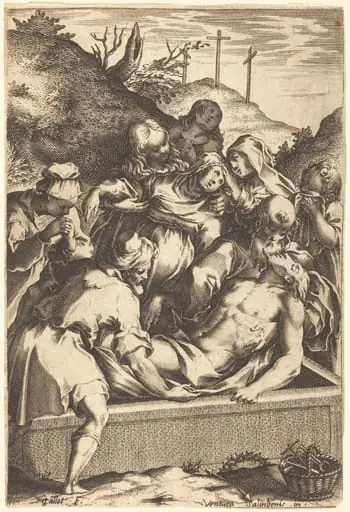
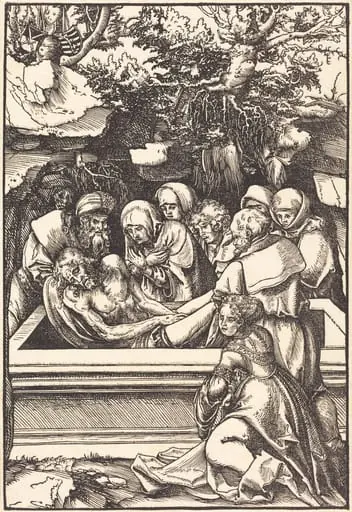
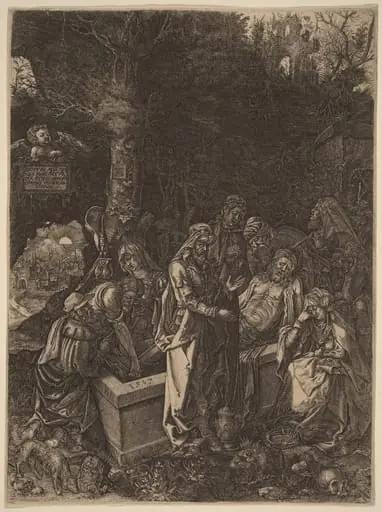
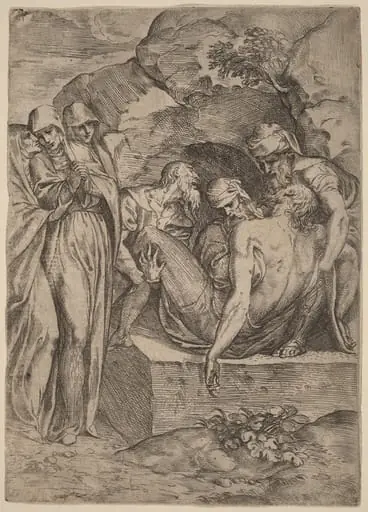
The Entombment
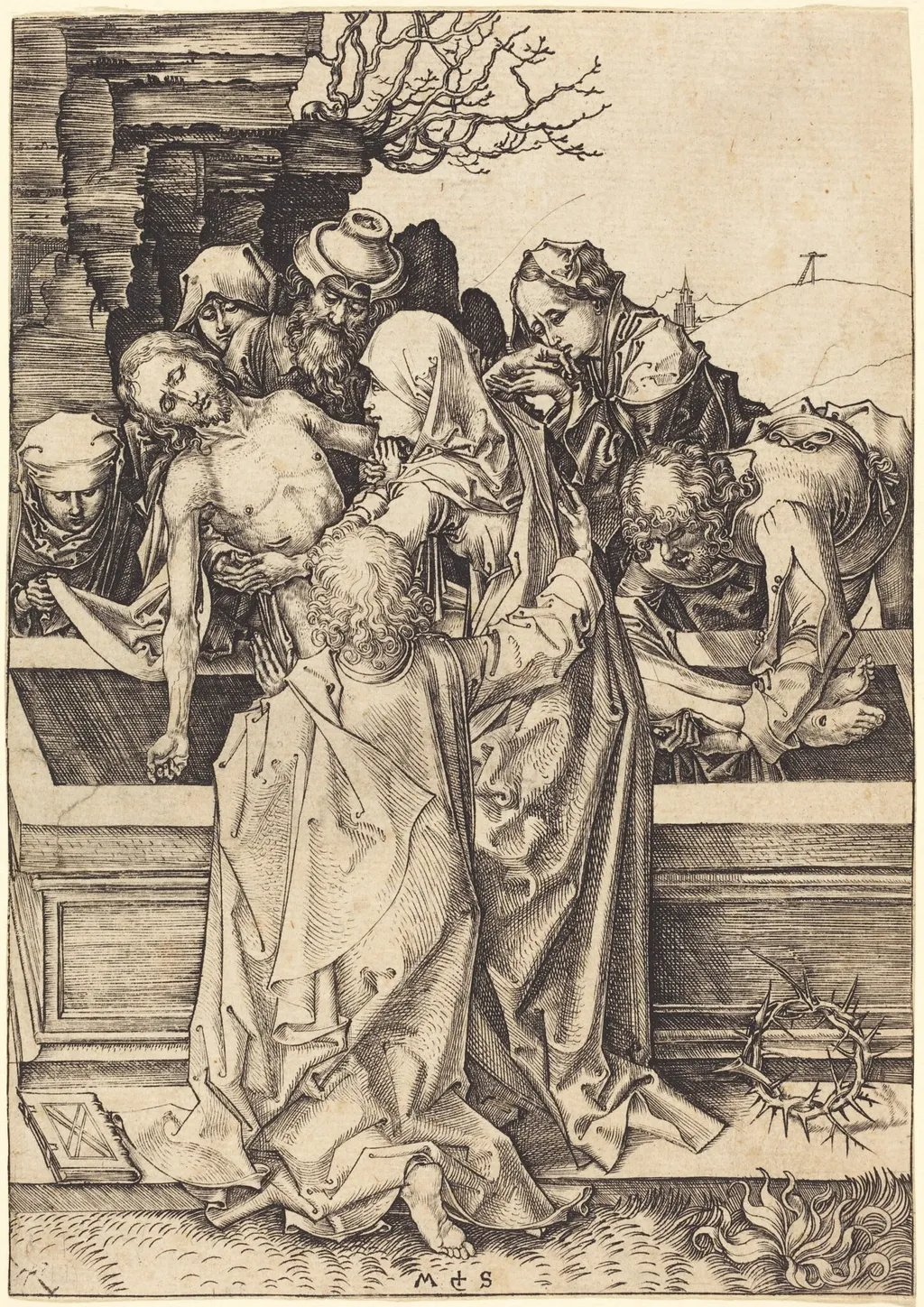
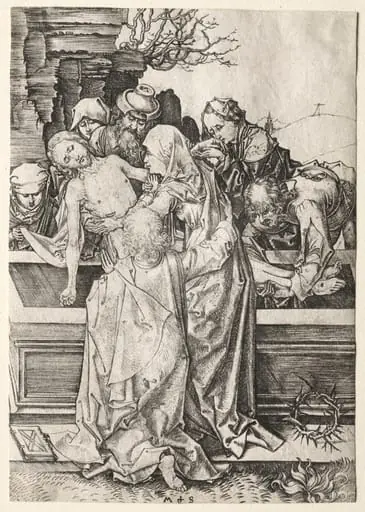
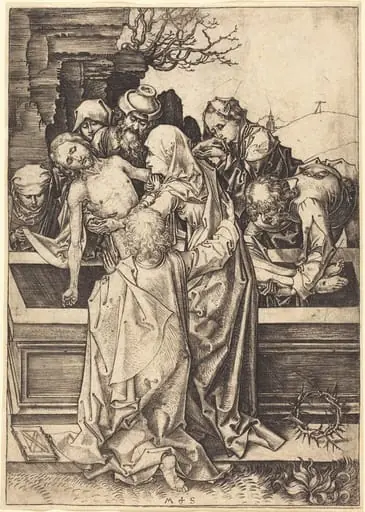
The Entombment is an ink print by the Renaissance artist Martin Schongauer. It dates from 1480 and is held in the collection of the National Gallery of Art.
About this work
Overview
Martin Schongauer’s engraving *The Entombment*, dated circa 1480, captures the quiet solemnity of Christ’s burial through finely incised lines on copper.
Martin Schongauer’s engraving *The Entombment*, dated circa 1480, captures the quiet solemnity of Christ’s burial through finely incised lines on copper. As one of 116 known engravings by the Alsatian artist, it exemplifies the technical rigor of late 15th-century Northern European printmaking. Schongauer’s background in metalwork informed his precision, allowing him to translate complex emotional scenes into minute, controlled marks that invite close observation.
Subject & Meaning
The scene portrays Christ’s body being lowered into a stone tomb by a small group of mourners, including Joseph of Arimathea and Mary Magdalene. No dramatic gestures or overt expressions dominate; instead, the figures move with restrained gravity, emphasizing the intimacy of the moment. The absence of spectacle focuses attention on the physical act of burial, underscoring themes of humility, loss, and sacred duty within the Christian narrative.
Technique & Style
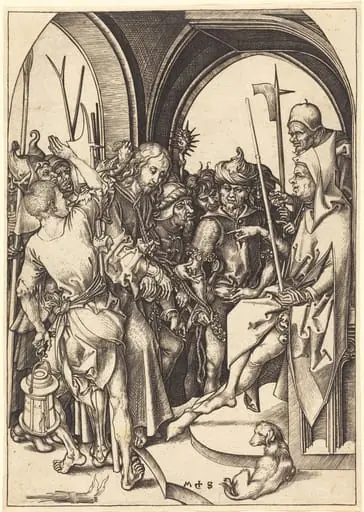
Schongauer employed fine, parallel lines and cross-hatching to model form and texture with remarkable subtlety. The engraving’s density of detail—seen in the folds of cloth, the grain of stone, and the contours of faces—reflects his training as a goldsmith. Unlike later woodcuts, this method allowed for intricate tonal gradations, enabling a quiet, meditative atmosphere through controlled line work rather than bold contrasts.
History & Provenance
Created in Colmar, then part of the Holy Roman Empire, the engraving circulated widely among religious communities and collectors in Germany and beyond. Its survival in multiple impressions suggests early demand for devotional imagery. Though no original commission record exists, its technical quality indicates it was likely produced for educated patrons familiar with theological themes and fine craftsmanship.
Context
In the decades before Dürer’s rise, Schongauer stood at the forefront of German printmaking, bridging medieval devotional traditions and emerging Renaissance sensibilities. His engravings responded to a growing market for portable religious images, used in private prayer and study. *The Entombment* aligns with contemporary altarpieces and panel paintings, adapting monumental compositions into intimate, reproducible formats for personal contemplation.
Legacy
Schongauer’s precise line work and emotional restraint influenced generations of Northern artists, including Dürer, who studied his engravings closely. *The Entombment* helped establish engraving as a serious medium for narrative and spiritual expression, moving beyond mere illustration toward a language of quiet intensity. Its enduring presence in collections attests to its role in shaping the visual culture of early modern printmaking.
Artist & collection

Artist
Martin Schongauer, also known as Martin Schön or Hübsch Martin by his contemporaries, was an Alsatian engraver and painter.