Artwork
Lamentation of Christ
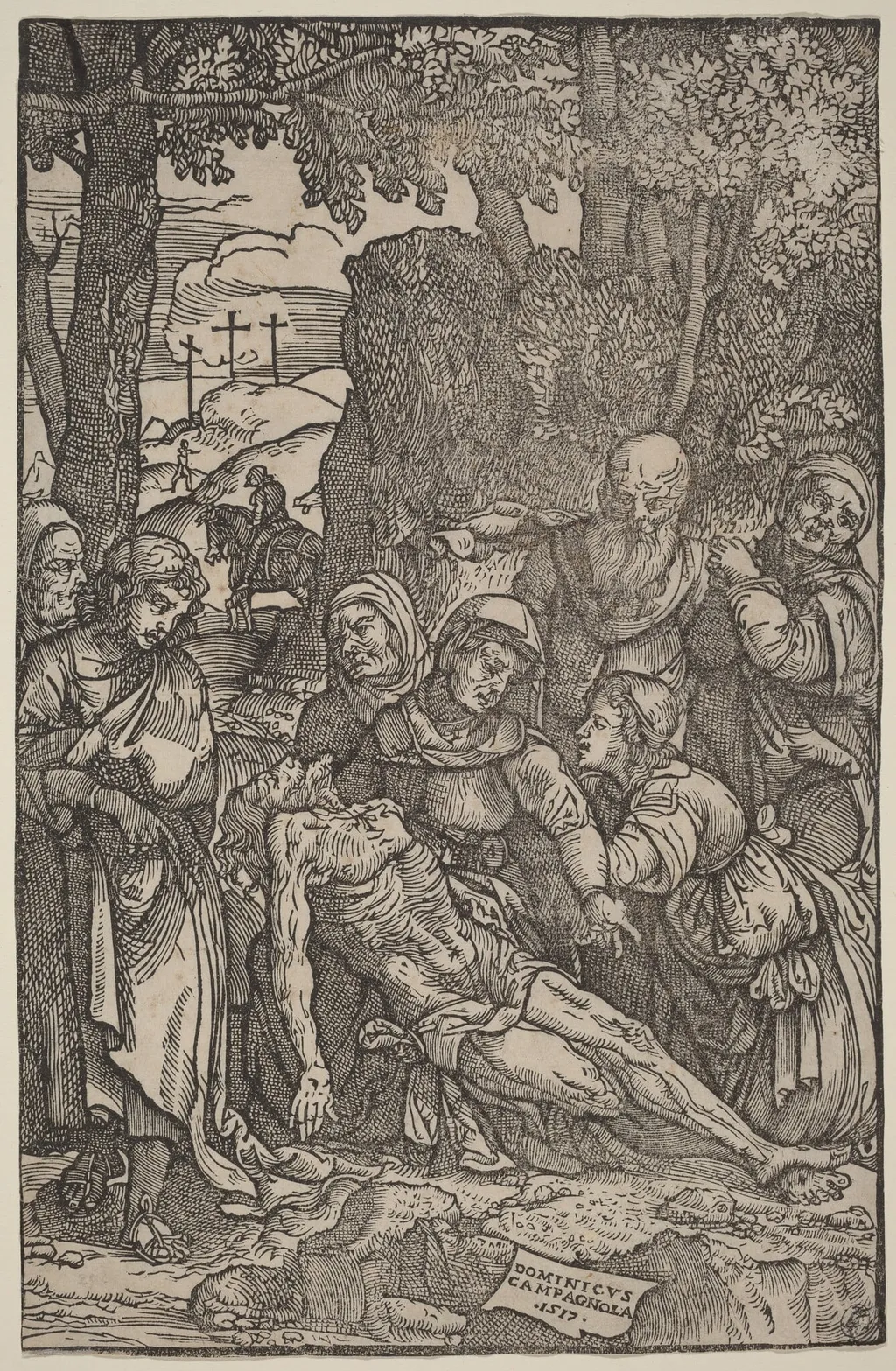
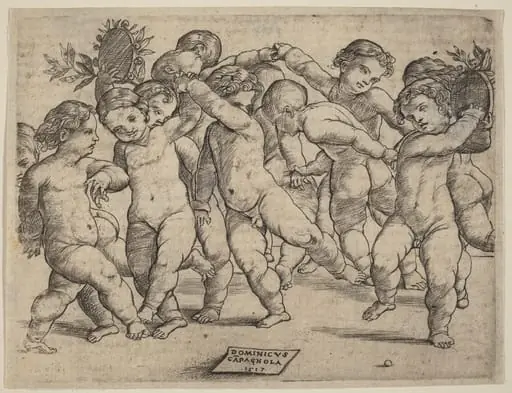
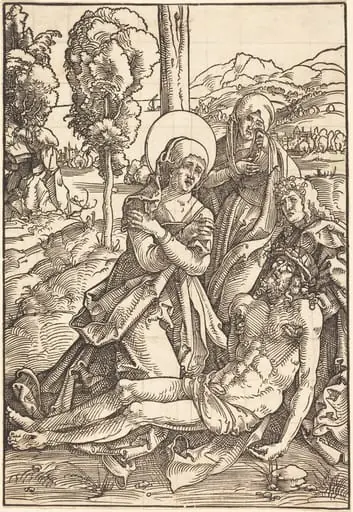
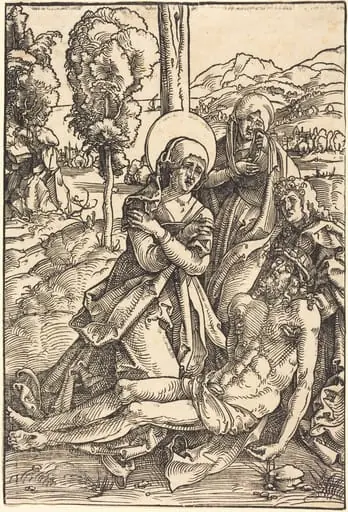
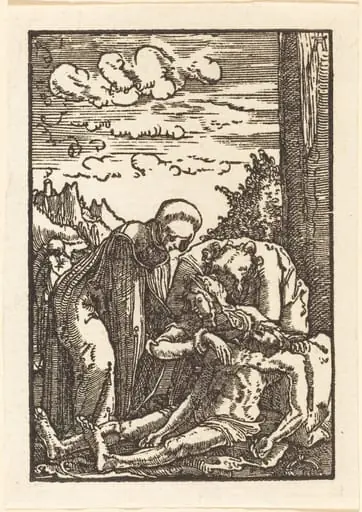
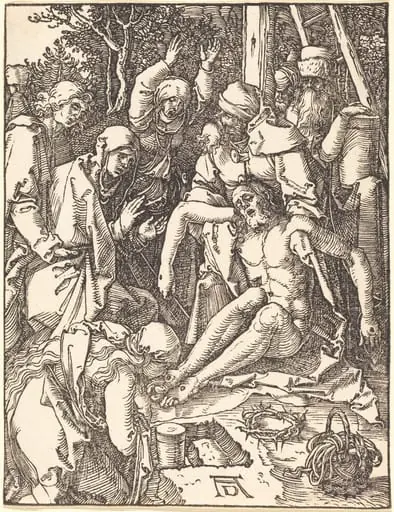
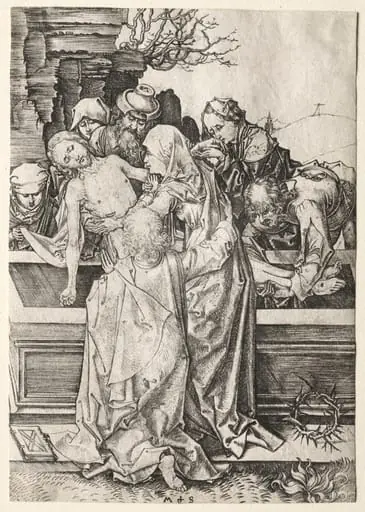
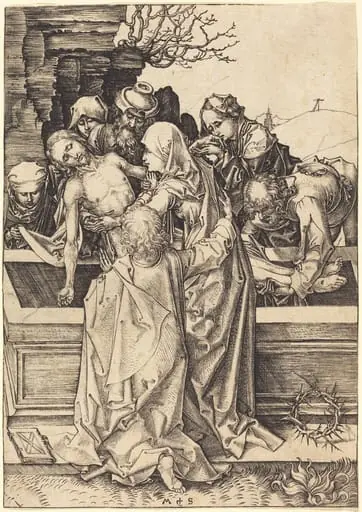
Lamentation of Christ is an ink print by the Renaissance artist Domenico Campagnola. It dates from 1517 and is held in the collection of the National Gallery of Art.
About this work
Overview
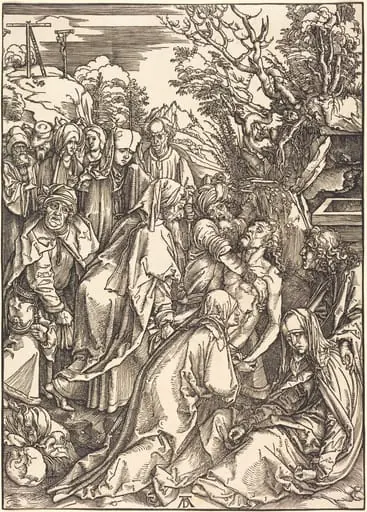
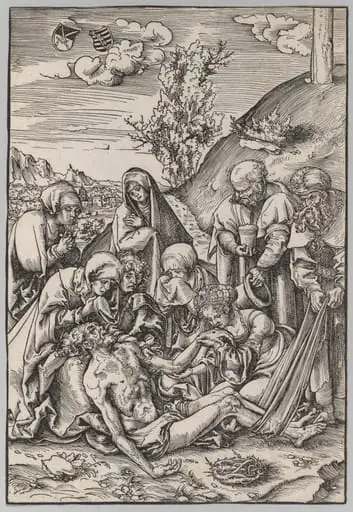
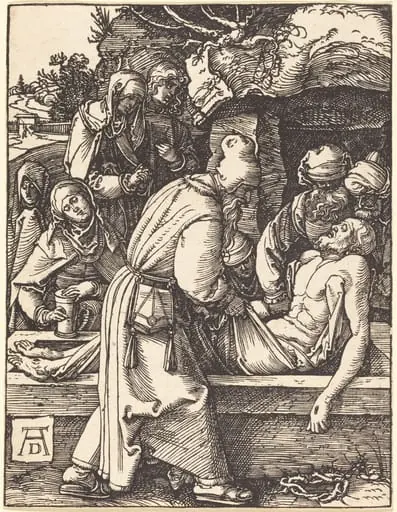
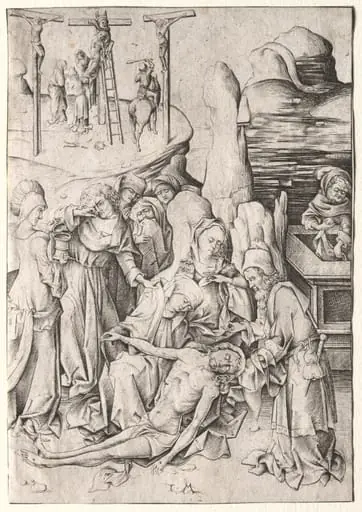
Domenico Campagnola’s woodcut Lamentation of Christ, dated 1517, presents a monochrome depiction of the biblical moment when Christ’s body is removed from the cross. Executed on a single sheet, the image concentrates on the mournful gathering surrounding the fallen figure, emphasizing the emotional intensity of the scene.
Subject & Meaning
The composition centers on the lifeless Christ, supported by attendants whose expressions convey shock and sorrow. The Virgin Mary is shown clasping his hand, while other figures kneel nearby, embodying the collective grief of the disciples and highlighting themes of loss and devotion inherent in the Lamentation narrative.
Technique & Style
Campagnola employs the woodcut medium’s capacity for stark contrast, using sharply incised lines to generate deep shadows that model the forms. The black‑and‑white palette intensifies the dramatic chiaroscuro, allowing the weight of Christ’s body and the surrounding anguish to be rendered with a graphic clarity characteristic of early 16th‑century printmaking.
History & Provenance
Created in the early Renaissance, the print reflects the period’s interest in disseminating religious imagery through affordable media. While specific ownership records are limited, the work is attributed to Campagnola, an Italian artist known for his contributions to printmaking and for adapting the expressive potential of woodcut for devotional subjects.
Artist & collection