Artwork
Buffalo Lighthouse
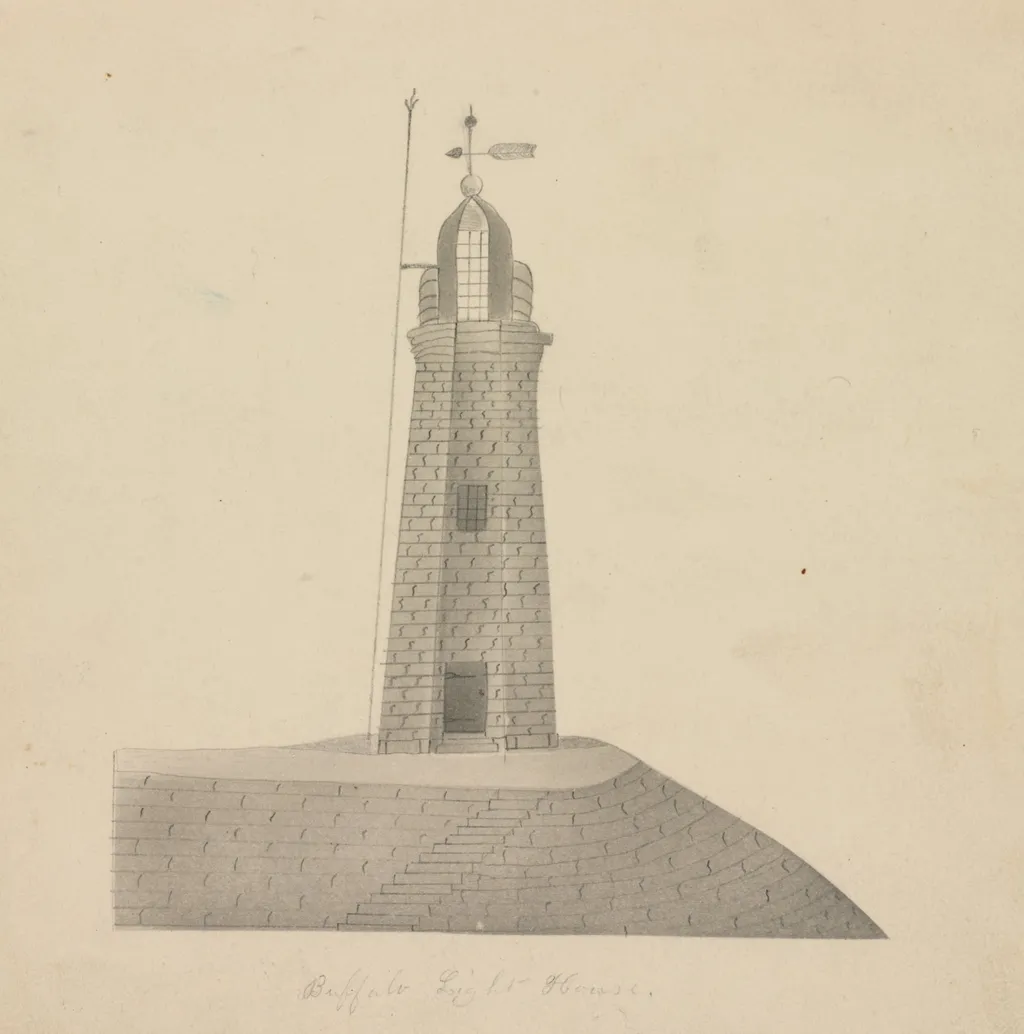
Buffalo Lighthouse is a drawing by the Romanticist artist Mary Altha Nims. It dates from 1804 and is held in the collection of the Cleveland Museum of Art.
About this work
Overview
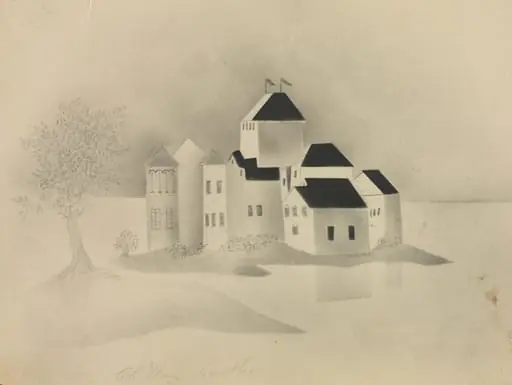
Created around 1804, this pencil drawing depicts the Buffalo Lighthouse as a modest, functional structure. Executed by Mary Altha Nims, the work is a straightforward architectural record, rendered in clean, unadorned lines. It is part of the collection at The Cleveland Museum of Art, where it serves as an early visual document of a regional landmark.
Subject & Meaning
The drawing captures the lighthouse in its original form: a narrow, brick tower rising from a broad, sloping base. A small window at the summit and a weather vane with a cross suggest both utility and symbolic presence. The label beneath confirms its identity, indicating the drawing’s purpose as a factual record rather than a decorative piece.
Technique & Style
Nims employed a restrained linear approach, using minimal shading and no background elements. The composition emphasizes structural clarity over atmosphere or detail. The absence of embellishment reflects a documentary intent, aligning the work with early 19th-century topographical drawing practices focused on accuracy over artistic flourish.
History & Provenance
The drawing’s origin lies in the early years of Buffalo’s development as a port town. Its survival and eventual acquisition by The Cleveland Museum of Art suggest it was preserved as a local historical artifact. No record of prior ownership is widely documented, but its preservation implies recognition of its significance as a regional record.
Context
In the early 1800s, lighthouses were critical to Great Lakes navigation, and their construction marked the expansion of infrastructure in the Northwest Territory. This drawing reflects a period when such structures were newly established and visually documented by local observers, often for personal or civic use rather than public display.
Legacy
As one of the earliest known visual records of the Buffalo Lighthouse, the drawing offers insight into the appearance of a structure later altered or replaced. It stands as a quiet testament to the role of amateur draftsmen in preserving architectural history before the advent of photography.
Artist & collection


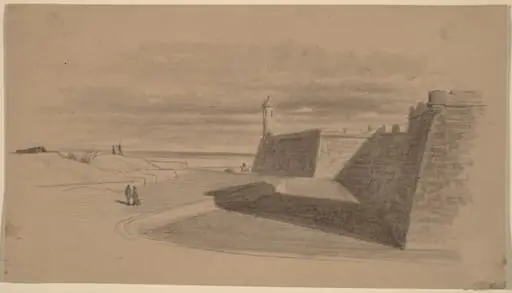 Moat at Fort Marion, Florida
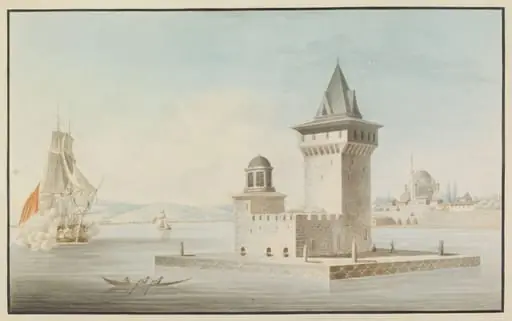 Kiz Kulesi (Leander's or Maiden's Tower) in the Bosphorus with Ayazma Camii near the shore at Üsküdar (Scutari)
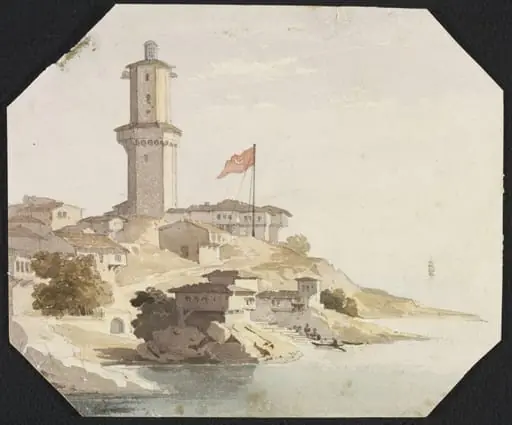 A Turkish Lighthouse, possibly Rumeli Feneri on the Upper Bosphorus at the entrance to the Black Sea
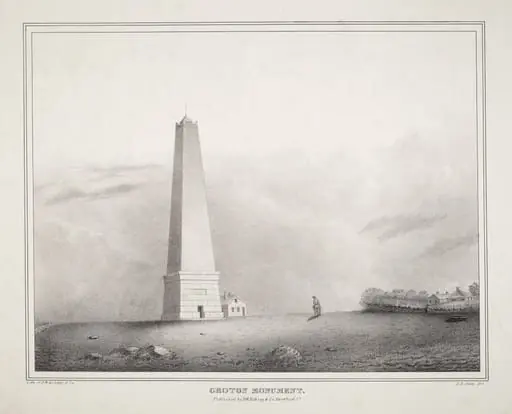 Groton Monument
 Ruin near Arimathea
 Egypt and Nubia, Volume I: Siout - Upper Egypt
 Solomon's Temple, Buxton
 Design for a Monument in Memory of George B. Doane
 Old water tower at York Buildings, Whitehall
 Landscape with Tower (from McGuire Scrapbook)