Artwork
A Turkish Lighthouse, possibly Rumeli Feneri on the Upper Bosphorus at the entrance to the Black Sea
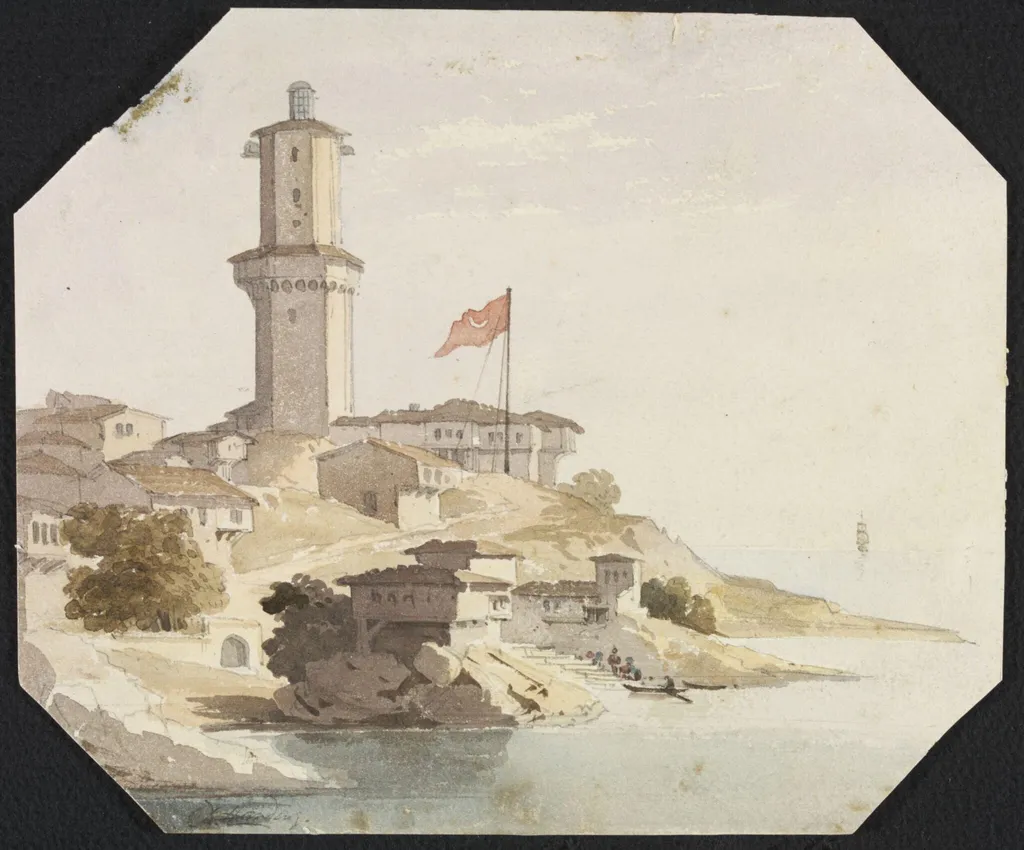
A Turkish Lighthouse, possibly Rumeli Feneri on the Upper Bosphorus at the entrance to the Black Sea is a watercolor work on paper by the American Impressionist artist William Page. It dates from 1827 and is held in the collection of the Victoria and Albert Museum.
About this work
Overview
William Page’s watercolor, dated around 1827, portrays a lighthouse perched on a hill overlooking the Upper Bosphorus at the mouth of the Black Sea. The composition includes a Turkish flag atop the tower, a modest boat with figures in the foreground, and scattered trees and buildings that frame the scene. The work is part of the Victoria and Albert Museum’s collection.
Subject & Meaning
The painting captures the Rumeli Feneri lighthouse, a navigational landmark marking the entrance to the Black Sea. By positioning the flag and the solitary vessel against a tranquil seascape, the image emphasizes the lighthouse’s role as a steady guide for maritime traffic, while also reflecting the calm atmosphere of the strait’s shoreline.
Technique & Style
Executed in watercolor, Page employs a restrained palette of muted blues, greens, and earth tones. Soft washes and delicate brushwork convey atmospheric depth and the gentle movement of water. The handling of light and shadow aligns with early Romantic sensibilities, favoring mood and natural serenity over precise topographical detail.
History & Provenance
Created circa 1827, the work entered the Victoria and Albert Museum’s holdings in the early 20th century, though the exact acquisition path remains undocumented. Its attribution to Page is based on stylistic analysis and the artist’s known interest in travel sketches of the Ottoman Empire during that period.
Context
During the 1820s, Western artists frequently documented Ottoman coastal sites, driven by both scientific curiosity and Romantic fascination with exotic locales. Page’s depiction of the Bosphorus fits within this broader trend, offering a visual record of a strategic maritime point while reflecting contemporary European interest in the region’s geography and culture.
Artist & collection




![Looking towards Leanders Tower and the Sultans New Palace [Dolmabahçe] From Scutari, by Michael Anthony Shrapnel Biddulph](https://artifactworldgallery.com/img/michael-anthony-shrapnel-biddulph--looking-towards-leanders-tower-and-the-sultans-new-palace-do--77513ba4e146ed32-w320.webp) Looking towards Leanders Tower and the Sultans New Palace [Dolmabahçe] From Scutari
Looking towards Leanders Tower and the Sultans New Palace [Dolmabahçe] From Scutari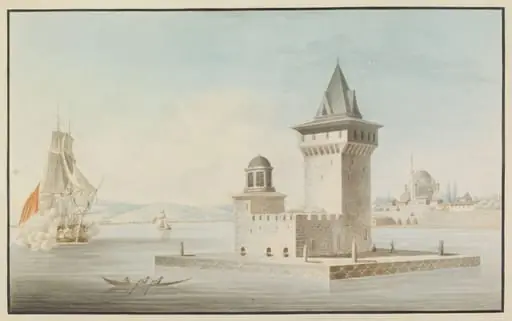 Kiz Kulesi (Leander's or Maiden's Tower) in the Bosphorus with Ayazma Camii near the shore at Üsküdar (Scutari)
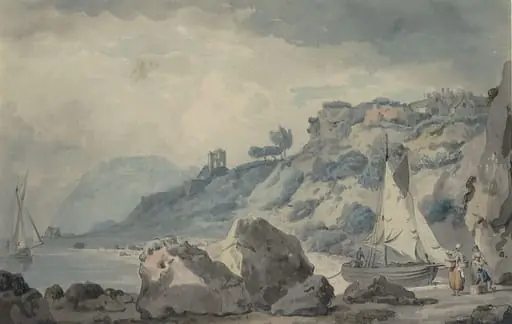 Howth, Ireland
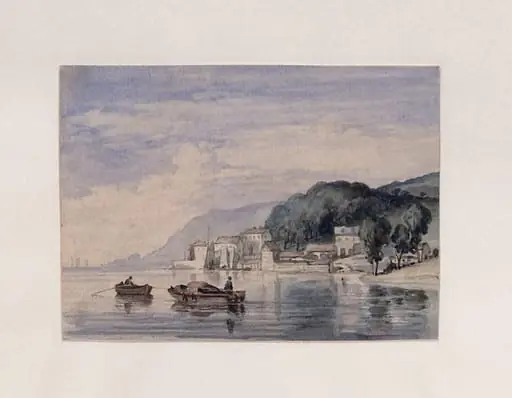 Salcombe, Devonshire
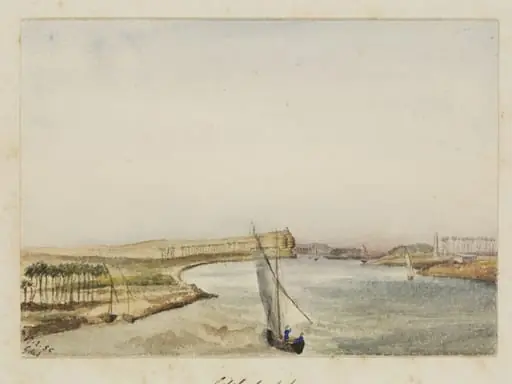 `Gibel-el-dab'
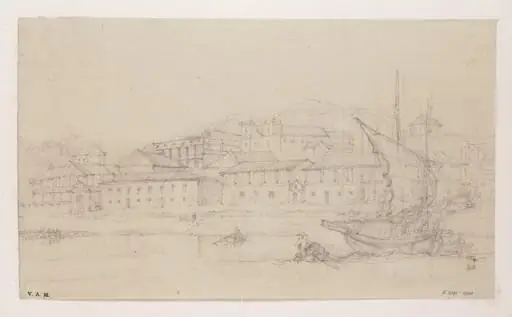 Macau with the church of S. Lourenço
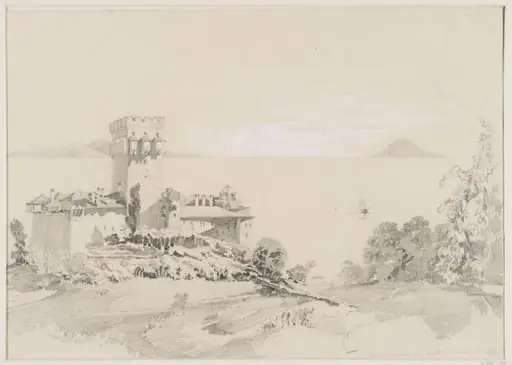 Stavronikéta, on the E. side of Athos; I<sup>s</sup> of Thasos & Samothrace in the distance
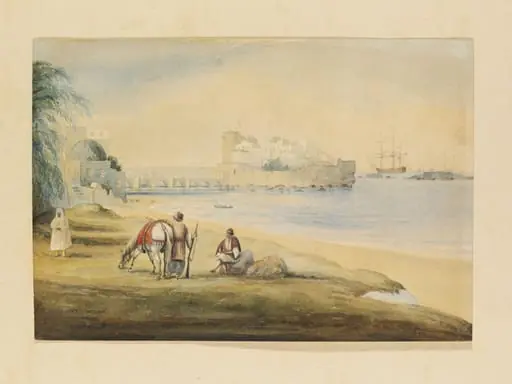 View of the Sea Castle (Sidon)
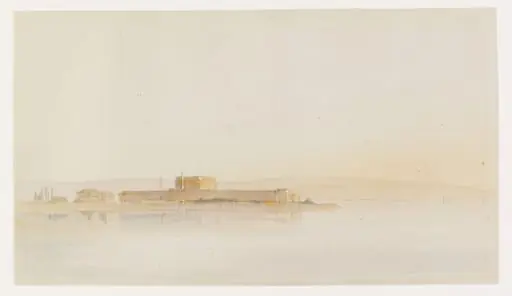 Dardanelles