Artwork
Ruins by Moonlight
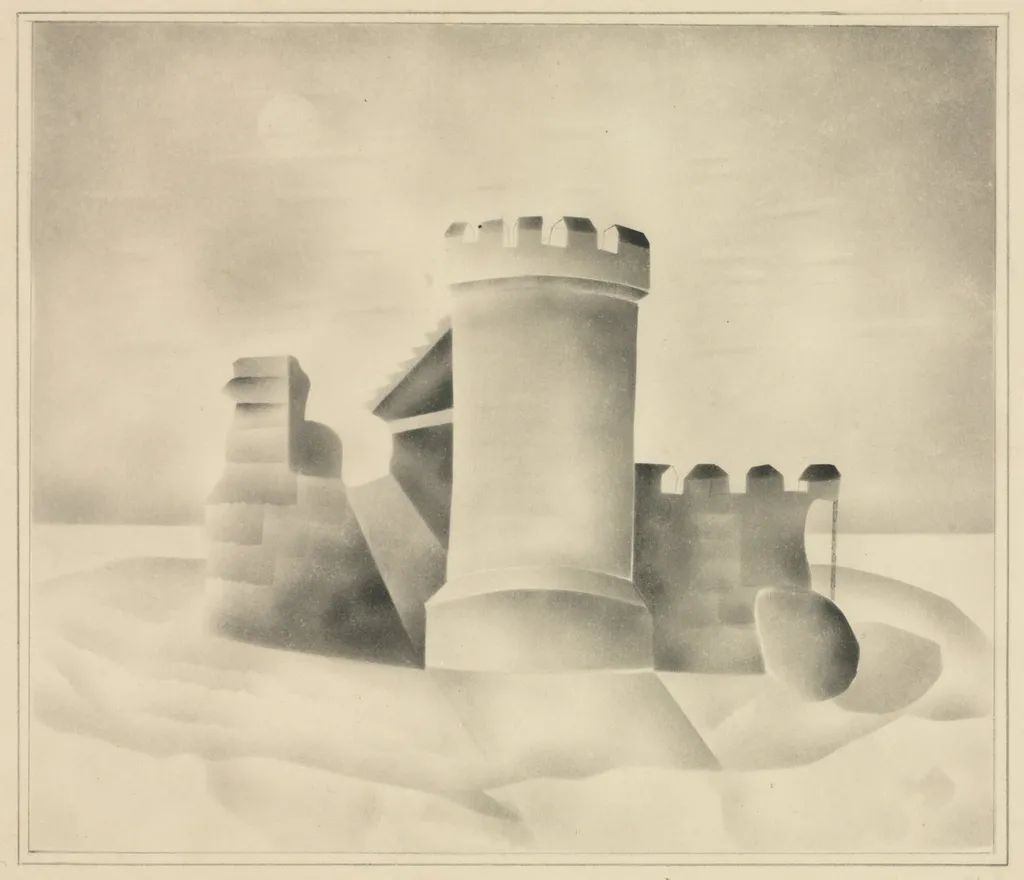
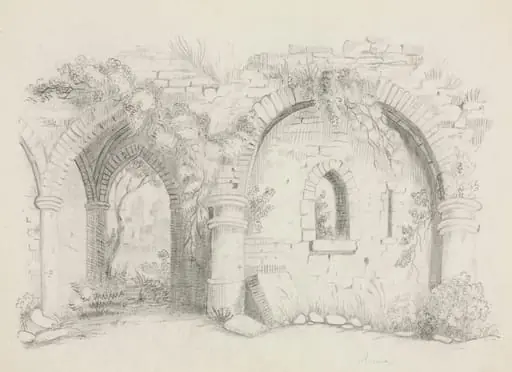
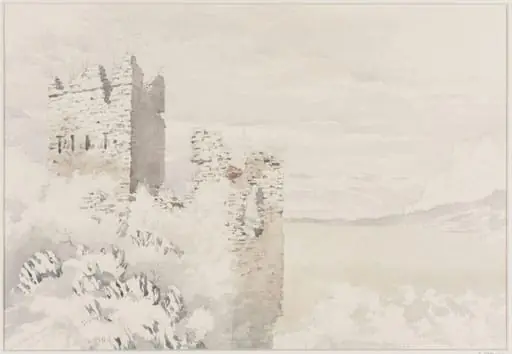
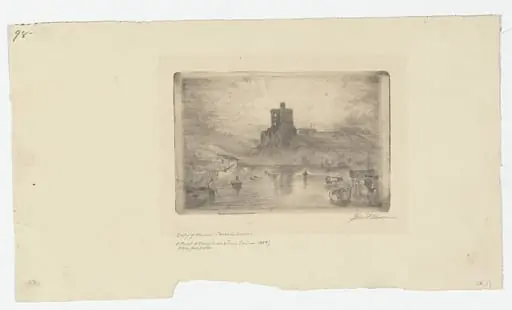
Ruins by Moonlight is a drawing by the Romanticist artist Mary Altha Nims. It dates from 1840 and is held in the collection of the Cleveland Museum of Art.
About this work
Overview
Created in 1840 by Mary Altha Nims, this drawing captures a decaying castle under a pale moon. Executed in pencil or ink, the work is part of the collection at The Cleveland Museum of Art. Its quiet, nocturnal atmosphere reflects a 19th-century fascination with time, decay, and the sublime in nature. The composition avoids narrative detail, focusing instead on mood and spatial depth.
Subject & Meaning
The scene depicts the remnants of a medieval fortress, with fractured walls and a lone, towering keep standing against a dark sky. The emptiness of the landscape suggests abandonment and the passage of time. Rather than celebrating historical grandeur, the image evokes solitude and melancholy, aligning with Romantic ideals that valued emotional resonance over historical accuracy.
Technique & Style
Nims employs stark tonal contrasts to model form and suggest depth, using minimal lines to define crumbling stonework. The moonlight casts elongated shadows that dominate the foreground, enhancing the sense of stillness. The restrained technique prioritizes atmosphere over precision, characteristic of Romantic draftsmanship that favored emotional impact over topographical fidelity.
History & Provenance
The drawing entered the collection of The Cleveland Museum of Art through documented acquisition, though its earlier ownership remains unrecorded.
The drawing entered the collection of The Cleveland Museum of Art through documented acquisition, though its earlier ownership remains unrecorded. Created during a period when amateur artists, particularly women, were increasingly engaging with landscape and ruin themes, it reflects broader cultural interests in medievalism and the picturesque. Its survival suggests personal significance to its original owner.
Context
In the 1840s, European and American artists frequently turned to ruins as symbols of transience and the sublime. Nims’s work aligns with this trend, influenced by Romantic literature and landscape traditions that emphasized nature’s power over human endeavor. Moonlit scenes were especially popular for their ability to evoke mystery and introspection, distancing art from Enlightenment rationalism.
Legacy
Though not widely exhibited or reproduced, the drawing contributes to the understanding of 19th-century amateur artistic practice, particularly among women. It exemplifies how Romantic sensibilities permeated private sketchbooks and domestic art-making, offering a quiet counterpoint to grander public works of the era. Its preservation underscores the value placed on personal, contemplative art.
Artist & collection