Artwork
Zeus and Hera
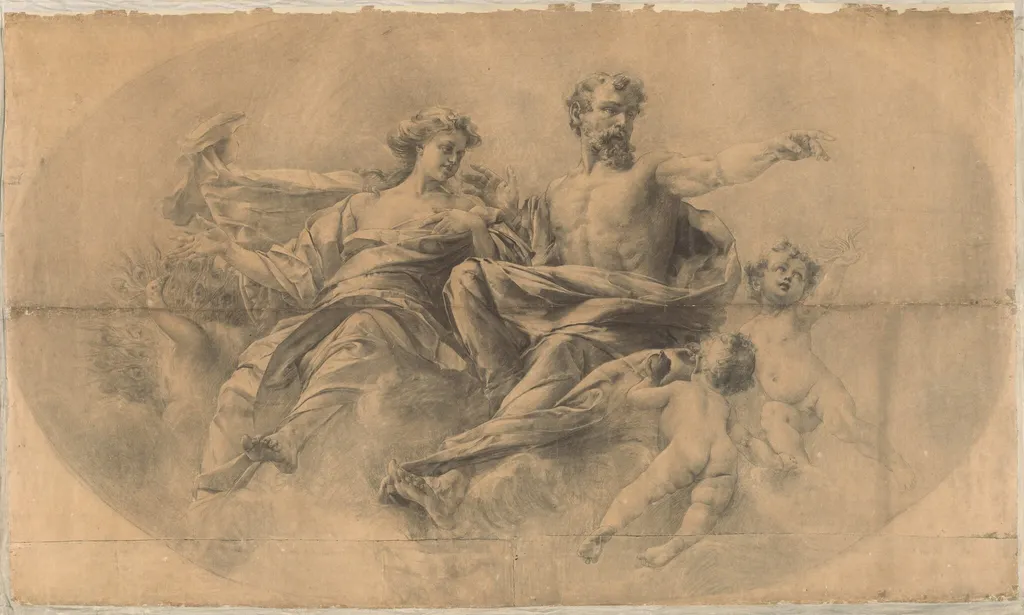
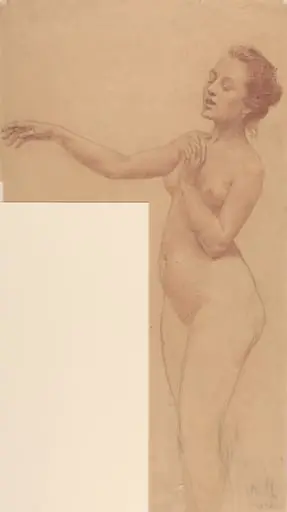
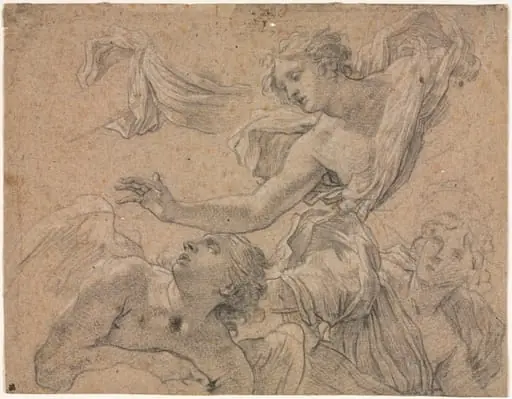
Zeus and Hera is a graphite drawing by the Impressionist artist Karel Vitezslav Masek. It dates from 1895 and is held in the collection of the National Gallery of Art.
About this work
Overview
Created in 1895 by Karel Vitezslav Masek, this drawing depicts Zeus and Hera on heavy paper mounted to canvas.
Created in 1895 by Karel Vitezslav Masek, this drawing depicts Zeus and Hera on heavy paper mounted to canvas. Executed in chalk, charcoal, and graphite, the work emphasizes soft tonal transitions and delicate line work. The surface bears visible signs of handling, suggesting prolonged engagement with the image. Its intimate scale and muted palette distinguish it from grander mythological treatments of the period.
Subject & Meaning
The figures of Zeus and Hera are rendered in classical attire, seated on a rocky outcrop surrounded by two small cherubic forms—one hovering, the other crawling. Zeus extends his arm, while Hera holds a draped cloth, gestures that imply quiet authority and domestic presence. The cherubs may symbolize divine offspring or elemental forces, reinforcing a sense of mythic intimacy rather than heroic grandeur.
Technique & Style
Masek employed scumbling and blended strokes to model form with subtle gradations of light. The use of soft media on textured paper allowed for smudged contours and atmospheric depth, avoiding sharp definition. Background elements like trees and sky are suggested rather than detailed, enhancing the dreamlike stillness. The technique prioritizes mood over narrative clarity, aligning with Symbolist tendencies of the era.
History & Provenance
The drawing has been handled extensively, evidenced by surface wear and smudging consistent with repeated viewing. Its mounting on canvas suggests later preservation efforts, possibly to stabilize the fragile paper. No documented exhibition or ownership history before the 20th century is known, and its early provenance remains unrecorded in public archives.
Context
Produced during a period when European artists revisited classical mythology through personal, introspective lenses, Masek’s work reflects Symbolist interests in inner states over external drama. Unlike academic depictions of gods as monumental figures, this drawing emphasizes quietude and emotional resonance, aligning with broader fin-de-siècle trends favoring psychological depth over heroic spectacle.
Legacy
Though not widely exhibited or reproduced, the drawing exemplifies Masek’s sensitivity to material and mood. Its understated approach to myth influenced later Czech artists exploring spiritual themes through intimate drawing. The work remains a quiet testament to the potential of graphic media to evoke myth without spectacle.
Artist & collection


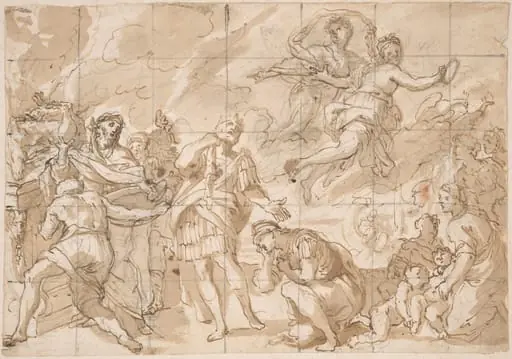 The Sacrifice of Iphigenia
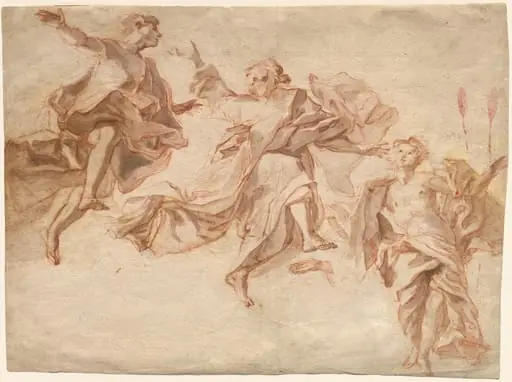 The Ascension of Christ
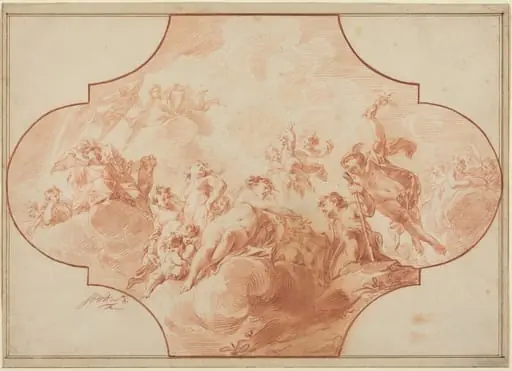 The Judgment of Paris
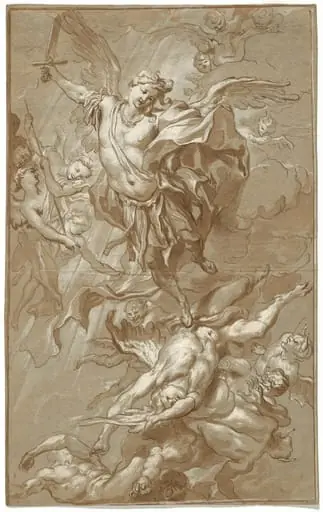 Saint Michael and the Rebel Angels
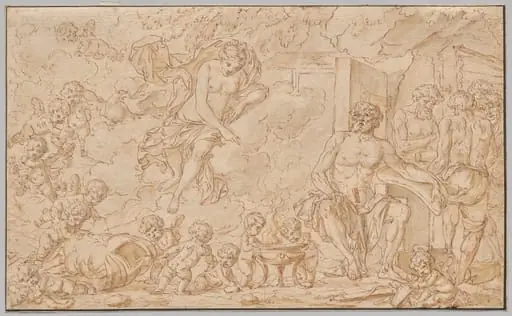 Venus at the Forge of Vulcan
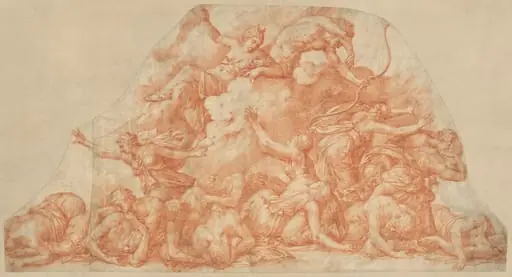 Diana and Apollo Slaughtering the Children of Niobe
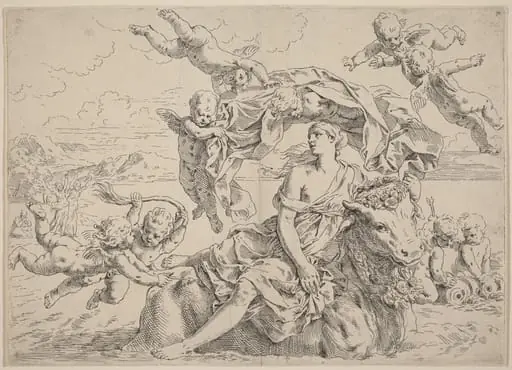 The Rape of Europa
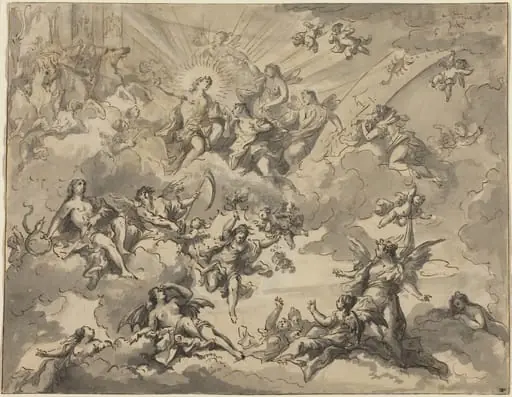 Apollo and the Muses
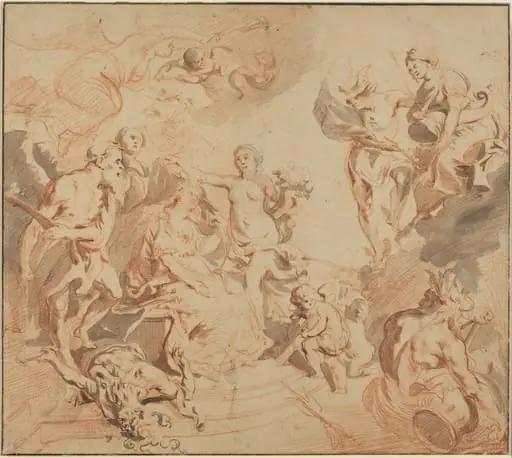 Antwerp Blessed with Abundance
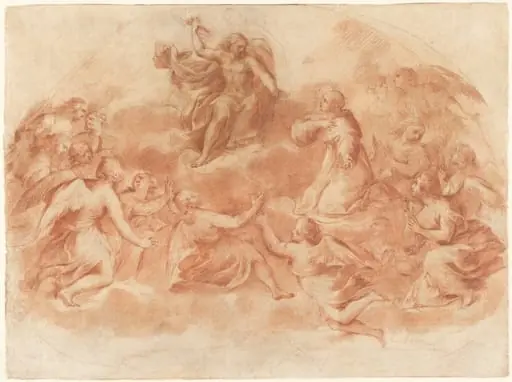 Christ in Glory with Angels and a Saint Kneeling in Adoration
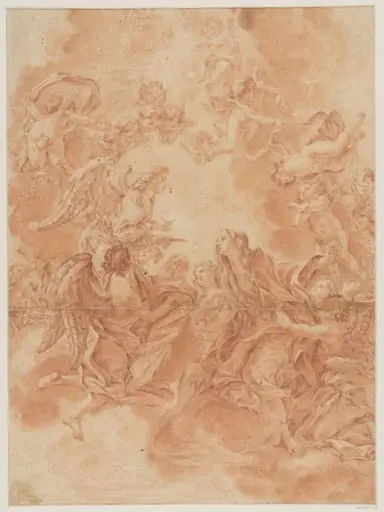 The Communion of St Mary Magdalene
 Studies of Angels (recto)