Artwork
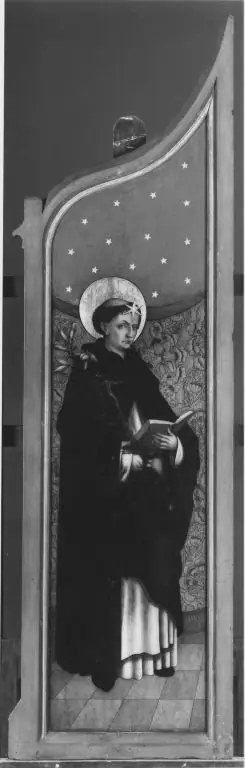
Johannesaltar, Flügelaußenseite: Hl. Johannes der Täufer
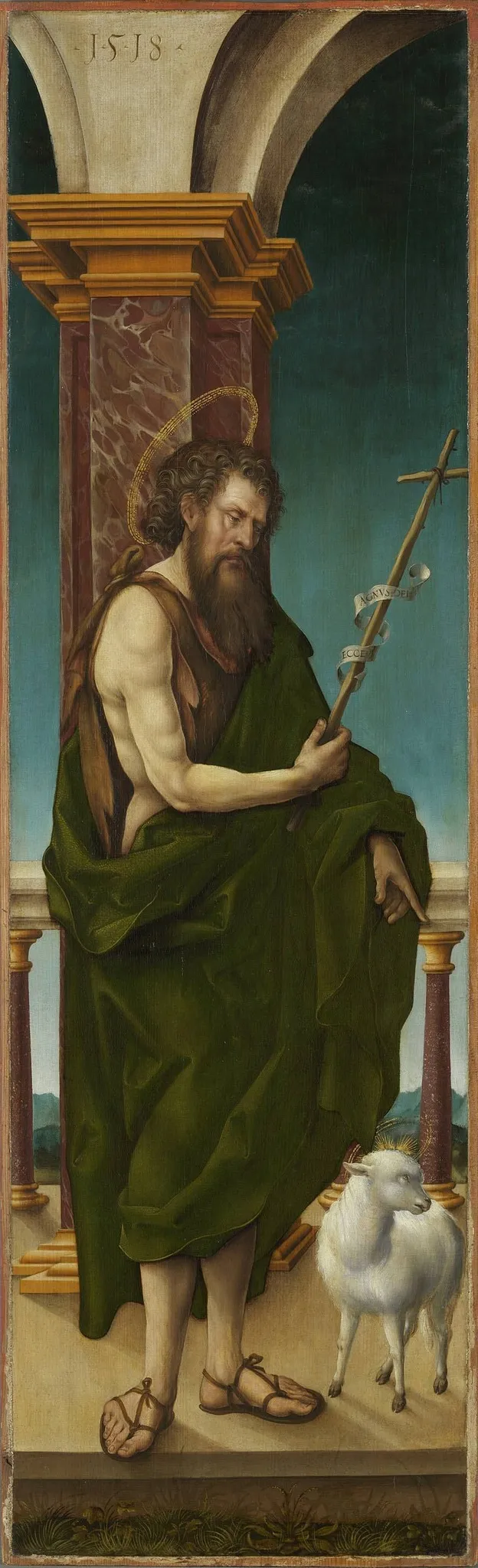
Johannesaltar, Flügelaußenseite: Hl. Johannes der Täufer is an unspecified painting by the Northern Renaissance artist Hans Burgkmair the Elder. It dates from 1518 and is held in the collection of the Bavarian State Painting Collections.
About this work
Look up chiaroscuro next to see how light and shadow create depth in paintings.
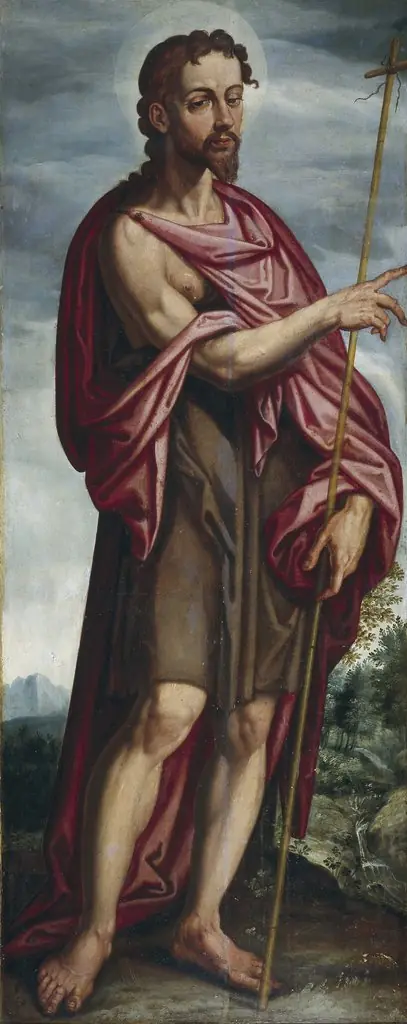
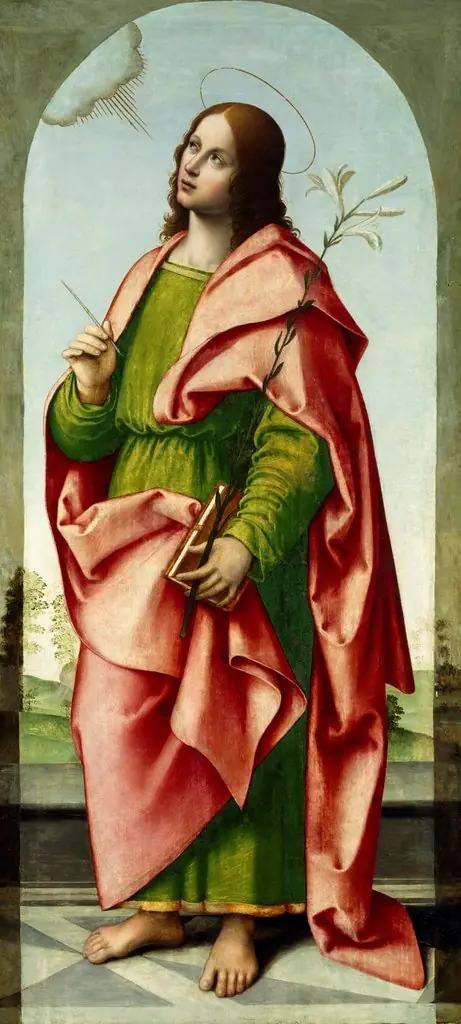
This painting shows a bearded man in a green robe standing under an archway. He holds a tall staff with a cross on top and wears a halo. Next to him is a small white sheep. The background has blue sky and a distant landscape.
The man’s face looks serious, and the sheep seems calm beside him. The painting was made in 1518, as noted by the date on the arch.
Look up chiaroscuro next to see how light and shadow create depth in paintings.
Overview
Created in 1518 by Hans Burgkmair the Elder, this panel painting forms part of the Johannesaltar and is currently displayed in Munich’s Alte Pinakothek. It presents a solitary, bearded figure in a green robe, identified as John the Baptist, standing beneath an arched frame. A white lamb rests at his side, while a blue sky and distant landscape fill the background.
Subject & Meaning
The central figure is Saint John the Baptist, recognizable by his halo, staff topped with a cross, and the presence of a lamb—symbols of his role as the forerunner of Christ. His solemn expression and the calm demeanor of the sheep emphasize themes of penitence and preparation, core to the saint’s biblical narrative.
Technique & Style
Burgkmair employs a clear, linear composition typical of early 16th‑century German painting. The use of light and shadow, though restrained, gives the figure a modest three‑dimensionality, while the bright green garment and crisp outlines enhance visual focus. The background landscape is rendered in muted tones, providing depth without detracting from the saint.
History & Provenance
The work was executed for the Johannesaltar, a devotional altarpiece commissioned for a church dedicated to Saint John. Over the centuries it entered the collection of the Bavarian State, eventually becoming part of the Alte Pinakothek’s holdings, where it remains accessible to the public.
Context
Produced during the transition from late Gothic to early Renaissance in southern Germany, the painting reflects Burgkmair’s synthesis of traditional iconography with emerging naturalistic detail. Its modest scale and clear narrative align with the devotional purposes of altar panels intended for contemplation by worshippers.
Artist & collection
Artist
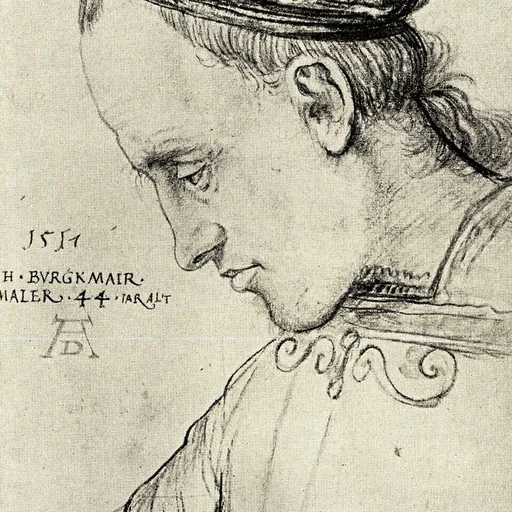
Hans Burgkmair the Elder (1473–1531) was a German artist, born in Augsburg.