Artwork
Mirabeau arrive aux Champs-Élisées
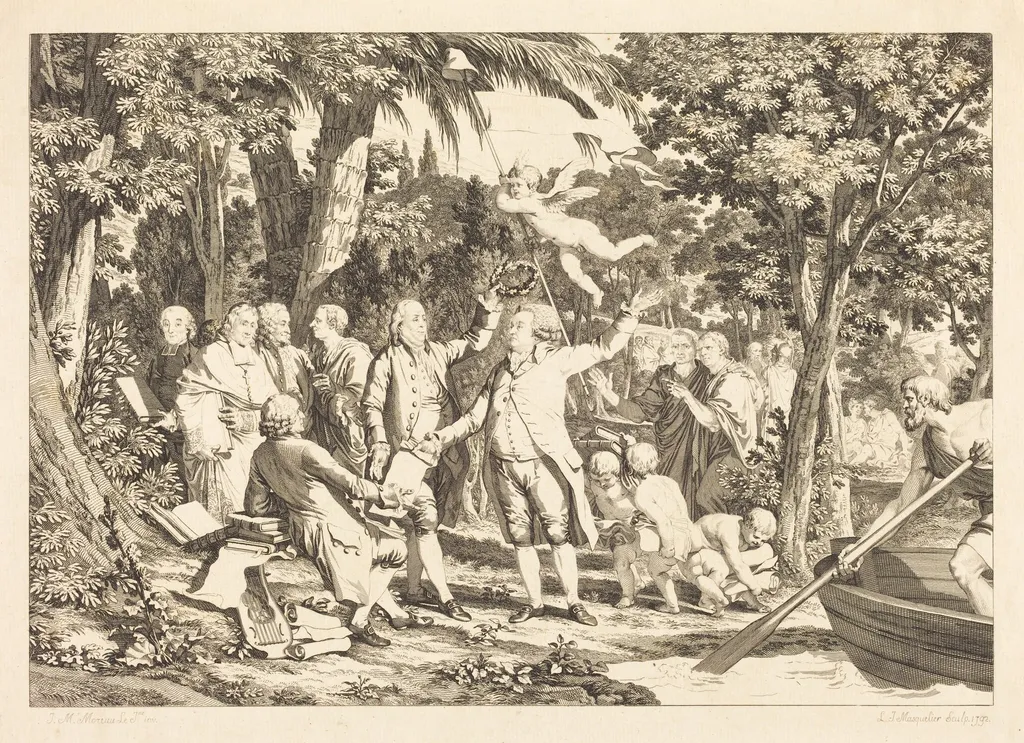
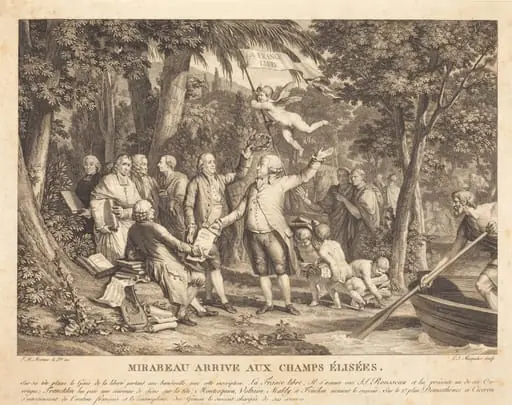
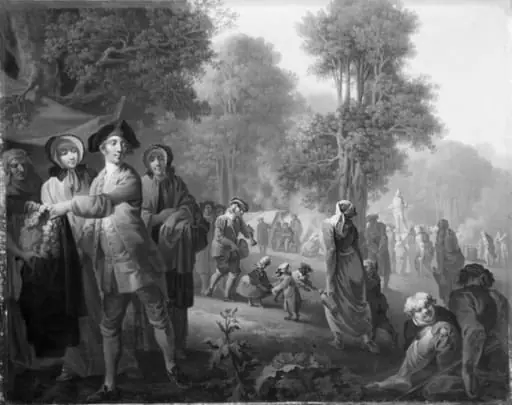
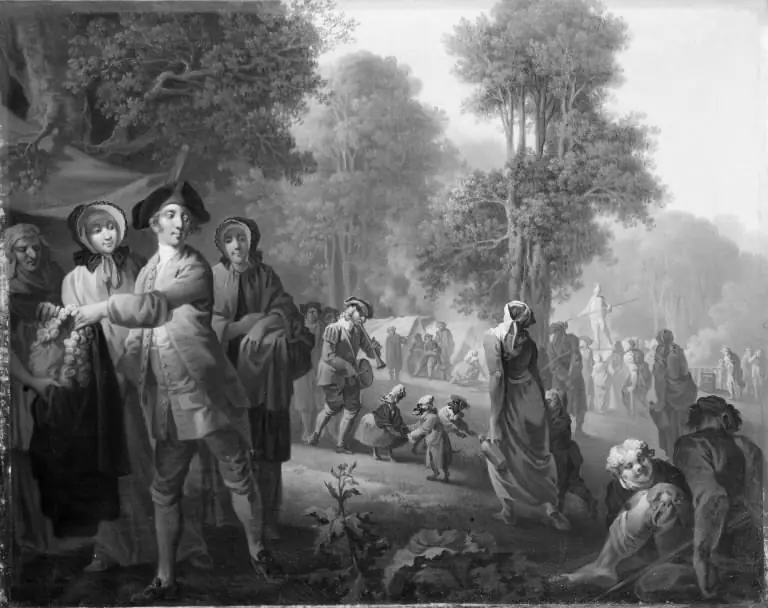
Mirabeau arrive aux Champs-Élisées is an ink print by the Romanticist artist Louis-Joseph Masquelier. It dates from 1792 and is held in the collection of the National Gallery of Art.
About this work
Overview
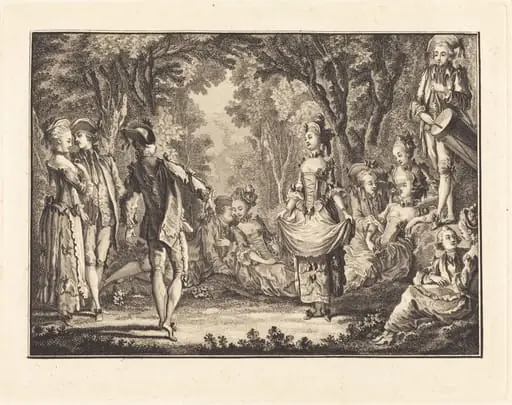
Around them, a varied crowd—adults reading, conversing, leaning on staffs, and children at play—fills the scene, set against a backdrop of trees and shrubbery.
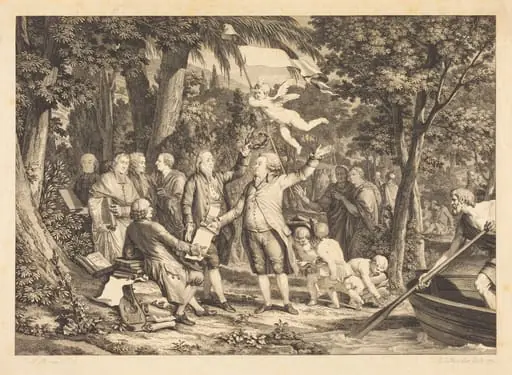
Louis-Joseph Masquelier’s 1792 etching, *Mirabeau arrive aux Champs‑Élisées*, depicts a bustling assembly in a wooded clearing. Central to the composition are two figures: one standing upright and gesturing skyward, the other extending a hand toward him. Around them, a varied crowd—adults reading, conversing, leaning on staffs, and children at play—fills the scene, set against a backdrop of trees and shrubbery.
Subject & Meaning
The work captures a moment of public gathering, likely a political rally or demonstration, suggested by the prominent figure’s upward pointing gesture, which draws the viewer’s eye and implies a call to attention or proclamation. The inclusion of both engaged adults and indifferent children conveys a spectrum of public response, hinting at the social dynamics of revolutionary France.
Technique & Style
Executed as an etching, Masquelier employed acid to incise lines into a metal plate, allowing for fine detail and tonal variation. The print’s dense line work renders the crowd’s textures and the surrounding foliage with clarity, while the contrast between illuminated figures and darker background creates depth within the limited monochrome palette.
History & Provenance
Created in 1792, during the height of the French Revolution, the print reflects contemporary political fervor. Masquelier, a noted French engraver, produced the image for distribution as a visual record of the event. Surviving copies are held in several European print collections, documenting both the artist’s oeuvre and the period’s visual culture.
Artist & collection