Artwork
A Grotesque with Diana of Ephesus and Diverse Animals
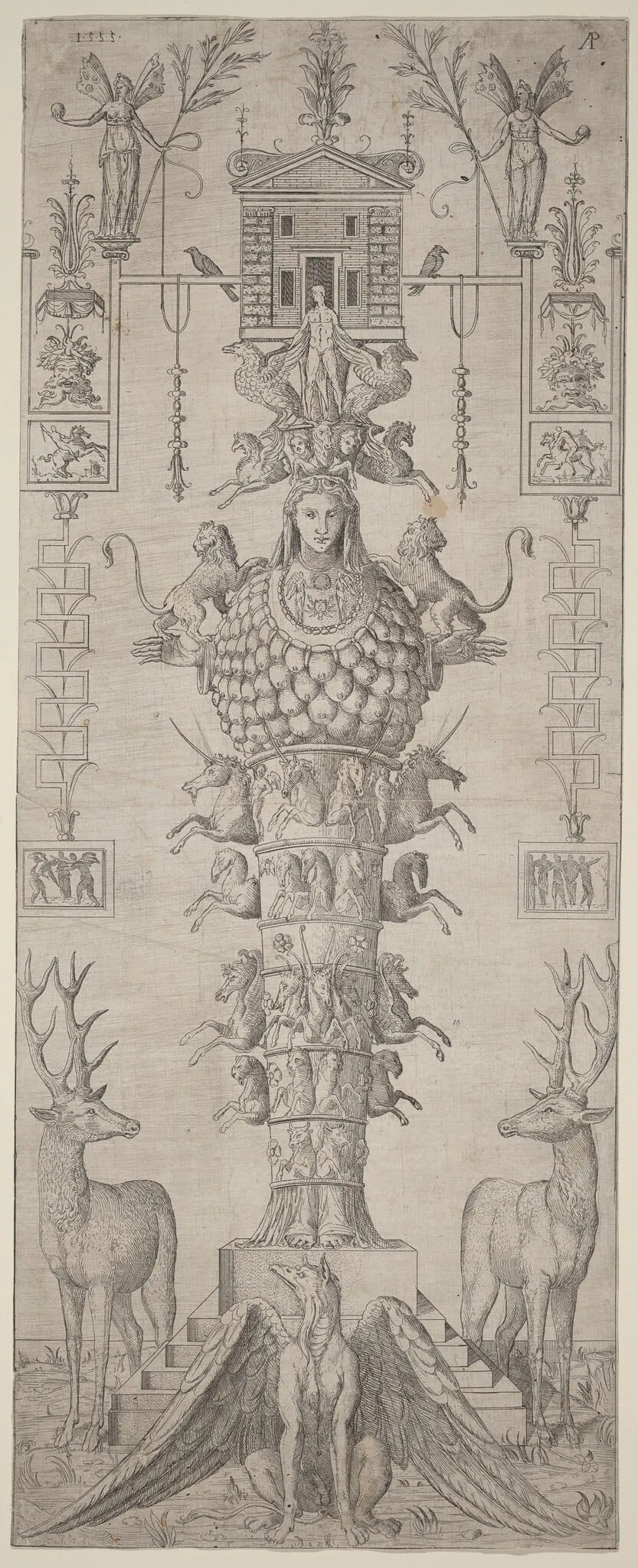
A Grotesque with Diana of Ephesus and Diverse Animals is an ink print by the Renaissance artist Master AP. It dates from 1555 and is held in the collection of the National Gallery of Art.
About this work
Overview
The composition is densely packed with symbolic elements, blending human, animal, and architectural forms into a single vertical structure.
This 1555 etching by Master AP depicts a fantastical composite figure inspired by the cult statue of Diana of Ephesus, rendered in intricate detail on laid paper. The composition is densely packed with symbolic elements, blending human, animal, and architectural forms into a single vertical structure. The work exemplifies the Mannerist fascination with hybridity and ornamentation, using fine linear technique to maximize visual complexity within a compact format.
Subject & Meaning
The central figure draws from the ancient Ephesian Artemis, traditionally depicted with multiple protuberances interpreted as breasts or eggs, symbolizing fertility. Surrounding animals—lions, deer, birds—reflect her dominion over nature. Tiny human faces and vines along the borders suggest hidden realms or ancestral spirits. The miniature temple at the summit may imply divine presence or ritual space, reinforcing the figure’s sacred yet unsettling authority.
Technique & Style
Master AP employed etching to achieve fine, controlled lines that define each minute detail without smudging. The plate’s incised lines create sharp contrasts, allowing dense ornamentation to remain legible. The style favors rhythmic repetition and layered textures, characteristic of Northern Mannerist printmaking. Despite the small scale, the composition avoids clutter by organizing elements into vertical bands, guiding the eye upward through the figure’s tiers.
History & Provenance
The print was produced in the mid-16th century, likely in the Low Countries or southern Germany, where interest in mythological and grotesque imagery flourished among print collectors. No definitive record of its early ownership exists, but similar works by Master AP circulated in scholarly and artistic circles. Its survival in good condition suggests it was carefully preserved, possibly as a study piece or curiosity.
Context
This work emerged during a period when Renaissance humanism coexisted with lingering medieval symbolic traditions. Artists frequently reinterpreted classical motifs through a lens of wonder and distortion, responding to both antiquarian curiosity and the era’s fascination with the monstrous. Grotesques like this one served as visual puzzles, inviting viewers to decode layered meanings tied to religion, nature, and power.
Legacy
Master AP’s etching contributed to a broader tradition of mythological prints that influenced later decorative arts and emblem books. Its fusion of classical iconography with fantastical embellishment prefigured Baroque ornamental styles. Though not widely known today, it remains a representative example of how printmakers translated complex theological and natural philosophies into compact, visually arresting compositions.
Artist & collection


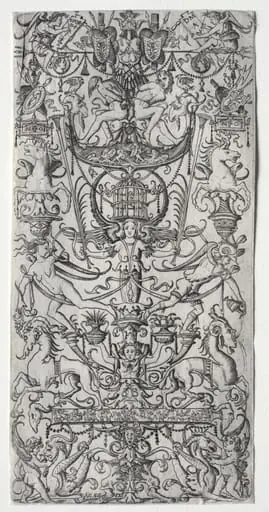 Ornament Panel with a Bird Cage
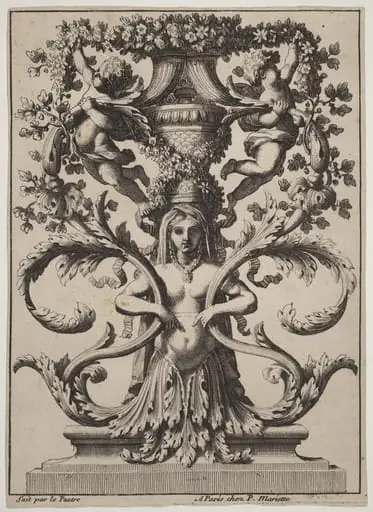 Ornament with a Woman Turning to Foliage
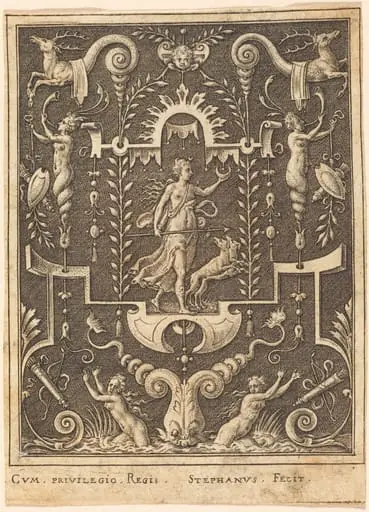 Diana
Diana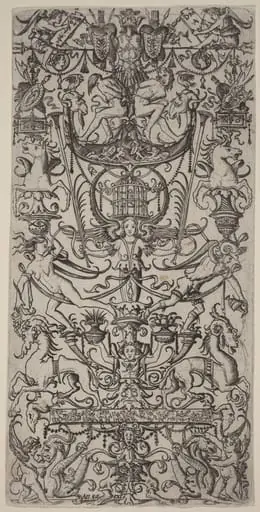 Ornament Panel with a Birdcage
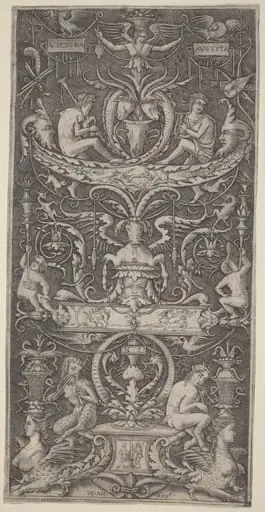 Ornamental Panel Inscribed "Victoria Augusta"
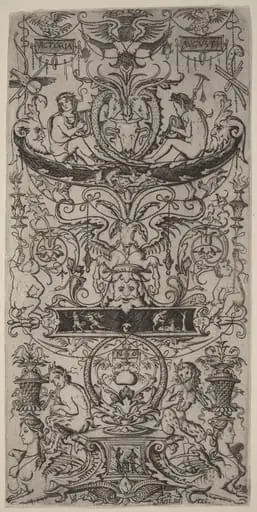 Ornament Panel: Victoria Augusta
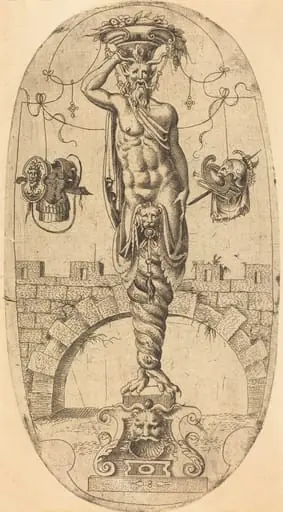 Satyr with Twisted Legs
 Satyr Bending Towards the Right
 Juno
Juno Panel of Ornament with Two Naked Children on Monstrous Beasts