Artwork
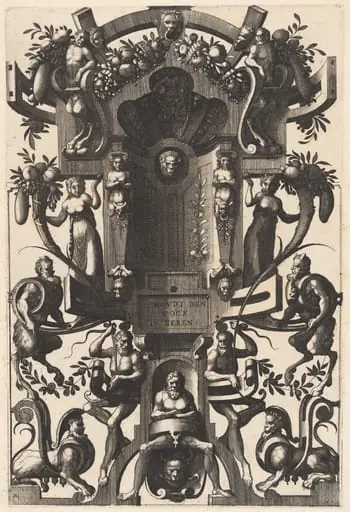
Ornament with a Woman Turning to Foliage
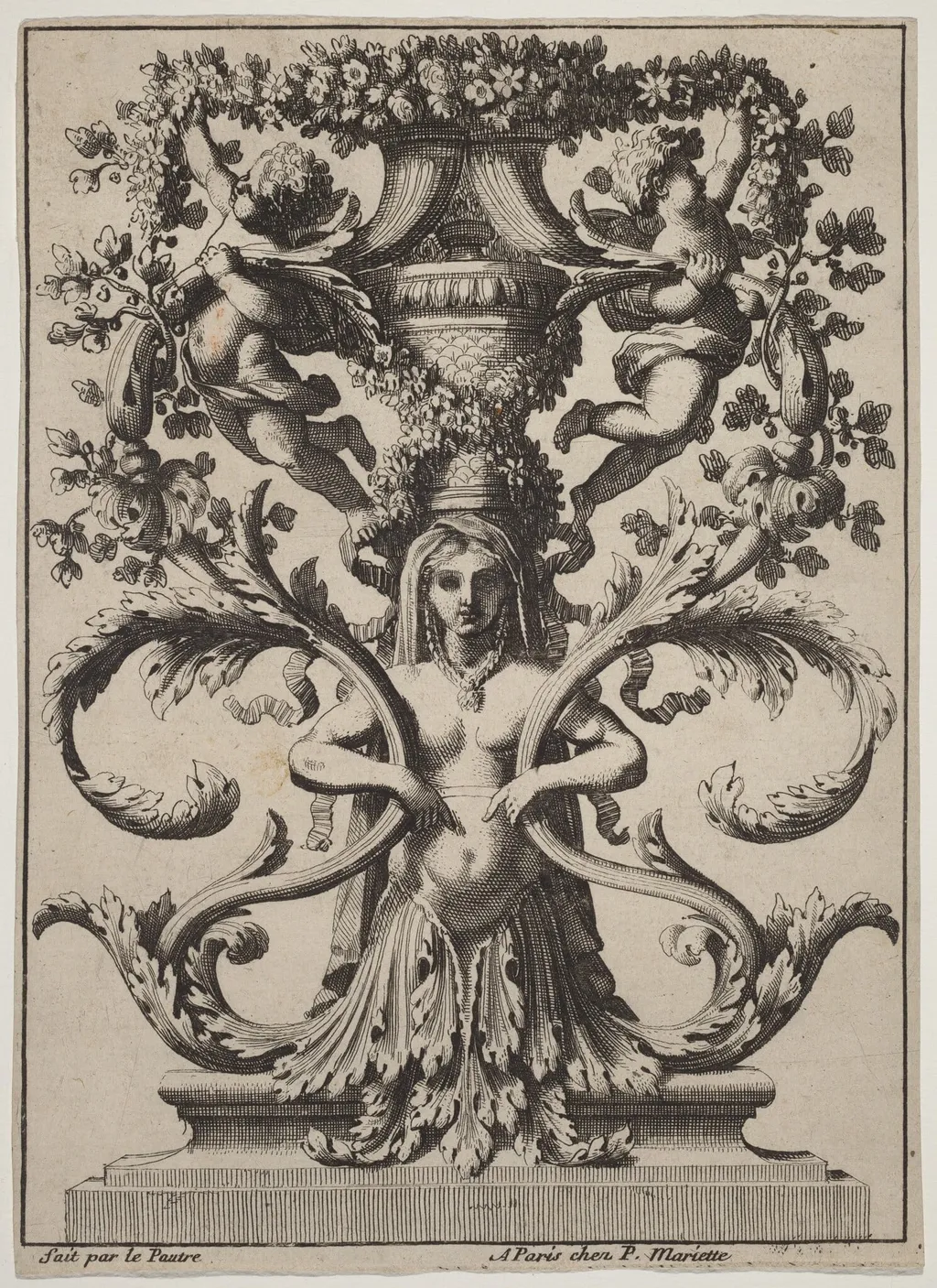
Ornament with a Woman Turning to Foliage is an ink print by the Baroque artist Jean Lepautre. It dates from 1650 and is held in the collection of the National Gallery of Art.
About this work
Overview
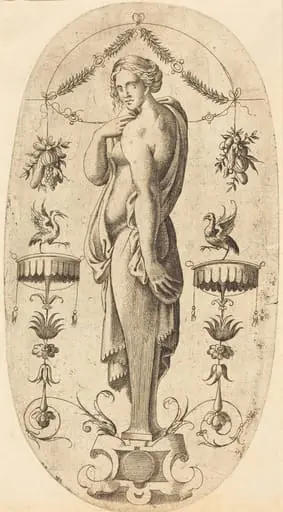
Jean Lepautre’s 1650 etching titled *Ornament with a Woman Turning to Foliage* presents a densely ornamented composition on laid paper. The central figure, a woman, holds a leafy branch while a large, overflowing vase of vines and blossoms encircles her, creating a sense of enclosed, ornamental abundance. The print exemplifies the Baroque fascination with intricate, dynamic decoration.
Subject & Meaning
The work juxtaposes a serene female visage with a profusion of vegetal motifs—leaves, acorns, and flowers—rendered as if sculpted from stone or metal. This contrast suggests a dialogue between human calm and the untamed vigor of nature, a common allegorical theme in 17th‑century decorative art that celebrates both order and exuberance.
Technique & Style
The method allowed for repeated, precise incisions on the copper plate, producing the dense, swirling patterns that characterize the piece.
Executed through etching, Lepautre achieved fine, crisp lines that delineate the intricate foliage and the figure’s features. The method allowed for repeated, precise incisions on the copper plate, producing the dense, swirling patterns that characterize the piece. The style reflects the ornamental Baroque aesthetic, emphasizing movement, complexity, and a tactile quality that mimics relief sculpture.
History & Provenance
Created in 1650, the print belongs to Lepautre’s broader output of decorative designs for architectural and interior applications. While specific ownership records are scarce, the work has circulated among collectors of French printmaking and appears in several catalogues of 17th‑century ornamental prints, attesting to its continued relevance in studies of period design.
Context
During the mid‑1600s, French artists like Lepautre responded to the demand for elaborate decorative schemes in palaces and aristocratic interiors. The integration of figural and botanical elements in this etching mirrors contemporary trends in garden design, tapestry, and architectural ornament, where natural motifs were stylized to convey grandeur and sophistication.
Artist & collection


 Woman with Left Profile
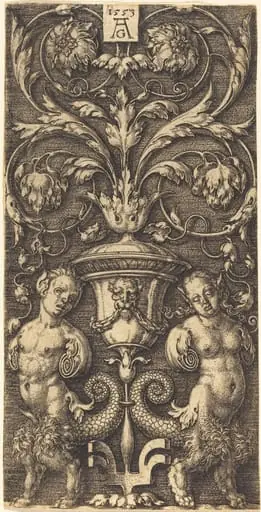 Ornament with Vase and Two Female Figures
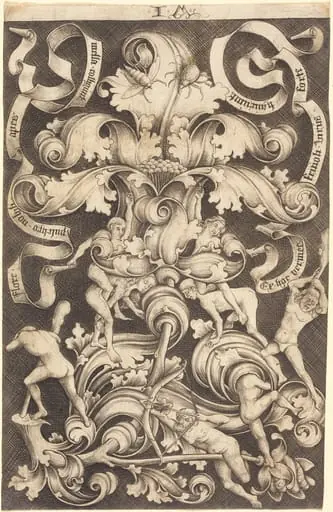 Ornament with Flower and Eight Wild Folk
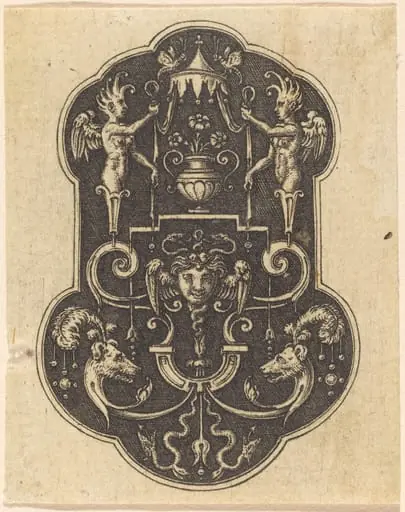 Head of Medusa
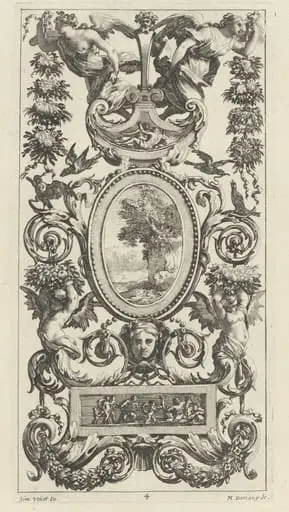 Ornamental Panel with Pan and Two Garland-Bearing Women
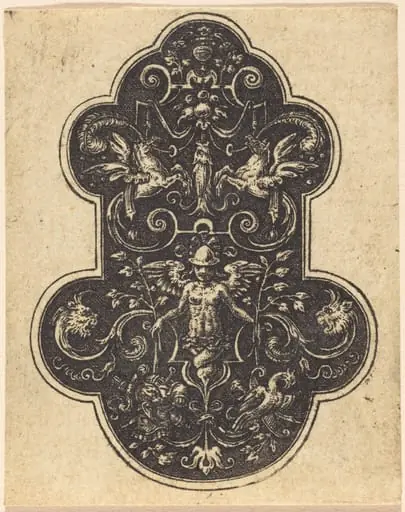 Female Figure
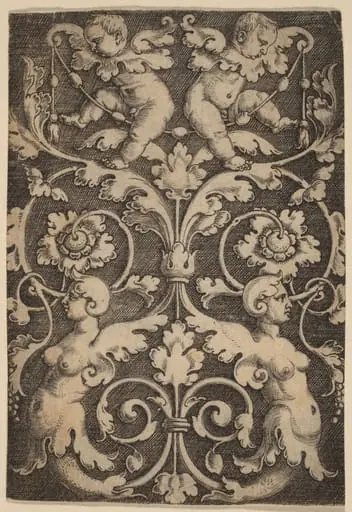 Upright Ornament with Two Sirens
 Diana Standing
 Ornamental Panel Surmounted by an Eagle and the Motto NATOS ET NOSTRA TUEMUR
 New ABC Booklet: X
 A Vase between Two Chimeric Figures
 Grotesque with Strapwork in the Form of a Cartouche