Artwork
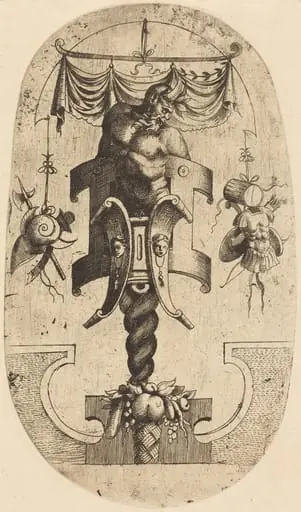
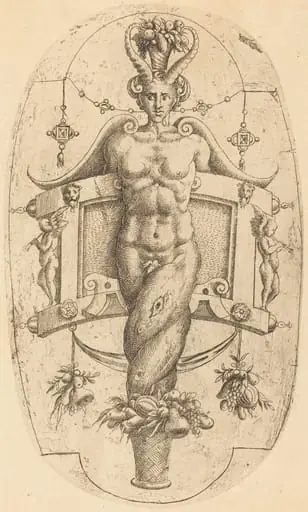
Satyr with Twisted Legs
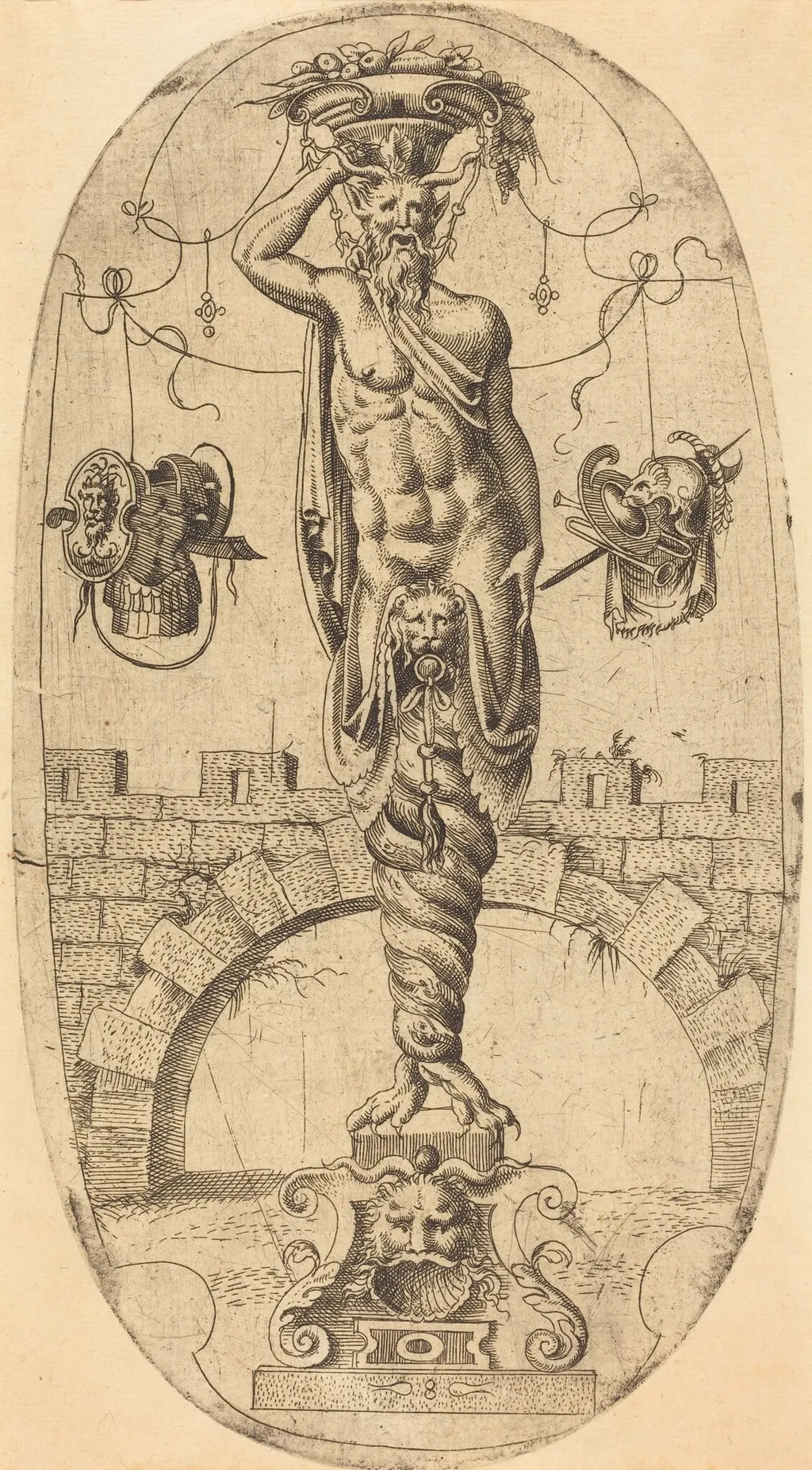
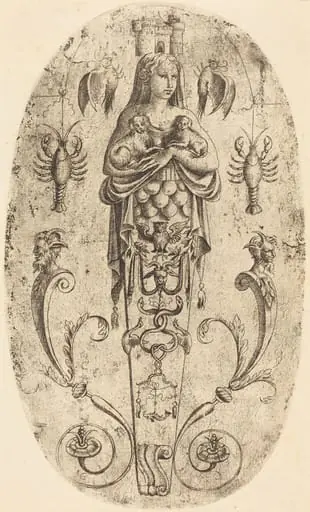
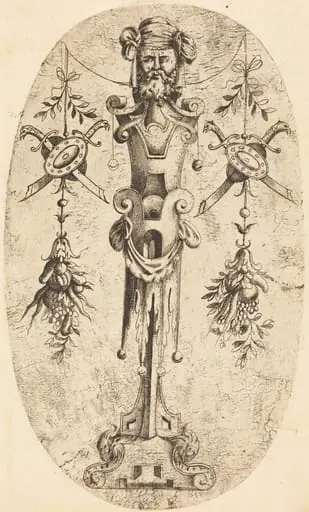
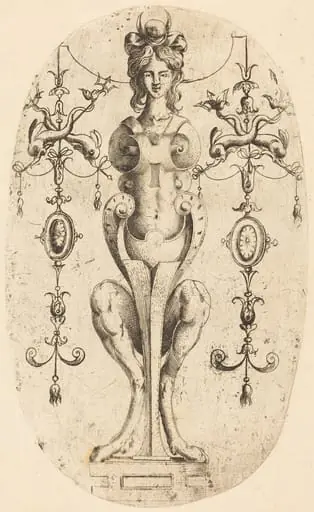
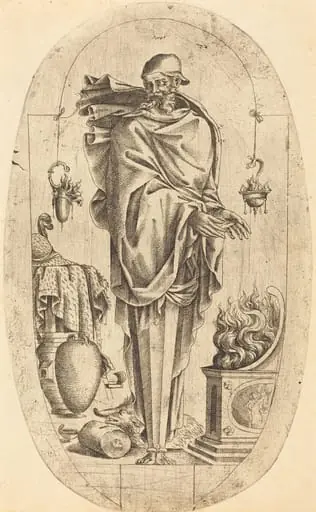
Satyr with Twisted Legs is an ink print by the Renaissance artist Jean Mignon. It is held in the collection of the National Gallery of Art.
About this work
Overview
Among the earliest French artists to embrace etching, he adapted Italianate motifs for a French courtly context.
Jean Mignon, a French printmaker active in the 1560s, produced this etching in 1563 as part of a broader engagement with the visual language of the First School of Fontainebleau. Among the earliest French artists to embrace etching, he adapted Italianate motifs for a French courtly context. The work exemplifies the period’s interest in mythological subjects rendered through precise, linear techniques, reflecting both technical experimentation and stylistic synthesis.
Subject & Meaning
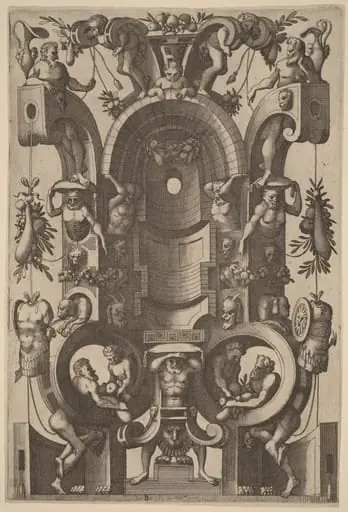
The figure is a satyr, a mythological creature associated with nature and rustic revelry, depicted in an unnatural, contorted pose. He balances a basket on his head while standing atop a pedestal crowned with a lion’s head. Two suspended objects flank him, possibly symbolic. The composition may allude to themes of endurance, transformation, or the tension between wildness and order, common in Mannerist allegory, though no definitive narrative is recorded.
Technique & Style
Mignon employed etching to achieve fine, intricate lines that define the satyr’s musculature, drapery, and the architectural background. The technique allowed for detailed rendering of texture and depth, characteristic of his adaptation of Italian Mannerist aesthetics. The dynamic twist of the figure’s limbs and the elevated perspective reflect stylistic influences from Primaticcio and Penni, whose designs circulated in Fontainebleau’s artistic circles.
History & Provenance
Created in 1563, the print emerged during a period when French artists were absorbing Italian Renaissance models under royal patronage. Mignon worked in the orbit of the Fontainebleau court, where etching was gaining traction as a medium for disseminating decorative designs. While specific early ownership records are sparse, the print aligns with the broader circulation of prints from Fontainebleau workshops in private and royal collections across Europe.
Context
This work belongs to a phase of French art when the royal court at Fontainebleau became a hub for hybridizing Italian and French styles. Artists like Mignon translated fresco and tapestry designs into prints for wider audiences. The satyr’s pose and setting echo classical antiquity filtered through Mannerist sensibilities, revealing how mythological imagery served both aesthetic and intellectual pursuits in mid-16th-century France.
Legacy
Mignon’s etchings, including this one, contributed to the standardization of printmaking as a vehicle for disseminating courtly aesthetics beyond the palace walls. Though less celebrated than his contemporaries, his technical precision and integration of Italianate forms helped shape the development of French graphic arts. The print remains a documented example of how mythological subjects were reimagined through the emerging medium of etching in Renaissance France.
Artist & collection

Artist
Jean Mignon was a French artist in painting and printmaking in the 16th century, active from 1537 to the mid-1550s.