Artwork
Saint Jerome
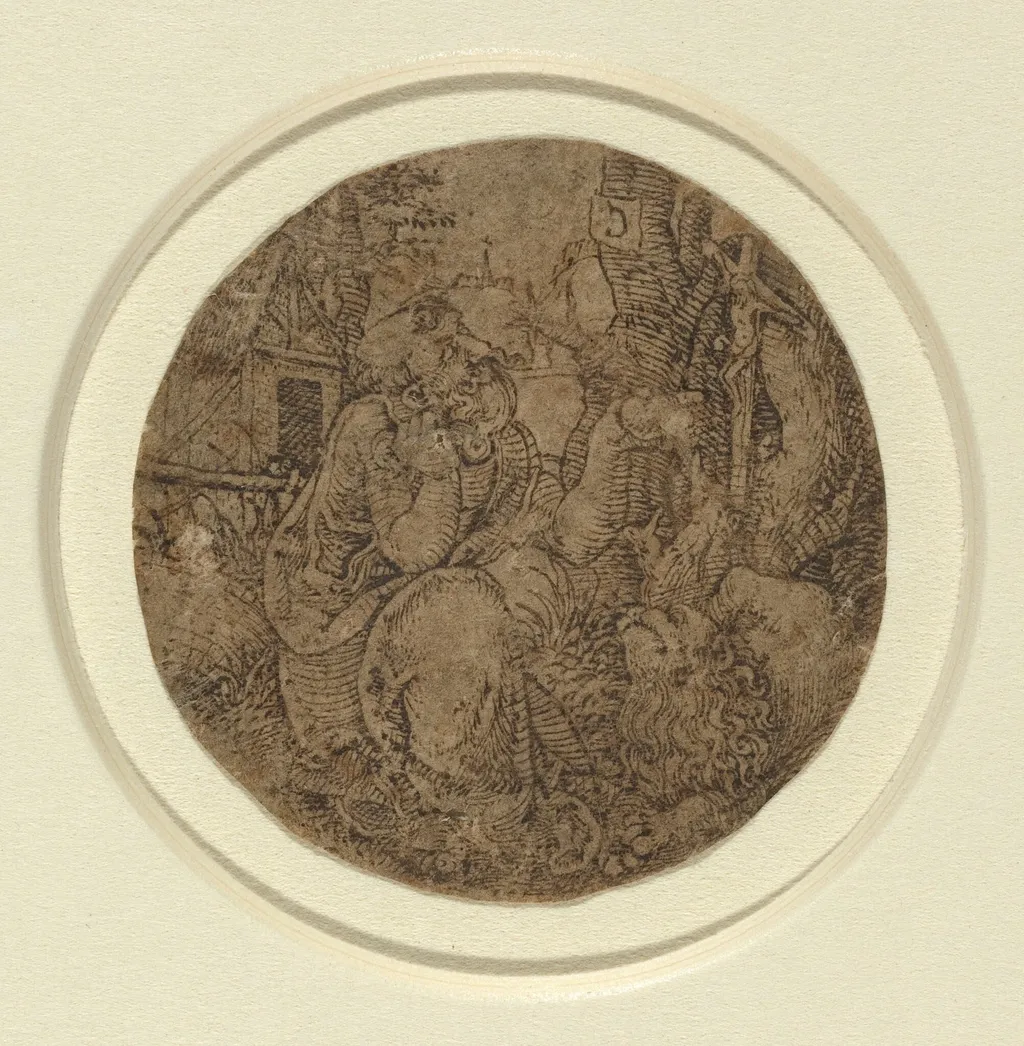
Saint Jerome is an ink drawing by the Renaissance artist Master C. It dates from 1540 and is held in the collection of the National Gallery of Art.
About this work
Overview
This drawing, executed in pen and brown ink around 1540, portrays Saint Jerome in a contemplative stance within a natural setting.
This drawing, executed in pen and brown ink around 1540, portrays Saint Jerome in a contemplative stance within a natural setting. The artist, identified as Master C, employed fine linear techniques to convey form and atmosphere. The work belongs to a tradition of devotional drawings from the Renaissance, where spiritual themes were rendered with meticulous attention to detail and subtle tonal variation.
Subject & Meaning
Saint Jerome, one of the Church Fathers, is depicted in quiet reflection, his hands clasped and head bowed, suggesting prayer or study. His attire—a long robe and hat—aligns with traditional iconography of the scholar-saint, often shown in solitude amid books and natural surroundings. The setting implies his retreat to the wilderness for translation and meditation, emphasizing introspection over narrative action.
Technique & Style
The artist used controlled pen strokes and layered washes of brown ink to model form and suggest depth. Fine lines define the folds of fabric and the texture of bark, while softer washes create shadow and volume in the landscape. The absence of color focuses attention on line and tone, characteristic of preparatory or independent drawings of the period that valued clarity and restraint.
History & Provenance
The drawing’s early ownership is undocumented, but its style and medium place it within mid-16th-century Italian or Northern European artistic circles. It has been attributed to Master C based on stylistic parallels with other signed or documented works. The piece remained in private collections until entering institutional care in the 20th century, where it was cataloged as a study in devotional draftsmanship.
Context
During the 1540s, religious figures were frequently rendered in intimate drawings for personal meditation or as studies for larger commissions. Artists like Master C responded to the Reformation’s emphasis on individual piety by depicting saints in solitary, human moments. This drawing reflects a broader trend toward naturalism and psychological depth in religious imagery, even in non-painted formats.
Legacy
Though Master C’s oeuvre is limited, this drawing exemplifies the quiet power of ink on paper to convey spiritual gravity. It contributes to the understanding of how Renaissance artists used drawing not merely as preparation but as a finished medium for contemplative expression. Its preservation allows continued study of devotional aesthetics in a period of religious transformation.
Artist & collection

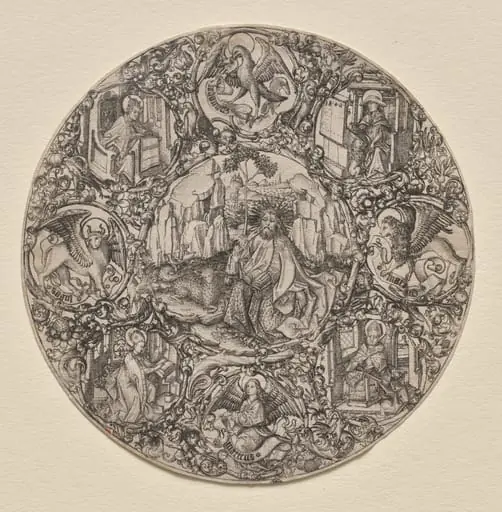 St. John the Baptist Surrounded by the Evangelists and Four Fathers of the Latin Church
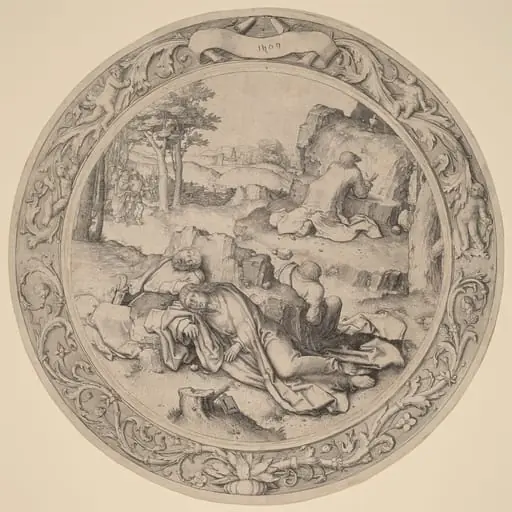 Christ in Gethsemane (Agony in the Garden)
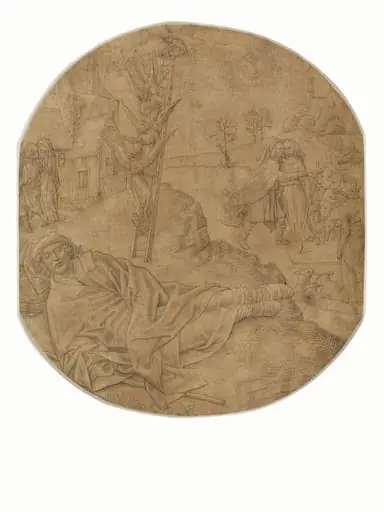 Jacob's Dream
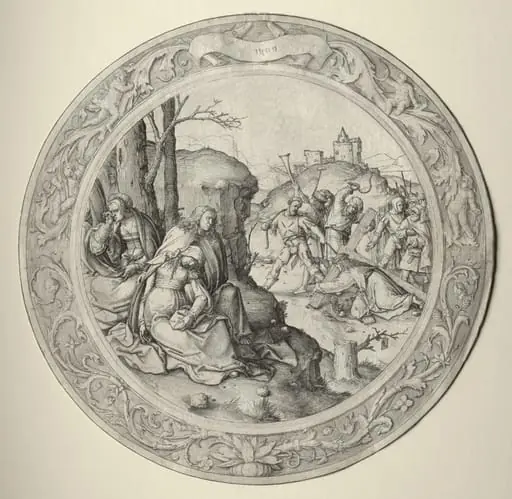 The Round Passion: Christ Carrying the Cross
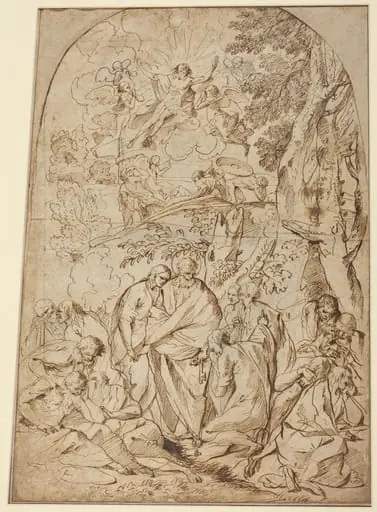 The Resurrection
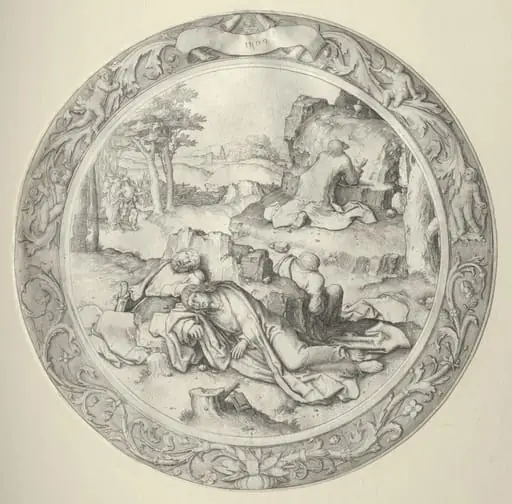 The Round Passion: Christ in Gethsemane (Agony in the Garden)
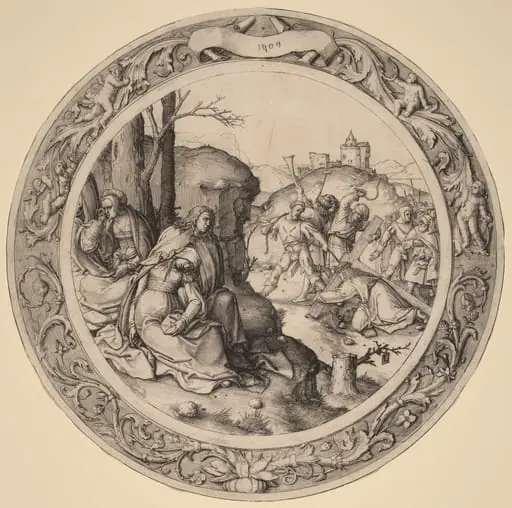 Christ Carrying the Cross
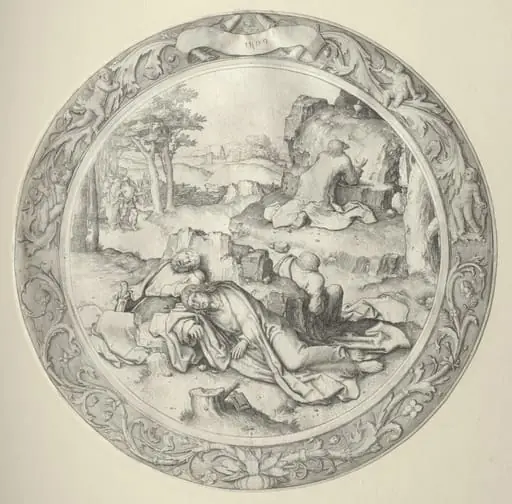 The Round Passion
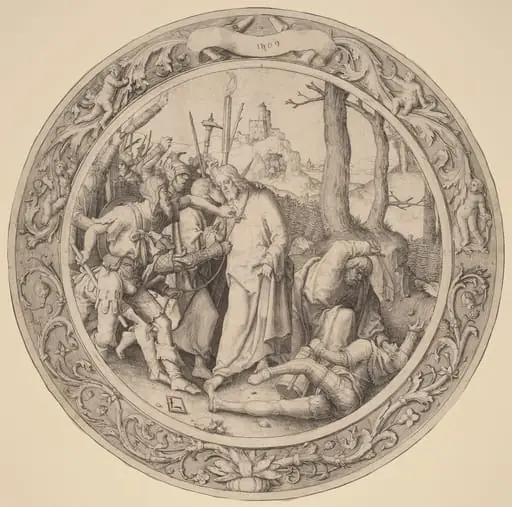 The Captivity
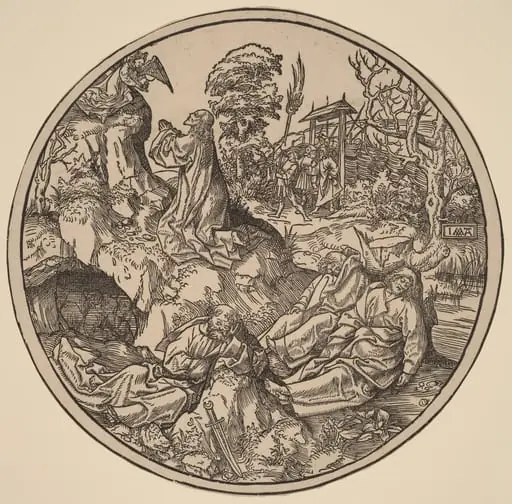 The Agony in the Garden
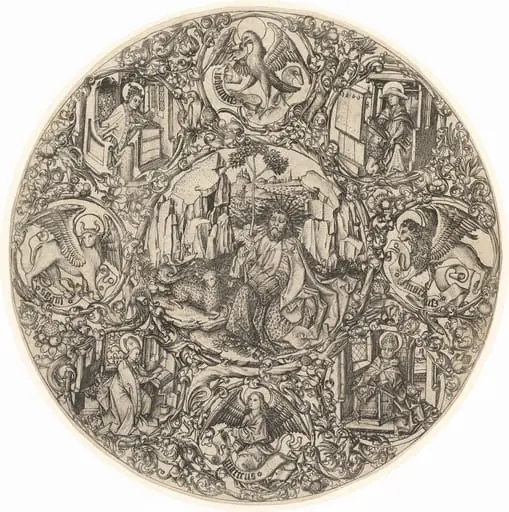 Saint John the Baptist in the Wilderness with the Lamb of God, Surrounded by the Symbols of the Evangelists and the Four Fathers of the Church
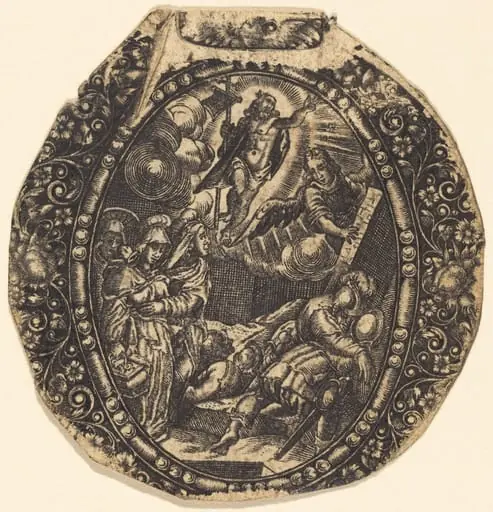 The Resurrection