Artwork
Christ in Gethsemane (Agony in the Garden)
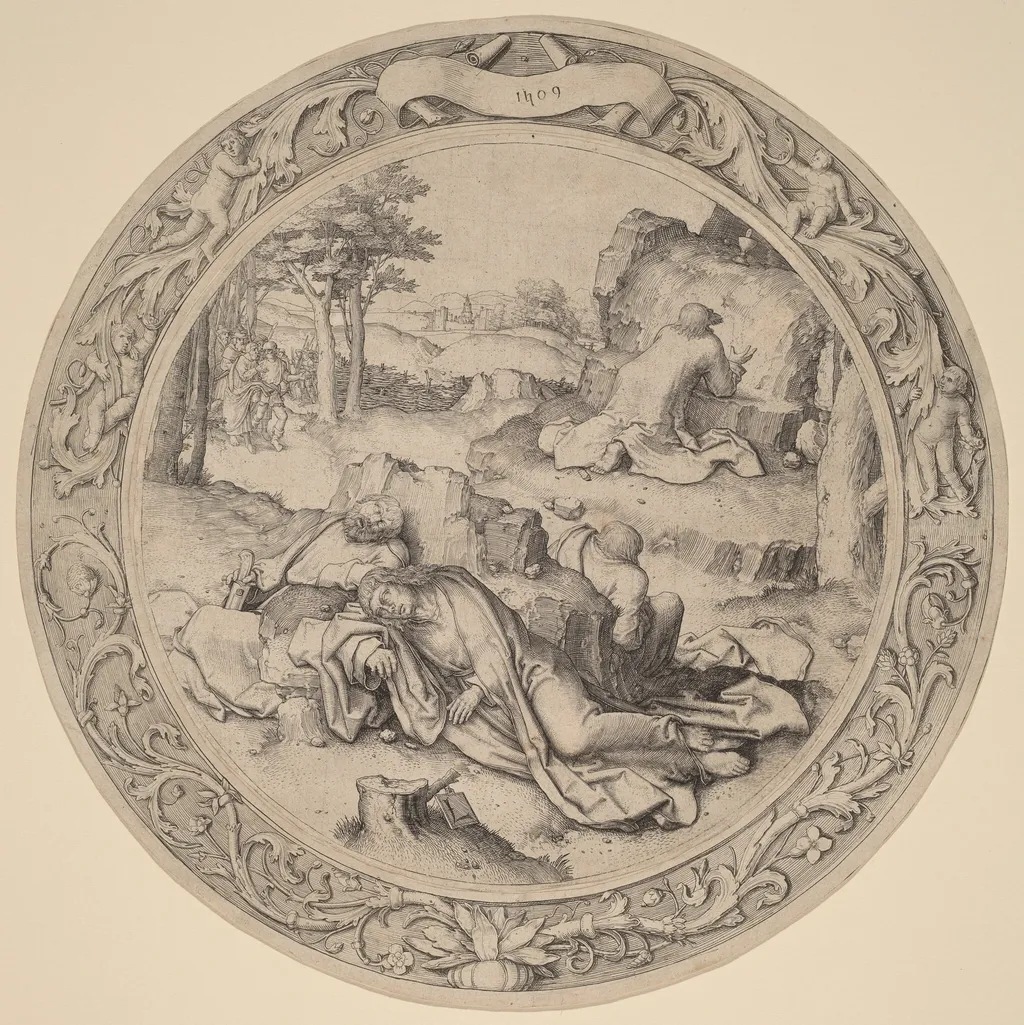
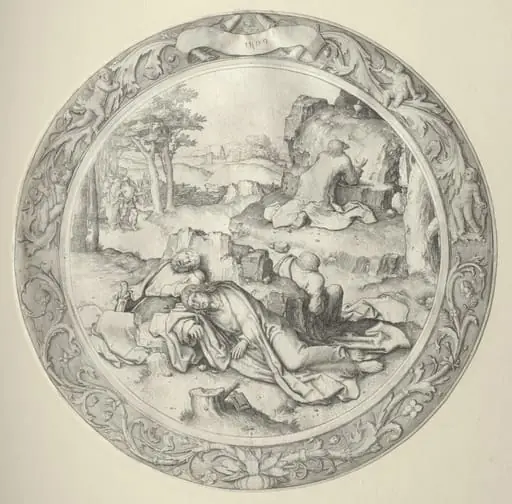
Christ in Gethsemane (Agony in the Garden) is an ink print by the Renaissance artist Lucas van Leyden. It dates from 1509 and is held in the collection of the National Gallery of Art.
About this work
The edge of the scene is framed by swirling decorative patterns—leaves, scrolls, and tiny faces peeking from the corners.
This engraving shows a rocky hillside at night, with three sleeping figures curled under a tree. In the distance, a small village glows faintly. The edge of the scene is framed by swirling decorative patterns—leaves, scrolls, and tiny faces peeking from the corners.
The year "1509" is stamped at the top, marking when this was made. The artist used fine lines and shading to create depth in the shadows and folds of the figures’ robes.
Next, look up engraving to see how artists like this carved images into metal.
Overview
Created in 1509, this engraving by Lucas van Leyden captures the moment of Christ’s prayer in Gethsemane, a scene drawn from the Gospels. Executed in fine metalwork, the print demonstrates van Leyden’s technical precision and his engagement with religious narrative. As one of the earliest Dutch artists to elevate printmaking to a serious artistic medium, he used engraving not merely for reproduction but as a vehicle for expressive detail and emotional weight.
Subject & Meaning
The scene depicts Christ kneeling in prayer, surrounded by three apostles asleep on the rocky ground, their bodies curled in exhaustion. The contrast between Christ’s solitude and the disciples’ slumber underscores themes of human frailty and divine resolve. In the distance, a softly lit village suggests the proximity of human life, untouched by the spiritual struggle unfolding nearby. The composition invites contemplation of inner turmoil amid outward stillness.
Technique & Style
Van Leyden employed fine, controlled lines to model form and texture, using hatching and cross-hatching to build shadow and volume in the figures’ robes and the rugged terrain. The night setting is rendered through subtle gradations rather than dark fields, preserving luminosity. Decorative borders—intertwined leaves, scrolls, and miniature faces—frame the scene, reflecting Northern Renaissance interest in ornamental detail and symbolic enrichment of sacred imagery.
History & Provenance
The engraving was produced in the Netherlands during a period of growing demand for religious prints among both clergy and private collectors. Van Leyden’s reputation as a printmaker allowed his works to circulate widely across Europe. Signed and dated 1509, this piece is among his early mature works, reflecting his transition from woodcut to the more refined technique of engraving, which offered greater detail and tonal nuance.
Context
In early 16th-century Northern Europe, religious imagery remained central to artistic production, even as humanist thought gained ground. Van Leyden’s work bridges devotional tradition and emerging secular interests, embedding biblical scenes within meticulously observed natural settings. His use of landscape and nocturnal atmosphere aligns with broader trends in Dutch art that sought to ground sacred stories in tangible, earthly environments.
Legacy
This engraving contributed to the elevation of printmaking as a respected artistic discipline in the Netherlands. Van Leyden’s integration of narrative depth with technical innovation influenced later generations of engravers, including Albrecht Dürer’s followers. His ability to convey psychological tension through line and composition set a precedent for how religious subjects could be rendered with intimacy and emotional complexity in small-scale works.
Artist & collection

Artist
Lucas van Leyden (1494 – 8 August 1533), was a Dutch painter and printmaker in engraving and woodcut. Lucas van Leyden was among the first Dutch exponents of genre painting and was a very accomplished engraver.

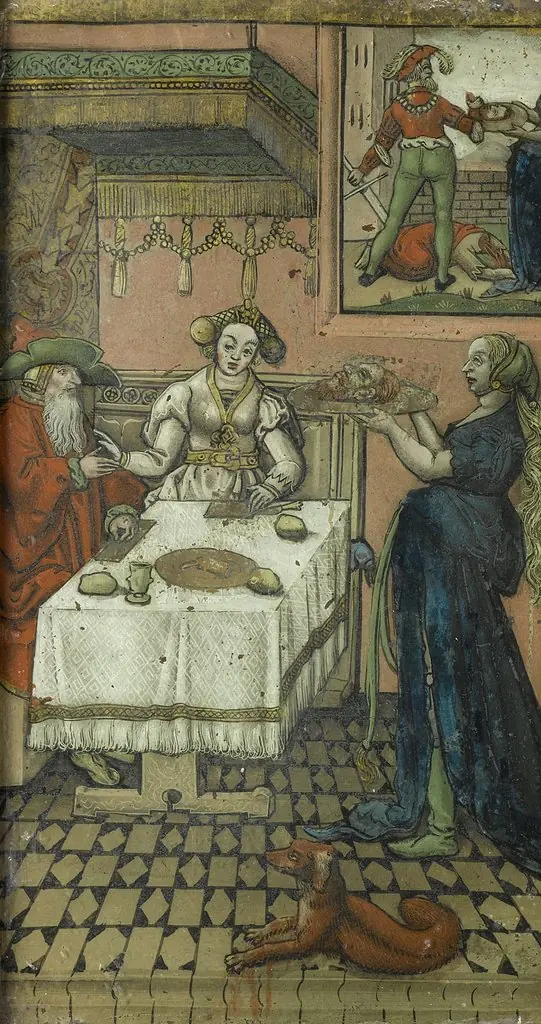 Salome with the head of St John the Baptist
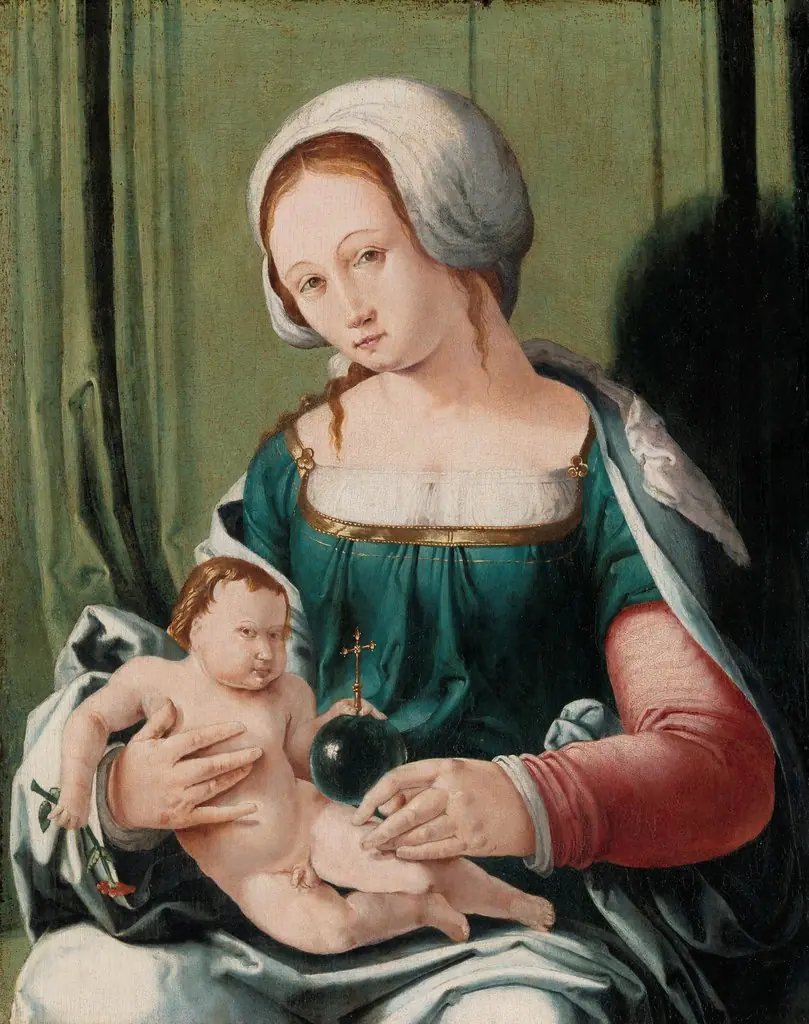 The Virgin and Child
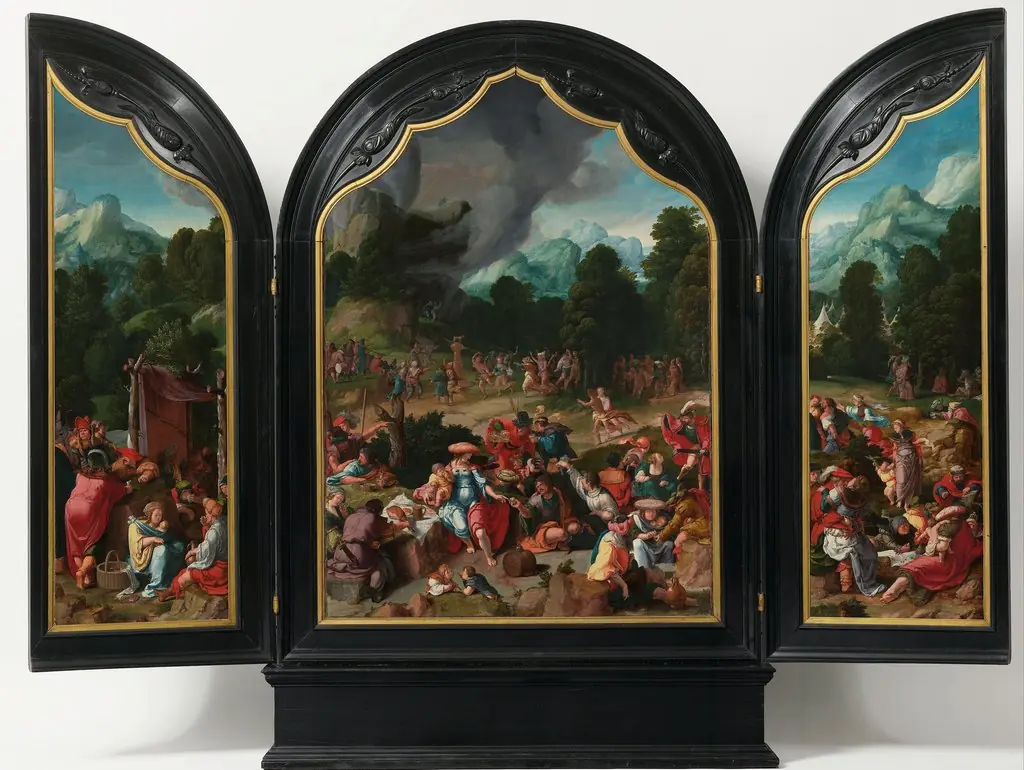 Worship of the Golden Calf
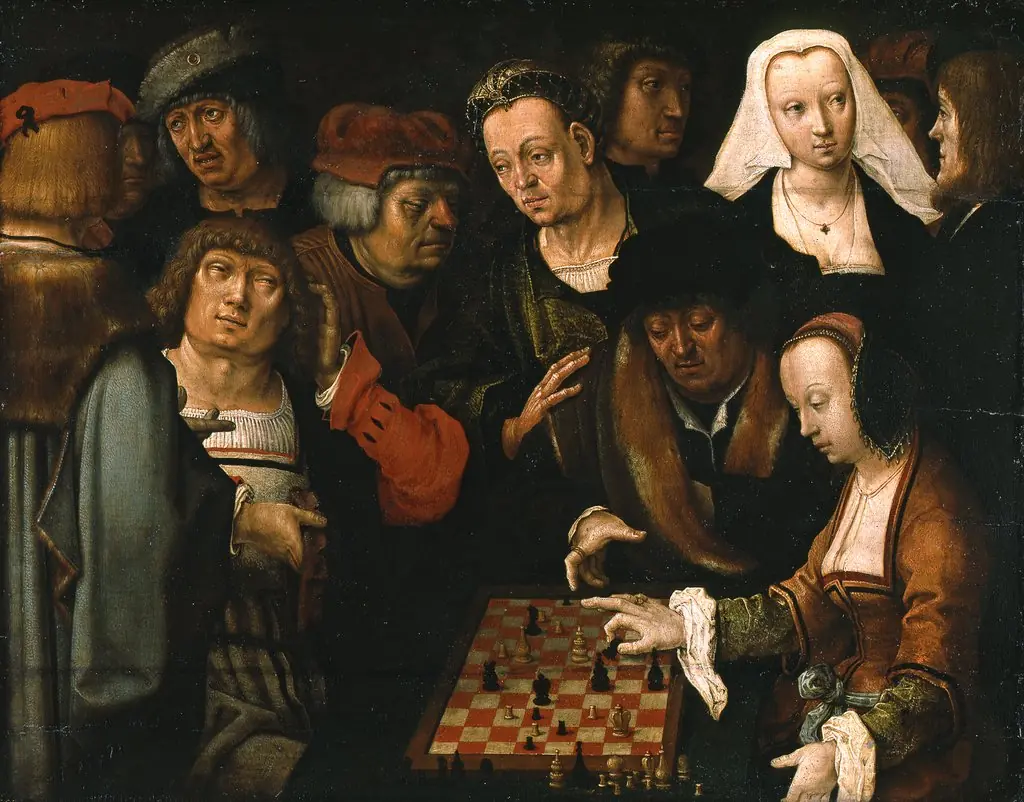 A Game of Chess
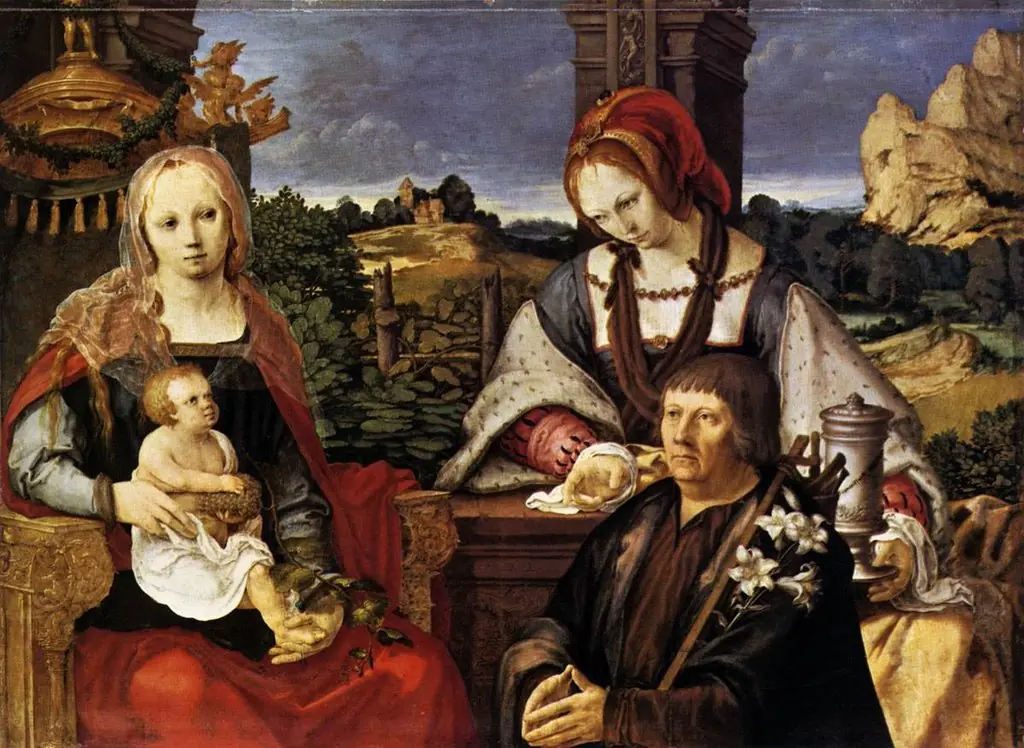 Mary with Child, St. Maria Magdalena and founder (separate outside, Inv. No. 7713)
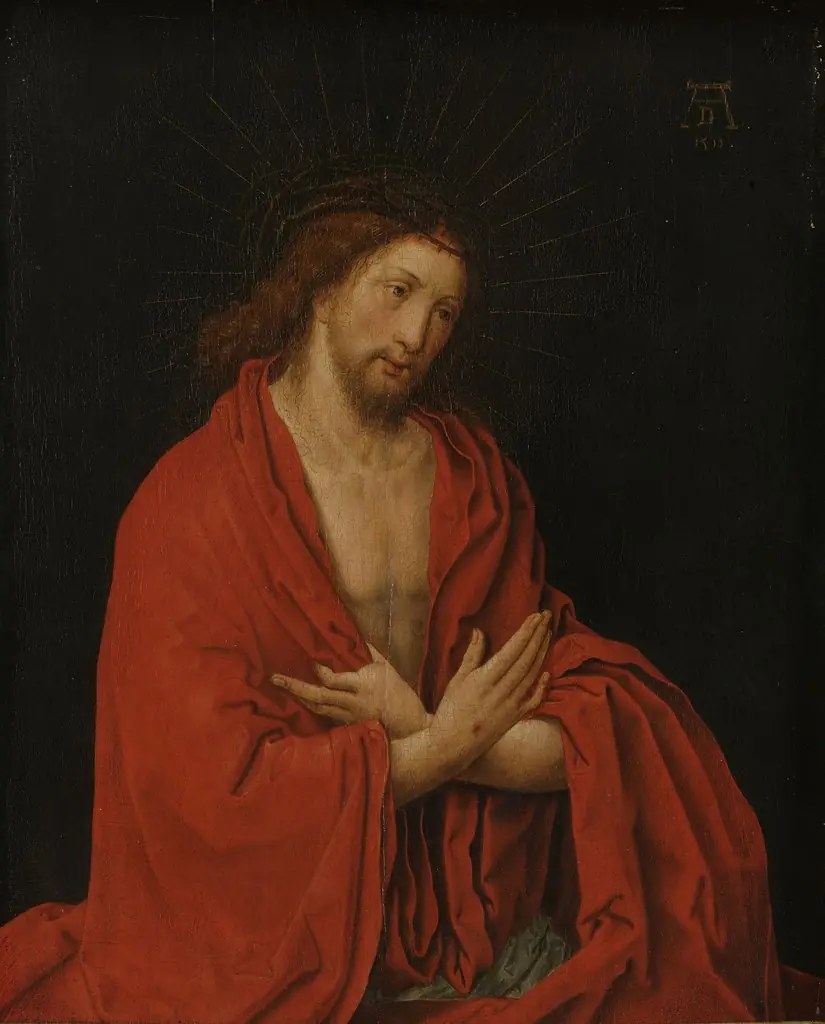 Inner left wing of a diptych with Christ as the Man of Sorrows
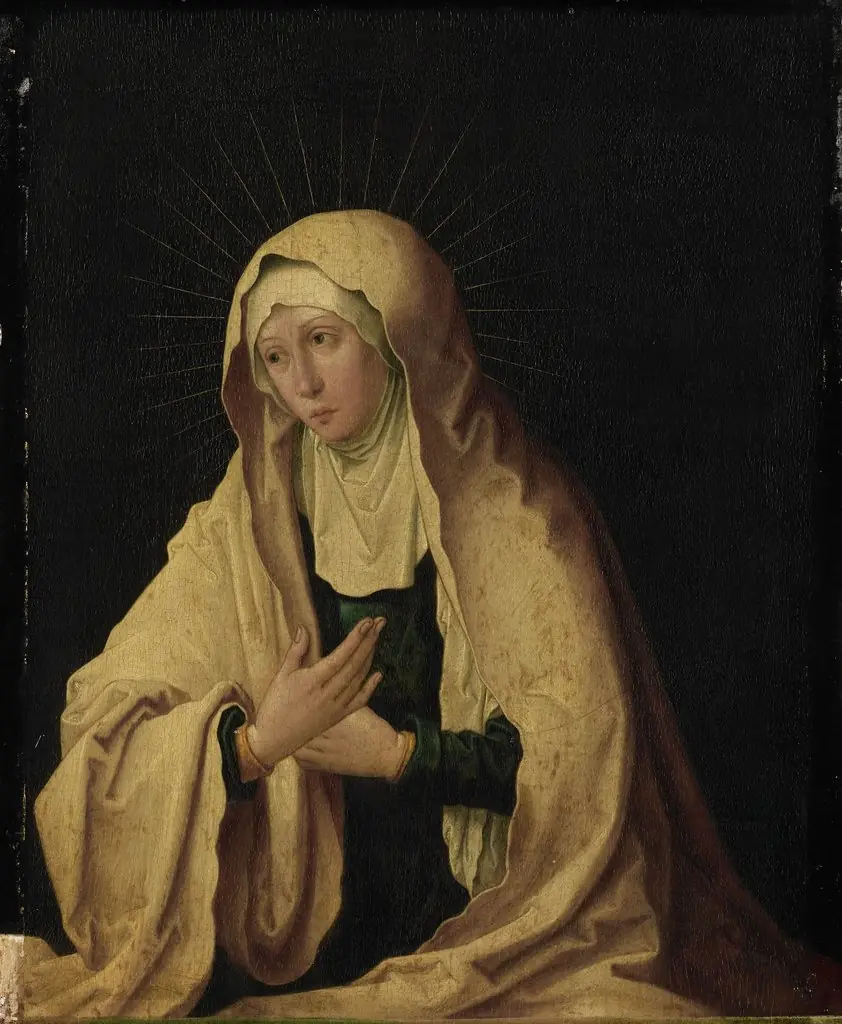 Inner right wing of a diptych with the Virgin as Mater Dolorosa
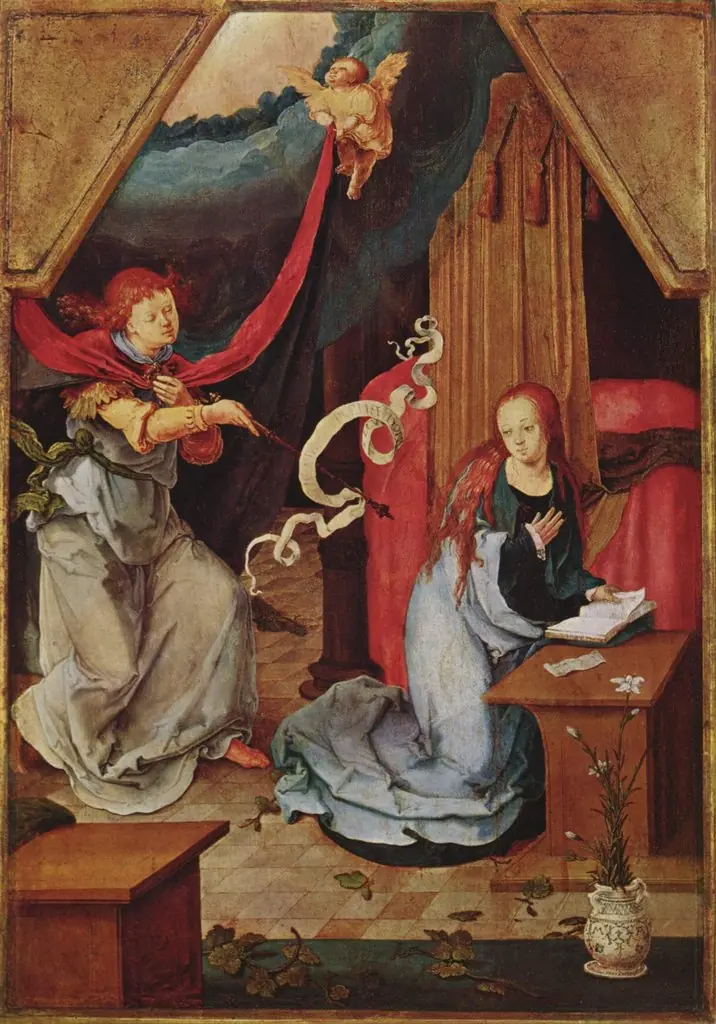 Annunciation
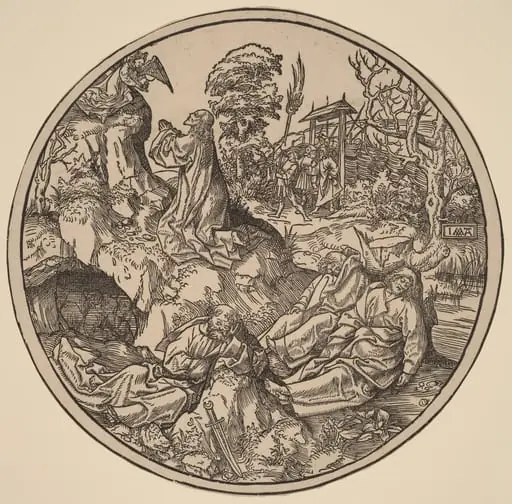 The Agony in the Garden
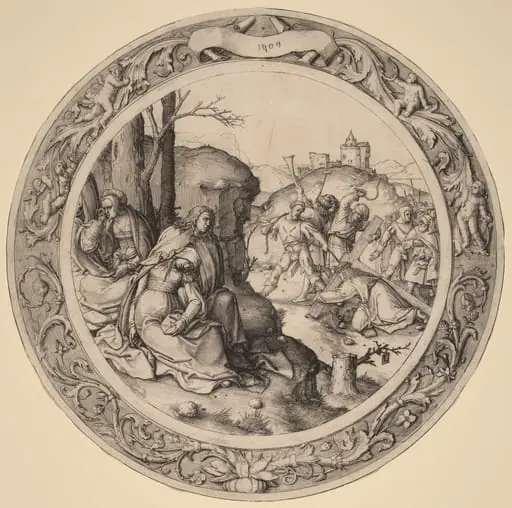 Christ Carrying the Cross
 The Round Passion
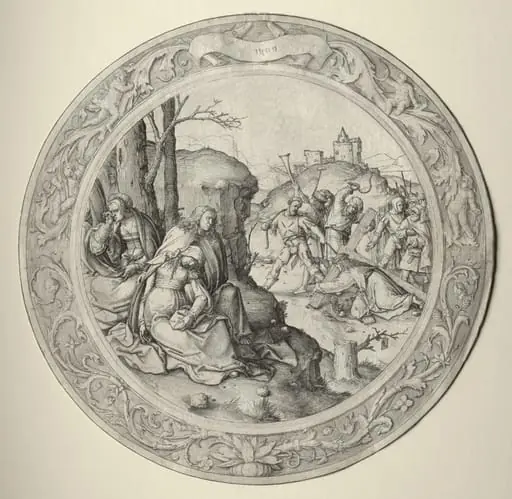 The Round Passion: Christ Carrying the Cross
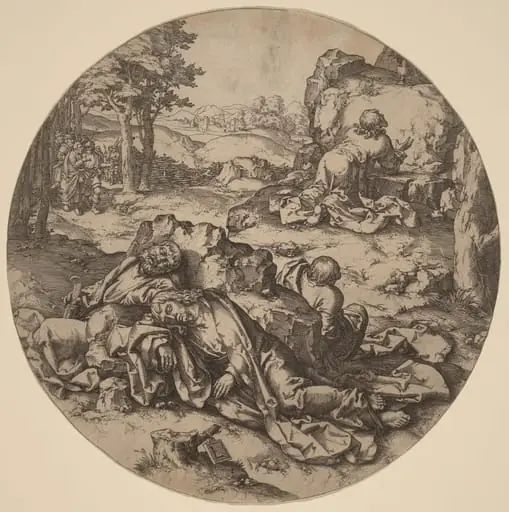 Christ at the Mount of Olives
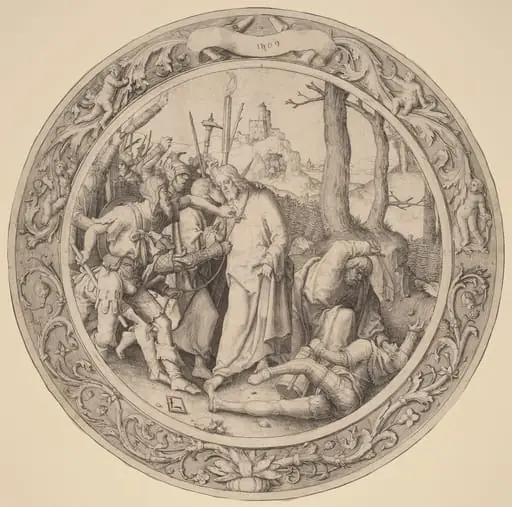 The Captivity
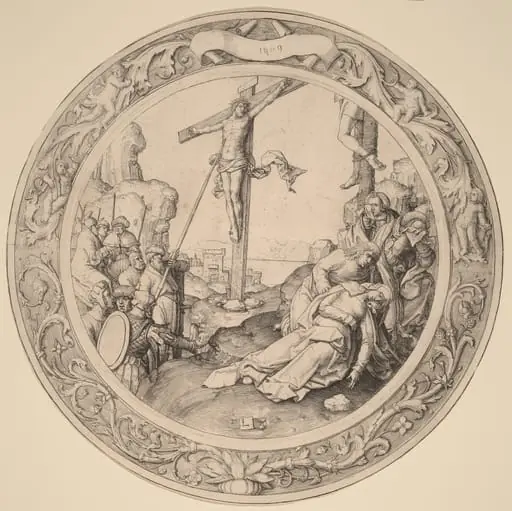 The Crucifixion
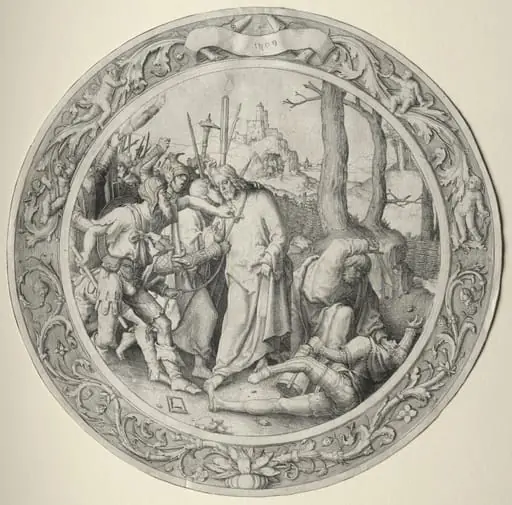 The Round Passion: The Betrayal of Christ
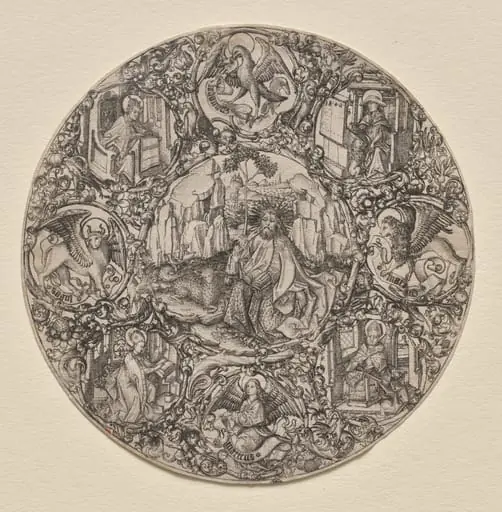 St. John the Baptist Surrounded by the Evangelists and Four Fathers of the Latin Church
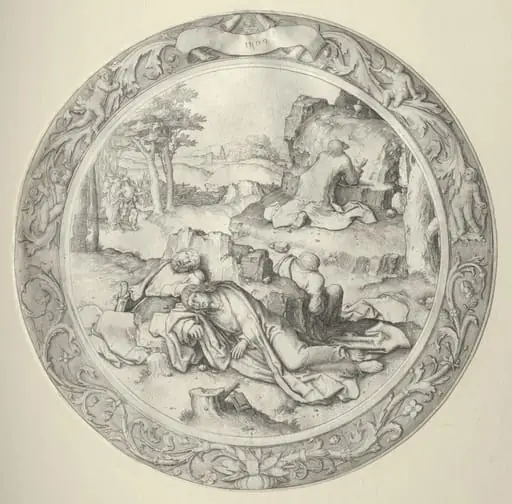 The Round Passion: Christ in Gethsemane (Agony in the Garden)