Artwork
The Agony in the Garden
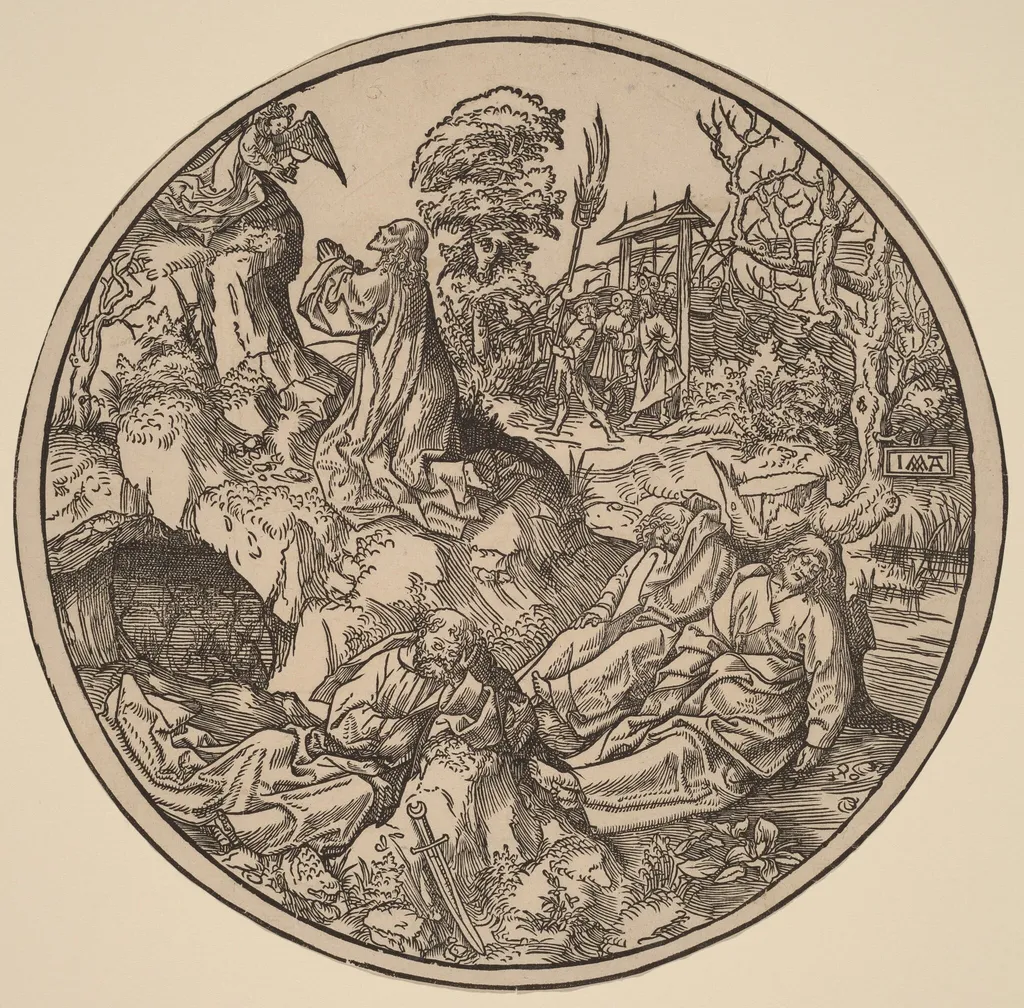
The Agony in the Garden is an ink print by the Renaissance artist Jacob Cornelisz van Oostsanen. It dates from 1512 and is held in the collection of the National Gallery of Art.
About this work
Overview
Van Oostsanen, among the city’s most active printmakers of the time, used the woodcut medium to reach a broad audience with biblical narratives.
Created in 1512 by Jacob Cornelisz van Oostsanen, this woodcut on laid paper is one of several religious prints produced during Amsterdam’s early emergence as a hub of Northern Renaissance art. Van Oostsanen, among the city’s most active printmakers of the time, used the woodcut medium to reach a broad audience with biblical narratives. The work reflects both devotional intent and the technical sophistication of early 16th-century printmaking in the Low Countries.
Subject & Meaning
The scene captures Christ in Gethsemane, kneeling in prayer as he accepts his impending suffering. His disciples lie asleep around him, their stillness contrasting with his anguish. Above, an angel presents a chalice and a sword—symbols of sacrifice and divine will. The composition emphasizes spiritual tension, framing Christ’s solitude as a moment of moral and theological gravity, central to Christian narratives of redemption.
Technique & Style
Van Oostsanen employed fine, controlled lines to render texture in fabric, foliage, and rock, creating a sense of depth through layered shadows. The contrast between light and dark, achieved through selective ink application, enhances emotional drama without relying on tone gradation. The dense, intricate patterning of the background—trees, cliffs, and sky—anchors the figures in a tangible, brooding landscape, typical of his graphic style.
History & Provenance
The print was made during a period of rapid artistic development in Amsterdam, where van Oostsanen operated a successful workshop. Few original impressions survive, and those that do are held in institutional collections across Europe. Its production coincided with the rise of devotional prints for private use, reflecting a growing market for portable religious imagery among middle-class patrons in the Northern Netherlands.
Context
This work emerged alongside the spread of humanist thought and the early stirrings of the Reformation. While still rooted in Catholic iconography, its emotional intensity and focus on individual piety foreshadowed shifts in religious expression. Van Oostsanen’s prints circulated widely, contributing to a visual culture that bridged traditional devotion and emerging Reformation sensibilities in the Low Countries.
Legacy
Van Oostsanen’s woodcuts, including this one, helped establish Amsterdam as a center for print production. His technical precision and narrative clarity influenced later generations of Northern printmakers. Though his name faded after his death, his works remain key examples of early 16th-century graphic art, illustrating how religious themes were adapted to the demands of a growing literate public.
Artist & collection
Artist
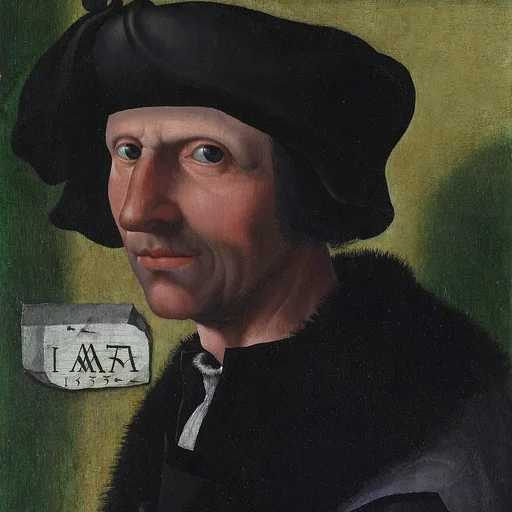
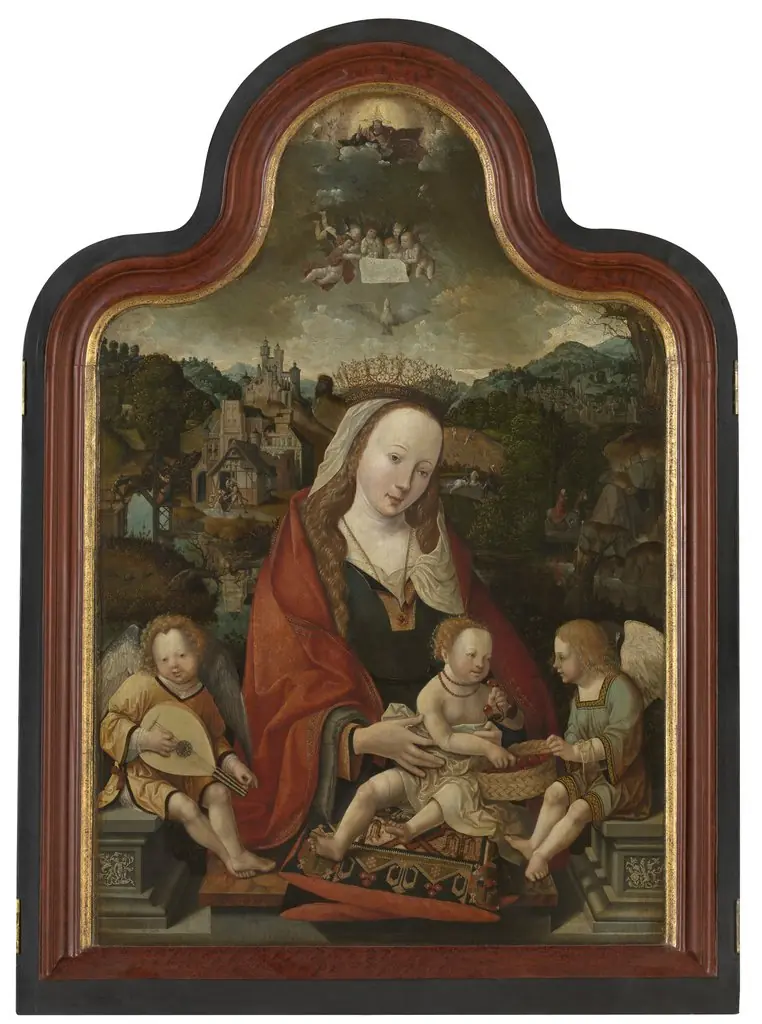
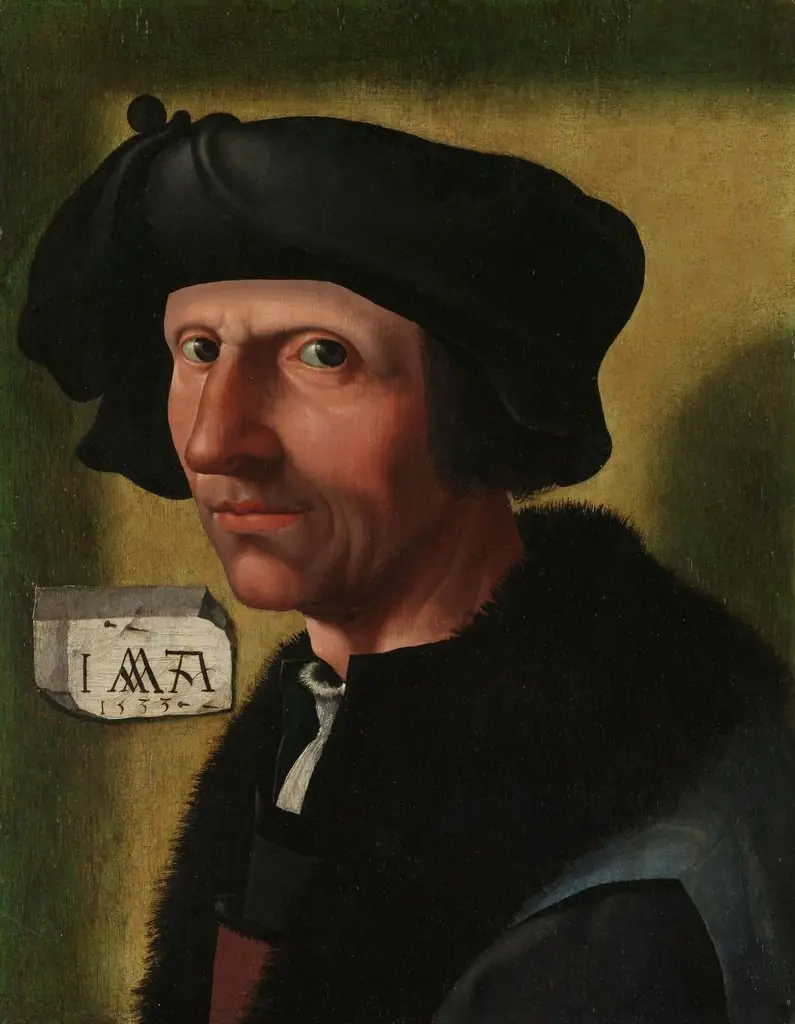
Jacob Cornelisz van Oostsanen (before 1470 – 1533) was a Northern Netherlandish designer of woodcuts and painter.

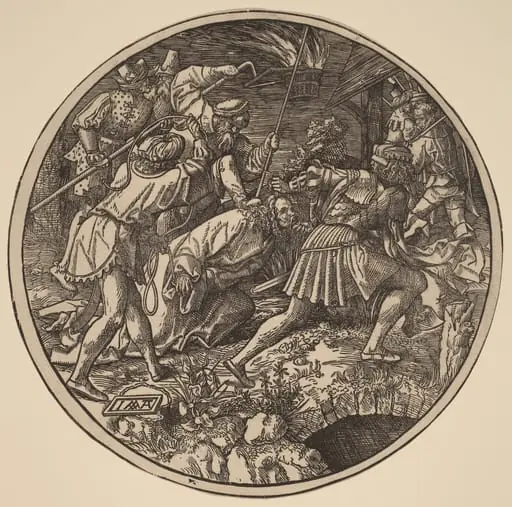 Christ Led Away After His Arrest
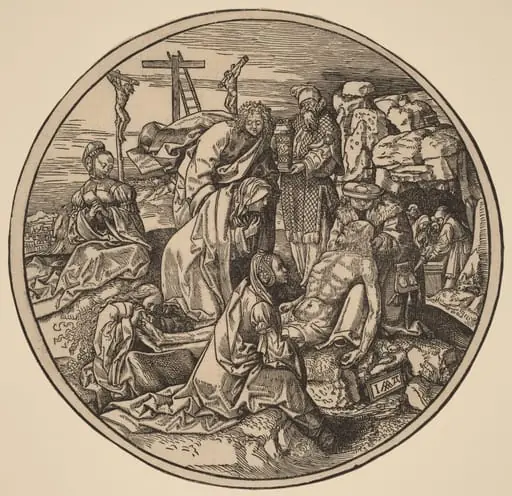 The Lamentation and Entombment
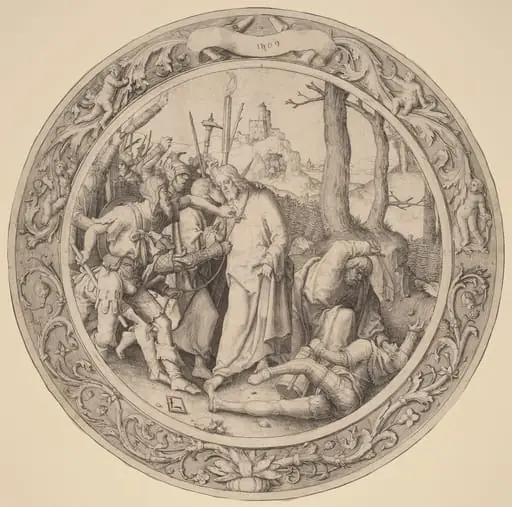 The Captivity
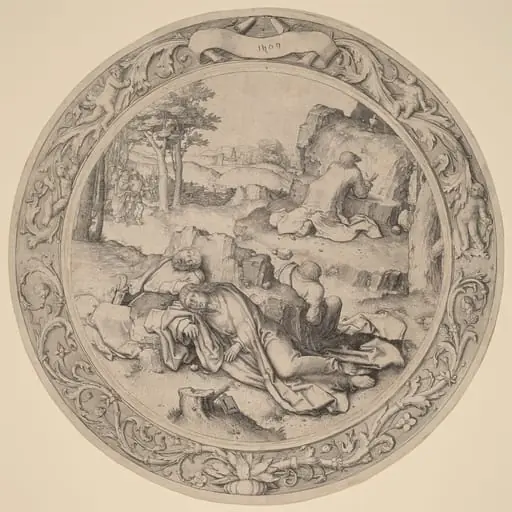 Christ in Gethsemane (Agony in the Garden)
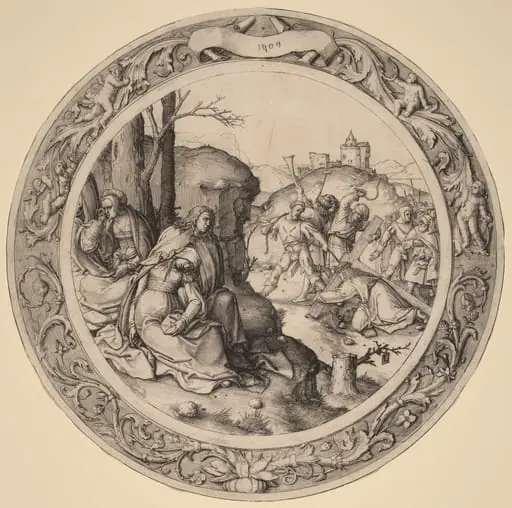 Christ Carrying the Cross
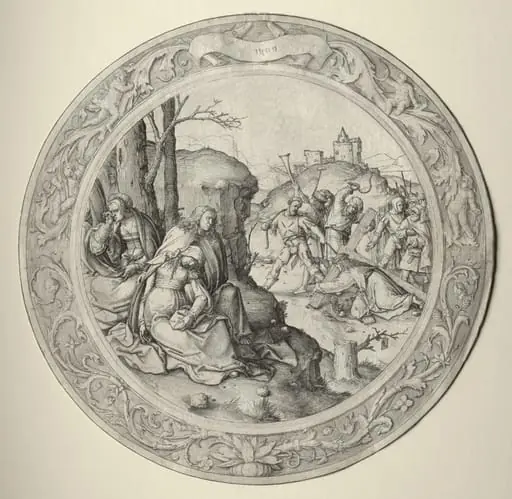 The Round Passion: Christ Carrying the Cross
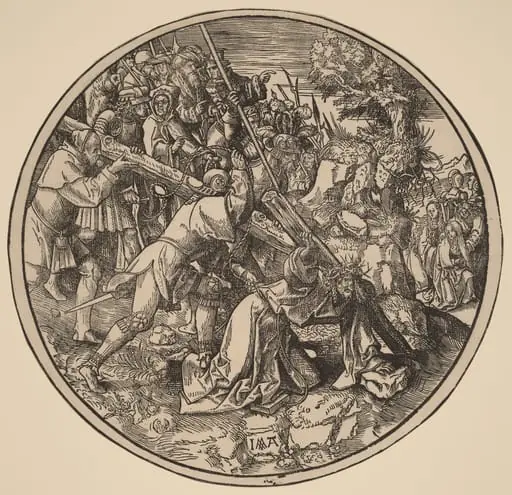 Christ Carrying the Cross
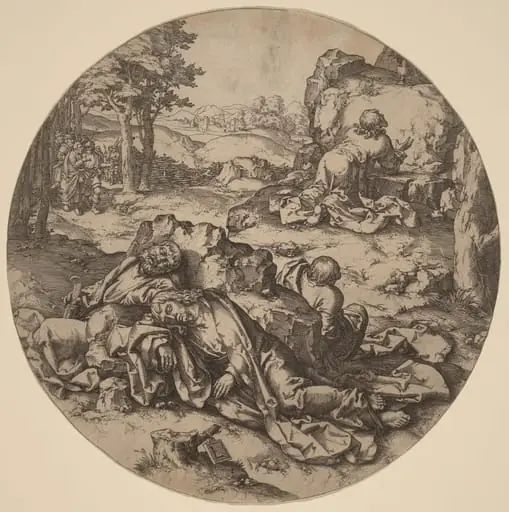 Christ at the Mount of Olives
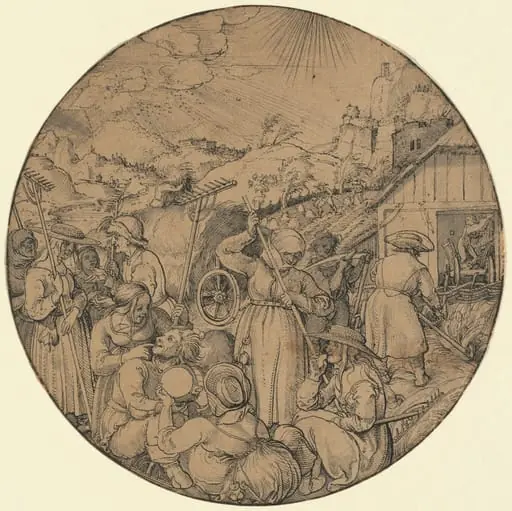 The Hay Harvest (June)
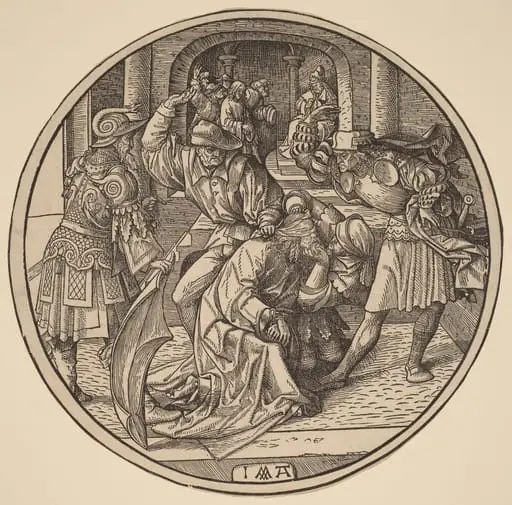 The Mocking of Christ and Christ Before Caiaphas