Artwork
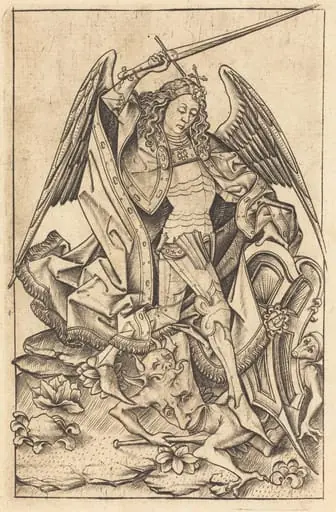
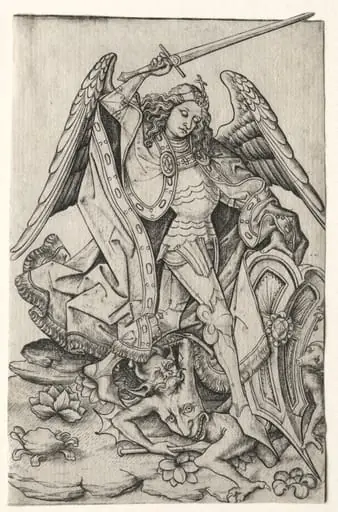
Saint Michael Defeating the Devils
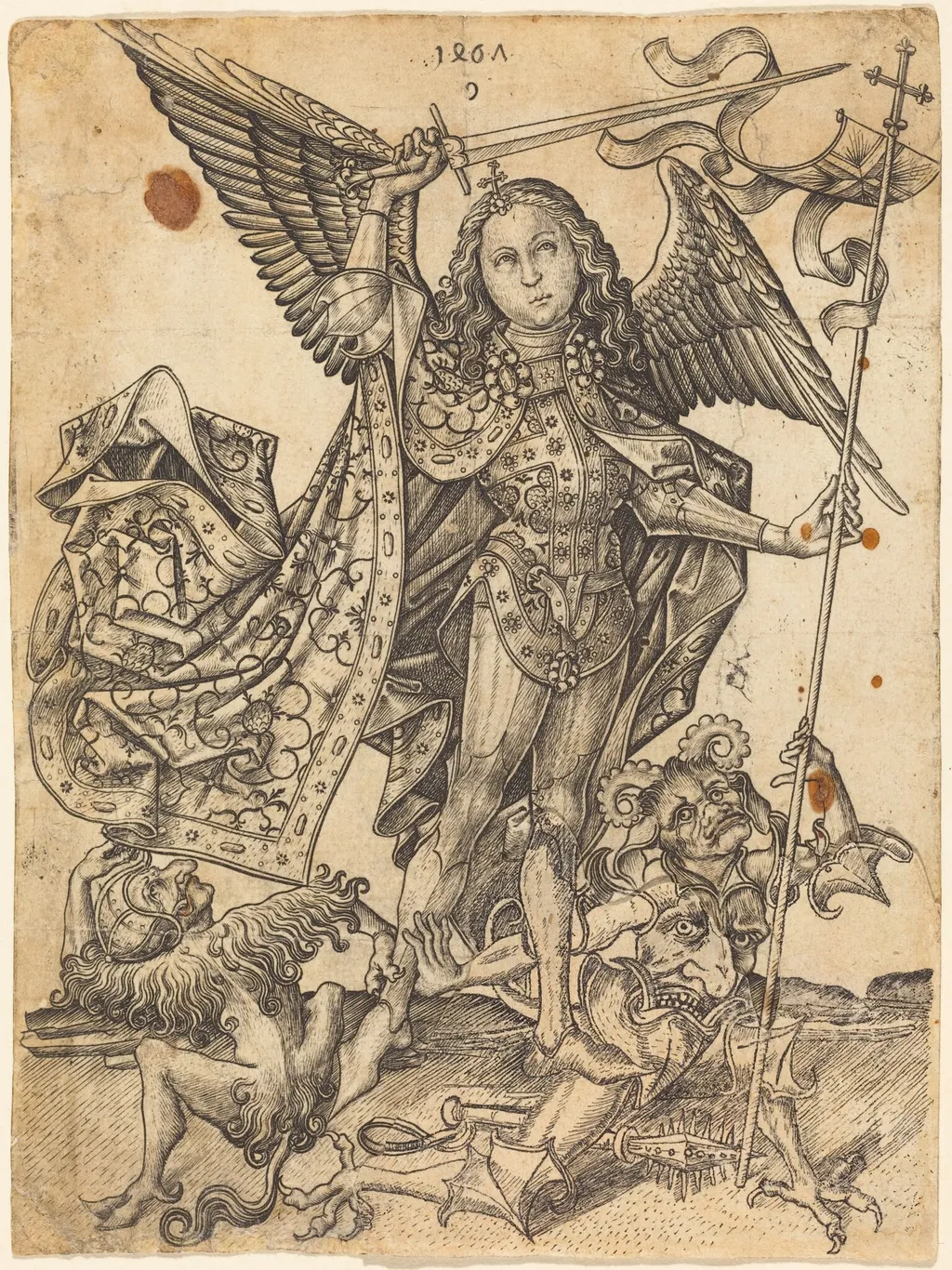
Saint Michael Defeating the Devils is an ink print by the Renaissance artist Master E.S.. It dates from 1467 and is held in the collection of the National Gallery of Art. The work is an engraving executed on laid paper, dated 1467, and bears the monogram E.
About this work
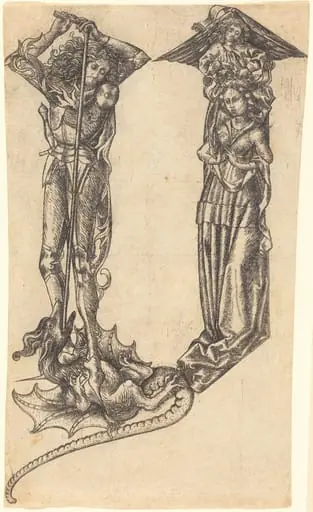
This image shows a winged figure in armor holding a spear, standing over a group of twisted, snarling creatures.
This image shows a winged figure in armor holding a spear, standing over a group of twisted, snarling creatures. The figure’s face is calm, but the monsters below look terrified. The background is packed with swirling patterns and sharp lines that make everything feel dramatic.
The tiny date "1467" is written in the top corner—this is a very old print. The artist used lines and shading to create depth, which was a big deal back then.
Want to see how this technique works? Look up engraving.
Overview
The work is an engraving executed on laid paper, dated 1467, and bears the monogram E. S. It portrays the archangel Michael in armor, spear in hand, standing triumphantly above a cluster of contorted demonic figures. The composition is framed by intricate, swirling ornamental motifs that heighten the sense of movement and tension.
Subject & Meaning
The central figure represents the biblical Michael, the heavenly warrior who defeats evil. By placing the serene, composed angel above the snarling, frightened devils, the image conveys the triumph of divine order over chaos, a theme commonly invoked in late‑medieval devotional art to reinforce moral and theological instruction.
Technique & Style
The print was produced by hand‑engraving lines into a copper plate, then transferring the image onto laid paper. Fine hatching and cross‑hatching generate tonal variation and a sense of depth, while the sharp, angular contours reflect the late Gothic aesthetic, emphasizing verticality and elaborate surface decoration.
History & Provenance
Created by an anonymous German goldsmith and engraver known only as Master E. S., the piece is among the earliest substantial German prints. The artist’s habit of signing with the initials E. S. allows attribution, though his full identity remains unknown. The print has survived in several museum collections, attesting to its early dissemination.
Context
Produced in the mid‑15th century, the engraving aligns with a period when printmaking began to spread beyond manuscript illumination. German workshops were adopting the medium to reproduce religious narratives for a broader audience, and the work exemplifies the transition from hand‑crafted illumination to reproducible graphic art.
Artist & collection

Artist
Master E. S. (c. 1420 – c. 1468; previously known as the Master of 1466) is an unidentified German engraver, goldsmith, and printmaker of the late Gothic period. He was the first major German artist of old master prints…