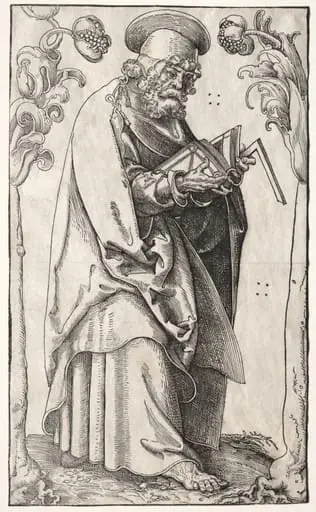
Artwork
Saint Judas Thaddaeus
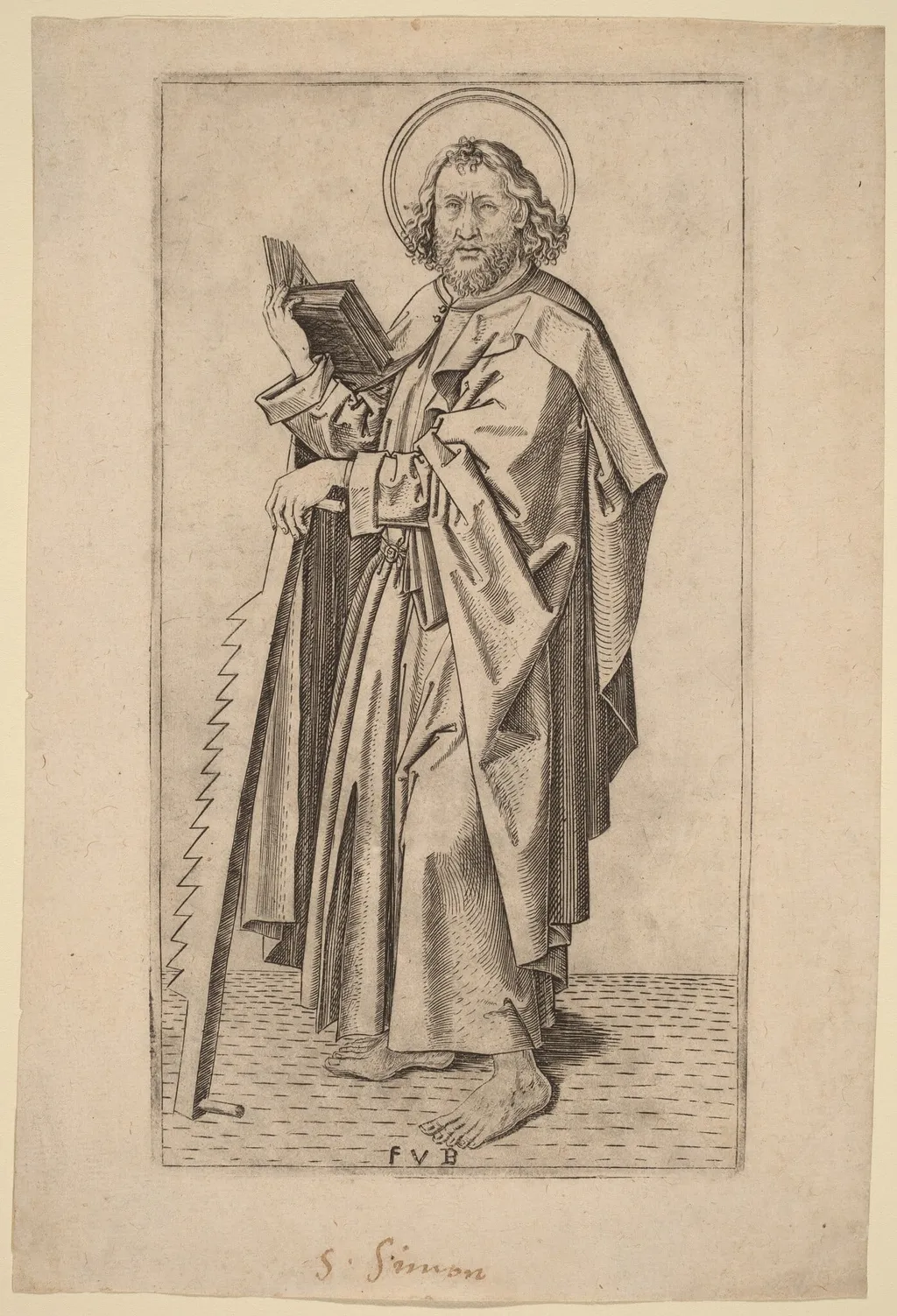
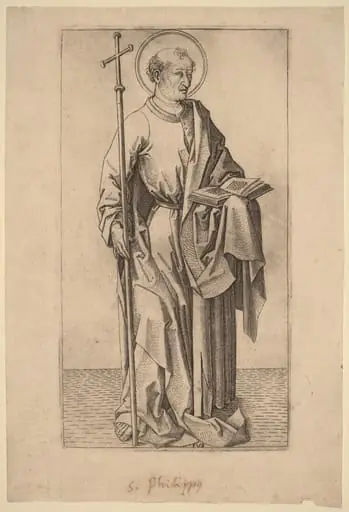
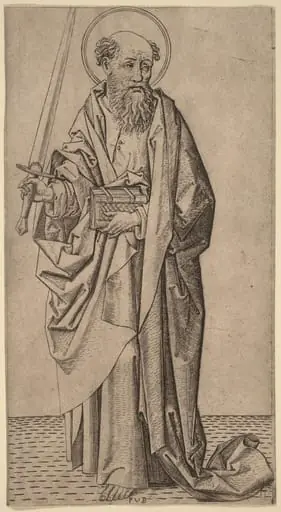
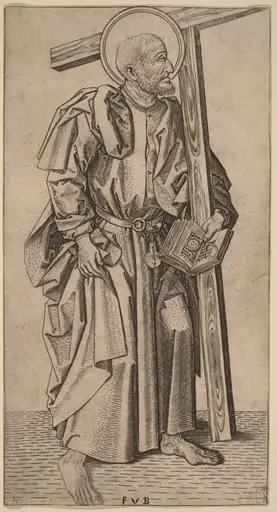
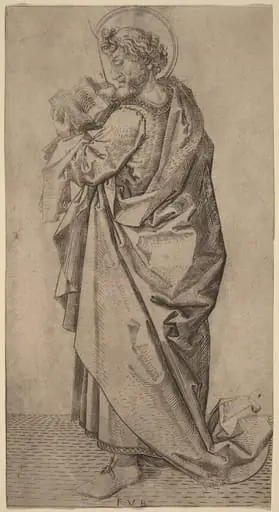
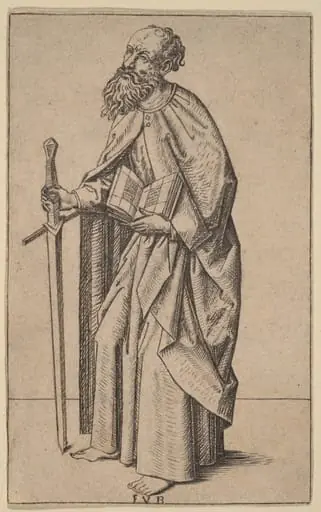
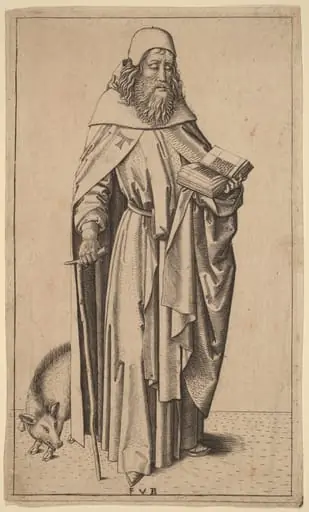
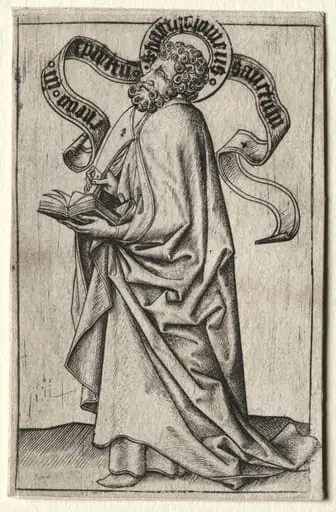
Saint Judas Thaddaeus is an ink print by the Renaissance artist Master FVB. It dates from 1495 and is held in the collection of the National Gallery of Art.
About this work
Overview
An anonymous Netherlandish engraver, known today as Master FVB, produced this black-and-white print around 1495.
An anonymous Netherlandish engraver, known today as Master FVB, produced this black-and-white print around 1495. The work is one of several devotional images attributed to this elusive artist, active in the late 15th century. Signed with the initials 'F.V.B.', the engraving exemplifies the precision and quiet intensity characteristic of Northern European printmaking at the time, intended for private religious reflection.
Subject & Meaning
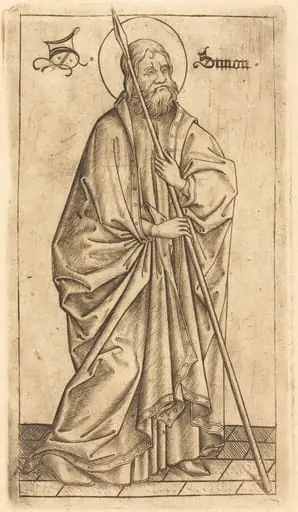
The figure represents Saint Judas Thaddaeus, one of the Twelve Apostles, depicted in a solemn, meditative stance. He holds a book—symbolizing his role as a teacher—and a long staff, a traditional attribute of apostolic authority. The halo confirms his sanctity. The inscription 'S. Simon' nearby likely refers to Saint Simon the Zealot, his traditional companion in hagiography, suggesting the image may have been part of a paired devotional set.
Technique & Style
The artist employed fine, controlled lines to model form and texture, using cross-hatching to suggest volume in the drapery and the curl of the saint’s hair. The shading is subtle yet deliberate, creating a sense of three-dimensionality within the flat plane of the print. The style echoes the meticulous detail and emotional restraint found in the work of Martin Schongauer and the Master of the Amsterdam Cabinet, reflecting a shared aesthetic among early Netherlandish engravers.
History & Provenance
The engraving survives in a limited number of impressions, typical of early prints from this period. Its attribution to Master FVB is based on stylistic comparison and the consistent appearance of the 'F.V.B.' signature across related works. No documented early ownership records exist, but its devotional nature suggests it circulated among private collectors or religious communities in the Low Countries during the late 1400s.
Context
Created during a period of growing demand for portable religious imagery, this engraving reflects the rise of printmaking as a medium for personal piety. Artists like FVB responded to the spiritual needs of laypeople by producing images of saints that could be owned and venerated at home. The influence of Dieric Bouts and other painters is evident in the figure’s composed demeanor and the quiet dignity of the composition.
Legacy
Though Master FVB remains unidentified, his body of work, including this engraving, contributed to the development of Northern Renaissance printmaking. His precise technique and devotional focus helped shape the visual language of religious prints in the decades before Dürer’s rise. The work endures as an example of how anonymous artisans sustained spiritual culture through the quiet power of the printed image.
Artist & collection

Artist
Master FVB (active c. 1480 — 1500) was an anonymous early Netherlandish engraver. According to one tradition, the artist is identical to Franz von Bocholt, but there seems to be no evidence to support such a…