Artwork
Saint Philip
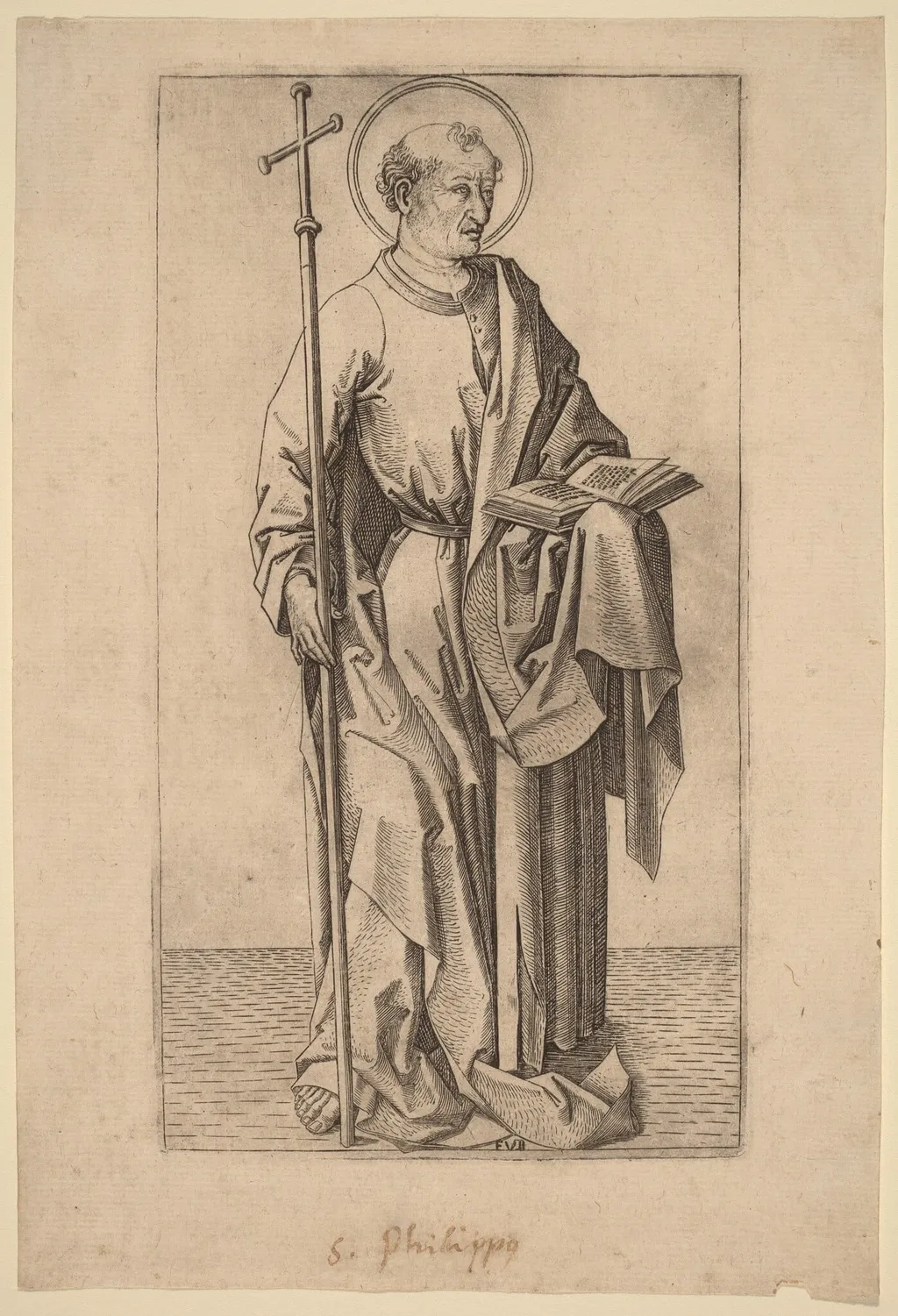
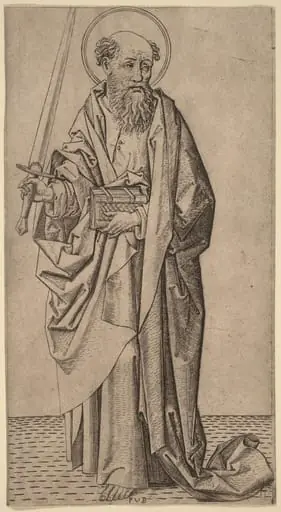
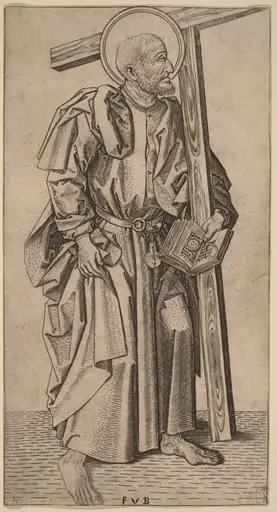
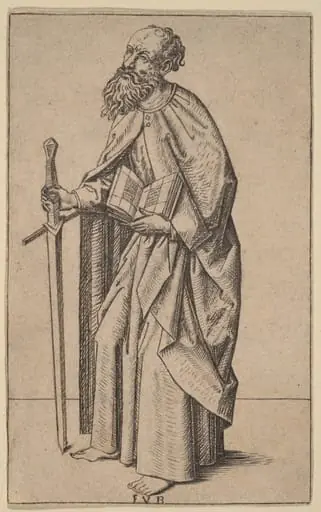
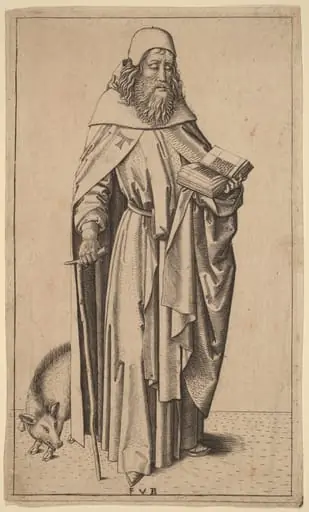
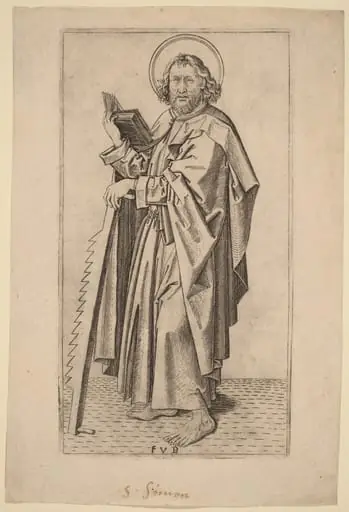
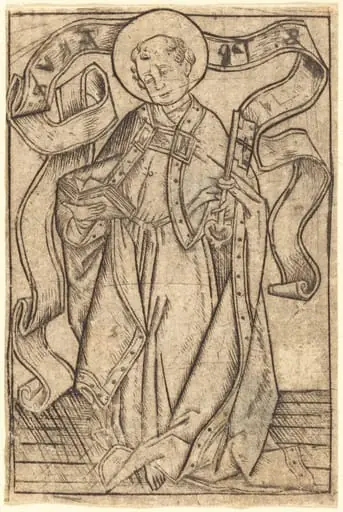
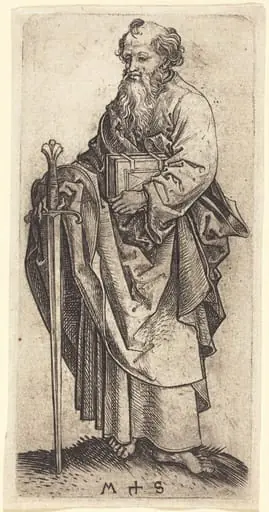
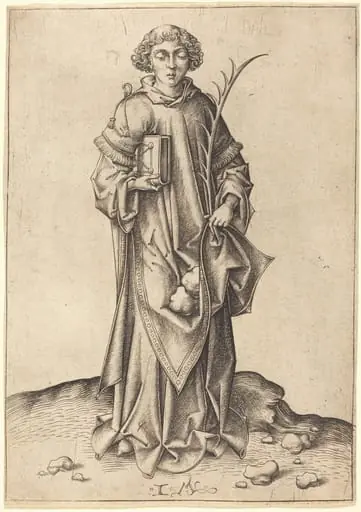
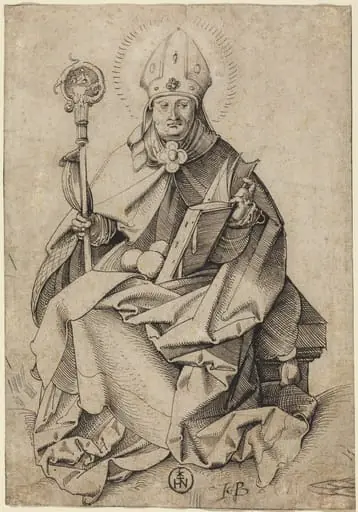
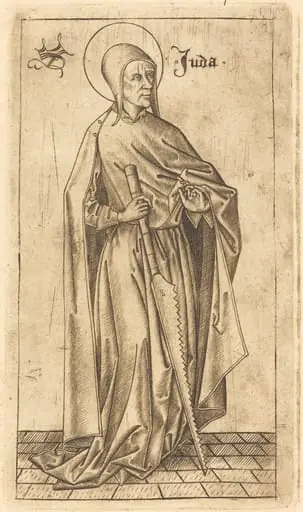
Saint Philip is an ink print by the Renaissance artist Master FVB. It dates from 1495 and is held in the collection of the Rosenwald Collection. Created around 1495, this copper engraving portrays the apostle Philip in a modest interior.
About this work
Overview
Created around 1495, this copper engraving portrays the apostle Philip in a modest interior. The figure stands on a tiled floor, his right hand gripping a staff and his left holding a book, both traditional symbols of his martyrdom and learning. A halo crowns his head, and his solemn gaze is directed downward, conveying a contemplative mood.
Subject & Meaning
Philip is identified by the cross‑like staff, an attribute commonly linked to his execution. The inclusion of a book underscores his role as a teacher of the faith, while the restrained setting emphasizes spiritual introspection over narrative drama.
Technique & Style
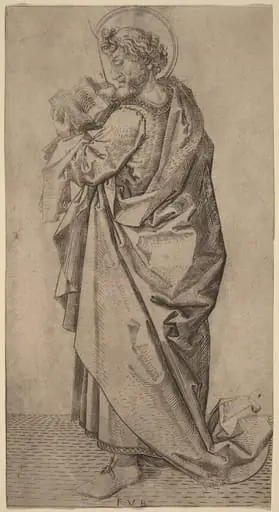
The print demonstrates fine cross‑hatching that models the drapery of the robe and the folds of the cloak, creating a subtle sense of volume. The precise line work and balanced composition echo the influence of early Netherlandish masters such as Dieric Bouts, while also recalling the delicate handling seen in works by the Master of the Amsterdam Cabinet and Martin Schongauer.
History & Provenance
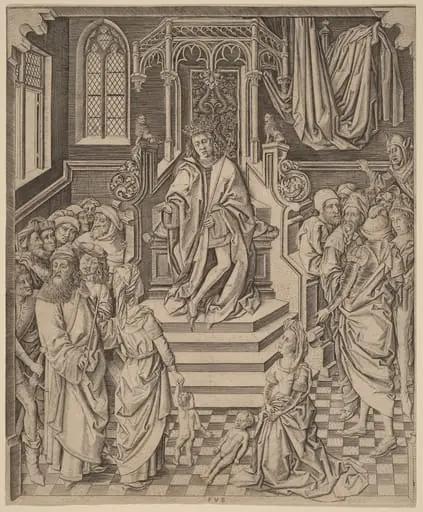
Attributed to the anonymous engraver known as Master FVB, an early Netherlandish artist active between 1480 and 1500, the piece reflects the period’s growing interest in devotional prints. Its survival in several collections suggests it was widely circulated among private devotional contexts in the late fifteenth century.
Context
The work belongs to a broader trend of late‑medieval religious prints that made sacred imagery accessible beyond painted altarpieces. By rendering a single apostle in a simple, intimate space, the engraving aligns with contemporary devotional practices that encouraged personal meditation on the saints.
Artist & collection

Artist
Master FVB (active c. 1480 — 1500) was an anonymous early Netherlandish engraver. According to one tradition, the artist is identical to Franz von Bocholt, but there seems to be no evidence to support such a…