Artwork
The Judgment of Solomon
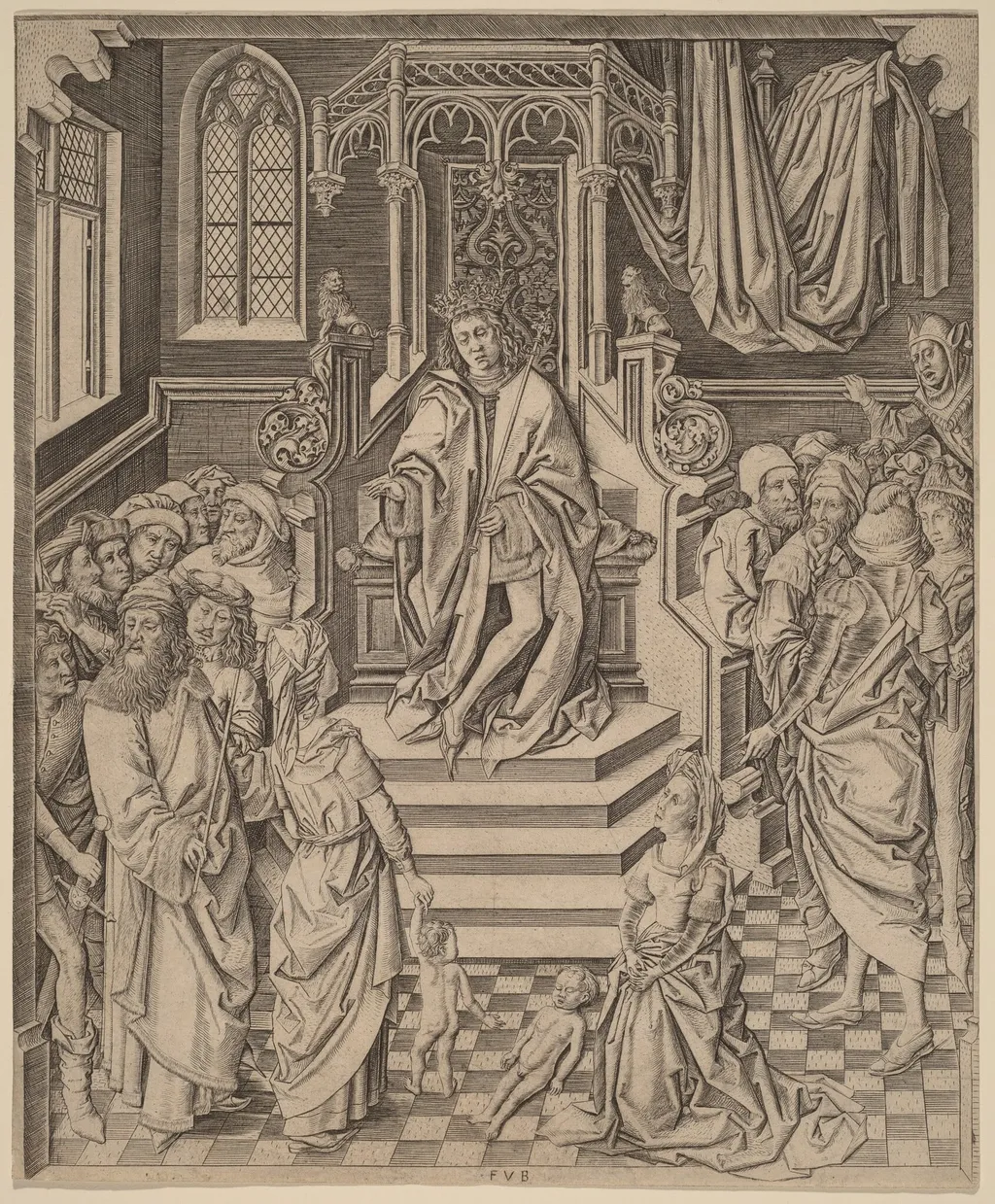
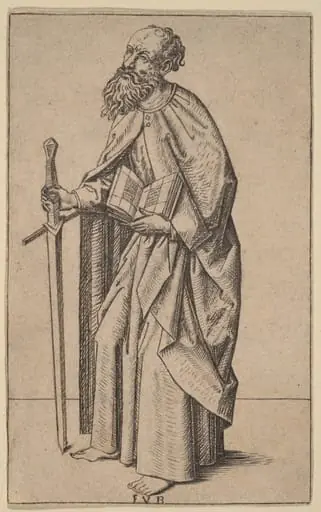
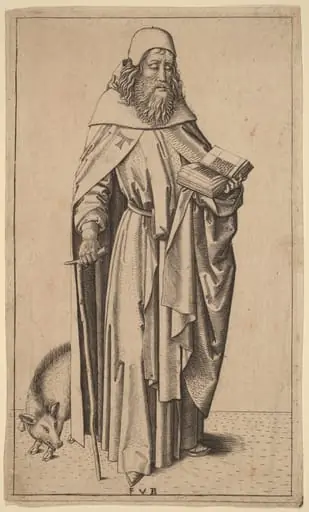
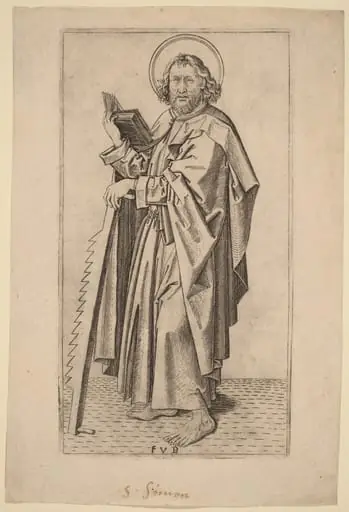
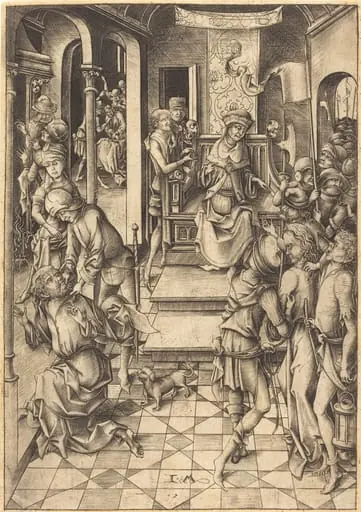
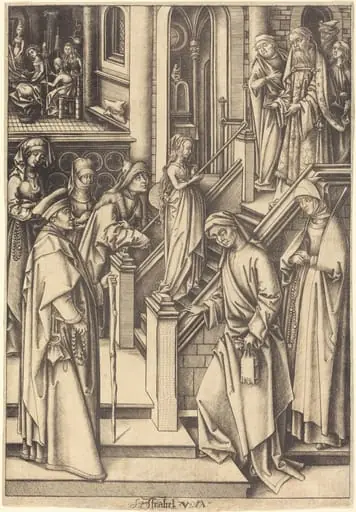
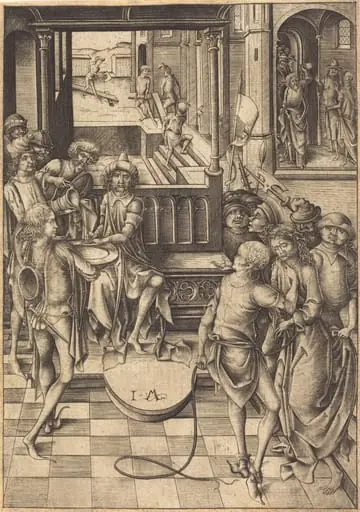
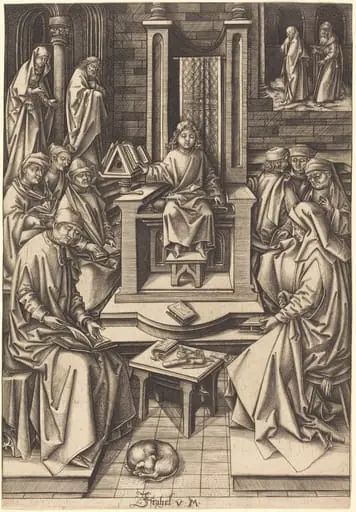
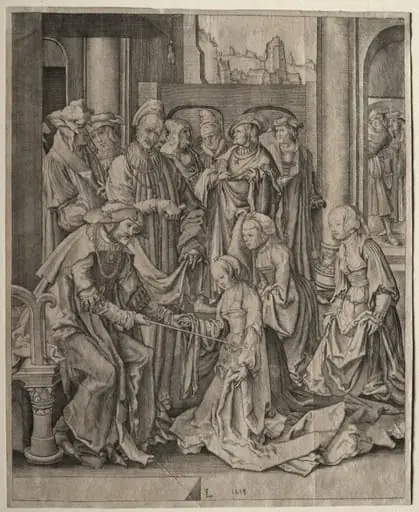
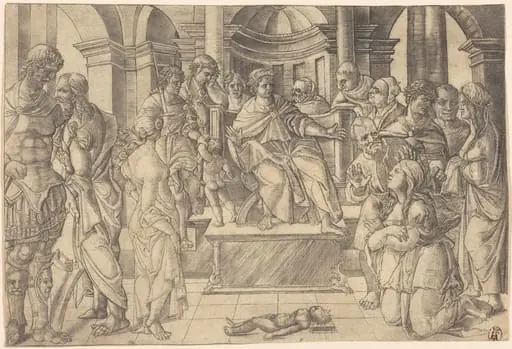
The Judgment of Solomon is an ink print by the Renaissance artist Master FVB. It dates from 1480 and is held in the collection of the National Gallery of Art. Created circa 1480, this engraving on laid paper presents the biblical episode of King Solomon’s judgment.
About this work
Overview
Created circa 1480, this engraving on laid paper presents the biblical episode of King Solomon’s judgment. The composition centers on a raised platform where Solomon holds a child, flanked by two kneeling women each presenting a child of their own, while a group of onlookers observes the decision. Architectural elements such as tall windows and carved wall panels frame the scene.
Subject & Meaning
The image illustrates the well‑known test of Solomon, in which the king orders a disputed infant to be cut in half, prompting the true mother to plead for its life. Her compassionate appeal reveals her genuine bond, allowing Solomon to identify the rightful parent. The work underscores themes of wisdom, justice, and maternal love within a biblical narrative.
Technique & Style
Executed with fine lines and deep cross‑hatching, the engraving achieves a rich tonal range that models clothing, facial features, and architectural details.
Executed with fine lines and deep cross‑hatching, the engraving achieves a rich tonal range that models clothing, facial features, and architectural details. The artist’s handling of shadow creates a sense of spatial depth, while the intricate line work conveys texture in fabrics and stone. The overall style reflects the meticulous draftsmanship characteristic of late‑15th‑century Netherlandish prints.
History & Provenance
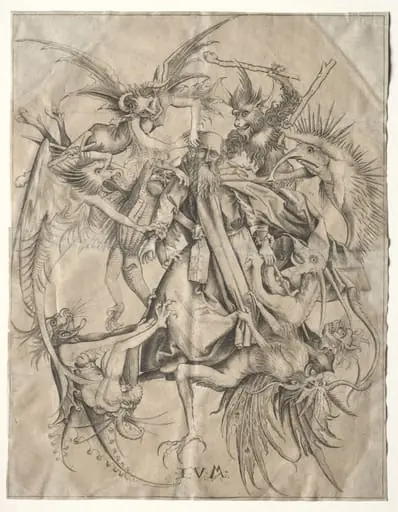
Attributed to the anonymous Master FVB, an early Netherlandish printmaker active between 1480 and 1500, the piece aligns with the output of contemporaries such as Dieric Bouts, the Master of the Amsterdam Cabinet, and Martin Schongauer. The work is known from several surviving impressions on laid paper, indicating its circulation among collectors of the period.
Context
The engraving belongs to a broader tradition of visualizing biblical judgments that served both devotional and didactic purposes. Its composition mirrors the narrative clarity found in panel paintings of the time, while the print medium allowed wider dissemination of the moral lesson. The architectural backdrop and crowded arrangement echo the urban settings favored by Netherlandish artists in the late medieval era.
Artist & collection

Artist
Master FVB (active c. 1480 — 1500) was an anonymous early Netherlandish engraver. According to one tradition, the artist is identical to Franz von Bocholt, but there seems to be no evidence to support such a…