Artwork
The Temptation of Christ
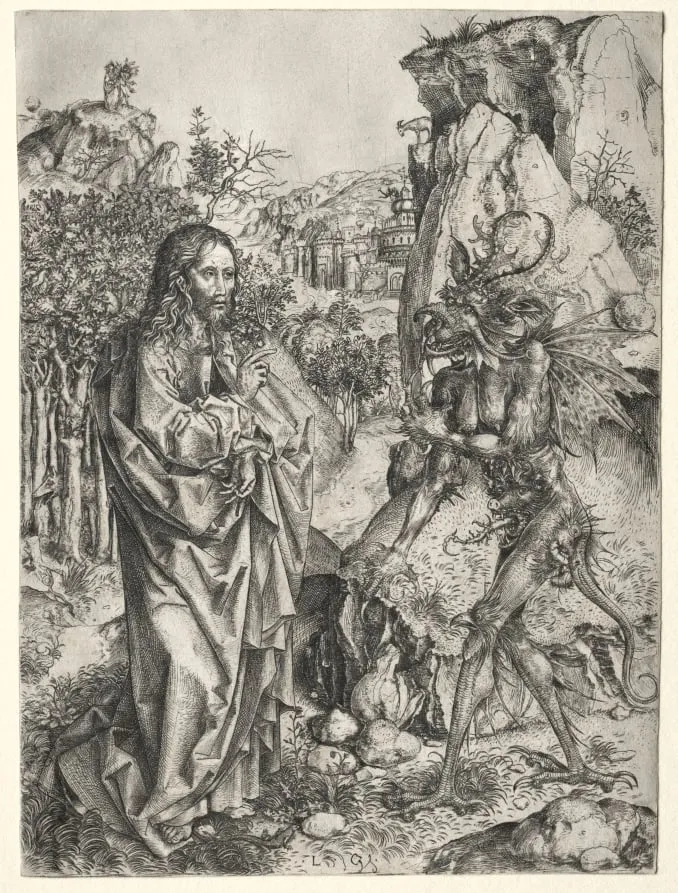
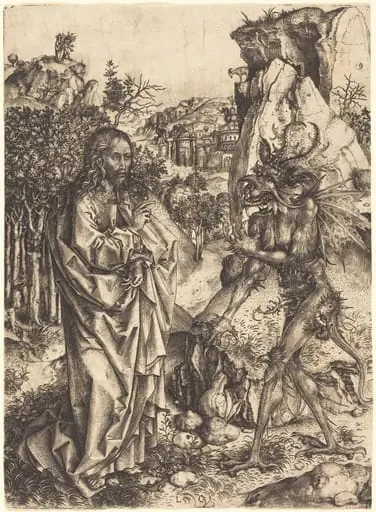
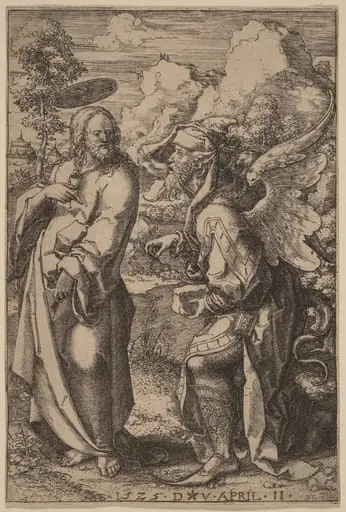
The Temptation of Christ is a print by the Renaissance artist Master L Cz. It dates from 1404 and is held in the collection of the Cleveland Museum of Art. This print illustrates a moment from the Gospel account of Christ’s forty-day fast in the wilderness, following his baptism.
About this work
Overview
The desert setting, traditionally associated with isolation and demonic presence, frames the confrontation between divine resolve and adversarial deception.
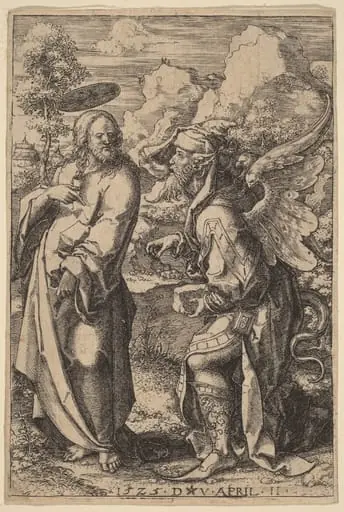
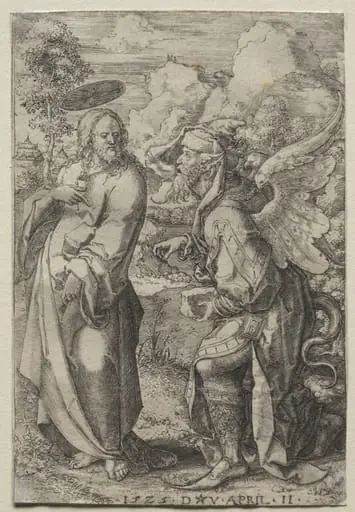
This print illustrates a moment from the Gospel account of Christ’s forty-day fast in the wilderness, following his baptism. It captures the first of three temptations by the devil, who challenges Jesus to transform stones into bread. The scene is rendered with symbolic intensity, emphasizing spiritual trial over naturalistic detail. The desert setting, traditionally associated with isolation and demonic presence, frames the confrontation between divine resolve and adversarial deception.
Subject & Meaning
The narrative centers on Christ’s refusal to use divine power for personal sustenance, affirming spiritual over material needs. The devil, depicted as a grotesque hybrid with horns, scales, and clawed limbs, embodies corruption and deceit. His gesture toward the stones is both a challenge and a test of faith. The imagery reflects early Christian interpretations of temptation as a physical manifestation of moral choice, reinforcing the virtue of endurance in solitude.
Technique & Style
The print employs stark contrasts and angular forms to heighten emotional tension. The devil’s monstrous features are rendered with exaggerated detail, contrasting sharply with Christ’s calm, simplified posture. Line work dominates, with minimal shading, characteristic of early printmaking traditions. The composition directs attention to the interaction between the two figures, using spatial isolation to underscore the psychological weight of the moment.
History & Provenance
Created in the late medieval or early Renaissance period, this print likely originated in a devotional context, intended for private meditation or religious instruction. Its survival suggests circulation among monastic or lay communities familiar with hagiographic themes. While its exact origin and maker remain undocumented, its stylistic traits align with Northern European woodcuts of the period, often produced for devotional use.
Context
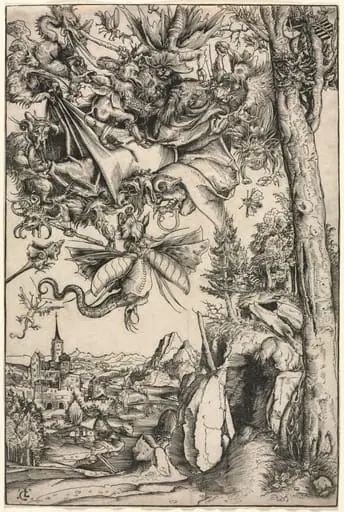
Depictions of Christ’s temptation were common in Christian art, particularly in regions influenced by the Desert Fathers. Saint Anthony’s own trials in the Egyptian desert provided a parallel narrative, reinforcing the idea that spiritual warfare was a universal Christian experience. This print situates Christ’s trial within a broader tradition of ascetic imagery, where the wilderness served as both physical and symbolic battleground for the soul.
Legacy
The image contributed to a visual lexicon of temptation that persisted through centuries of religious art. Its stark portrayal of evil as a physical, monstrous force shaped later representations in both print and painting. While stylistically rooted in its time, the composition’s emotional clarity ensured its relevance in devotional practice, influencing how generations visualized the internal struggle between faith and doubt.
Artist & collection