Artwork
The Temptation of Christ
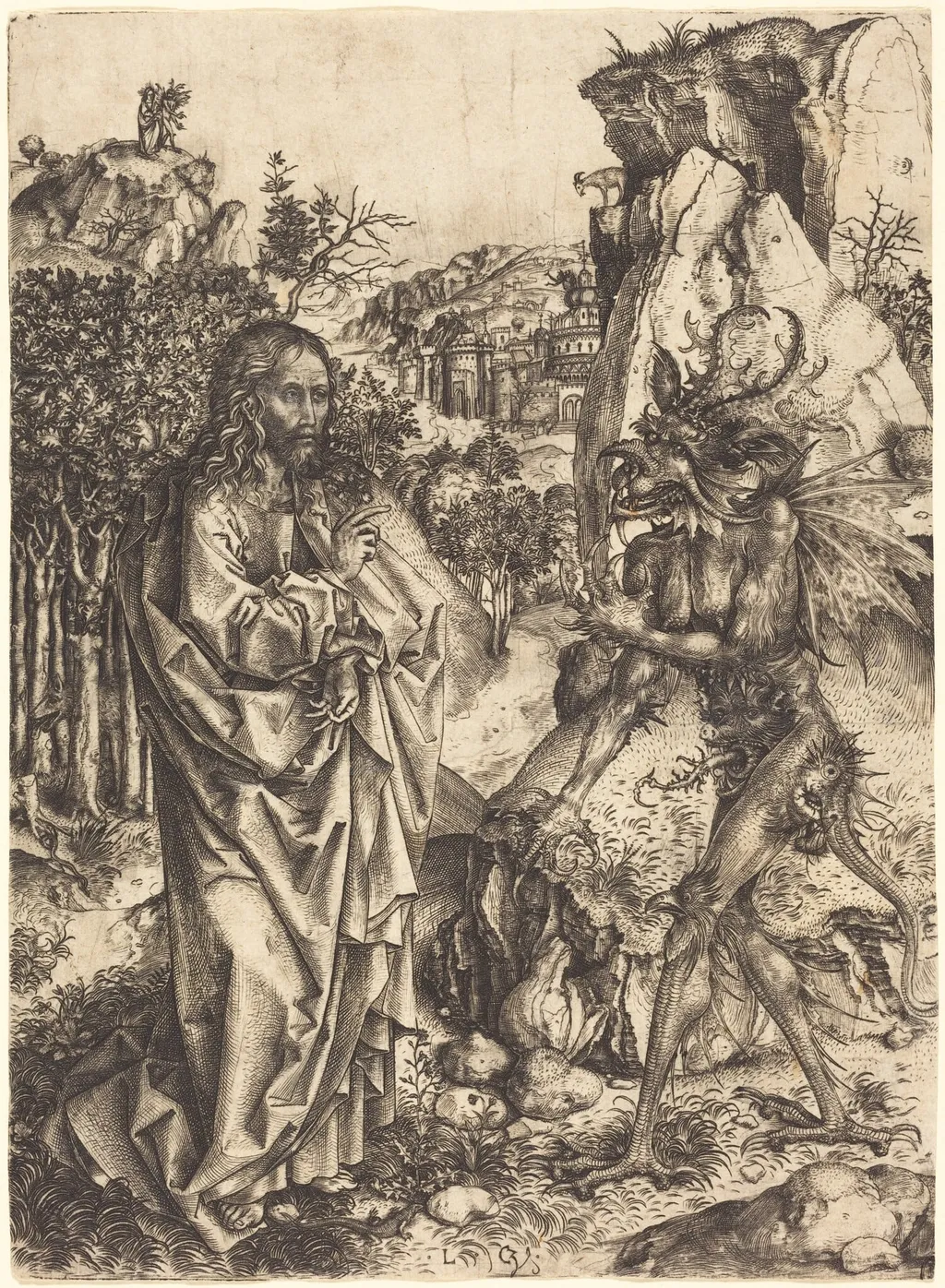
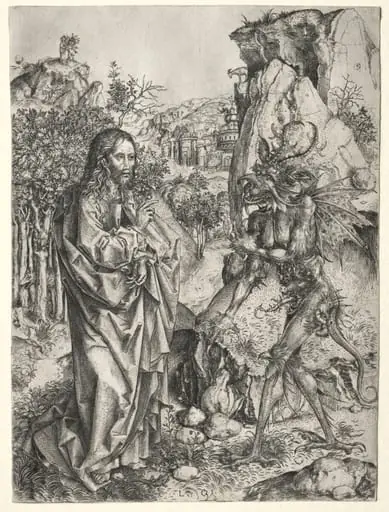
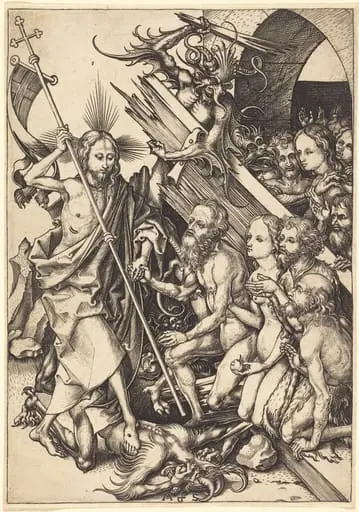
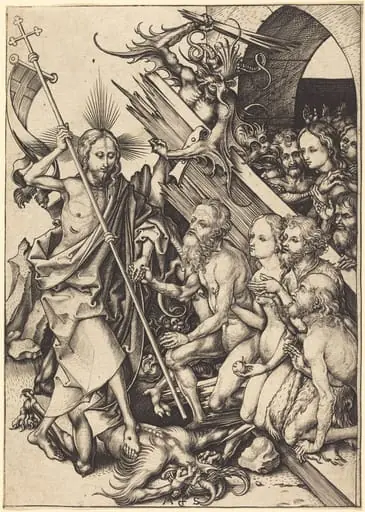
The Temptation of Christ is an ink print by the Renaissance artist Master L. Cz.. It dates from 1502 and is held in the collection of the National Gallery of Art. Created around 1502, this engraving on laid paper portrays the biblical moment of Christ’s resistance to temptation in the desert.
About this work
Overview
The artist, known only as Master LCz, was a German printmaker active between 1480 and 1505, producing a limited but technically accomplished body of work.
Created around 1502, this engraving on laid paper portrays the biblical moment of Christ’s resistance to temptation in the desert. The artist, known only as Master LCz, was a German printmaker active between 1480 and 1505, producing a limited but technically accomplished body of work. His style reflects a transitional phase in Northern Renaissance printmaking, blending the delicate precision of Martin Schongauer with the emerging dynamism seen in Albrecht Dürer’s later engravings.
Subject & Meaning
The scene captures Christ standing alone in a rugged landscape, arms outstretched as if repelling an unseen force. To his right, a horned figure crouches on a cliff, symbolizing Satan’s presence without direct confrontation. The distant town on the hill suggests worldly comforts being rejected. The composition emphasizes spiritual resolve through isolation and restraint, aligning with devotional themes common in early 16th-century religious imagery.
Technique & Style
Fine, controlled lines define the rocky terrain, Christ’s flowing robes, and the textured cliffside. Shading is achieved through closely spaced hatching, creating subtle gradations of light and volume. The use of laid paper, with its characteristic chain lines, was typical for prints of the period. The artist’s meticulous handling of detail—especially in the landscape and fabric folds—demonstrates a high level of craftsmanship, characteristic of skilled engravers working before the rise of Dürer’s dominant style.
History & Provenance
Only a handful of prints are securely attributed to Master LCz, making this work a rare example of his output. Its survival suggests it was circulated among collectors or religious communities familiar with devotional imagery. No documented ownership records exist prior to the 19th century, but its technical quality indicates it was produced for an audience with access to high-quality prints, likely in southern Germany or the Rhineland.
Context
In the early 1500s, engraving emerged as a primary medium for disseminating religious narratives beyond manuscript illumination. Artists like Master LCz contributed to a growing market for portable, reproducible images used in private devotion. The emphasis on detailed landscapes and psychological tension reflects broader trends in Northern Renaissance art, where naturalism and narrative clarity became increasingly valued in printed formats.
Legacy
Though little known today, Master LCz’s work represents a crucial link between the late Gothic tradition of Schongauer and the humanist precision of Dürer. His restrained yet expressive handling of form influenced the development of narrative engraving in Germany. The survival of this print underscores the importance of anonymous artisans in shaping the visual culture of the early Renaissance, even when their names were lost to history.
Own this work as a print
Artist & collection
Artist
Master L. Cz. (active c. 1480–1505) was an anonymous late 15th-century German Renaissance printmaker. Only twelve engravings by his hand are extant, but their virtuosity establishes him as a talented artist whose work…