Artwork
Christ in Limbo
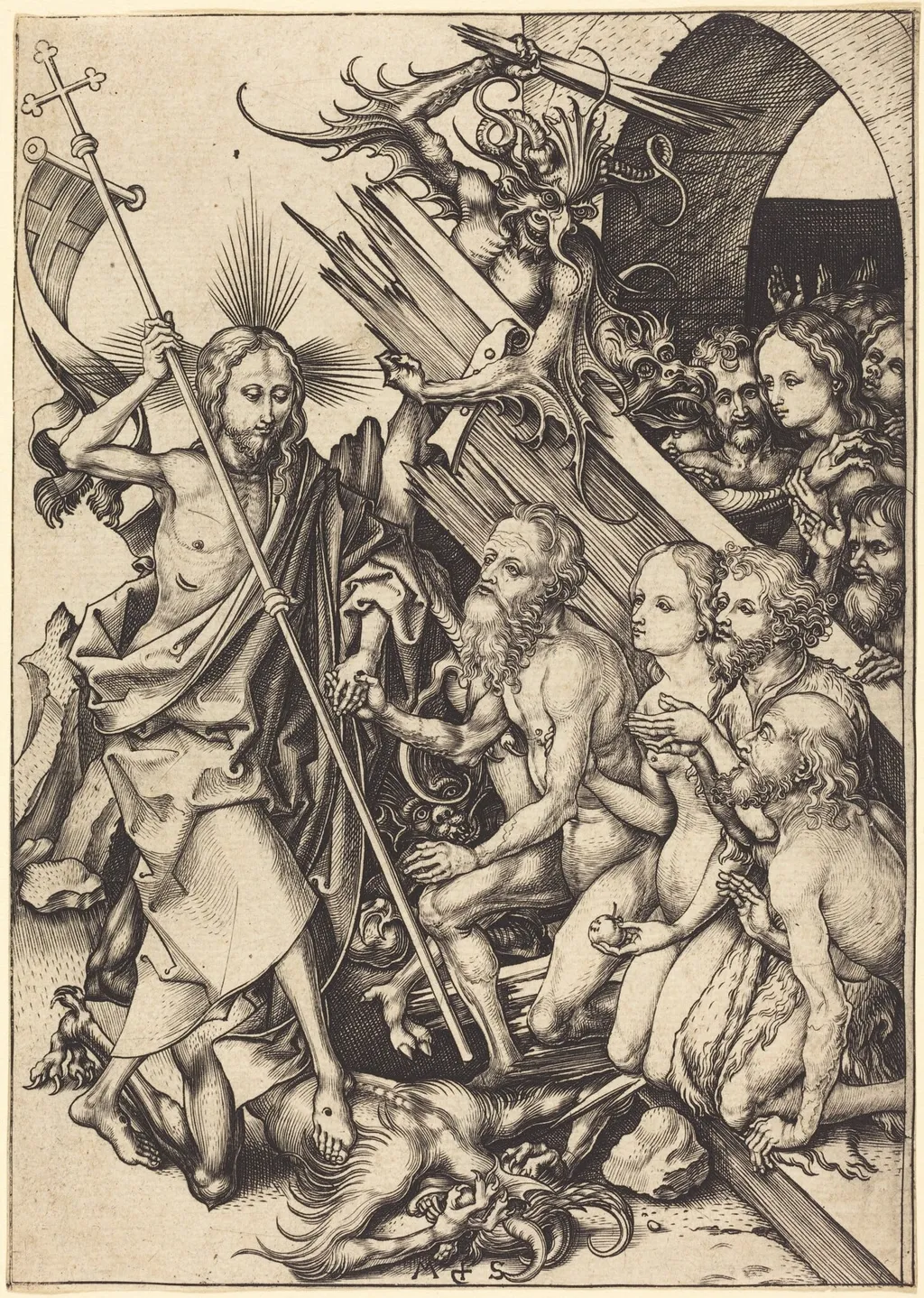
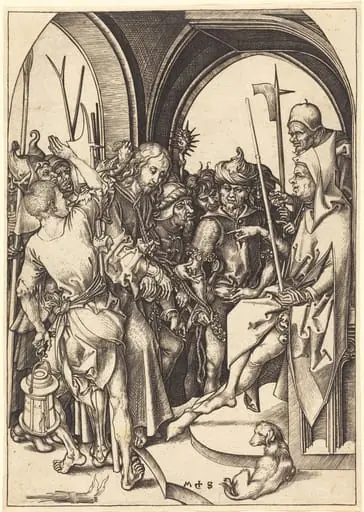
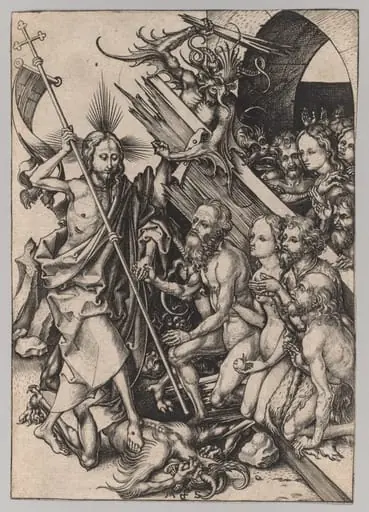
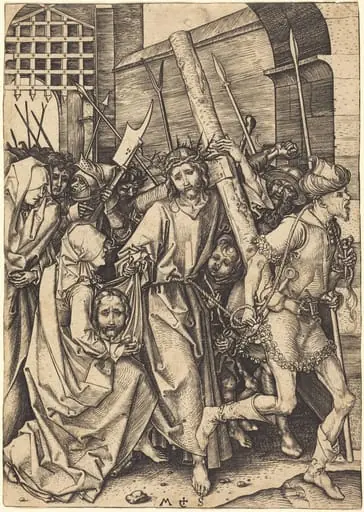
Christ in Limbo is an ink print by the Renaissance artist Martin Schongauer. It dates from 1480 and is held in the collection of the National Gallery of Art.
About this work
Overview
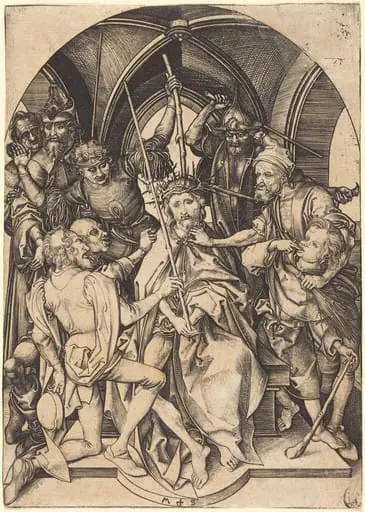
Martin Schongauer’s engraving titled *Christ in Limbo*, created around 1480, presents a central figure of Christ surrounded by a gathering of onlookers within a dimly lit space. The work exemplifies the devotional imagery common to late‑15th‑century Northern Europe, employing the print medium to disseminate a theological narrative to a broad audience.
Subject & Meaning
The composition portrays the moment when Christ, depicted with a staff and robe, stands amid the souls awaiting salvation. The surrounding figures display a range of reactions—from reverent awe to palpable fear—reflecting the medieval concept of the “Harrowing of Hell,” in which Christ descends to liberate the righteous dead.
Technique & Style
Schongauer’s mastery of line is evident in the dense cross‑hatching that models flesh, fabric, and shadow, creating a convincing sense of volume. The engraving’s tonal gradations emerge from intersecting strokes, while the dark background recedes, allowing the illuminated central figure to dominate the visual field.
History & Provenance
Part of a corpus of 116 extant prints bearing Schongauer’s monogram, this piece underscores his pre‑Dürer prominence as the leading Northern printmaker. The engraving was known to Albrecht Dürer, who collected Schongauer’s works, indicating its circulation among contemporary artists and patrons.
Context
Produced in the Alsace region during the early Renaissance, the print reflects the period’s intensified focus on personal piety and the use of reproducible images to convey scriptural events. Its devotional theme aligns with the era’s emphasis on visual aids for meditation and instruction.
Artist & collection

Artist
Martin Schongauer, also known as Martin Schön or Hübsch Martin by his contemporaries, was an Alsatian engraver and painter.