Artwork
Saint Catherine
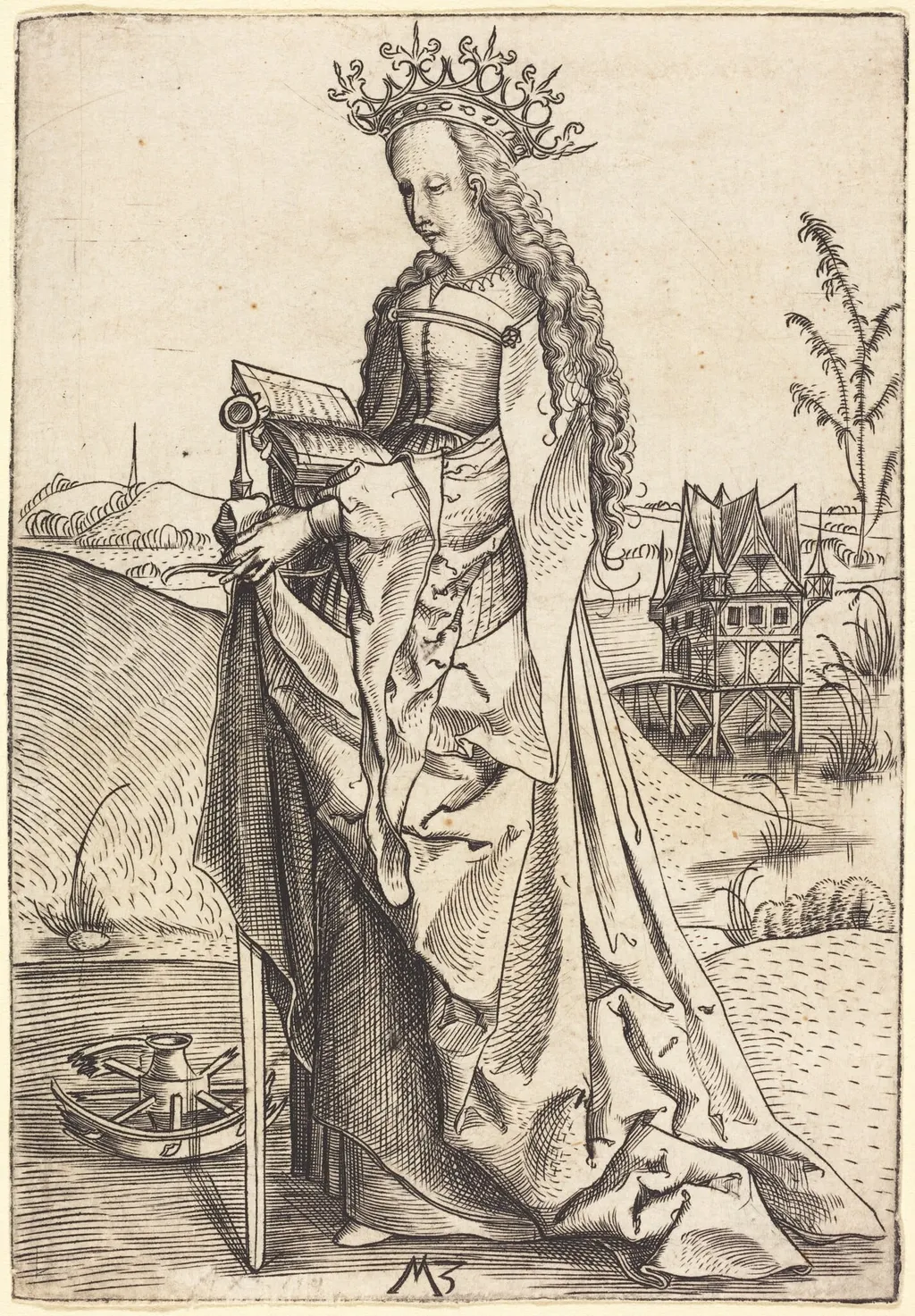
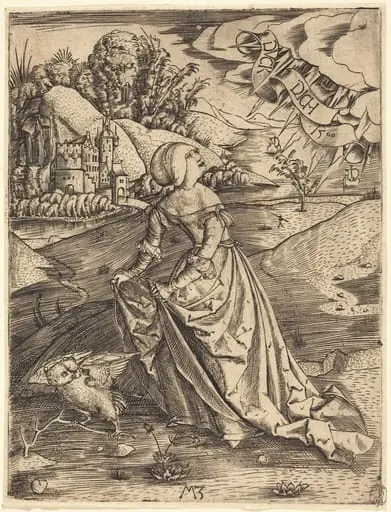
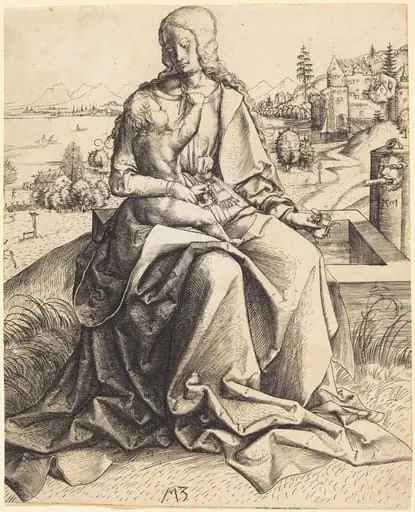
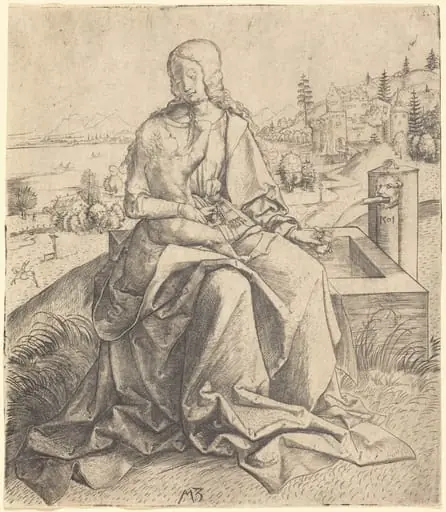
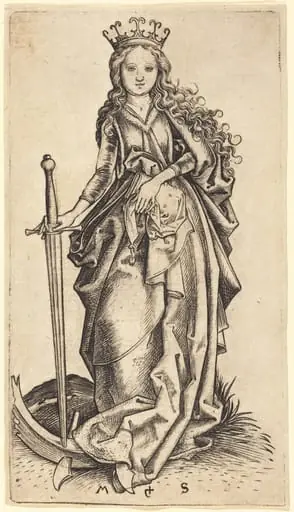
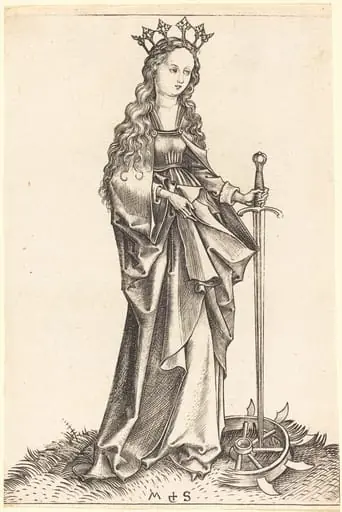
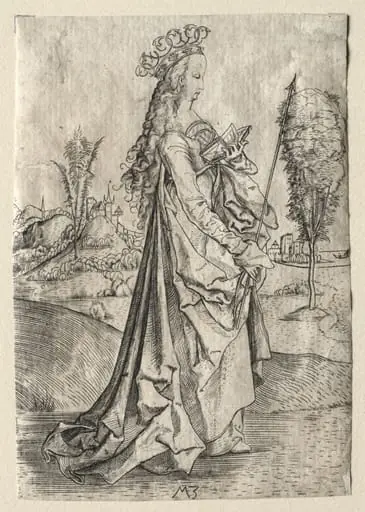
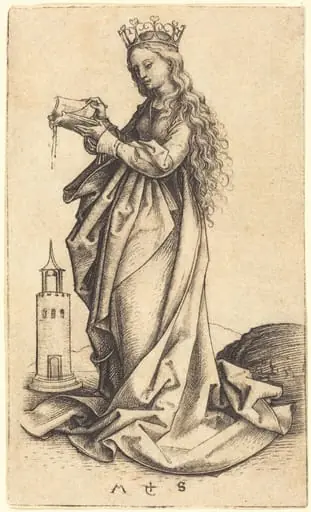
Saint Catherine is an ink print by the Renaissance artist Master MZ. It dates from 1500 and is held in the collection of the National Gallery of Art.
About this work
Overview
The work belongs to the early Renaissance print tradition, where intricate engraving techniques allowed for nuanced expression in small-scale religious imagery.
Created around 1500, this engraving on laid paper depicts Saint Catherine, a Christian martyr, rendered in fine linear detail by an artist known as Master MZ. The work belongs to the early Renaissance print tradition, where intricate engraving techniques allowed for nuanced expression in small-scale religious imagery. Its precision and compositional balance reflect the technical ambitions of printmakers at the turn of the sixteenth century.
Subject & Meaning
The figure of Saint Catherine is identified by her attributes: a crown signifying her royal status, a sword representing her beheading, and a spiked wheel recalling the instrument of her failed torture. Behind her, a distant town and a ship suggest her earthly origins and the broader world beyond her martyrdom. The image functions as both devotional aid and narrative summary, condensing her legend into a single, symbolic scene.
Technique & Style
Master MZ employed fine, controlled engraving lines to model form and suggest texture, using cross-hatching for shadow and delicate contours to define fabric and hair. The background, rendered with lighter, sparser strokes, recedes spatially, creating depth without perspective systems. This mastery of line was uncommon in early prints, elevating the work beyond mere illustration into a refined graphic art.
History & Provenance
The engraving is attributed to Master MZ, an anonymous German artist active in the late fifteenth and early sixteenth centuries. Few of his works survive, and this piece is among the most recognized. It was likely produced for private devotion or scholarly collectors, circulating in northern Europe through print networks. No early ownership records are documented, but its survival in multiple institutional collections indicates early appreciation.
Context
In the decades before the Reformation, images of saints remained central to Catholic piety, even as printing expanded access to religious imagery. Master MZ’s engraving aligns with a trend of detailed, emotionally restrained saint portraits, contrasting with the more dramatic styles emerging in Italy. The inclusion of landscape elements reflects northern European interest in naturalistic detail, even in devotional subjects.
Legacy
This engraving exemplifies the technical maturity of early German printmaking and influenced later artists in the use of line to convey both narrative and spiritual gravity. Though Master MZ’s identity remains obscure, his work contributed to the canon of Renaissance prints studied for their craftsmanship. It stands as a quiet but significant artifact of pre-Reformation religious visual culture.
Artist & collection