Artwork
The Circumcision
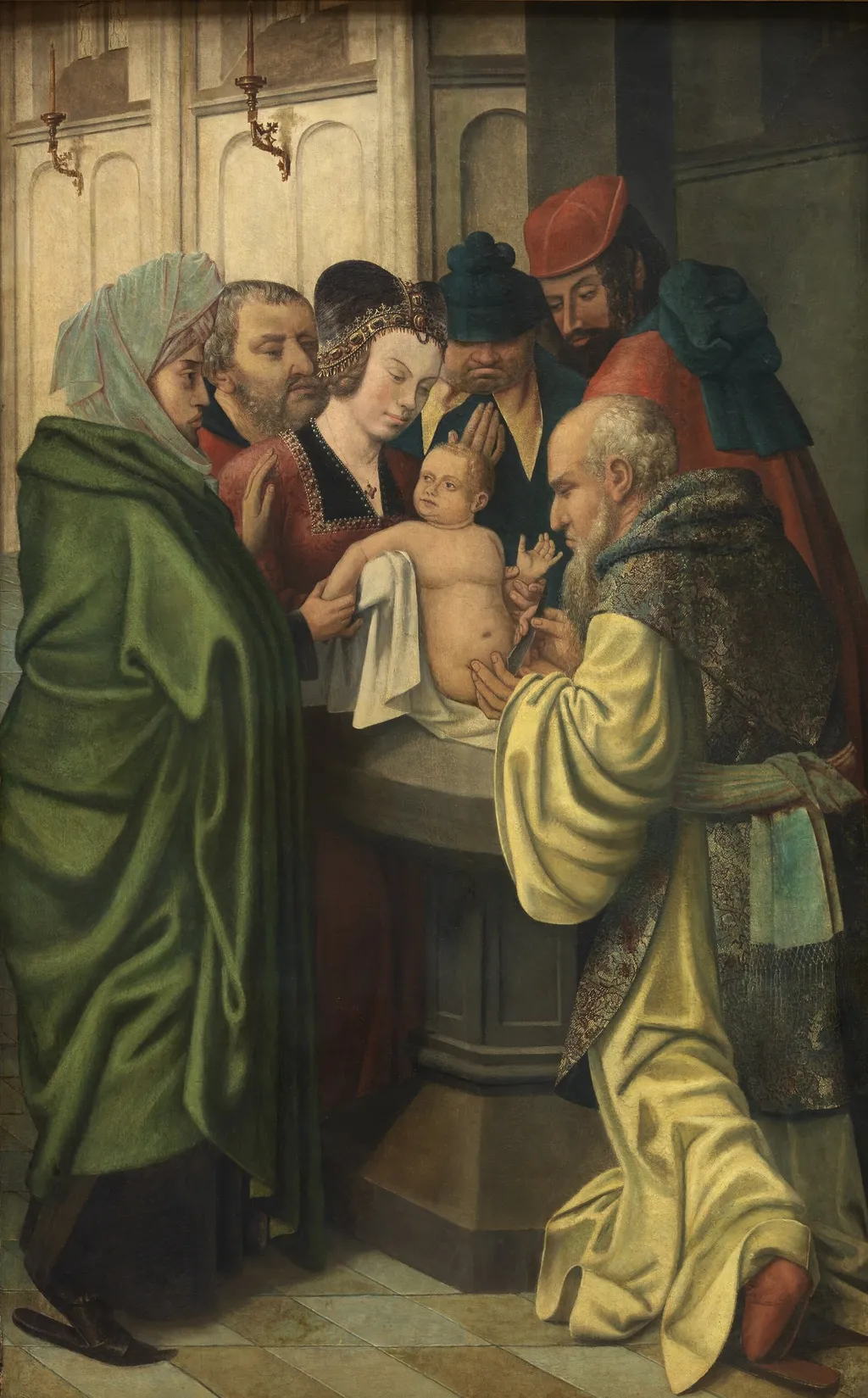
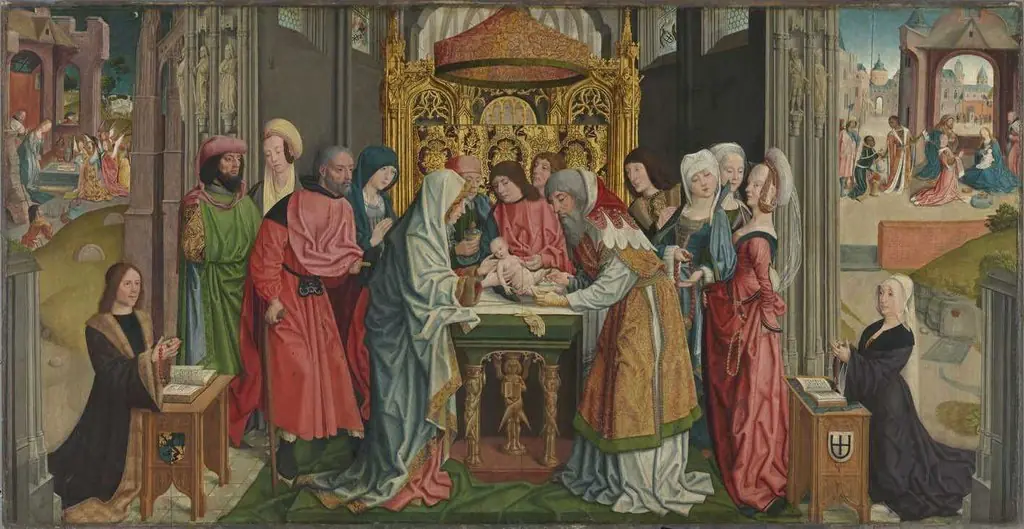
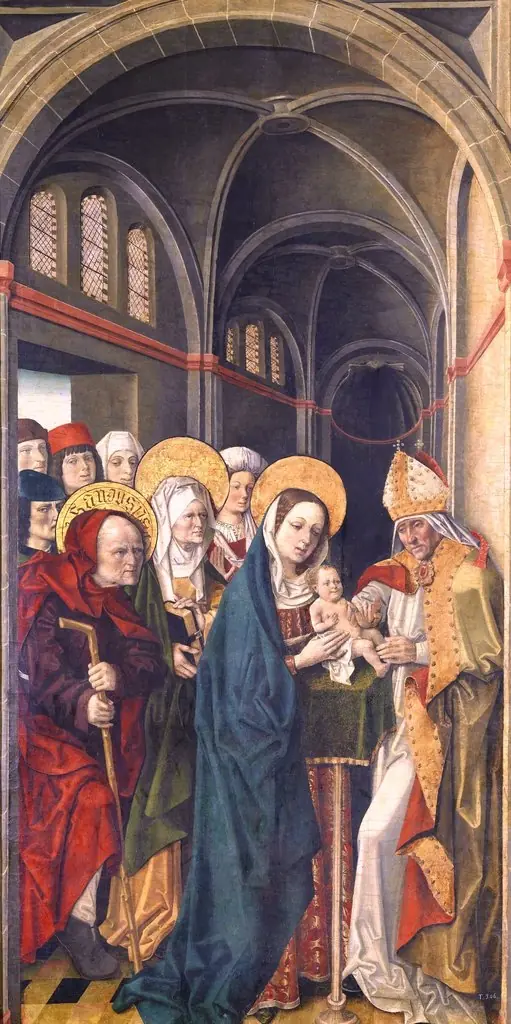
The Circumcision is an oil painting by the Northern Renaissance artist Master of Frankfurt. It dates from 1500 and is held in the collection of the Royal Museum of Fine Arts Antwerp.
About this work
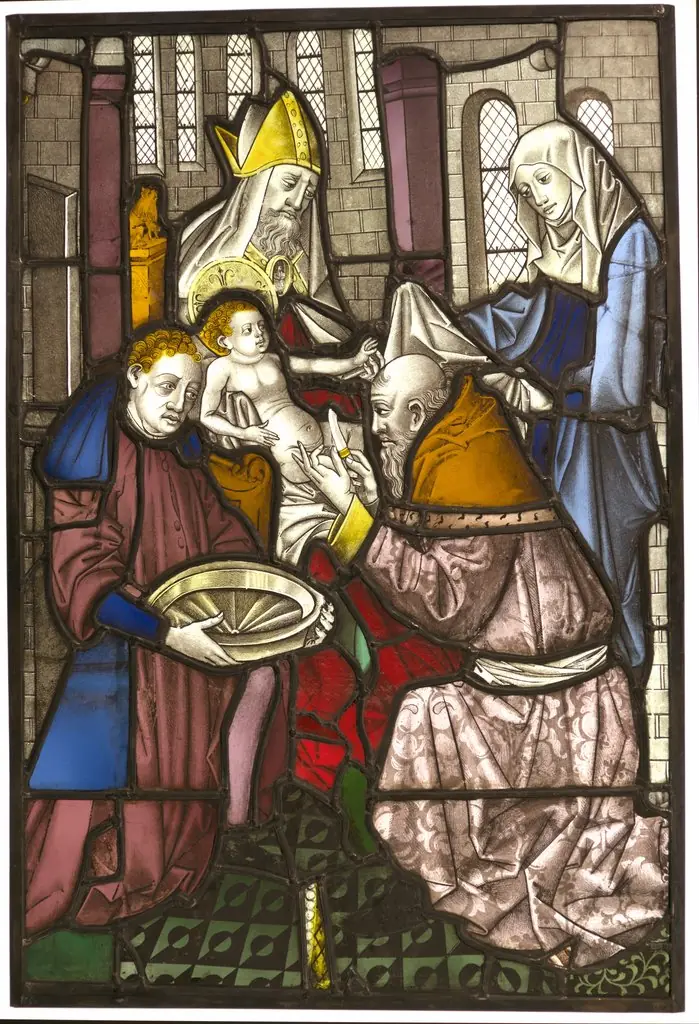
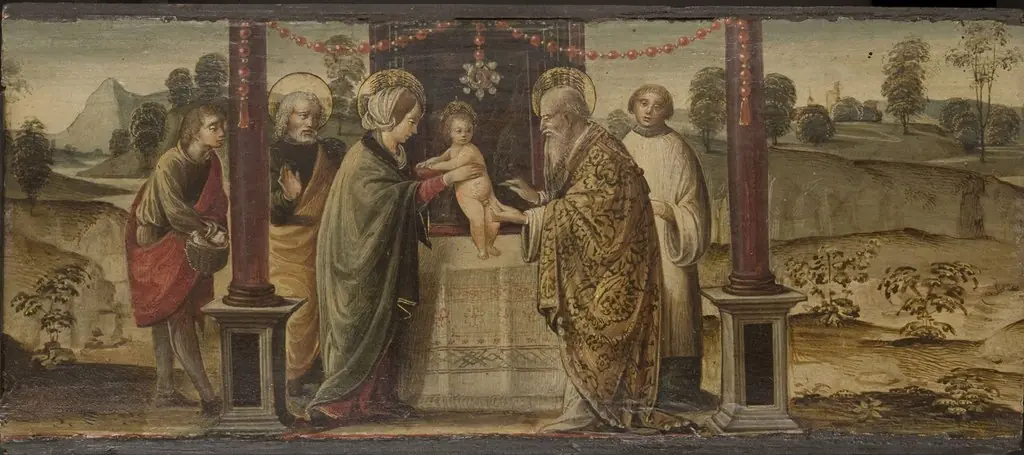
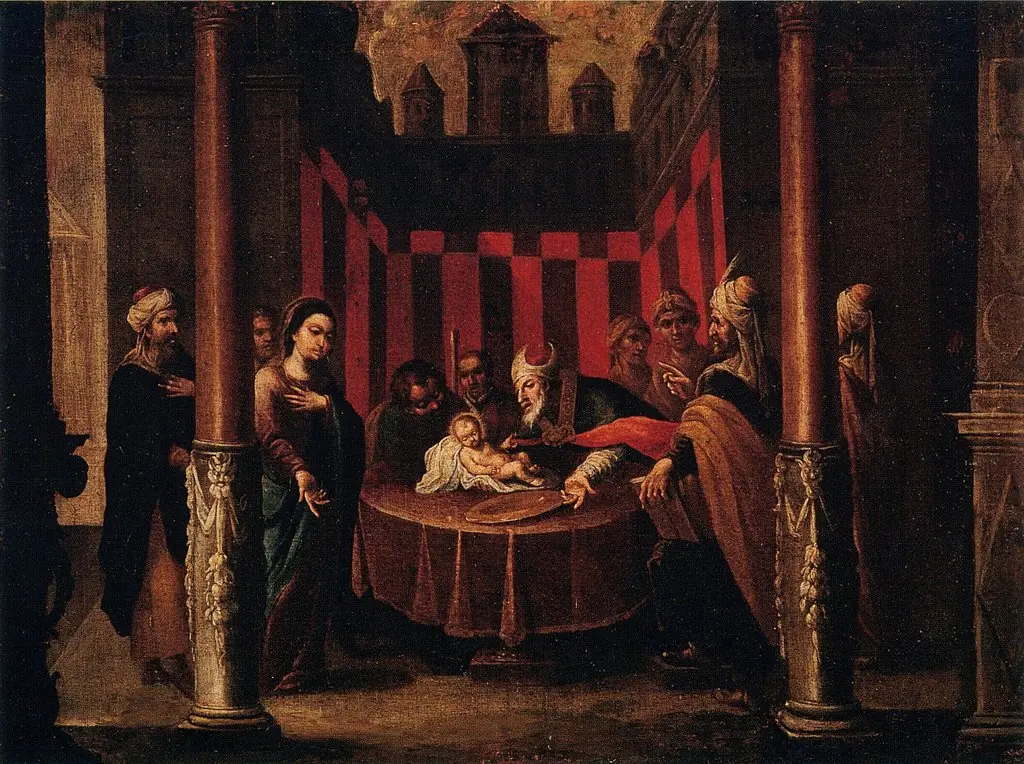
This painting depicts a group of people gathered around a baby, with one man holding the child and another standing in front of them.
This painting depicts a group of people gathered around a baby, with one man holding the child and another standing in front of them. The scene is set in a room with a stone floor and a wall featuring arched windows.
The group is dressed in clothing from the early 16th century, with the men wearing hats and robes. The woman in the center of the group is adorned with a gold headpiece and a red dress.
The painting is done in oil paint, with the artist using chiaroscuro to create depth and contrast. The use of impasto adds texture to the painting, while glazing enhances the colors. If you're interested in learning more about the artist's technique, you might want to look into chiaroscuro.
Overview
The Circumcision is a religious oil painting created by the Master of Frankfurt in 1500. It is part of the collection at the Royal Museum of Fine Arts in Antwerp.
Subject & Meaning
The painting depicts the biblical scene of a circumcision, with a group gathered around the infant. Figures include a man holding the child, another standing before them, and a central woman adorned in a gold headpiece and red dress, alongside men in hats and robes, all set in a room with a stone floor and arched windows.
Technique & Style
The artist employed chiaroscuro to achieve depth and contrast. The painting features impasto for textured elements and glazing to enhance color intensity.
History & Provenance
Created in 1500, the work's provenance is documented from its creation until its current holding at the Royal Museum of Fine Arts in Antwerp, though specific ownership transitions are not detailed here.
Context
The attire of the figures, including the men's hats and robes and the woman's gold headpiece and red dress, reflects early 16th-century fashion, situating the scene's depiction in the artist's contemporary time despite its biblical subject.
Own this work as a print
Artist & collection


 Saint Anne with the Virgin and the Christ Child
 Festival of the Archers
 Saint Catherine
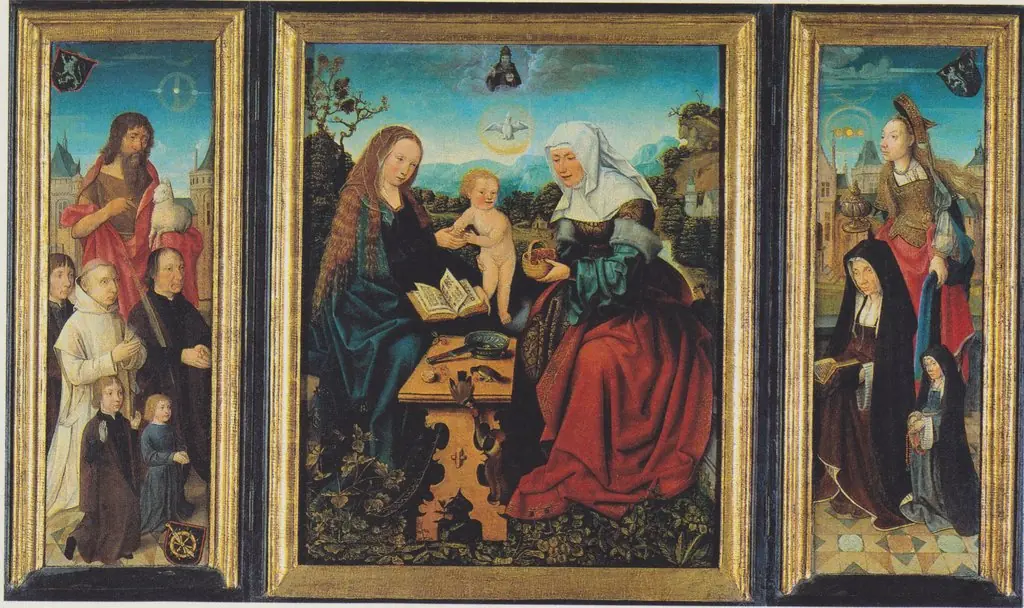 Portrait of Dirck van Heemskerck van Beest & sons with John the Baptist, Madonna and Child with St Anne, and Gertruid van Diemen & daughter with Mary Magdalene
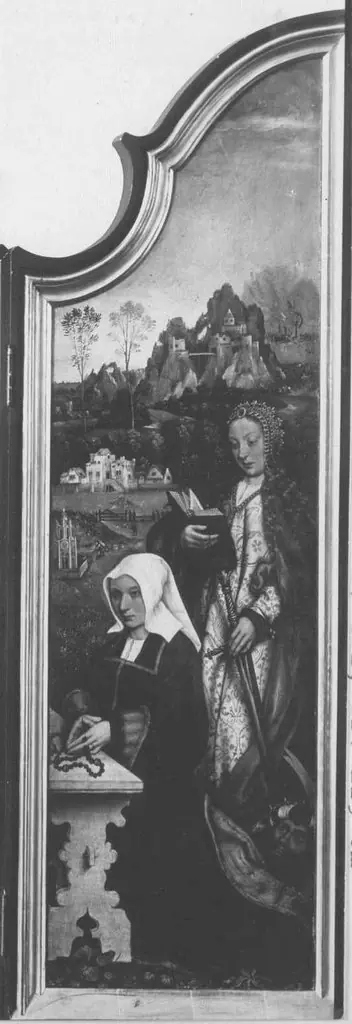 Beweinungsaltar: Hl. Katharina mit Stifterin
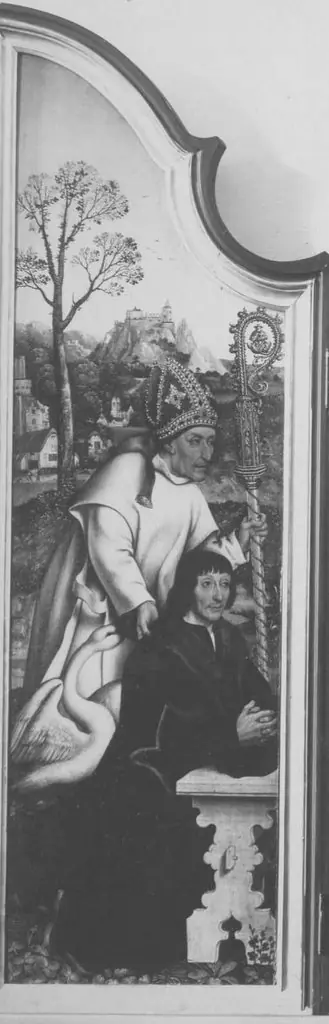 Beweinungsaltar: Hl. Hugo von Lincoln mit Stifter
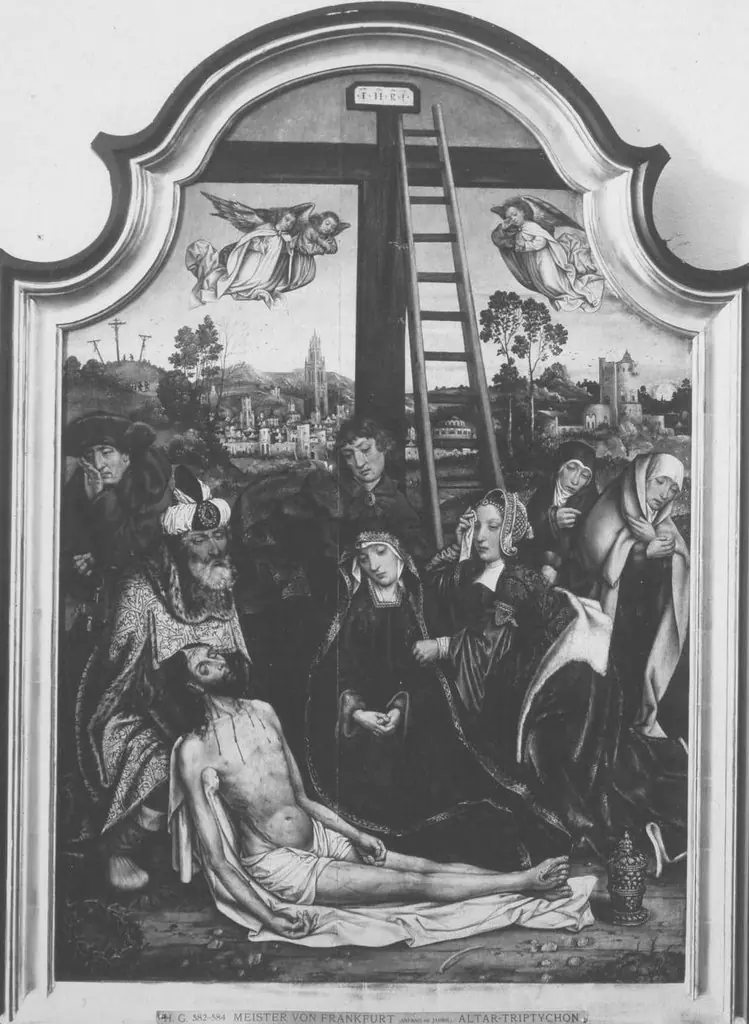 Beweinungsaltar: Beweinung Christi
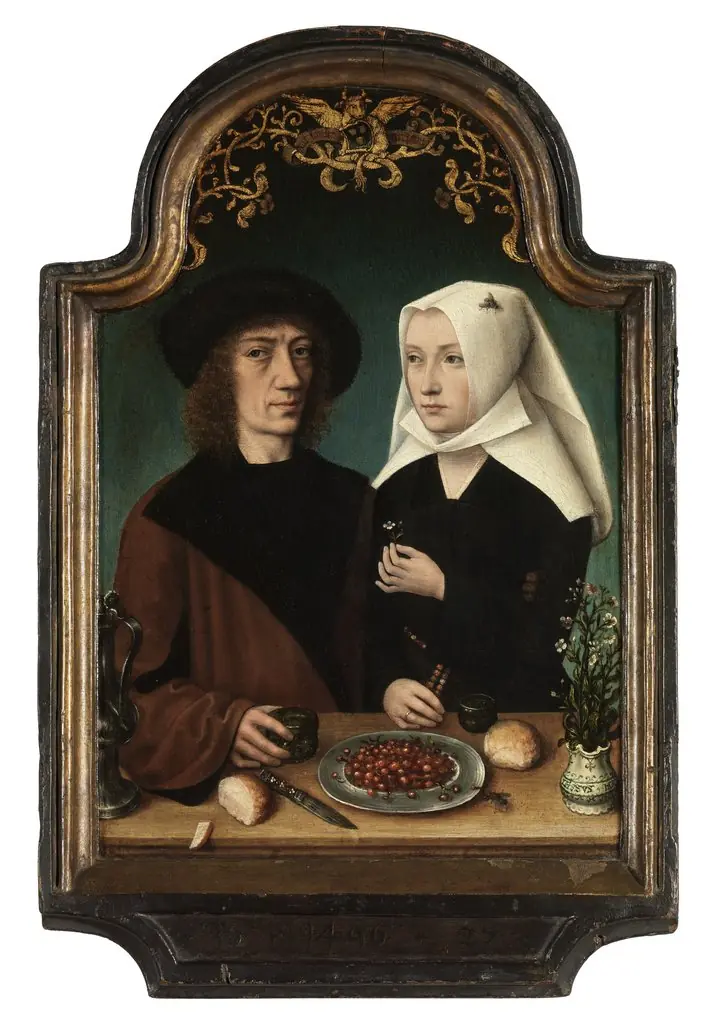 The Painter and his Wife