Artwork
The Circumcision of Christ
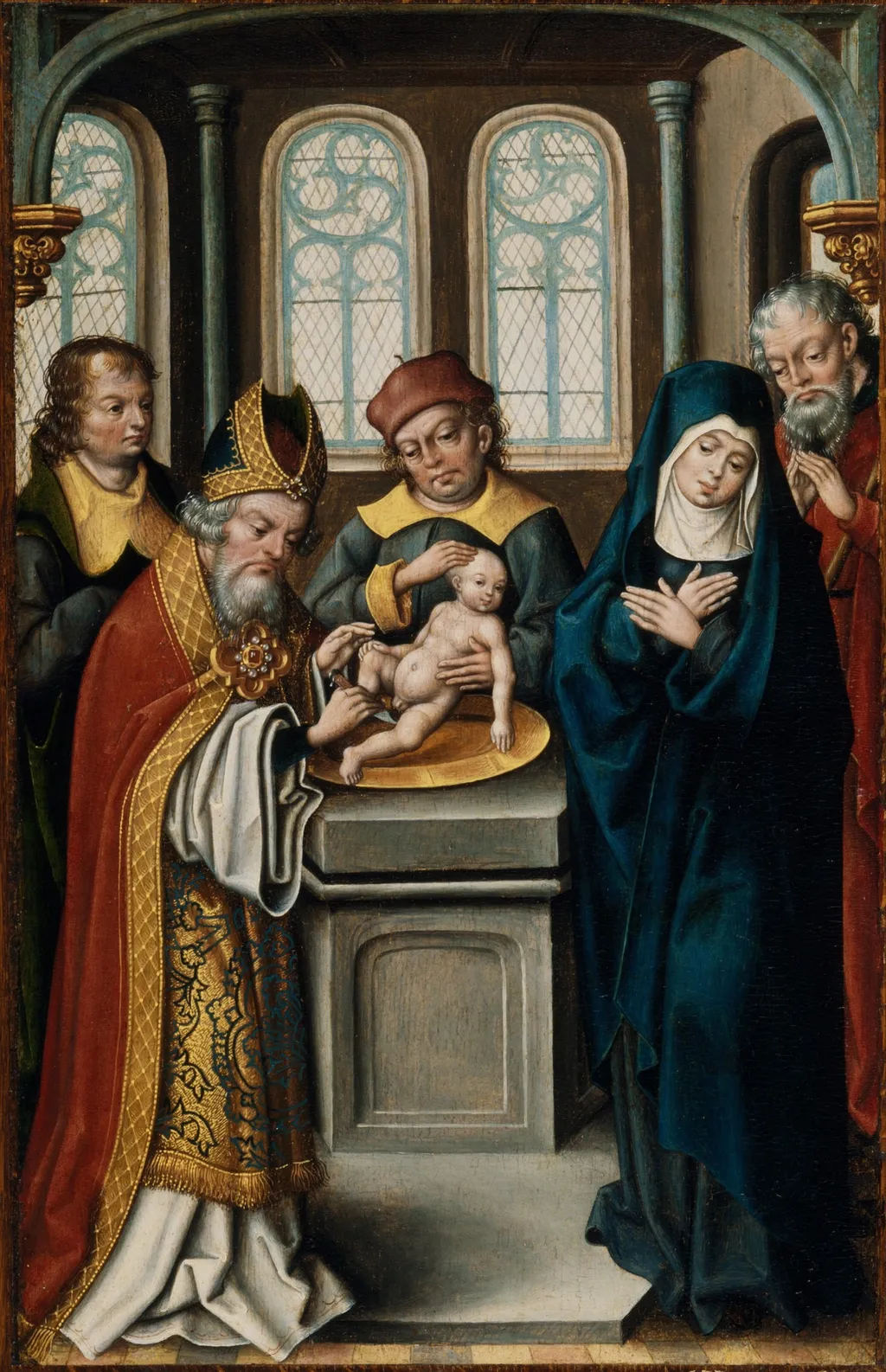
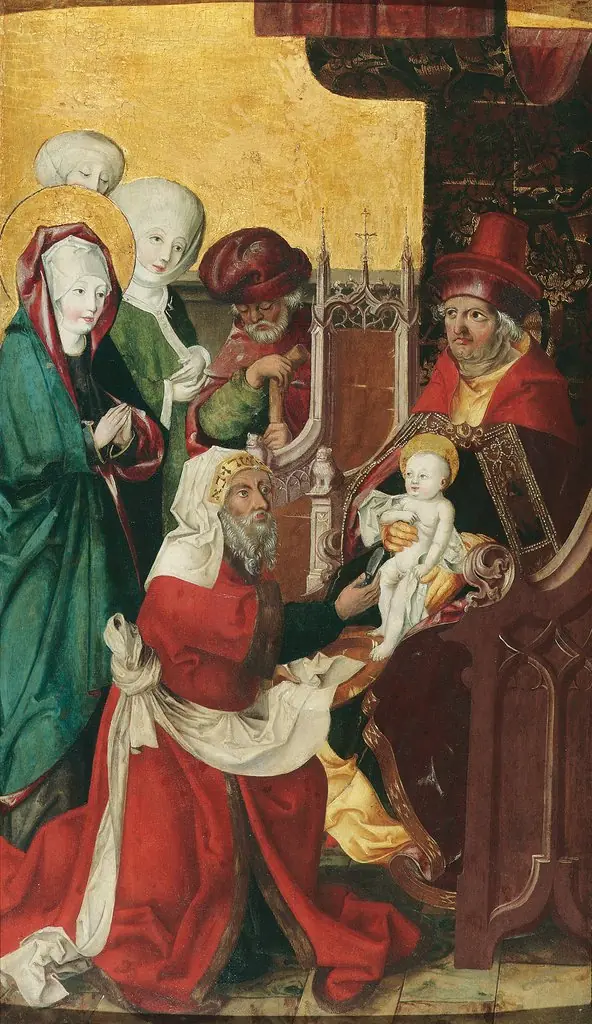
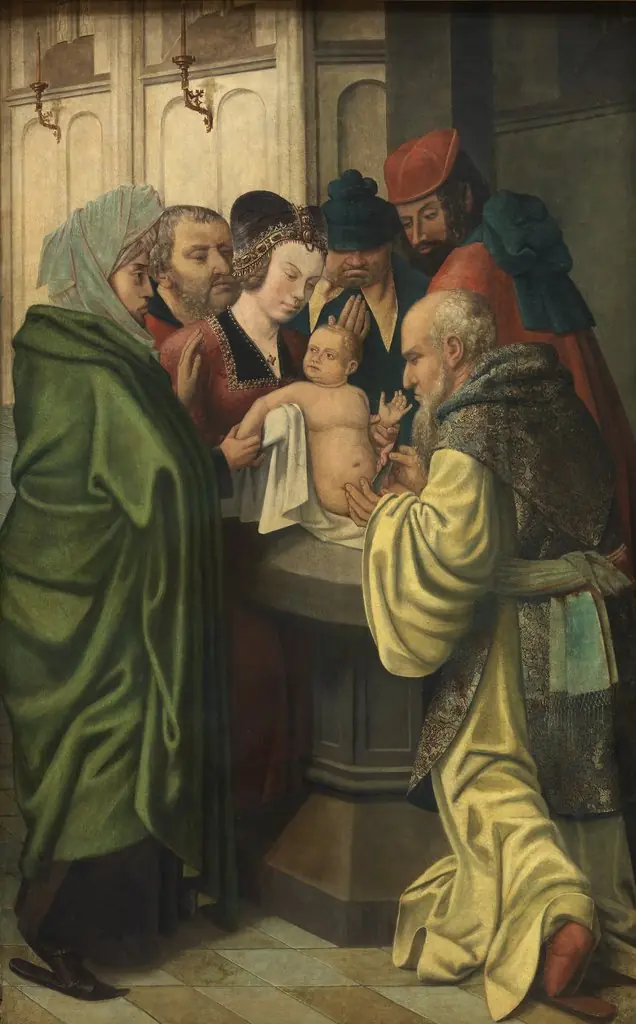
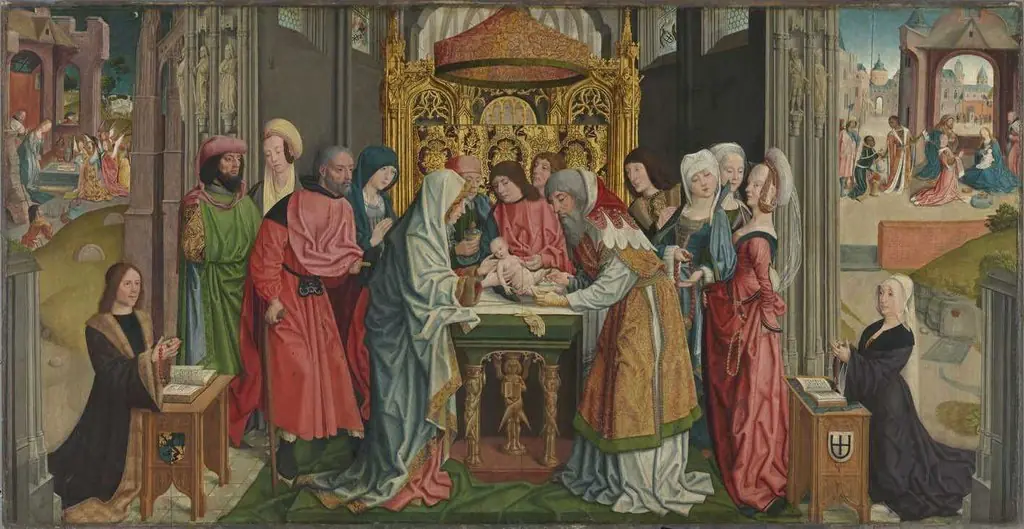
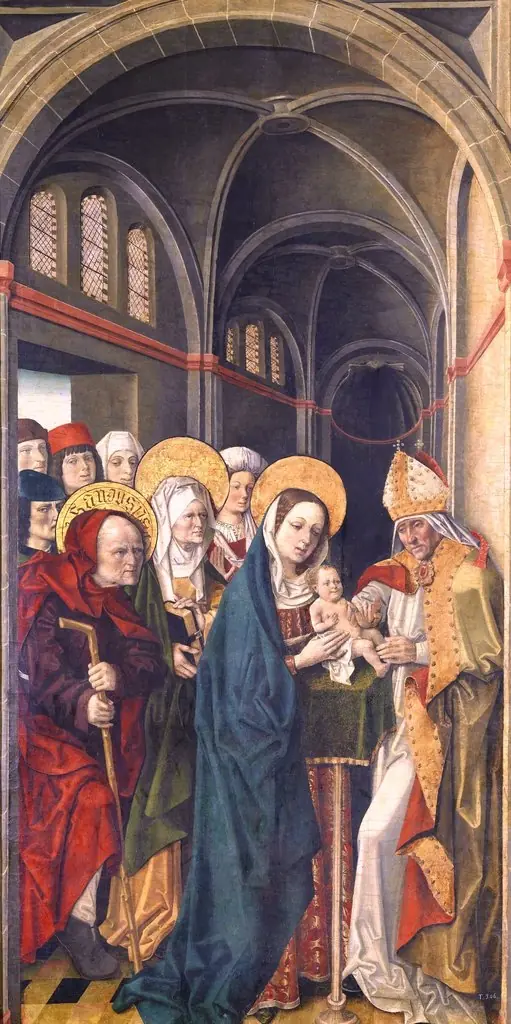
The Circumcision of Christ is an oil painting by Jan Baegert. It dates from 1498 and is held in the collection of the Los Angeles County Museum of Art.
About this work
Overview
Painted in 1498 by Jan Baegert, this oil-on-panel work depicts the ritual circumcision of the infant Jesus, a moment described in the Gospel of Luke.
Painted in 1498 by Jan Baegert, this oil-on-panel work depicts the ritual circumcision of the infant Jesus, a moment described in the Gospel of Luke. The scene is rendered with quiet intensity, set within a modest interior defined by stone walls and arched windows. The composition centers on the child lying on a surface, surrounded by figures in subdued reds, blues, and golds, conveying a tone of solemn devotion rather than theatrical drama.
Subject & Meaning
The painting illustrates the circumcision of Jesus on the eighth day after his birth, fulfilling Jewish law and foreshadowing his future sacrifice. The central act—performed by a man in a red robe and gold hat—symbolizes Christ’s entry into the covenant. The presence of Mary, with hands clasped in prayer, and other witnesses underscores the sacredness of the moment, emphasizing obedience, humility, and divine fulfillment within a human context.
Technique & Style
Baegert employs fine brushwork and layered glazes to achieve subtle tonal transitions, typical of late Gothic Netherlandish painting. Facial expressions are restrained, and drapery folds are rendered with precision, enhancing the quiet dignity of the figures. The muted palette and limited spatial depth reflect a devotional focus over naturalism, aligning with contemporary religious panel painting practices in the Low Countries.
History & Provenance
The painting was created in the late 15th century in the Netherlands, likely for private devotion. It entered the collection of the Los Angeles County Museum of Art in the 20th century, though its earlier ownership history remains partially undocumented. Its survival in good condition suggests it was carefully preserved, possibly within a religious or aristocratic household before its modern acquisition.
Context
During the late 1400s, scenes of Christ’s early life were popular in Northern European devotional art, particularly among communities emphasizing personal piety. The circumcision, though less common than the Nativity or Adoration, served as a theological anchor—linking Christ to Jewish tradition and affirming his humanity. Baegert’s version reflects this trend, prioritizing contemplative stillness over narrative spectacle.
Legacy
Though not widely reproduced or celebrated in mainstream art history, the painting exemplifies the quiet devotional aesthetics of its time. It contributes to the understanding of how ordinary religious rituals were rendered with reverence in pre-Reformation Northern Europe. Its preservation in a major museum ensures continued access for scholarly and public engagement with understudied regional works.
Own this work as a print
Artist & collection