Artwork
Rechter Flügel des sog. Pretschlaipfer-Triptychons: Hll. Gregor und Agathe (Innenseite); Hll. Erasmus und Barbara (Außenseite)
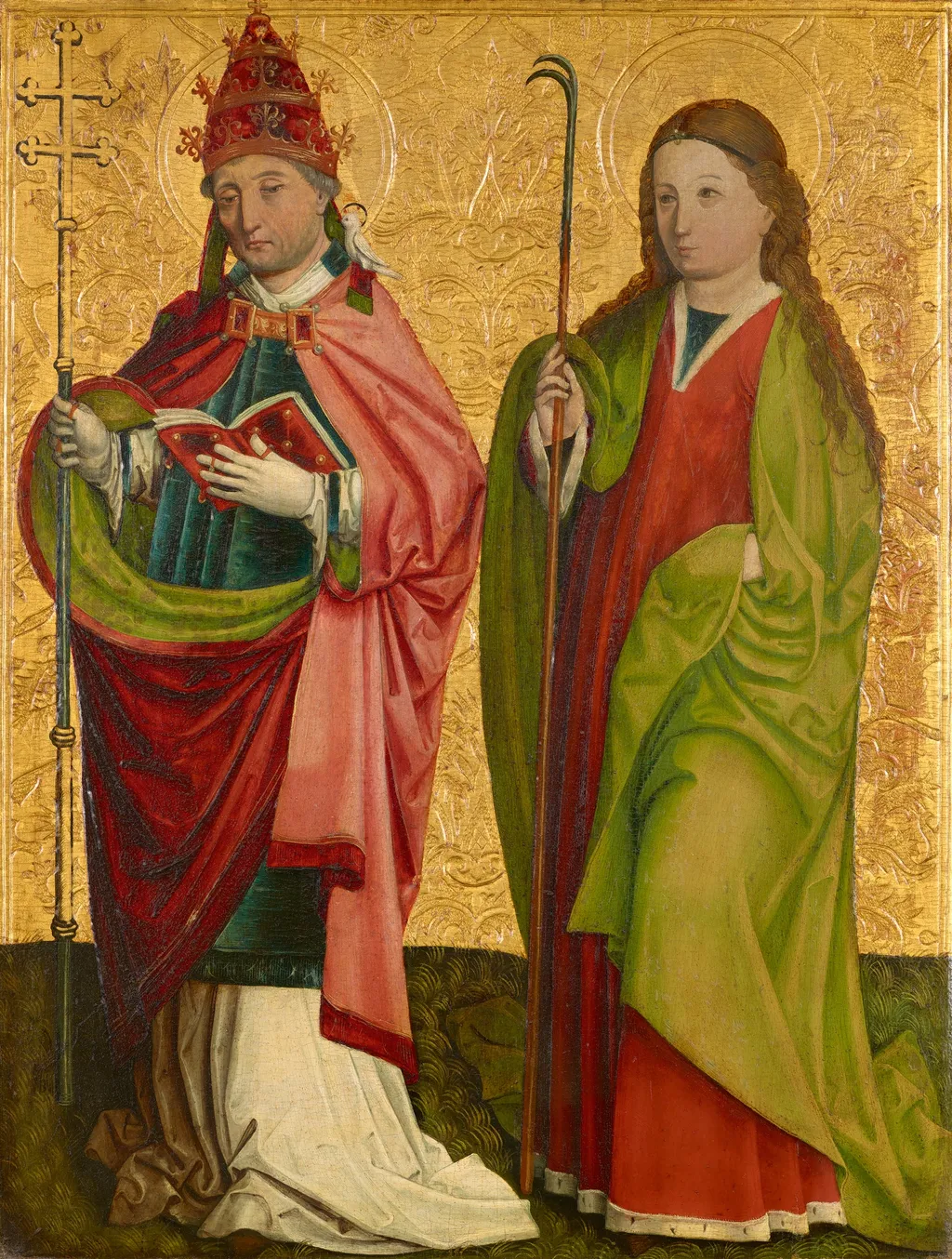
Rechter Flügel des sog. Pretschlaipfer-Triptychons: Hll. Gregor und Agathe (Innenseite); Hll. Erasmus und Barbara (Außenseite) is an unspecified painting by the Northern Renaissance artist Master of Großgmain. It dates from 1490 and is held in the collection of the Kunsthistorisches Museum.
About this work
Overview
The work is executed in tempera and gold leaf on wood, typical of late Gothic devotional panels.
This panel forms part of a triptych attributed to the Master of Großgmain, dated around 1490. It depicts two saints on the interior side: Saint Gregory the Great and Saint Agatha. The work is executed in tempera and gold leaf on wood, typical of late Gothic devotional panels. It resides in the collection of the Kunsthistorisches Museum in Vienna, where it is studied as an example of regional Austrian religious art from the late 15th century.
Subject & Meaning
Saint Gregory, identified by his episcopal regalia, is shown as a teacher of the Church, holding a book symbolizing his theological writings. Saint Agatha, a virgin martyr, is depicted with a staff and often associated with the instrument of her torture, though not explicitly shown here. Their pairing reflects a devotional emphasis on intercessory saints, common in altarpieces meant to inspire prayer and veneration among the faithful.
Technique & Style
The figures are rendered with fine linear detail and restrained modeling, characteristic of late Gothic panel painting. Gold leaf backgrounds feature delicate punched patterns, enhancing the sacred atmosphere. The clothing is rendered in rich, contrasting hues—red and green—with attention to fabric folds and texture. A small white bird perched on Gregory’s shoulder may symbolize divine inspiration or the Holy Spirit, a subtle theological detail integrated into the composition.
History & Provenance
The panel originated as the left interior wing of a triptych commissioned for a church or private chapel, likely in the Salzburg region. It entered the Kunsthistorisches Museum’s collection in the 19th century, following the dissolution of ecclesiastical holdings. Its companion panels, now separated, are believed to depict other saints on the exterior and a central scene of the Virgin and Child, though their current locations remain uncertain.
Context
Created during a period of heightened devotional imagery in southern Germany and Austria, this work reflects the influence of Netherlandish painting in its attention to detail and symbolic content. Local workshops, like that of the Master of Großgmain, adapted these styles for regional patrons, blending traditional iconography with emerging naturalism. Such triptychs served both liturgical and educational roles in communities with limited literacy.
Legacy
Though the Master of Großgmain remains an anonymous figure, this panel contributes to the understanding of regional artistic production in late medieval Austria. It exemplifies how devotional art functioned within ecclesiastical spaces, reinforcing saintly veneration through visual narrative. The work continues to inform scholarly studies on the transmission of iconographic models across Central Europe in the decades before the Reformation.
Own this work as a print
Artist & collection

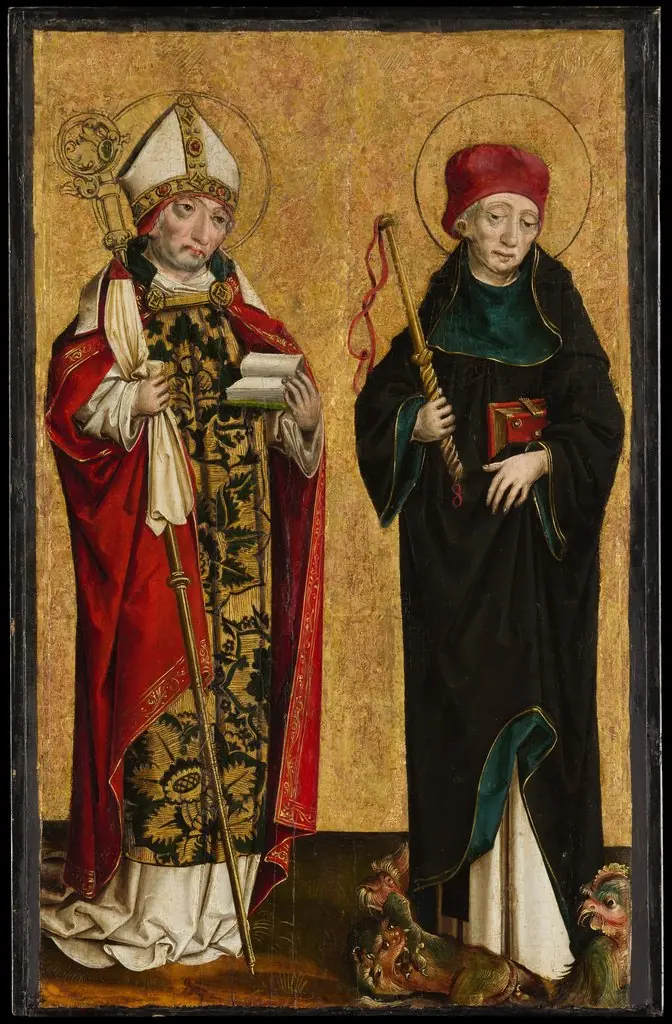 Saint Adalbert and Saint Procopius
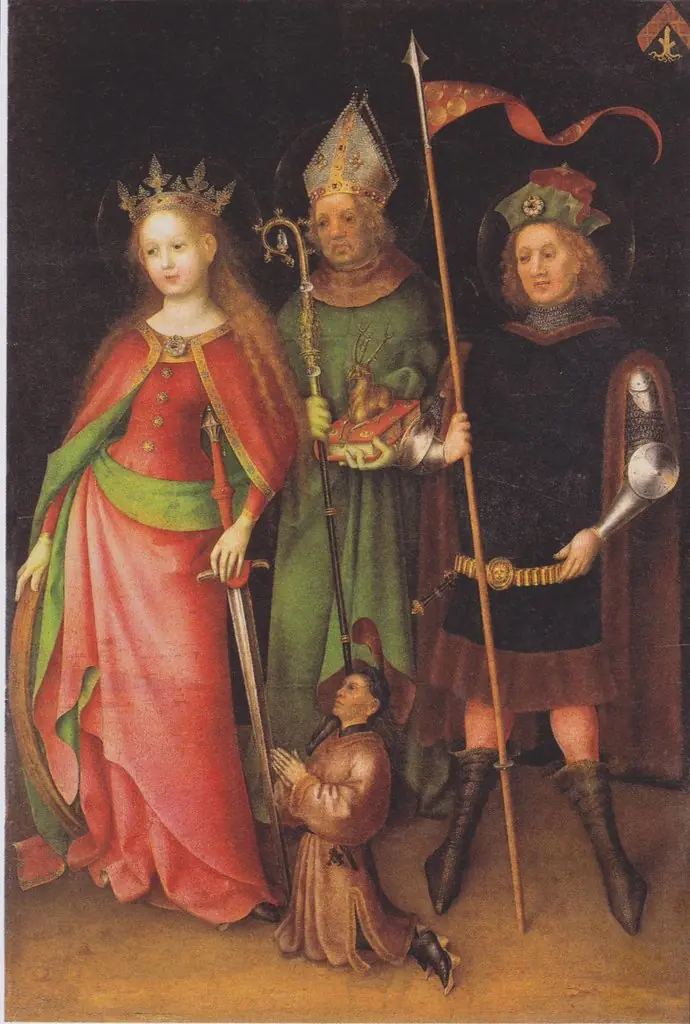 Sts. Catherine, Hubert and Quirinus (Last-Judgement-Altar)
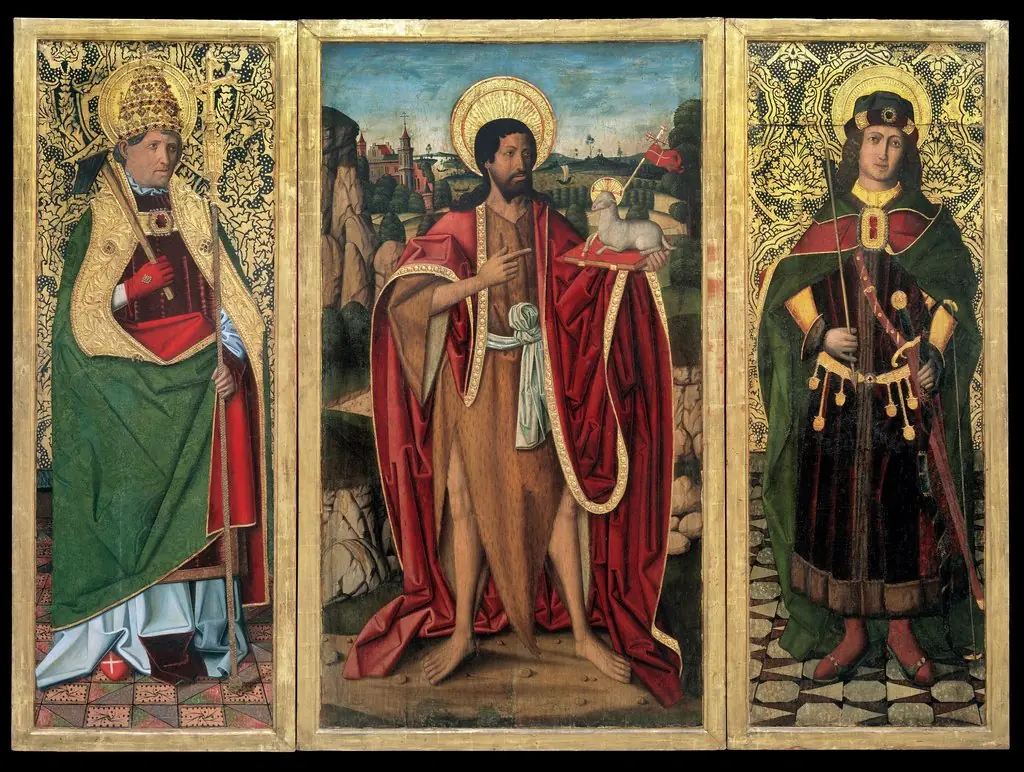 Saint John the Baptist, Saint Fabian and Saint Sebastian
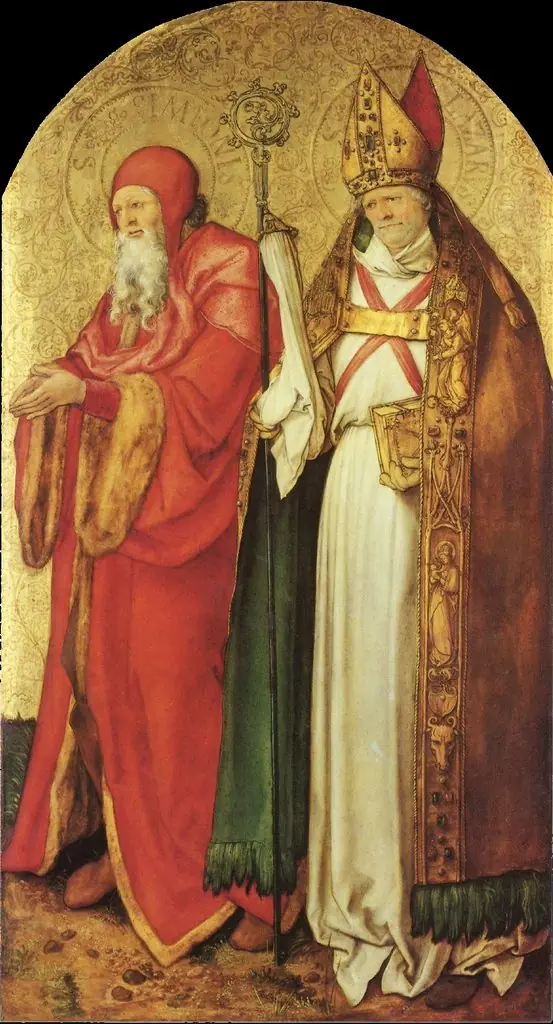 Jabach Altar: Saints Simeon and Lazarus
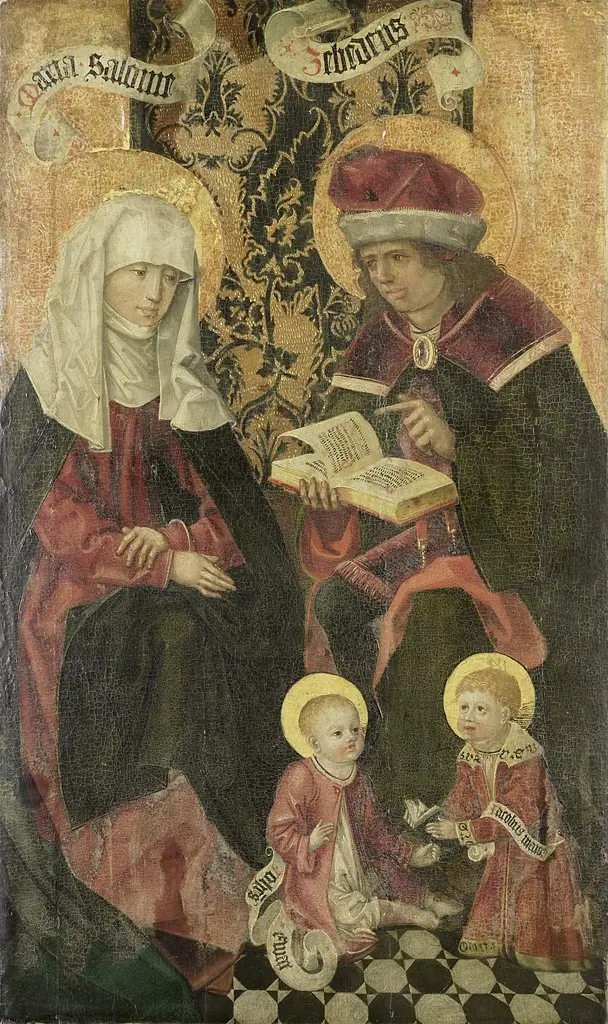 "The Family of Zebedee
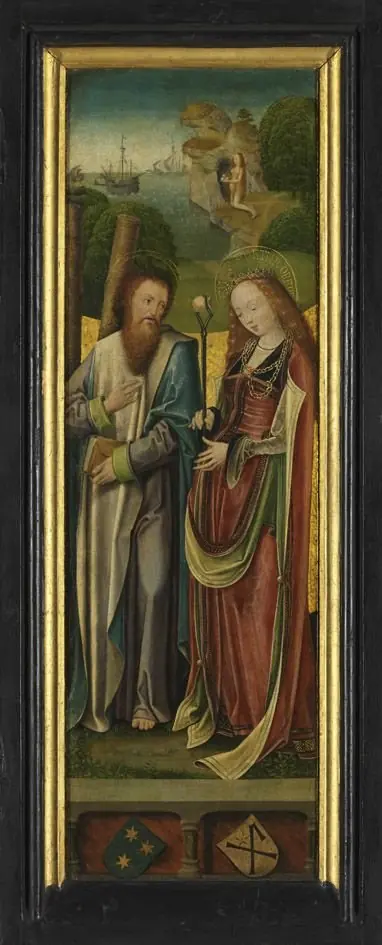 Flügelpaar: Die hll. Andreas und Agatha Außenseite: Maria der Verkündigung
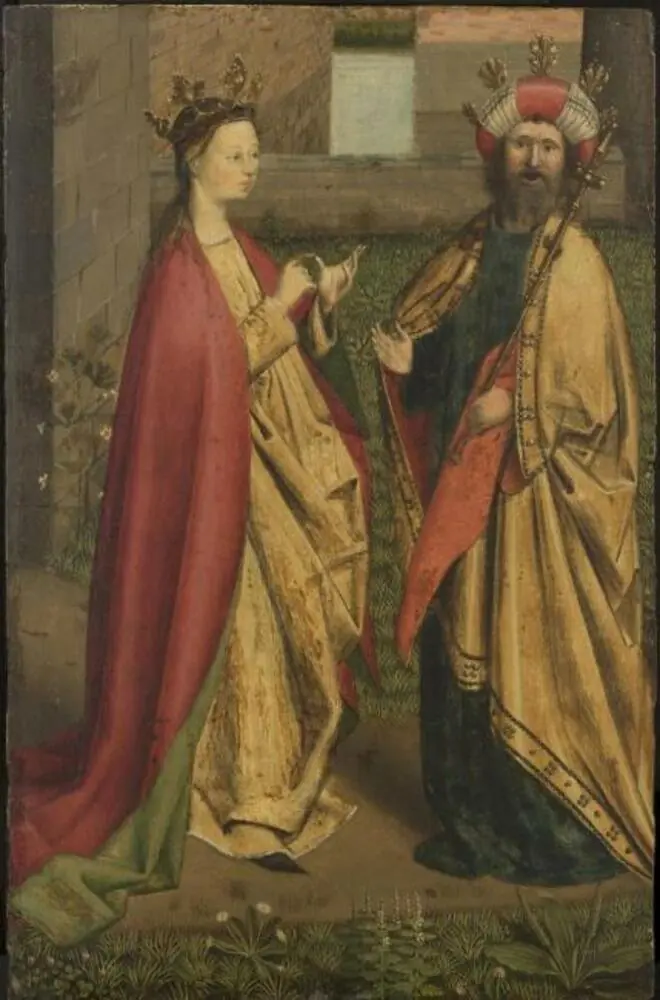 Saint Catherine of Alexandria Preaching to the Emperor