Artwork
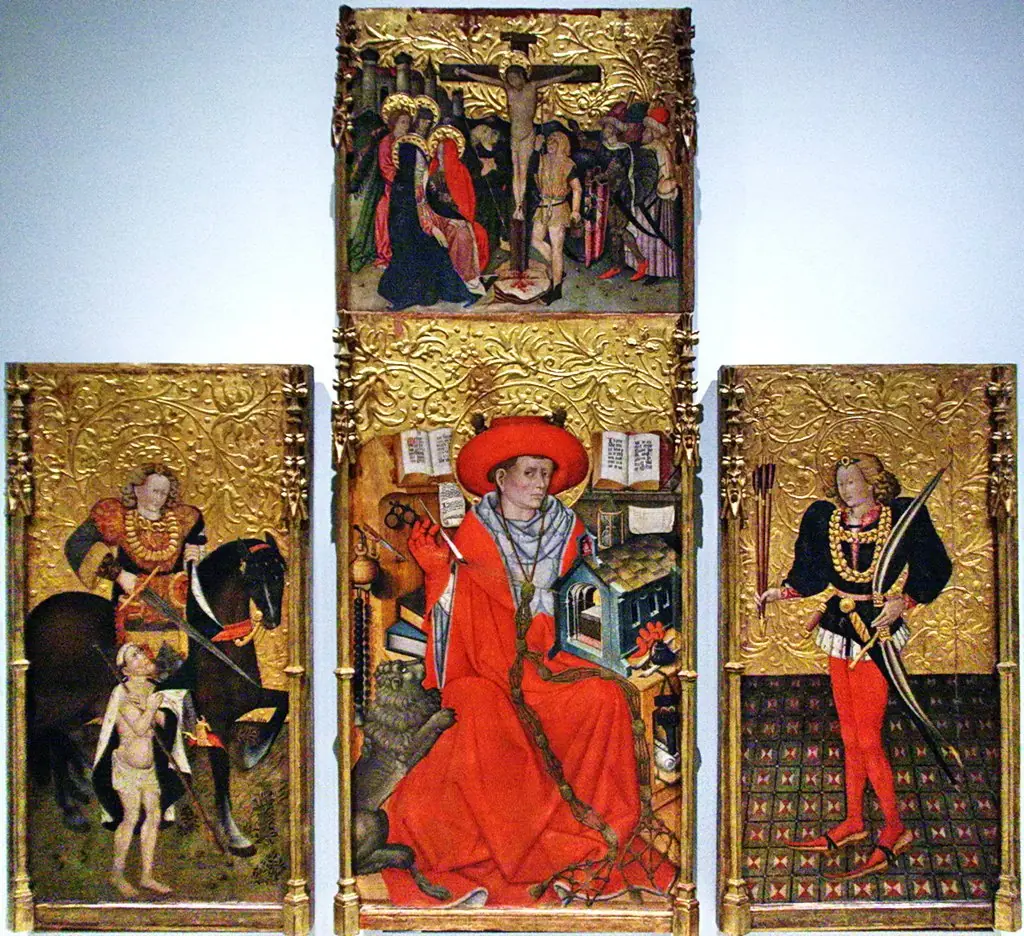
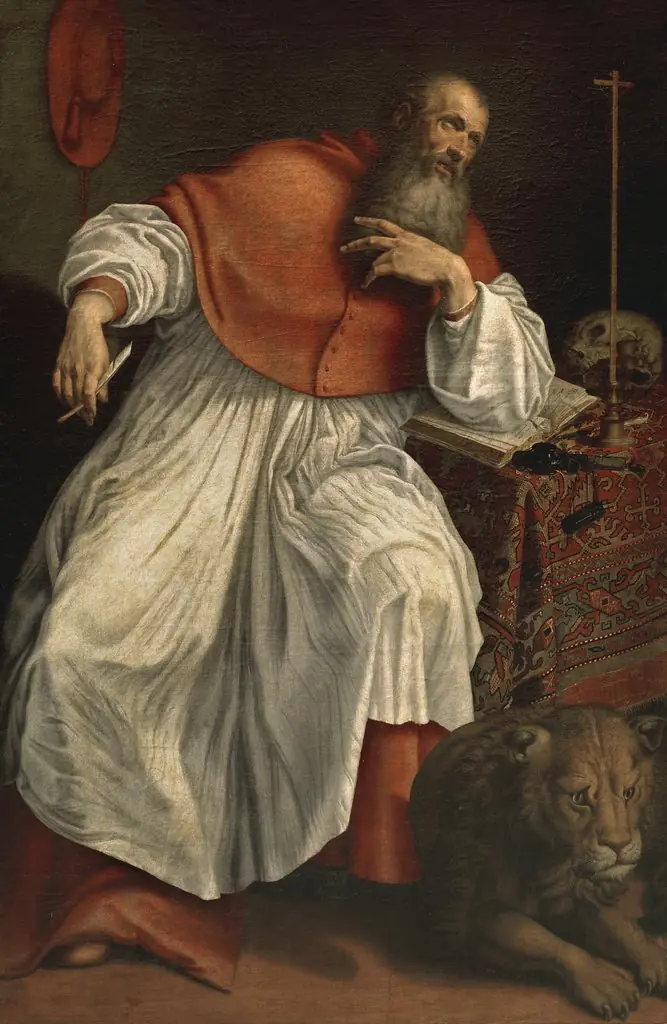
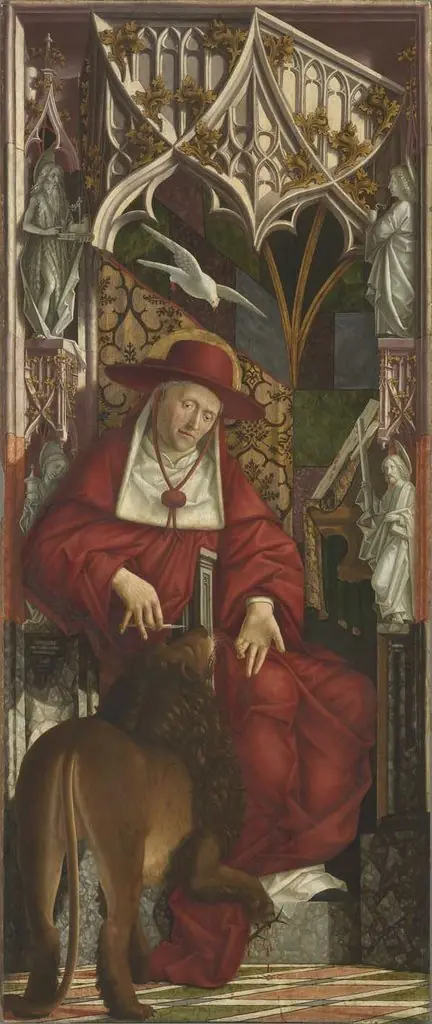
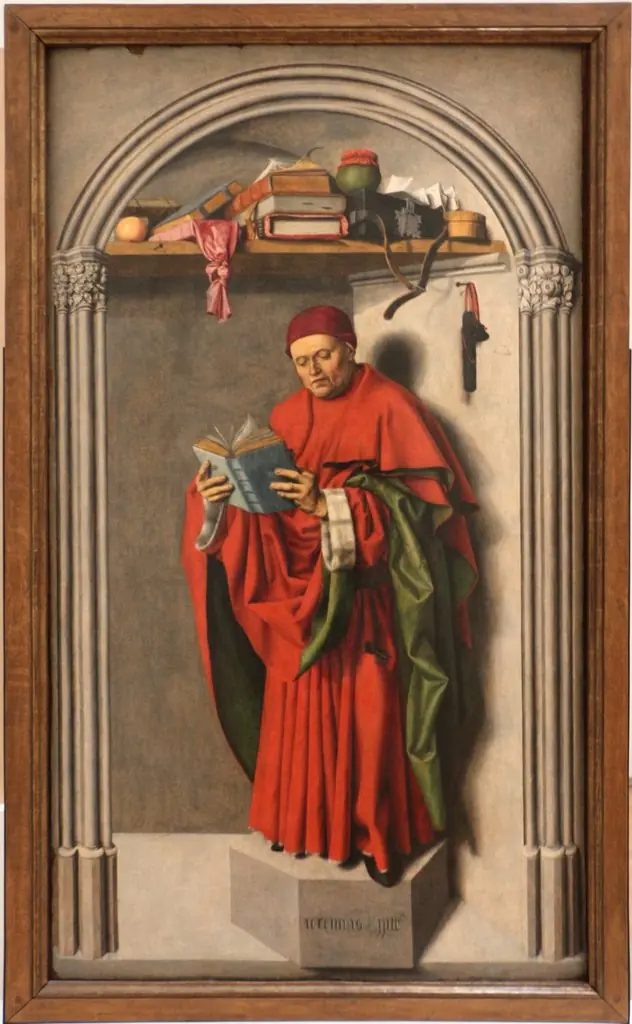
Saint Jerome in his Study
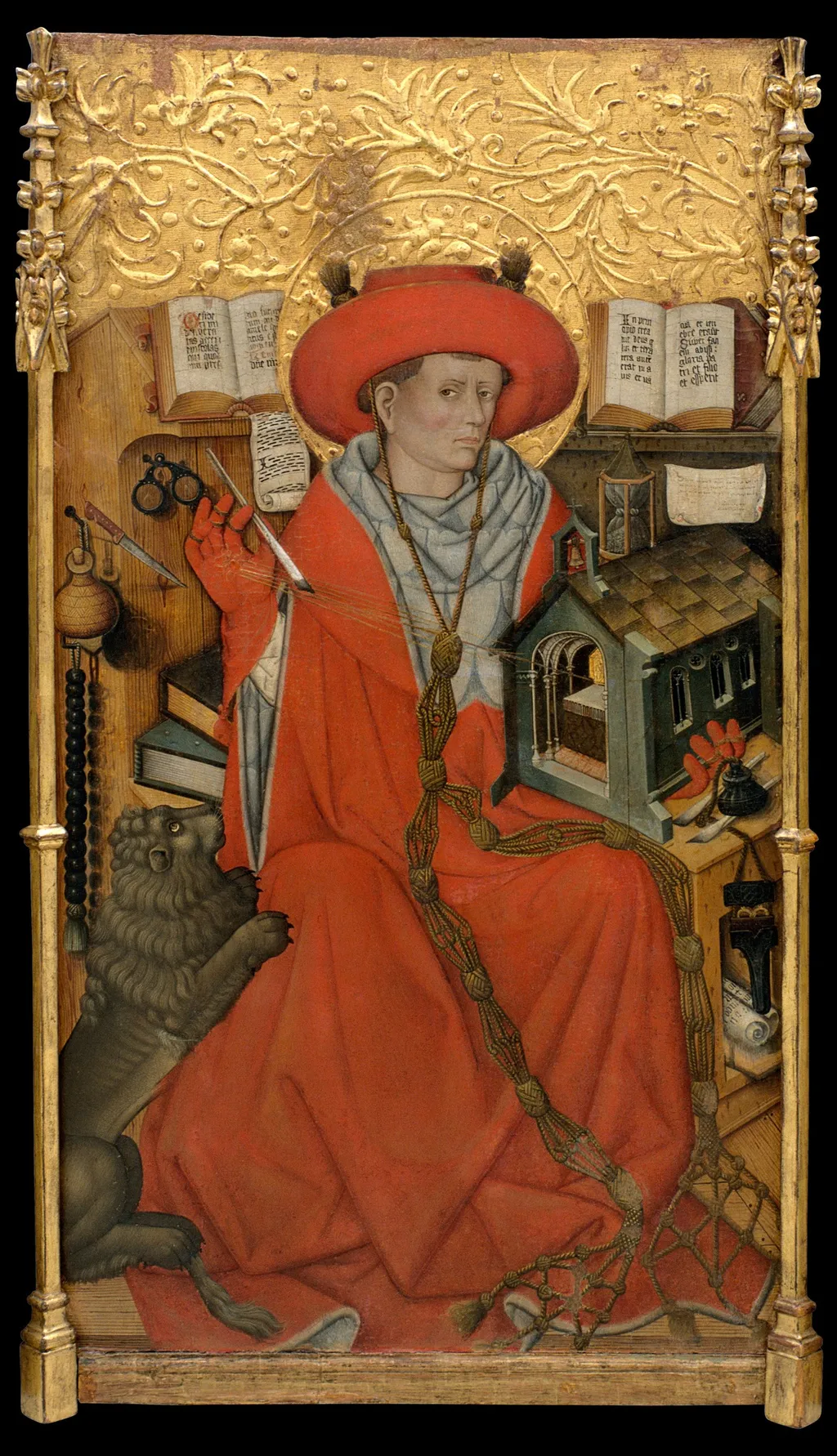
Saint Jerome in his Study is an unspecified painting by the Early Renaissance artist Jaume Ferrer II. It dates from 1450 and is held in the collection of the Museu Nacional d'Art de Catalunya.
About this work
Overview
Painted around 1450 by Jaume Ferrer II, this work portrays Saint Jerome engaged in scholarly activity within a richly detailed interior.
Painted around 1450 by Jaume Ferrer II, this work portrays Saint Jerome engaged in scholarly activity within a richly detailed interior. The painting is part of the collection at the Museu Nacional d'Art de Catalunya and reflects the devotional and intellectual currents of mid-15th-century Catalan art. Its intimate scale and careful rendering suggest a private devotional purpose rather than public display.
Subject & Meaning
Saint Jerome, one of the Church Fathers, is shown in the act of editing the Latin Vulgate Bible. The scissors in his hand indicate his role as a textual reviser, cutting and correcting manuscripts. The cluttered study, filled with books and writing tools, symbolizes the labor of theological scholarship. His red robe and hat signify his ecclesiastical rank, reinforcing his authority as a translator and commentator of sacred texts.
Technique & Style
Ferrer employs fine brushwork to render textures—fabric folds, leather bindings, wooden shelves—with precision. The room’s depth is suggested through layered surfaces and subtle atmospheric perspective, not linear vanishing points. Warm tones dominate, with the saint’s crimson garments contrasting against muted walls and earthy book spines. Light falls naturally from the left, modeling forms and enhancing the sense of tangible space.
History & Provenance
The painting originated in Catalonia during a period of flourishing religious art under the Crown of Aragon. It likely adorned a private chapel or monastic cell, given its intimate scale and subject. It entered the Museu Nacional d'Art de Catalunya’s collection in the early 20th century, following the consolidation of regional ecclesiastical holdings after the dissolution of monasteries in the 19th century.
Context
In mid-15th-century Catalonia, depictions of Saint Jerome were common among learned clergy and literate patrons. The emphasis on books and writing tools mirrored broader humanist interests in textual accuracy and classical learning, even within religious contexts. Ferrer’s work aligns with Northern European traditions of detailed interior scenes, adapted to local devotional practices and Catalan artistic conventions.
Legacy
Though not widely known outside Catalonia, the painting exemplifies the quiet dignity of late medieval devotional art. Its focus on scholarly labor as sacred activity influenced later portrayals of saints in study. It remains a key example of how religious identity and intellectual pursuit were visually intertwined in 15th-century Iberian culture.
Artist & collection