Artwork
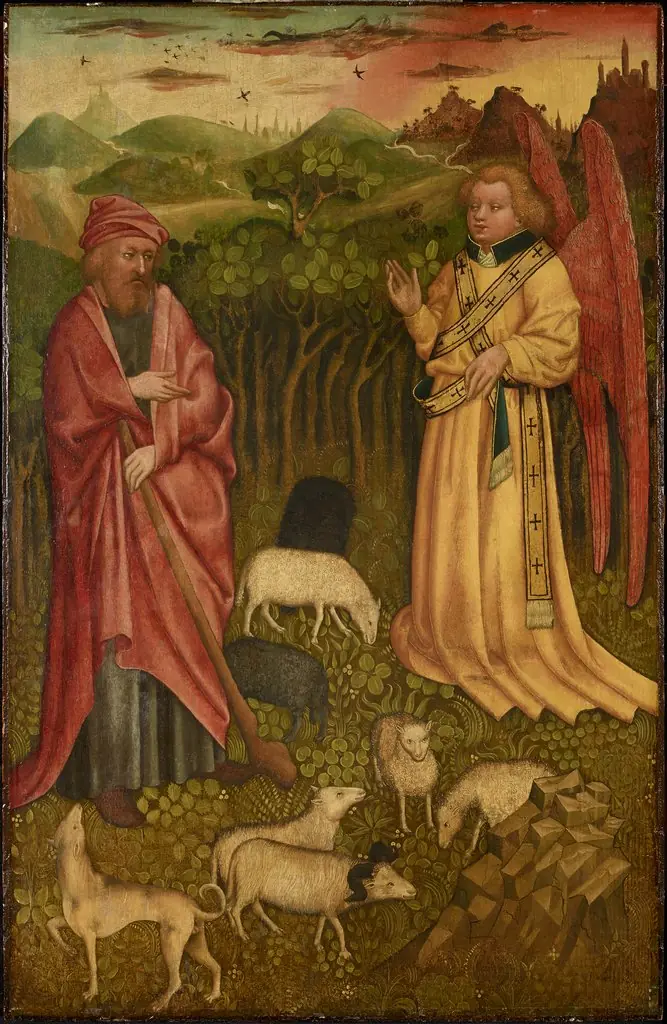
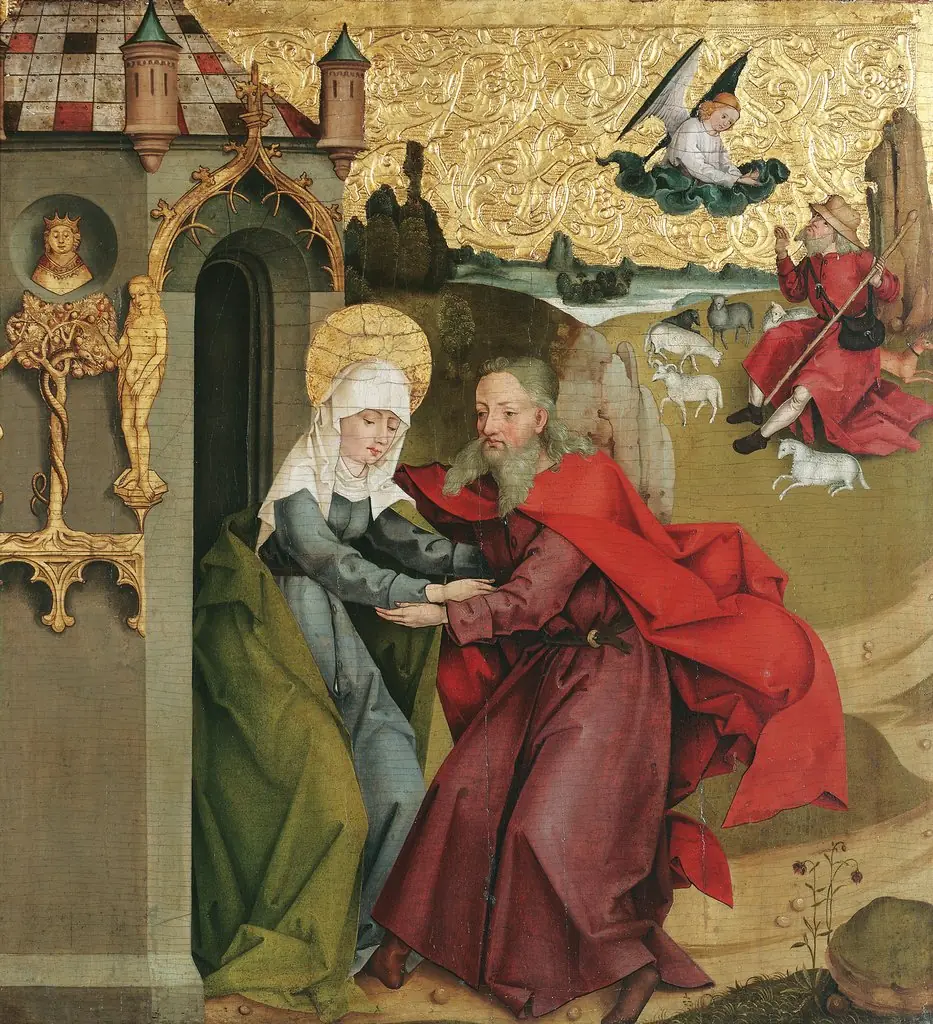
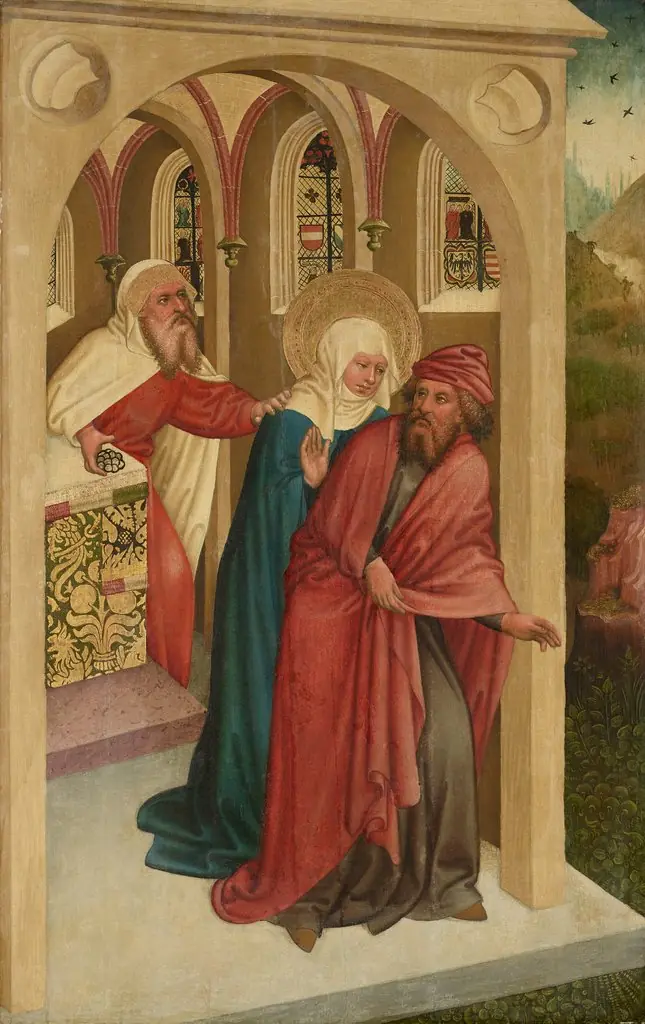
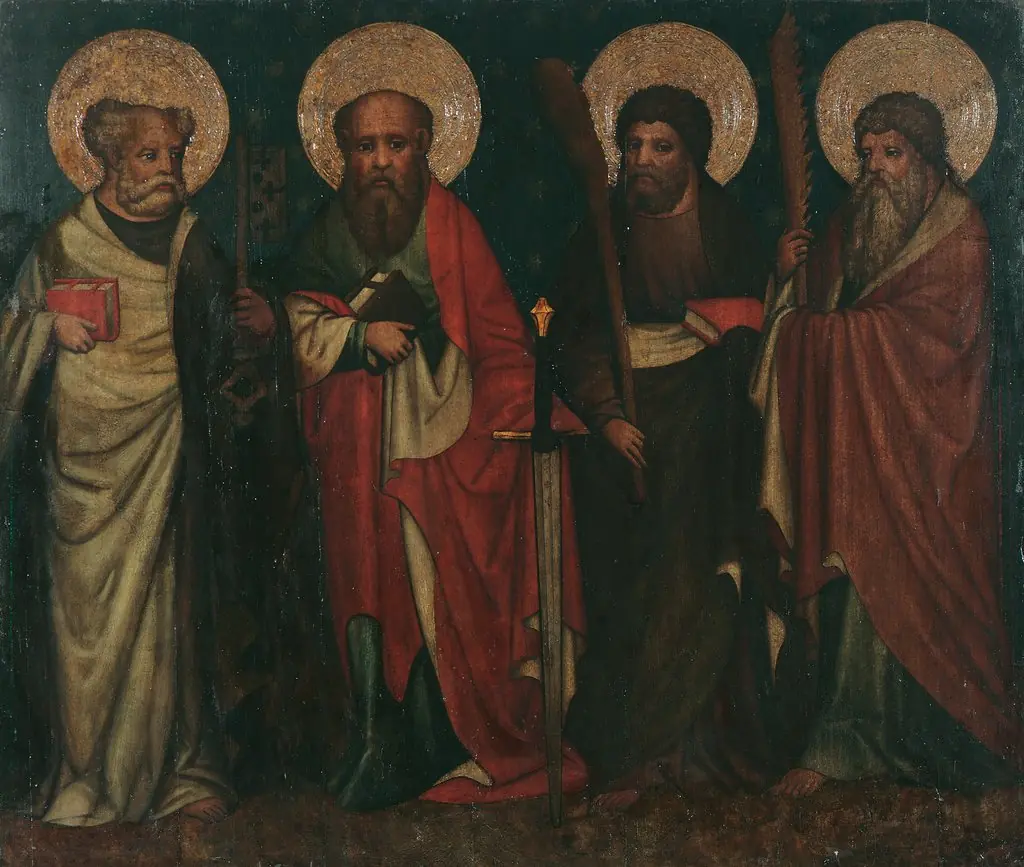
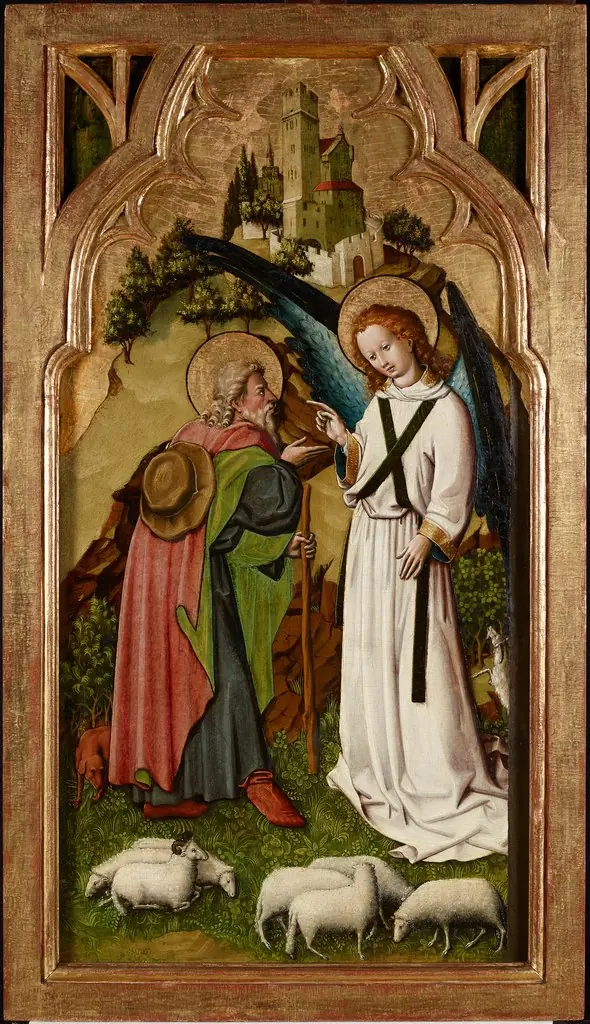
Linker Flügel des sog. Pretschlaipfer-Triptychons: Hll. Christophorus und Jakobus Major (Innenseite); Verkündigung an Maria (Außenseite)
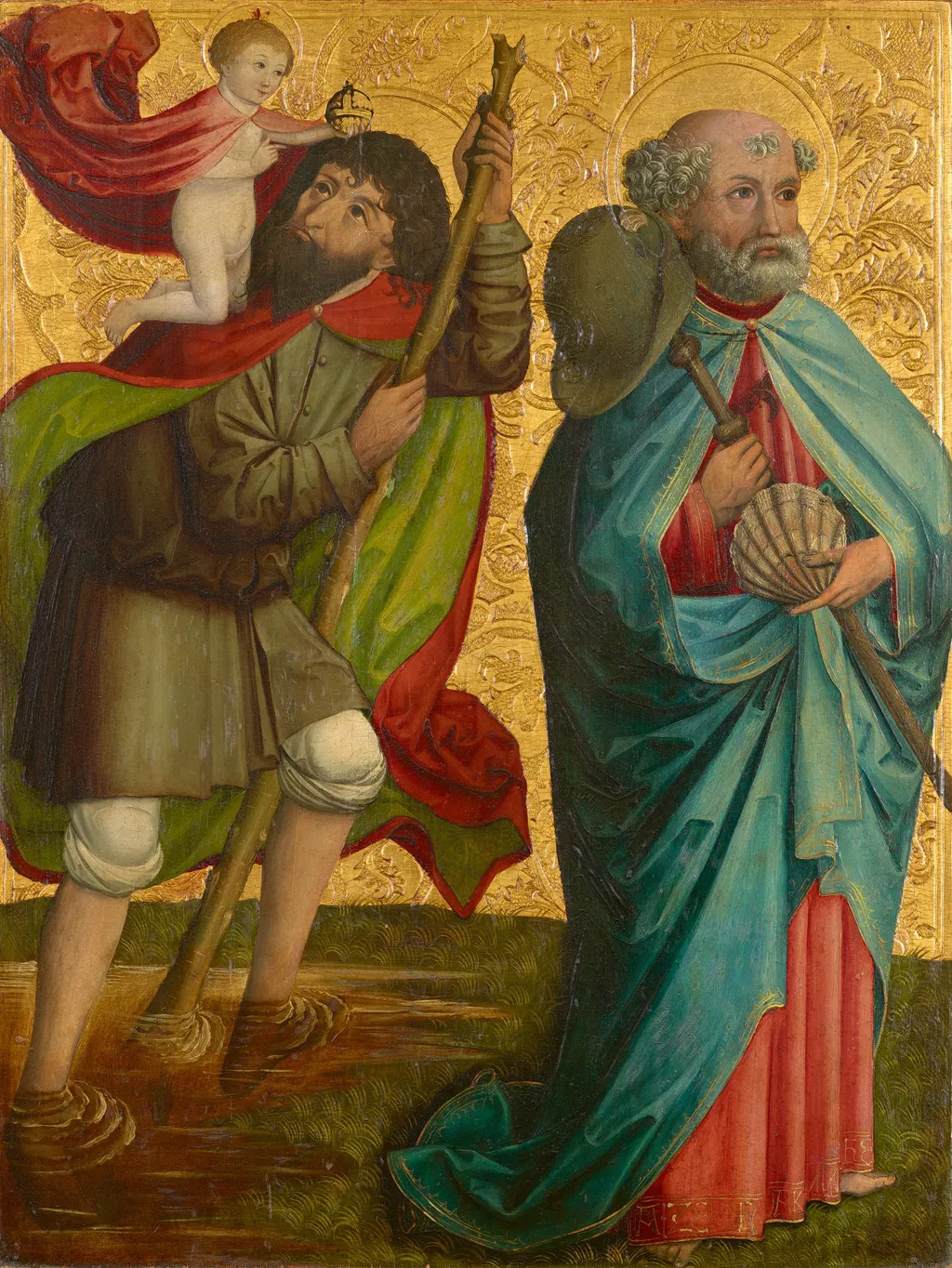
Linker Flügel des sog. Pretschlaipfer-Triptychons: Hll. Christophorus und Jakobus Major (Innenseite); Verkündigung an Maria (Außenseite) is an unspecified painting by the Northern Renaissance artist Master of Großgmain. It dates from 1490 and is held in the collection of the Kunsthistorisches Museum.
About this work
Overview
This panel, part of a triptych attributed to the Master of Großgmain, dates to around 1490 and originates from the southern German or Austrian region.
This panel, part of a triptych attributed to the Master of Großgmain, dates to around 1490 and originates from the southern German or Austrian region. It forms the left wing of the altarpiece known as the Pretschlaipfer Triptych. The inner face portrays two saints, while the outer face depicts the Annunciation. The work is now held in the Kunsthistorisches Museum, Vienna, as part of its collection of late medieval religious art.
Subject & Meaning
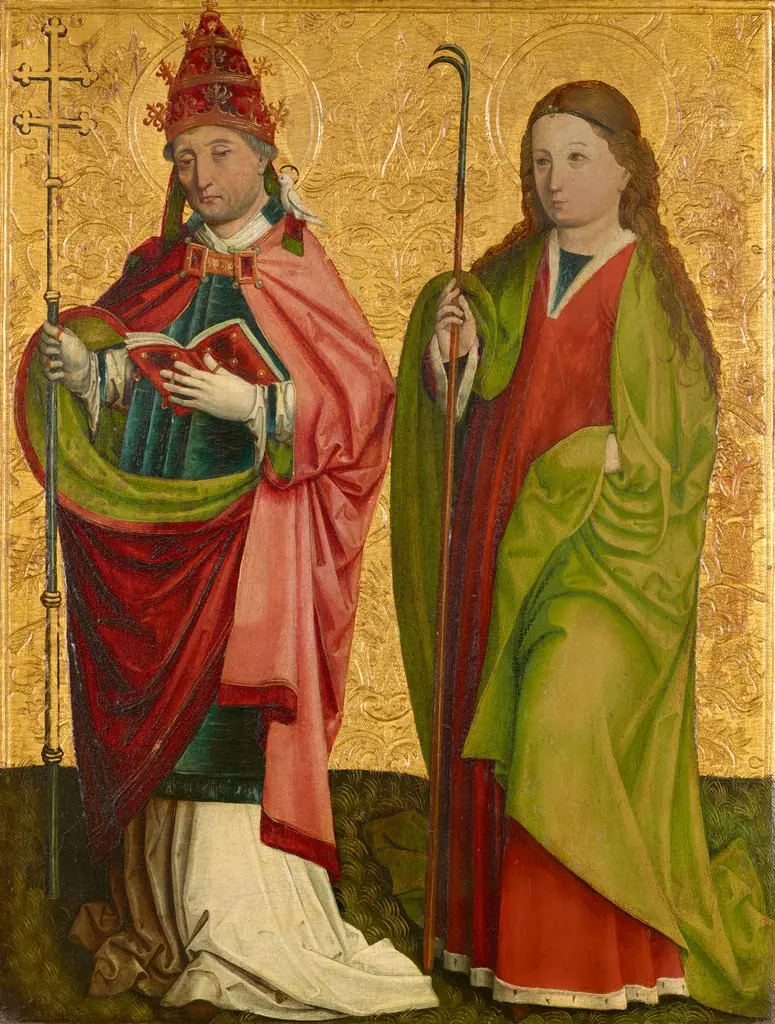
The inner panel shows Saint Christopher carrying the Christ Child across a river, symbolizing faith and divine protection, alongside Saint James the Greater, identifiable by his pilgrim’s staff and scallop shell—emblems of his journey to Santiago de Compostela. Together, they represent pilgrimage and devotion. The Annunciation on the exterior, visible when the wings are closed, reinforces themes of divine revelation and preparation for salvation.
Technique & Style
Executed in tempera on wood, the painting employs a gold leaf background adorned with fine tooling, typical of late Gothic devotional art. Figures are rendered with elongated proportions and detailed drapery, emphasizing spiritual presence over naturalism. The use of rich, flat colors—deep reds, blues, and earth tones—contrasts with the luminous gold, enhancing the sacred atmosphere without perspective or depth.
History & Provenance
The panel was originally part of a portable altarpiece commissioned for a private chapel or small parish church, likely in the Salzburg region. It entered the Kunsthistorisches Museum’s collection in the 19th century, following the dissolution of ecclesiastical holdings. Its attribution to the Master of Großgmain, a name given to an anonymous artist based on stylistic consistency, reflects scholarly reconstruction from regional workshop practices.
Context
Created during a period of heightened devotional imagery in southern Germany and Austria, the work reflects the popularity of pilgrimage cults and saint veneration. The inclusion of both Christopher and James aligns with contemporary practices of commissioning altarpieces that guided the faithful through spiritual narratives. The dual-sided design allowed for seasonal or liturgical display, adapting the imagery to church calendar cycles.
Legacy
As a representative of regional late Gothic painting, this panel contributes to understanding the visual language of pre-Reformation religious art outside major urban centers. Though the artist remains anonymous, the work’s craftsmanship and iconographic precision illustrate the sophistication of provincial workshops. It remains a key reference for studies of devotional object use and regional artistic identity in the late 15th century.
Own this work as a print
Artist & collection