Artwork
Prophets of the triumphal arch from El Burgal
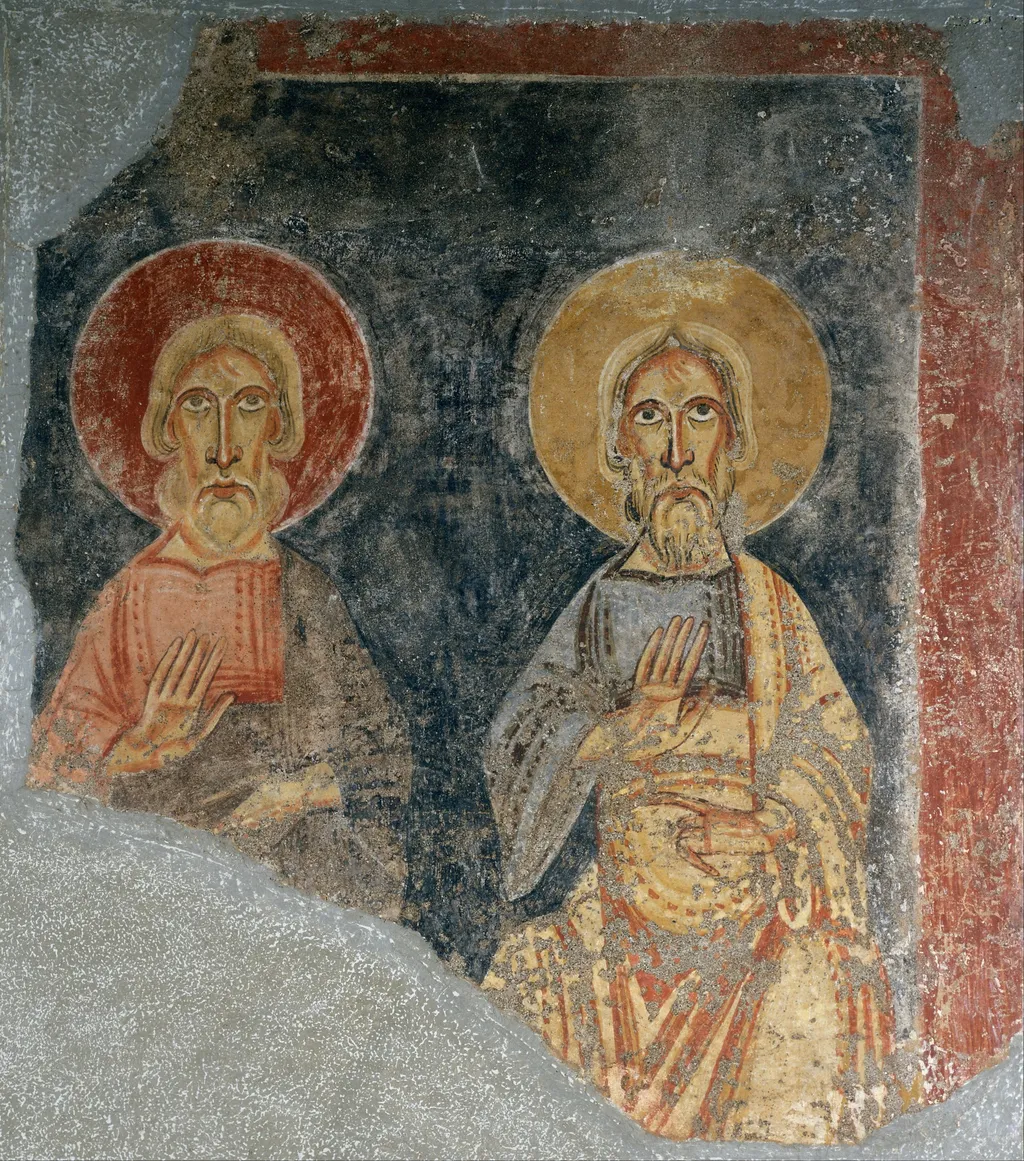
Prophets of the triumphal arch from El Burgal is an unspecified painting by Master of Pedret. It dates from 1100 and is held in the collection of the Museu Nacional d'Art de Catalunya.
About this work
Overview
The Prophets of the triumphal arch from El Burgal is a Romanesque fresco dating to approximately 1100, originating from a church in the Catalan region.
The Prophets of the triumphal arch from El Burgal is a Romanesque fresco dating to approximately 1100, originating from a church in the Catalan region. It was once part of a larger decorative scheme above the apse arch. The painting is now held in the Museu Nacional d'Art de Catalunya, where it is grouped with other works from the same period and region, including those attributed to the anonymous artist known as the Master of Pedret.
Subject & Meaning
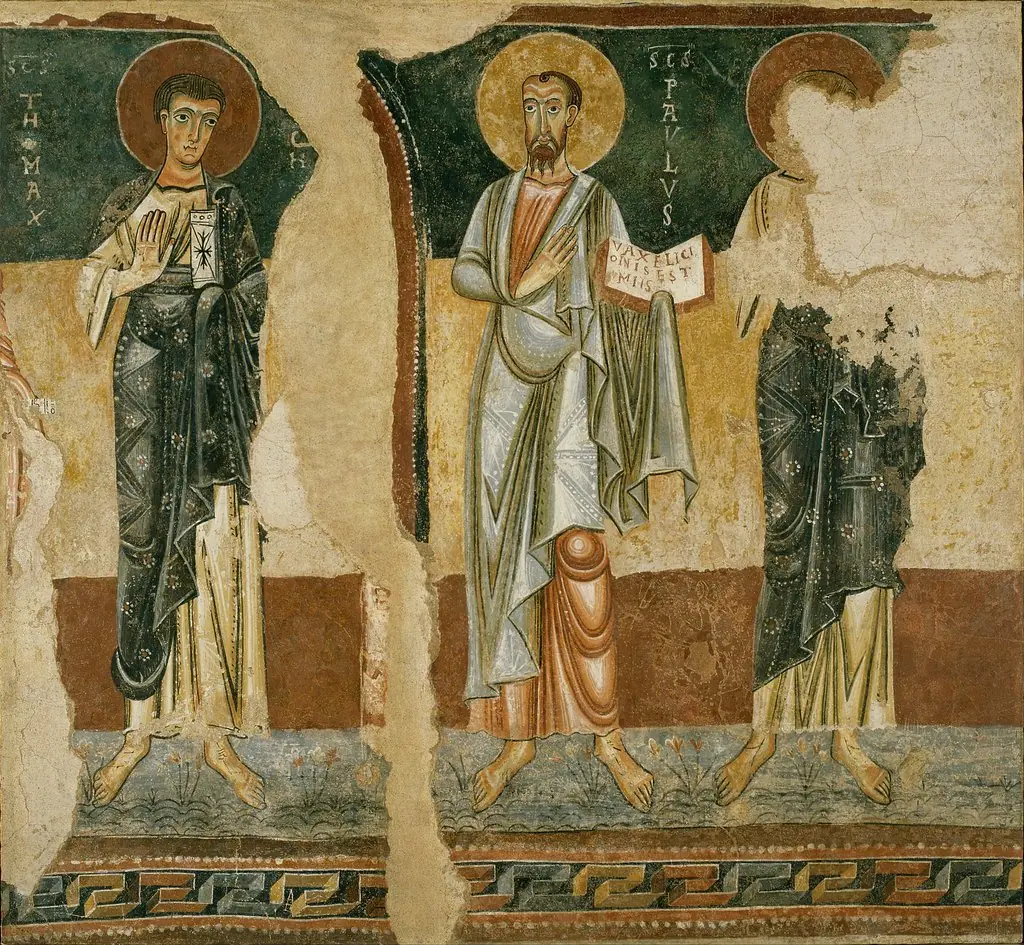
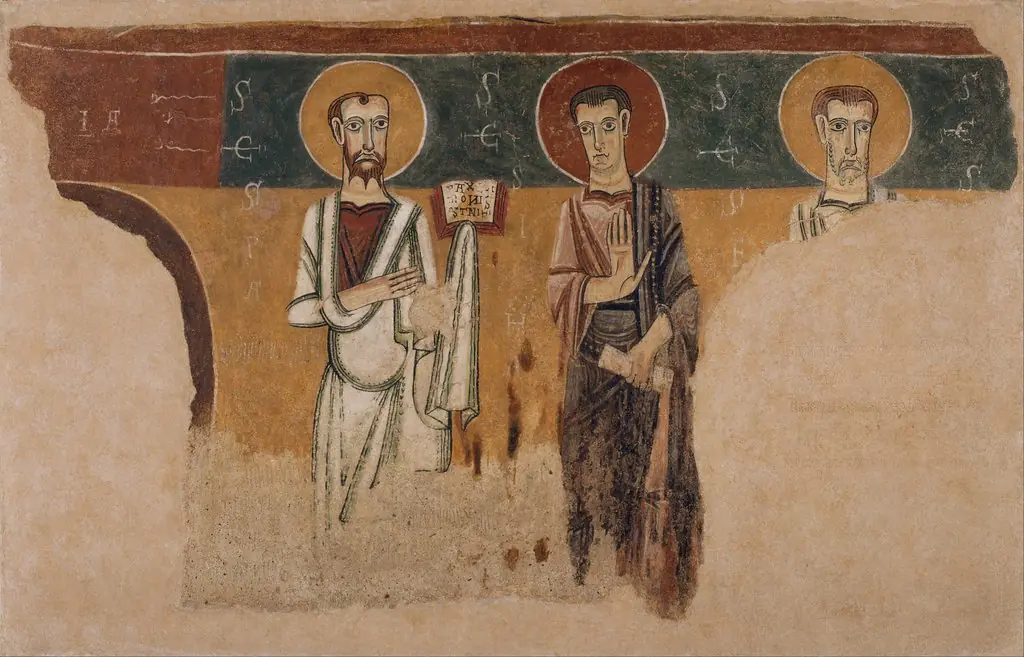
Two figures, identified as prophets or saints, stand side by side beneath an implied arch. Each bears a halo, signaling sacred status. The figure on the left holds a book, suggesting scriptural authority, while the other clasps his hands in prayer, conveying devotion. Their placement within a liturgical architectural frame implies a connection to the altar space, reinforcing their role as intermediaries between the divine and the congregation.
Technique & Style
The fresco employs flat, stylized forms typical of Romanesque art, with strong outlines and limited modeling. Colors—deep red and vivid yellow—are applied in bold, unmodulated planes against a dark background, enhancing the figures' presence. While not using chiaroscuro in the later Renaissance sense, the contrast between light robes and dark ground creates a sense of depth and focus, guiding the viewer’s attention to the sacred figures.
History & Provenance
The fresco was originally painted in the church of El Burgal, a small Romanesque structure in Catalonia. It was detached during 20th-century conservation efforts, along with other wall paintings from the region, to prevent deterioration. It was transferred to the Museu Nacional d'Art de Catalunya, where it is preserved alongside related works from the Master of Pedret’s circle, helping to reconstruct the visual culture of early 12th-century Catalan churches.
Context
Created during a period of monastic expansion and church building in Catalonia, the fresco reflects the liturgical emphasis on prophetic authority and divine order. Similar arch decorations appear in other regional churches, often framing scenes of Christ in Majesty. The figures here, though unnamed, align with a broader iconographic program meant to instruct the faithful through symbolic, hierarchical imagery rooted in biblical tradition.
Legacy
The work contributes to the understanding of a regional artistic tradition centered on anonymous workshops that produced cohesive decorative cycles. Though the Master of Pedret remains unidentified, his style—characterized by rhythmic line and symbolic color—helps define Catalan Romanesque painting. The preservation of this fresco allows scholars to trace stylistic links across multiple sites, illuminating the transmission of religious imagery in medieval Iberia.
Artist & collection
Artist
Master of Pedret is the name given by historians to a Romanesque fresco painter active in Catalonia in the early twelfth century.

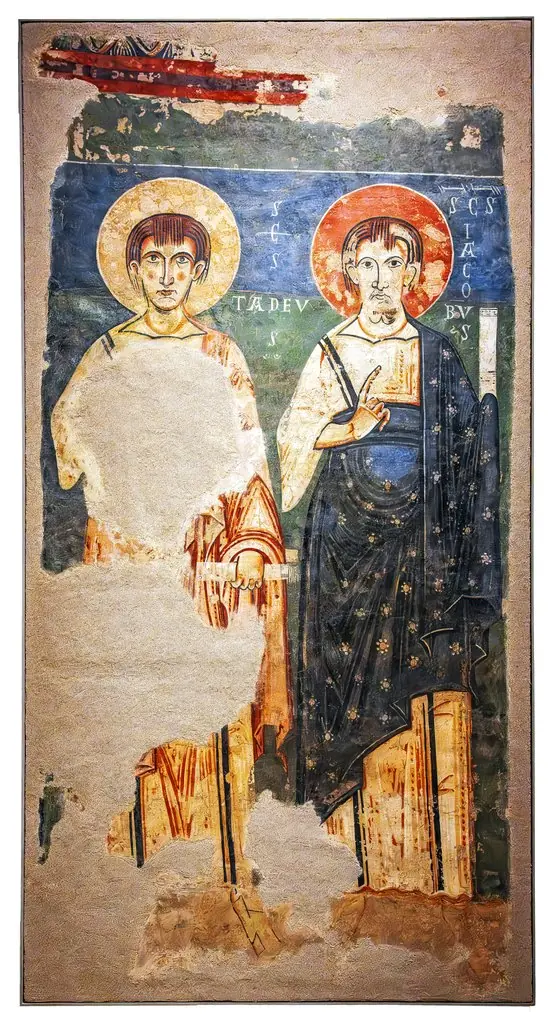
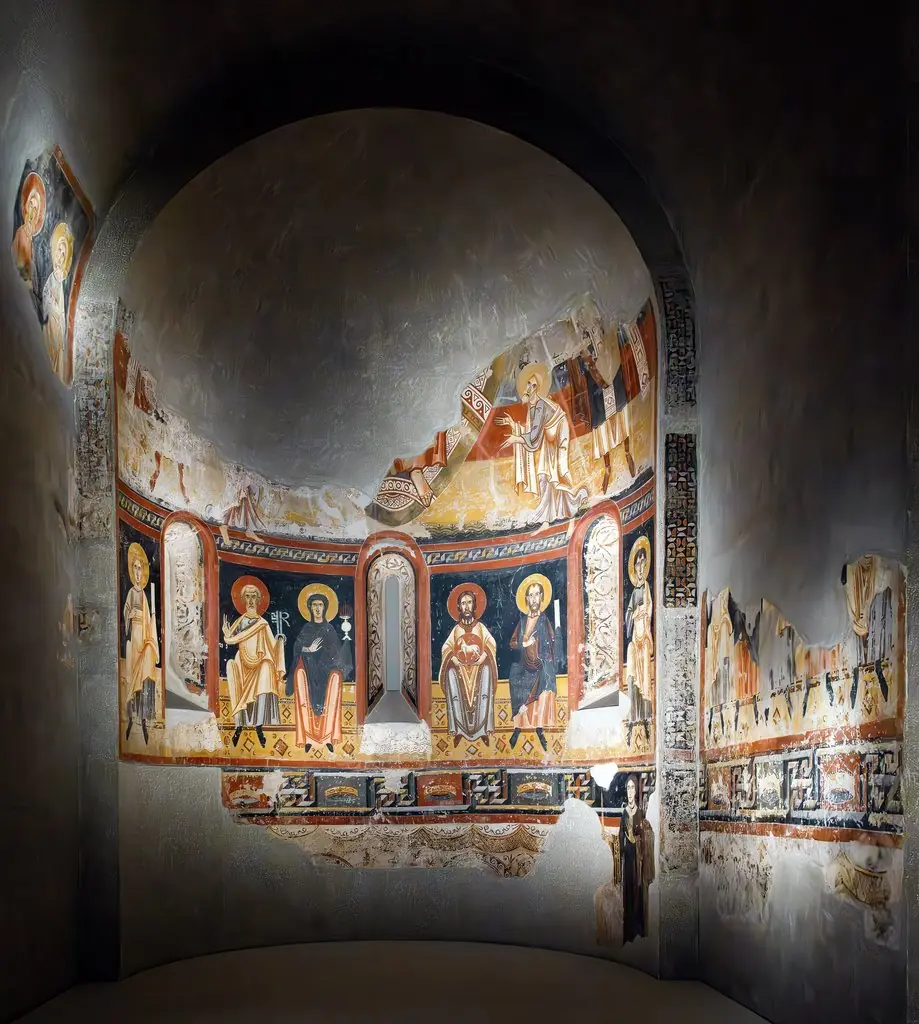
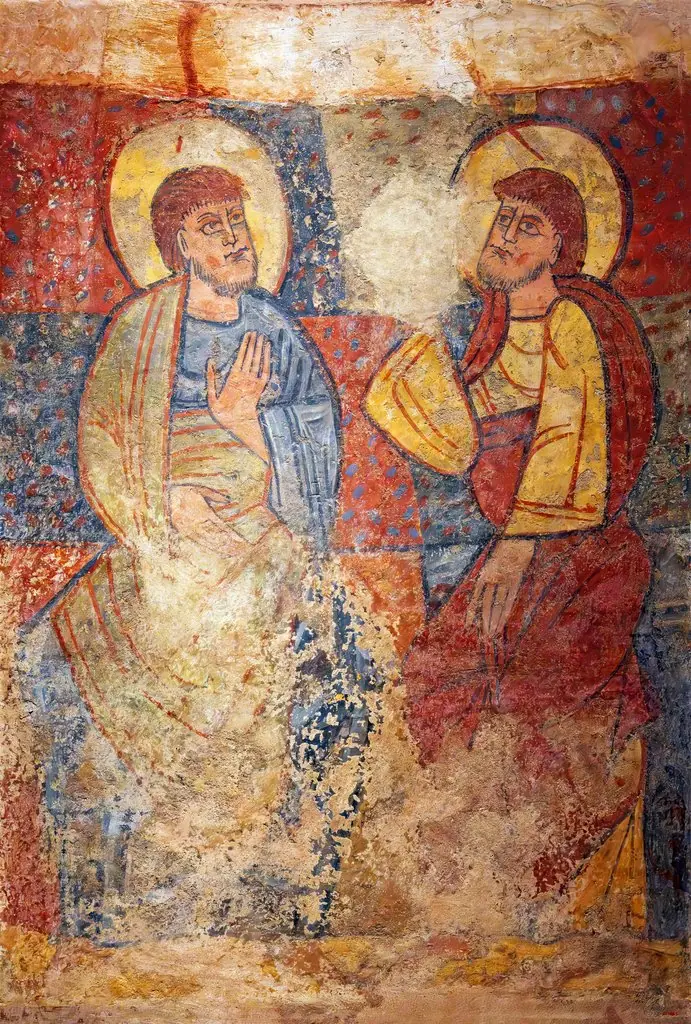 Apòstols de la Pentecosta, de Bellcaire
 Apostles from Orcau
 The Apostles of Argolell
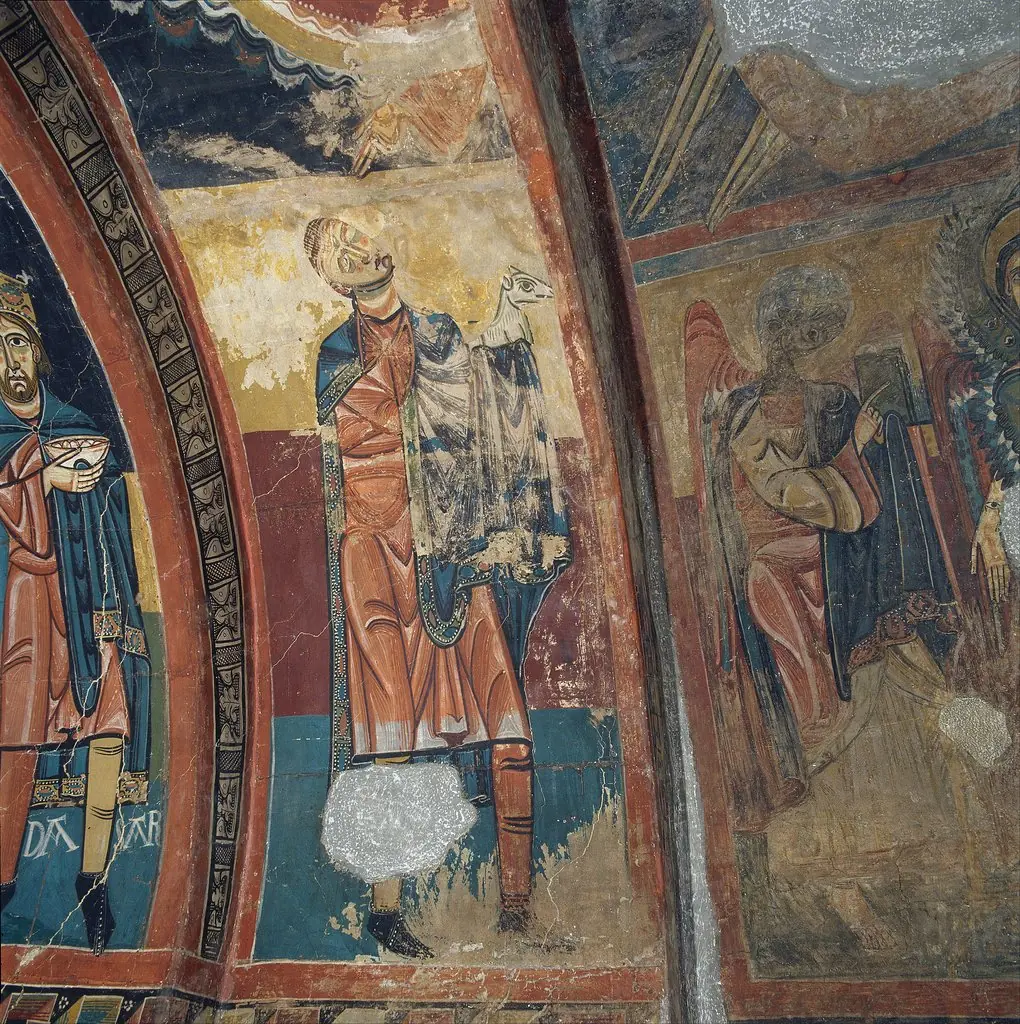 Arch of Abel's Offering from Santa Maria de Taüll
 Suprinii
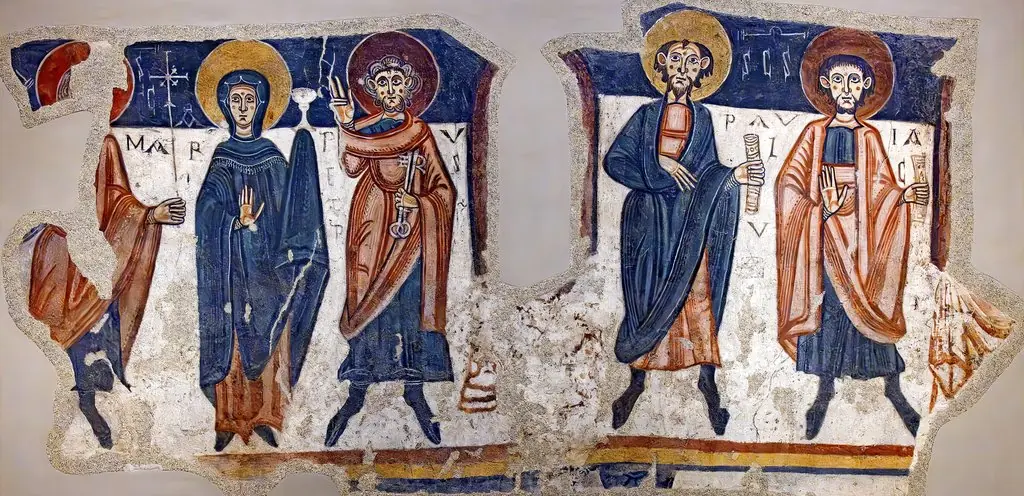 Apostles from Sant Romà de les Bons
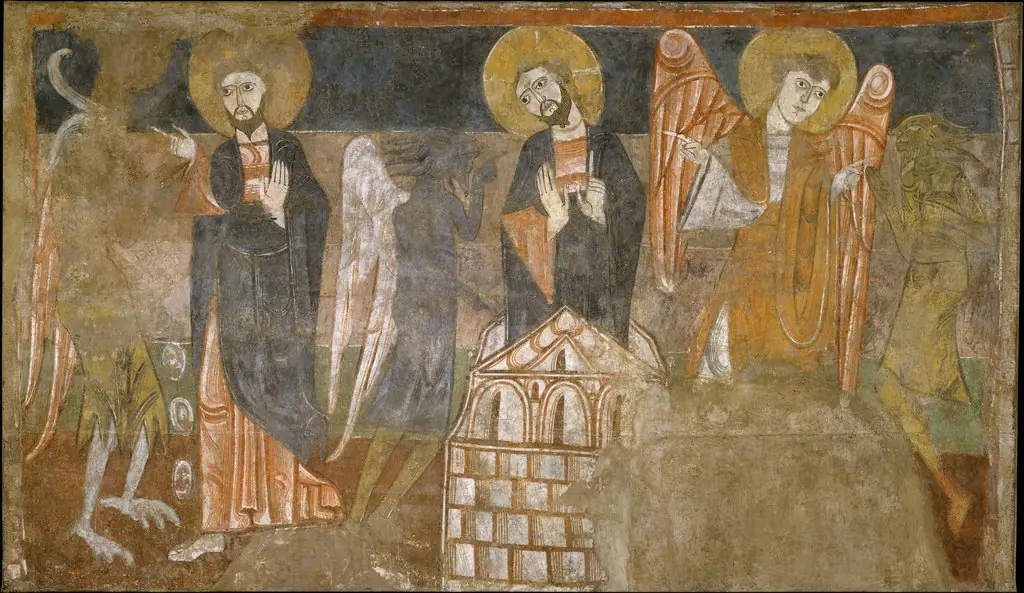 The Temptation of Christ by the Devil
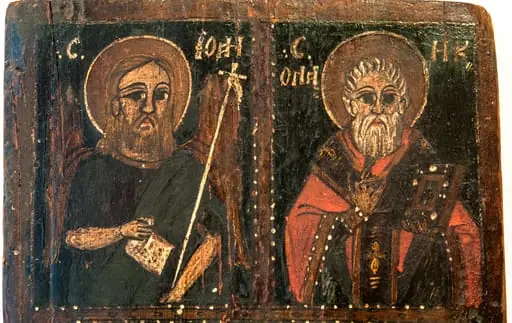 Câmpul icoanei este împărțit în patru casete dreptunghiulare în care sunt redati 3/4: Sfântul Ioan Botezătorul(ipostaza de înger al pustiului, în stânga cu o cruce, în dreapta un rotulus, mantie verde peste blana de cămilă), sfântul Nicolae ierarh(sacos roșu, capul desoperit, binecuvântând cu stânga, în dreapta Evanghelia), Arghanghelul Mihail(cu sabia de foc în stânga, în dreapta un înscris), Arhanghelul Gavriil(cu o floare în dreapta, cruce în stânga). Pictură de factură populară, naivă, fețele expresive, amintind de icoana coptă. Cromatica sobră, fond întunecat, inscripții cu alb, chenare dublate cu șiruri de puncte albe.
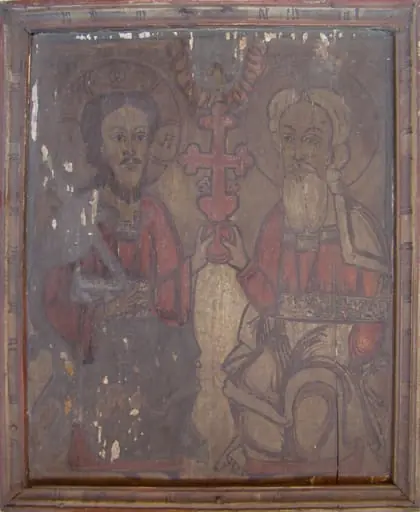 Sf. Treime nou-testamentară
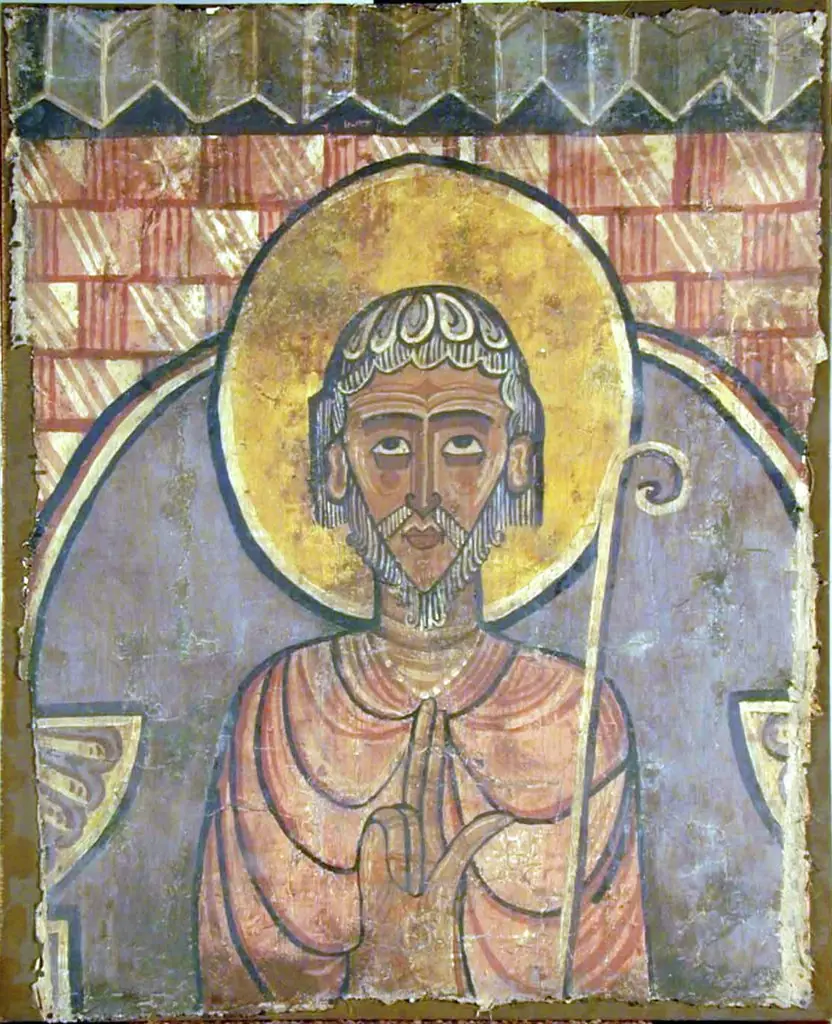 A Bishop Saint
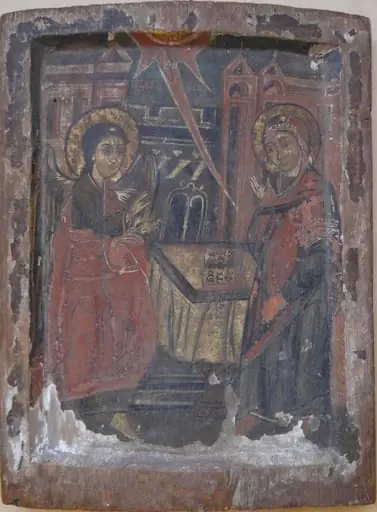 Buna Vestire