Artwork
Suprinii
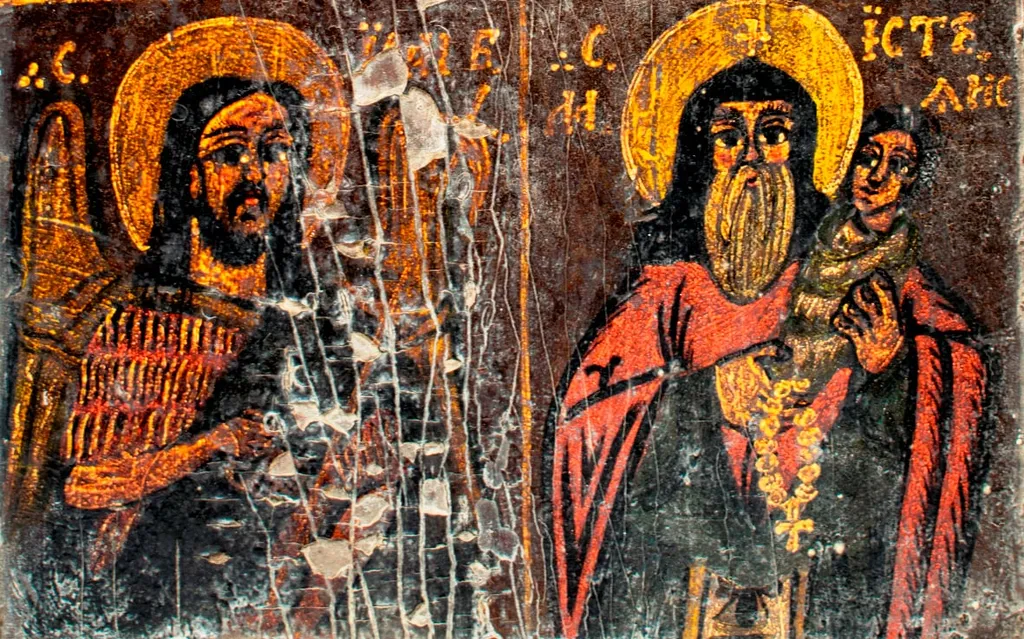
Suprinii is a drawing by Hugo Kołłątaj. It is held in the collection of the "Dimitrie Gusti" National Village Museum.
About this work
Overview
Suprinii is a religious-themed drawing on a worn, darkened surface, its age evident through visible cracks and material degradation.
Suprinii is a religious-themed drawing on a worn, darkened surface, its age evident through visible cracks and material degradation. The composition is divided vertically into two distinct figures, rendered with minimal detail and strong, unadorned lines. The simplicity of form and lack of ornamental elements suggest an early or folk-inspired devotional work, possibly intended for private veneration rather than public display.
Subject & Meaning
The left figure bears a halo and wears a red garment, suggesting a saint or holy person. The right figure, bearded and holding a staff, may represent a prophet or biblical patriarch. The pairing implies a doctrinal or narrative contrast—perhaps divine authority versus earthly leadership. The absence of textual or symbolic context leaves interpretation open, but the shared red robes and solemn posture reinforce a sacred connection between the two.
Technique & Style
Executed with bold, unmodulated lines and flat areas of color, the drawing avoids shading or perspective. The limited palette and absence of fine detail reflect a deliberate austerity, common in devotional art from regions with limited access to refined materials. The surface’s cracked texture indicates prolonged exposure or aging, possibly from use in a domestic or rural chapel setting.
History & Provenance
No documented origin or creator is known for Suprinii. Its condition suggests it predates modern conservation practices, likely originating in a region where religious imagery was produced locally, outside major artistic centers. The work’s survival implies it was preserved through familial or communal devotion, though its path from creation to current state remains undocumented.
Context
The style aligns with late medieval or early modern Eastern European religious drawings, where iconographic conventions were adapted by non-professional artists. Similar works, often attributed to itinerant painters or monastic scribes, served as aids for prayer or instruction. The reference to Hugo Kołłątaj is misleading—he was an Enlightenment-era intellectual, not a visual artist, and has no known connection to this type of imagery.
Legacy
Suprinii survives as a quiet testament to vernacular religious expression, offering insight into how faith was visually sustained beyond institutional art. Its preservation highlights the value placed on such objects in domestic or regional spiritual life, even when they lacked formal artistic training or recognition. It remains a modest but significant artifact of popular piety.
Artist & collection
Artist
This Polish folk painter worked in the late eighteenth and early nineteenth centuries, creating religious scenes with bold colors and simple shapes.
Museum
"Dimitrie Gusti" National Village Museum
Continue through works from the same source collection.
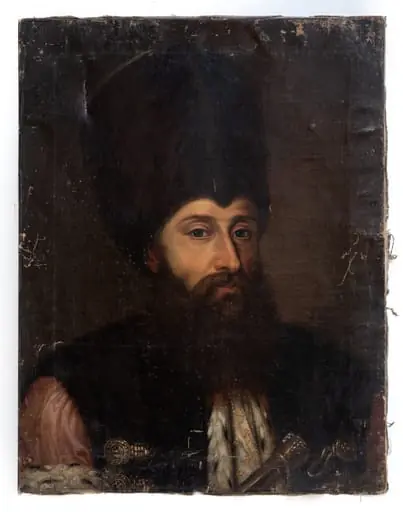 Alexandru Ipsilanti
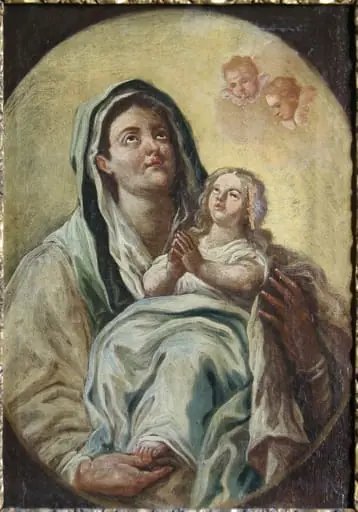 Fecioara Maria cu Pruncul Isus (în Reg. Inv.: Maria cu copilul Isus)
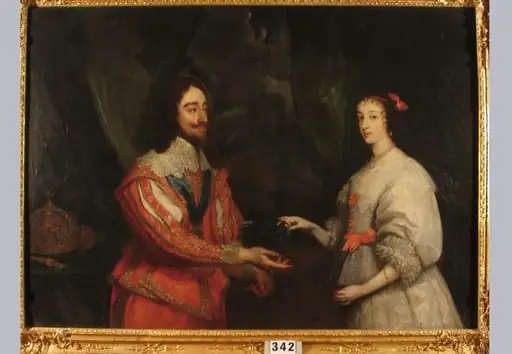 Regele Charles I Stuart al Angliei și soția sa Henrietta Maria de Franța (în Reg. Inv.: Carol I al Angliei și soția sa Henriette din Franța)
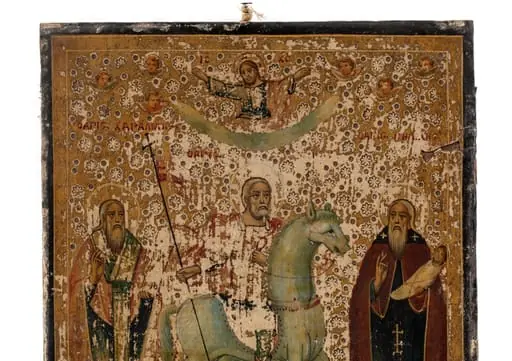 Sfântul Haralambie cu alți doi sfinți
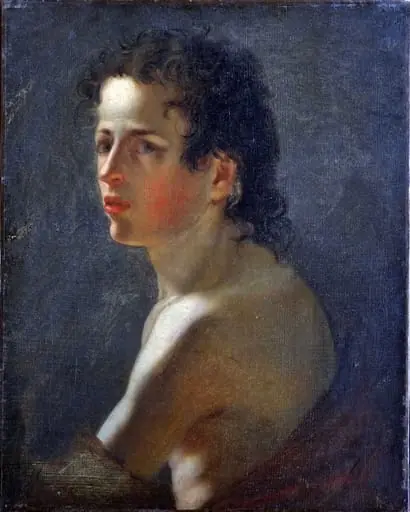 Portret de bărbat
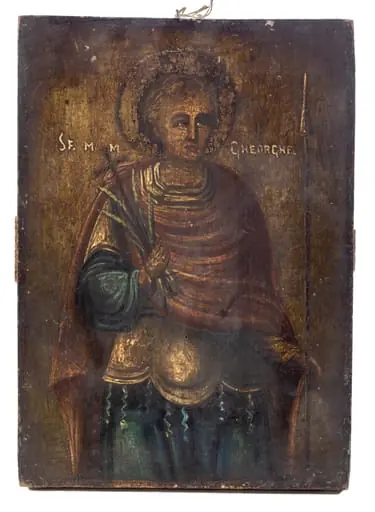 Sfântul Gheorghe
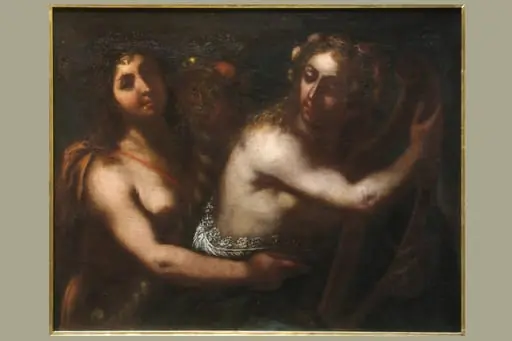 Vertumnus și Pomona (în Reg. Inv.: Vertumnus și Flora)
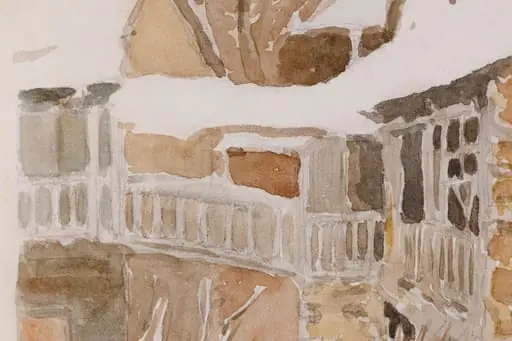 Iarnă
Iarnă
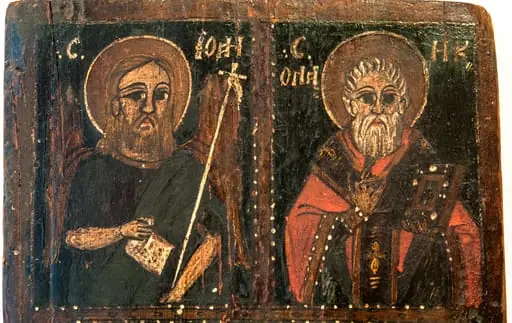 Câmpul icoanei este împărțit în patru casete dreptunghiulare în care sunt redati 3/4: Sfântul Ioan Botezătorul(ipostaza de înger al pustiului, în stânga cu o cruce, în dreapta un rotulus, mantie verde peste blana de cămilă), sfântul Nicolae ierarh(sacos roșu, capul desoperit, binecuvântând cu stânga, în dreapta Evanghelia), Arghanghelul Mihail(cu sabia de foc în stânga, în dreapta un înscris), Arhanghelul Gavriil(cu o floare în dreapta, cruce în stânga). Pictură de factură populară, naivă, fețele expresive, amintind de icoana coptă. Cromatica sobră, fond întunecat, inscripții cu alb, chenare dublate cu șiruri de puncte albe.
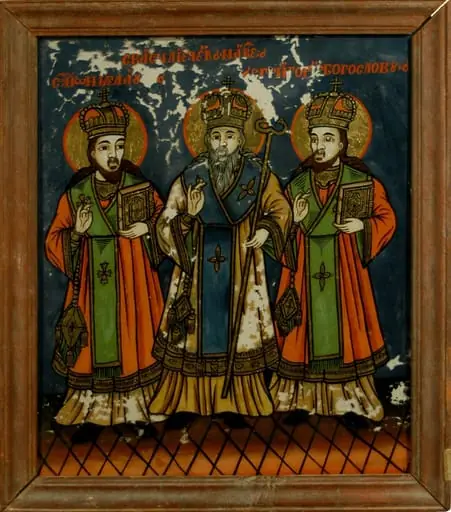
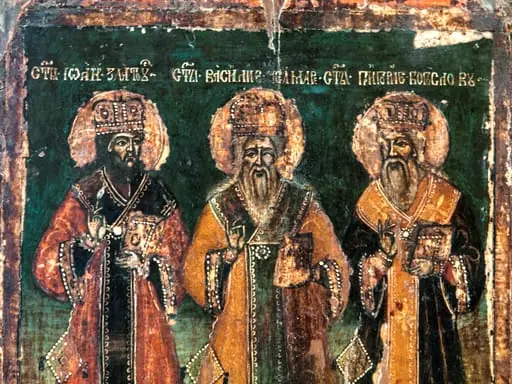 Tema icoanei este "Sfinții trei ierarhi, Vasile, Grigorie, și Ioan". Ordinea din icoană este, de la stânga la dreapta : Ioan Gură de aur(Zlotul), Vasile cel Mare și Grigore Teologul(Bogoslovul).Cei trei sfinți sunt pictați în picioare, Sf. Ioan și Grigorie ușor întorși către Sf Vasile plasat central. Redați în veșminte arhierești, cu însemne episcopale. Pe cap toți poartă mitră împodobită cu pietre scumpe, în mâna stângă țin Evanghelia iar cu dreapta binecuvintează prin atingerea degetului inelar de cel mare.De mâna dreaptă le atârnă bedernița, un veșmânt arhieresc în formă de romb. Reprezentarea celor trei respectă în mare indicațiile Erminiei, ceea ce arată că zugravul o studiase; Doar Sfântul Ioan este redat cu părul și barba negre, ceea ce nu corespunde descrierilor. Veșmintele sunt destul de simple, Sacosurile de culori diferite(roșu cărămiziu, galben ocru, brun închis) au în parte de jos o bordură lată, aurită decorată cu motive geometrice. Peste acestea este așezat omoforul mare, simplu, cu chenar pe margine . La gât poartă câte un engolpion rotund.În partea de jos se vede capătul epitrahilului deasemenea decorat cu motive geometrice și franjuri, așezat peste stihar. Aureolele sunt realizate cu foiță,delimitate de o linie albă, fină. Trăsăturile sunt foarte fine, cu aceent pe detalii, ceea ce denotă un iconar cu experiență și probabil școală. Proporțiile sunt respectate paleta cromatică dominată de culori calde valorate prin contraste cu culorile complementare și nuanțe. Fondul este realizat într-o trecere treptată, de la o culoare mai deschisă în partea de jos la un verde-albastru sus, ceea ce scoate în evidență figurile celor trei. Scrisul este caligrafic, foarte fin și ordonat, realizat cu o linie fină de culoare albă. Chenar dublu, roșu la exterior, auriu la interior. Icoana prezintă crăpături și lacune pe margine.
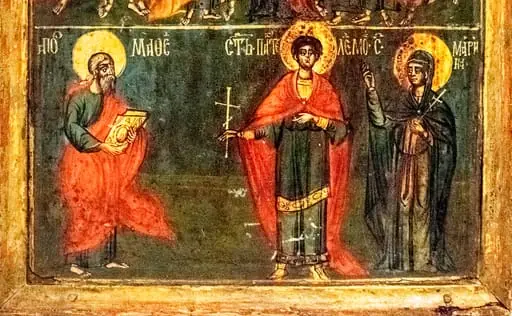 Icoaocto
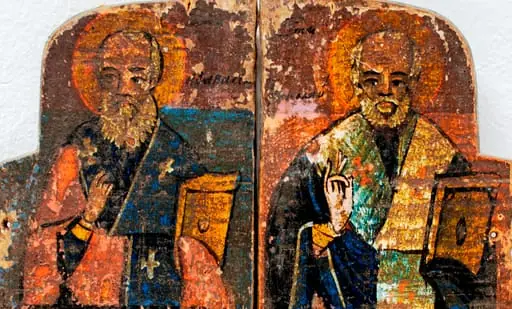 Pictura este realizată pe două registre verticale, de înălțime aproape egală, în stil popular, cu respectarea în mare a indicațiilor canoanelor bizantine. În registrul superior , frontal, 3/4, sf. Atanasie și sf. Ierah Nicolae, în vârstă, cu părul și barba albe, Sf Atanasie ține în dreapta o cruce mică, în stânga o carte cu mâna acoperită.Epitrahil albastru cu cruci albe și sacos roșu. Sf Nicolae are fruntea înaltă, capul descoperit. Binecuvintează cu dreapta, în stânga ține cartea sfântă cu mâna acoperită. Epitrahil alb cu cruci roșii, sacos bleumarin. În registrul inferior, sfinții Dimitrie și Gheorghe călări .Ambii cai sunt pe două picioare, în pozițiile consacrate, sfinții războinici făcând gestul de ucidere cu lancea unul a balaurului, celălalt a lui Lie. Calul sf Dimitrie este roșu, cel al sf. Gheorghe alb. Redați naiv, cu capete mici, cu cozile înnodate. Sfinții înveșmântați cu culori complementare(roșu și albastru). Nimburile realizate cu culoare galbenă, cu linia de contur roșie. Culorile de fond complementare, albastru(Sf Atanasie) și roșu , verde -Sf Dumitru, albastru sf. Gheorghe. În partea de sus a fiecărui registru fondul este violet Paleta cromatică variată , culorile tari, ușor stridente. Pe spatele voleurilor apare inscripția IS HS; NI KA.
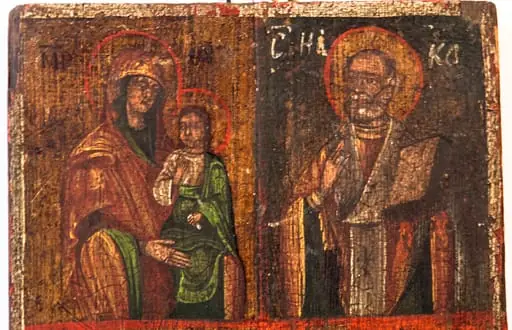 Icoana cu patru scene în care sunt reprezentați: Maica Domnului cu Pruncul(tipul Hodighitria), Sfântul Nicolae, sfântul Gheorghe, cuvioasa Paraschiva. Toți sunt redați 3/4, din semiprofil, pe un fond de culoare(galben) care servește și ca suport pentru pictură, la două casete peste acesta s-a aplicat albastru( fond la sf. Nicolae) și roșu (fond la Cuvioasa Paraschiva, continuat ca bandă de separație orizontală între registre.Pictura este ușor naivă și stângace, dar zugravul cunoștea canoanele picturi bizantine, chipurile sunt expresive, proporțiile respectate, se observă virtuozitate în realizarea faldurilor. Maica Domnului este înveșmântată cu maforion roșu deschis, drapaj galben, intradosul verde și stola bleumarin. Pruncul binecuvintează cu mâna dreaptă, în stânga ține un rotulus. Înveșmântat cu chiton alb și himation verde. Sfântul ierarh Nicolae binecuvintează cu dreapta în stânga ține Evanghelia. Are capul descoperit fruntea înaltă, barba și părul scurte. Sacos roșu cu drapaj galben, stihar bleumarin, epitrahil alb. Sfântul Gheorghe, tânăr, poartă o lorică argintie, tunică albastră, mantie roșii cu drapaj galben.. În dreapta ține o cruce, în stânga o lance.Cuvioasa Paraschiva poartă un maforion întunecat, tunică roșie cu drapaj galben și mâneci verzi.În dreapta ține o cruce mică, în stânga niște mătănii.Nimburile trasate cu o linie roșie. Chenar- bandă albă.
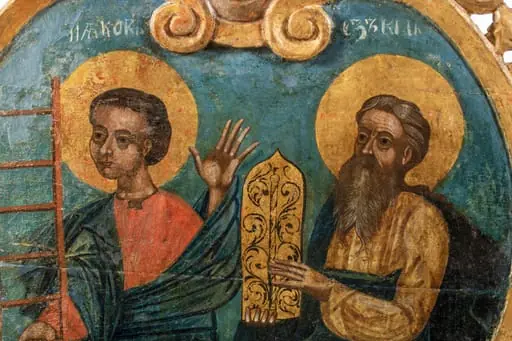 Iacov și Ezechil
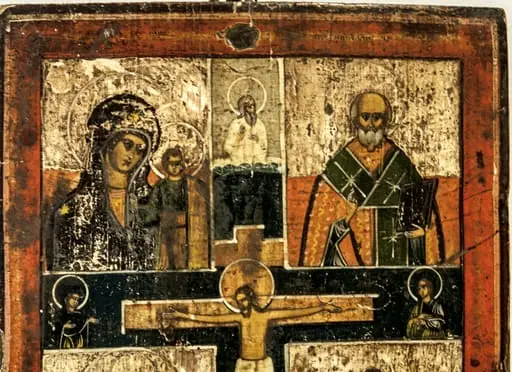 Răstshka
 Intru co
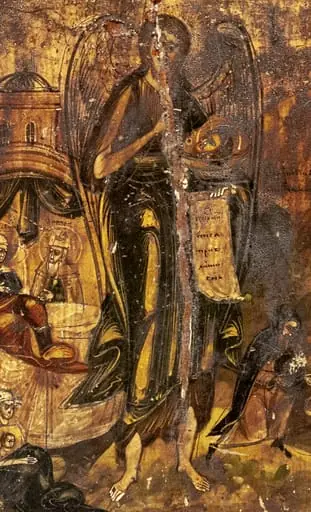 În centrul spațiului pictural, prim plan, Sfântul Ioan Îngerul Pustiului, cu aripi mari,având în mâna stângă un rotulus desfășurat, cu dreapta ținând capul său tăiat pe o tipsie. Este înveșmântat cu o mantie verde peste blana de cămilă, picioarele desculțe. În planul doi, dreapta, este redată scena aflării capului. Un călugăr îngenuncheat lângă capul aureolat al sfântului prooroc, un alt personaj în veșminte roșii(deși tot călugăr), prezentat în picioare, cu capul înclinat, indicând locul cu o săgeată (în alte icoane ambii călugări au lopeți). Este vorba de una dintre aflările capului sfântului, în zilele lui Constantin cel Mare. Aceasta s-a întâmplat în muntele Eleonului. În partea stângă a icoanei este redată nașterea sfântului Ioan. Pe un pat înalt, Elisabeta, în spatele patului, proorocul Zaharia, cu barbă lungă, albă, privind-o. În fața patului, o slujnică ținându-l în brațe pe pruncul Ioan, cu aureolă în jurul capului. Scena se petrece într-un iatac dintr-o clădire cu o turlă. În colțul din stânga sus, Iisus așa cum apare pe mahrama Veronicăi sau sfântul Keramion. Inscripții: pe chenar în partea superioară - Chipul Sfântului Ioan Înainte Mergătorul; în jurul nimburilor părinților proorocului -Elisaveta și Zaharia; în partea dreaptă a icoanei cu litere mici cursive: Aflarea capului Sfântului Ioan Botezătorul, pe rotulusul desfășurat inscripții indescifrabile.Fondul - foița aurie brunificată, (partea de sus), pe care se proiectează crestele muntoase. Cromatica specifică acestui tip de icoane, predomină culorile calde, tonurile de brun, încadrate de bordura roșiatică( galben, ocru, tonuri de verde, brun, roșu, negru.) Desenul trasat cu linie fină. Suportul prezintă o crăpătură longitudinală, lacune ale stratului pictural.
 Întâmpinarea Domnului
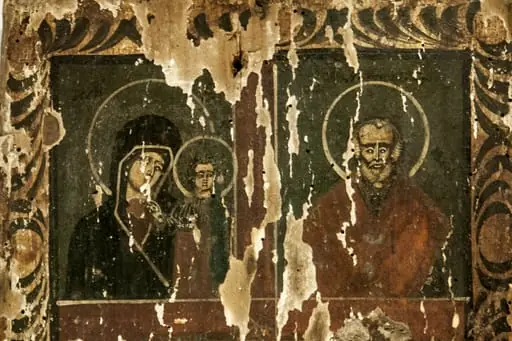 Un câmp central sub formă de cruce, împarte spațiul pictural în patru casete dreptunghiulare care conțin următoarele scene: Stânga sus Maica Domnului cu Pruncul tipul Kazanskaia. Este reprezentată până la piept, nu se văd mâinile, înveșmântată cu maforion negru cu galon alb. Are chipul îndurerat, privirea tristă, capul ușor înclinat spre Prunc. Iisus – Emanuel, binecuvintează cu dreapta, privirea îndreptată lateral, către sfântul Nicolae..Chiton brun deschis, himation verde. Dreapta sus - Sf. Nicolae în veșminte simple, capul descoperit, cărunt, cu barba rotundă și scurtă, privind la rândul său către pruncul Iisus. Înveșmântat cu sacos verde și omofor mare orange, care îi acoperă umerii. În casetele de jos sunt redați doi sfinți în vârstă, în picioare, în veșminte preoțești, întorși unul către altul, cu privirea îndreptată către scenele din registrul superior. Inscripția ce denominează primul dintre ei a fost ștearsă, cel de al doilea posibil sfântul Savatie?. Icoana are un vădit caracter popular, naiv. Spațiul cruciform pictat cu roșu, fondul scenelor verde închis, 2/3 din fondul scenelor de jos galben-orange. Nimburi trasate cu alb, inscripții caligrafice, litere cursive, cu negru. Compoziția este încadrată de un chenar cu decor vegetal, motive ample de factură populară, specifice spațiului slav.
 Sfinții Trei Ierarhi