Artwork
Saint Bartholomew
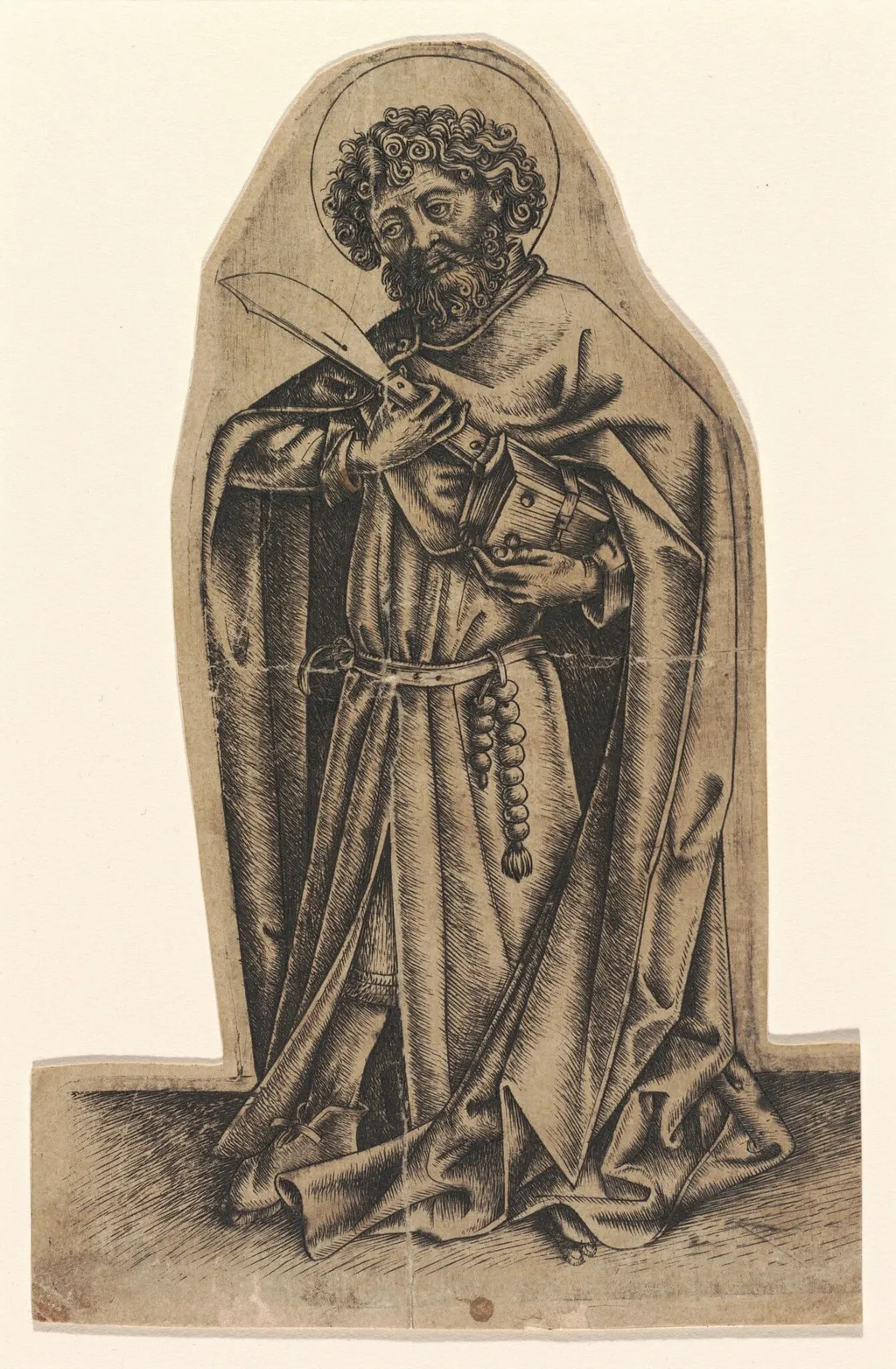
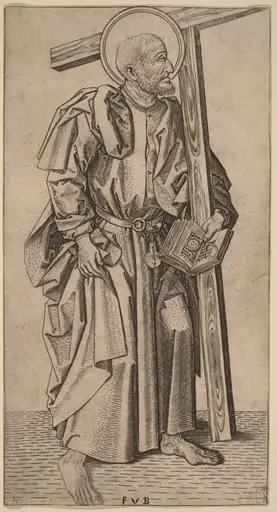
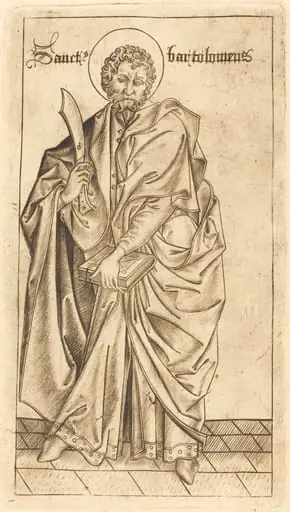
Saint Bartholomew is an ink print by the Renaissance artist Master of Saint John the Baptist. It dates from 1444 and is held in the collection of the National Gallery of Art.
About this work
Overview
Saint Bartholomew is a religious engraving attributed to the Master of Saint John the Baptist, dating to around 1444. Executed on laid paper, it represents a saint through distinctive iconography.
Subject & Meaning
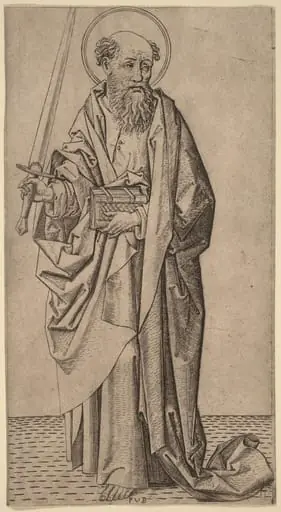
The engraving portrays Saint Bartholomew, identifiable by the knife in his right hand (symbolizing his martyrdom by flaying) and a book in his left, signifying his role as an apostle and evangelist. His attire consists of a belted robe and draped cloak, with a halo denoting his sanctity.
Technique & Style
The work showcases a detailed, realistic style characteristic of the early Renaissance. Cross-hatching techniques are prominently used to achieve textured effects and nuanced shading, highlighting the artist's mastery of engraving.
History & Provenance
Created circa 1444, specific details about the engraving's history and ownership prior to its current location are not provided in the available information.
Context
This engraving reflects the Renaissance's emphasis on realism and detailed representation of religious figures, aligning with the artistic values of its time.
Legacy
As an early Renaissance engraving, Saint Bartholomew contributes to the understanding of the period's printmaking techniques and the dissemination of religious imagery during the 15th century.
Artist & collection