Artwork
Woman Donor from Esterri d'Àneu
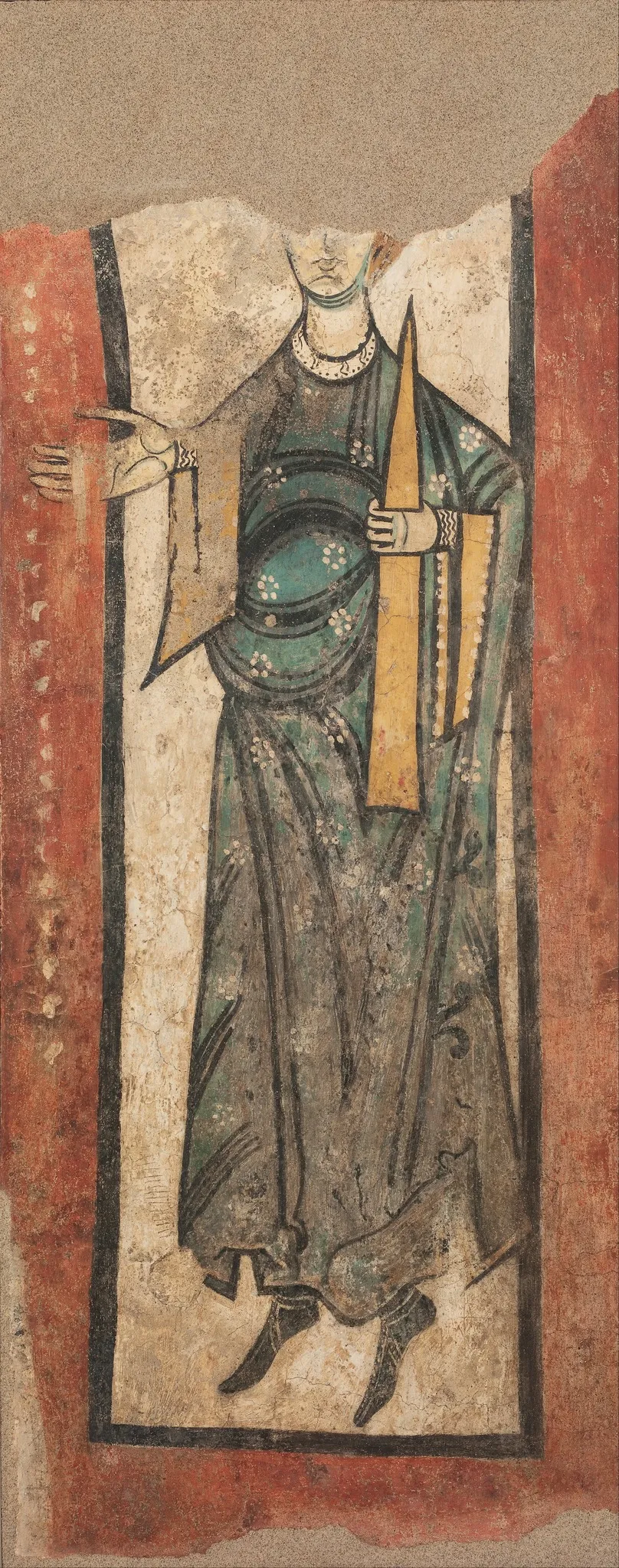
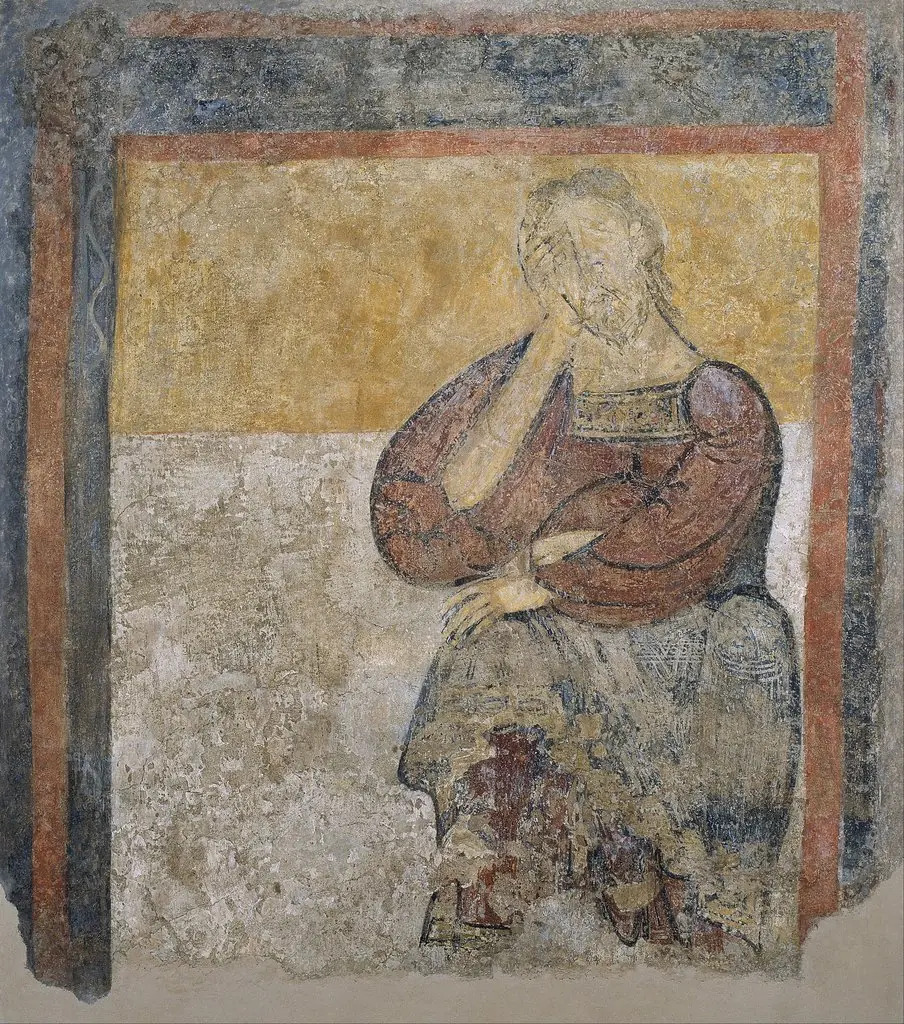
Woman Donor from Esterri d'Àneu is an unspecified painting by the Byzantine icon painting artist Unknown. It dates from 1150 and is held in the collection of the Museu Nacional d'Art de Catalunya. The work portrays a seated woman dressed in a dark, flowing robe trimmed with a white collar and a green sash.
About this work
Overview
The work portrays a seated woman dressed in a dark, flowing robe trimmed with a white collar and a green sash. She holds a yellow object in her left hand while her right hand is extended outward, and a rounded emblem rests on her abdomen. The backdrop consists of muted reds, whites and browns, rendered in broad, uncomplicated hues.
Subject & Meaning
The figure is identified as a donor, a common motif in religious and civic commissions where the patron is shown offering a tribute. The round object on her stomach likely functions as a symbolic badge indicating her charitable role, while the outstretched hand suggests a gesture of giving or intercession.
Technique & Style
The painting employs a limited palette of saturated primary and earth tones, applied with confident, decisive brushwork. Bold outlines define the garments and objects, creating a clear visual hierarchy. The overall composition balances simplicity of color with a refined sense of proportion, characteristic of late medieval devotional portraiture.
History & Provenance
The artwork originates from the region of Esterri d'Àneu, a locality in the Pyrenees of Catalonia. Its precise date and original setting remain uncertain, but it likely formed part of a local chapel or civic altar where donor portraits were customary. The painting entered the museum collection through a regional acquisition in the early twentieth century.
Artist & collection

 Domestic Scene
 Giacomo and Cardinal Marco, investing Andrea, Abbot of San Zeno, with his Benefice
 The Nymph of Fontainebleau
 Portrait of a Woman
 Madonna and Child with Saints in the Enclosed Garden
 Venus and Minerva
 Family Group of Four on Sofa
 Wall painting from Room H of the Villa of P. Fannius Synistor at Boscoreale
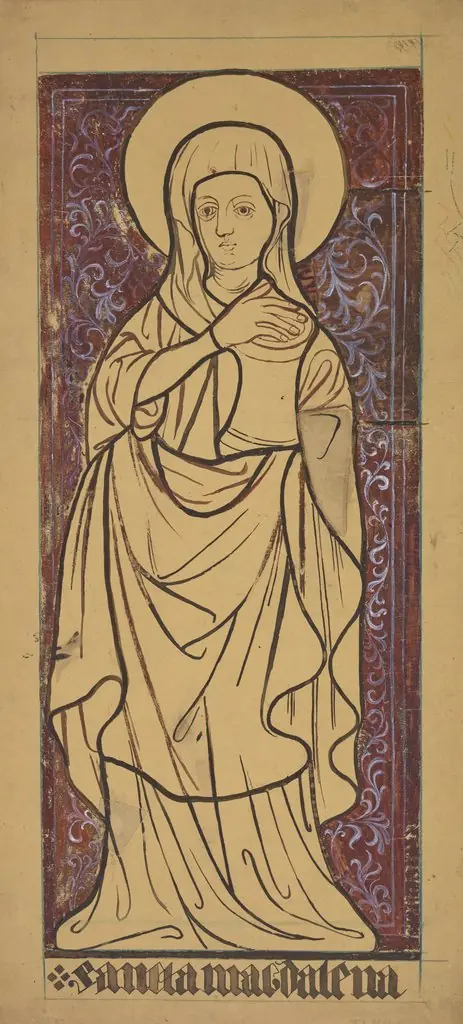 Saint Mary Magdalene. Artistic reconstruction of a stained-glass panel from the Dominican church in Kraków
 Standing Youth with a Branch
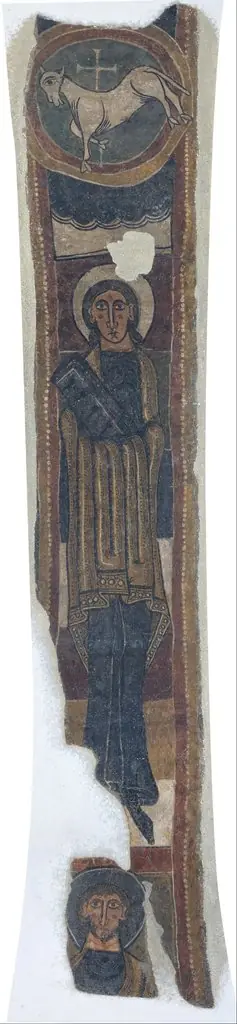 Lamb of God and saints from Santa Maria de Taüll
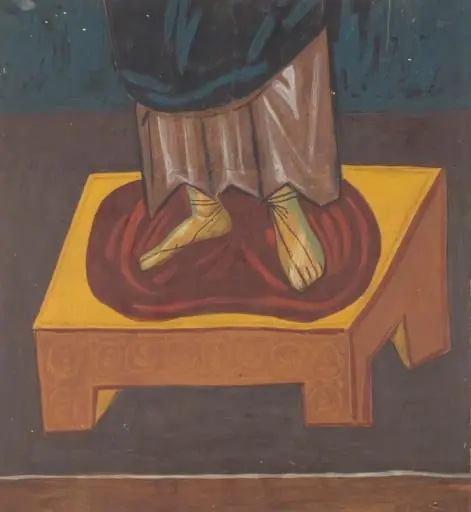 Detail
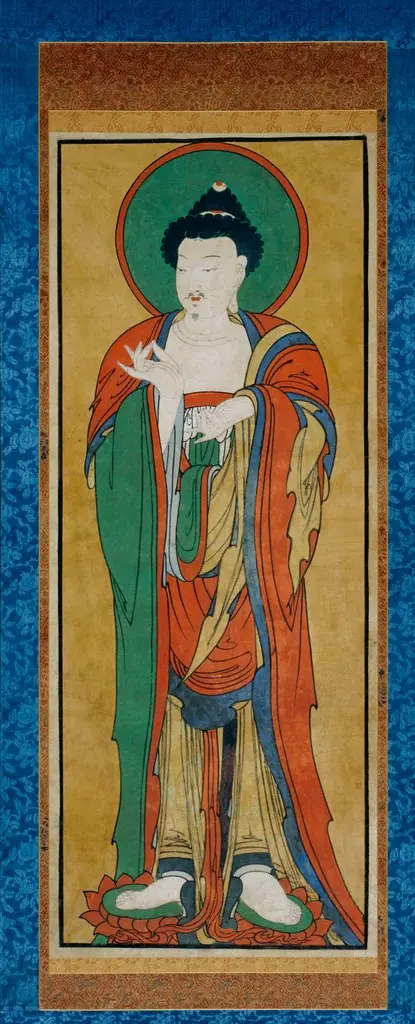 Tathagata Buddha
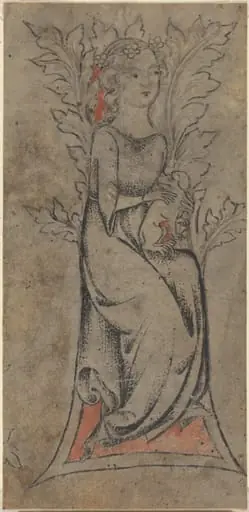 Seated Girl with a Dog
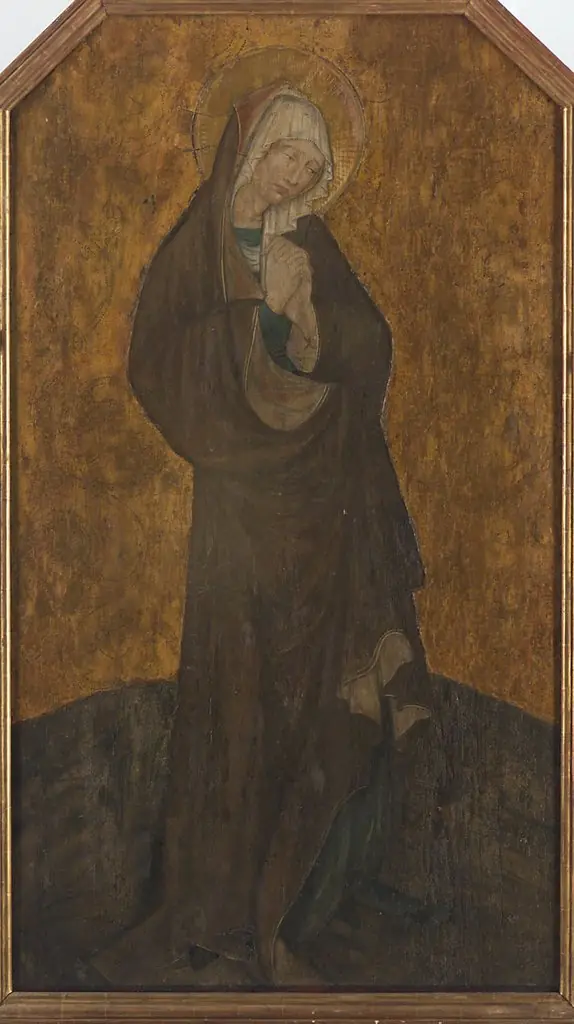 Our Lady of Sorrows
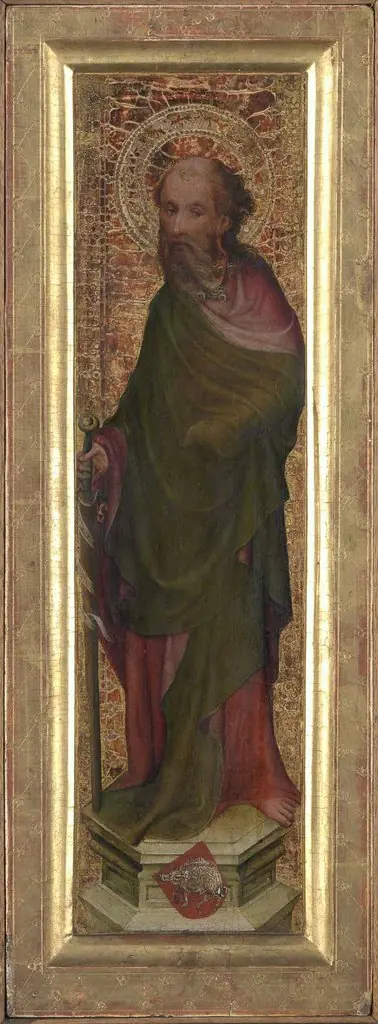 Hl. Paulus Rückseite: Hl. Reinoldus
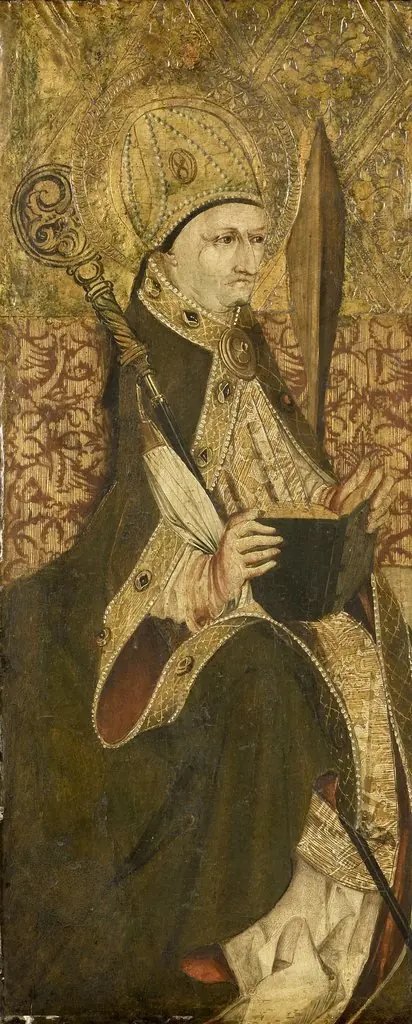 A Holy Bishop
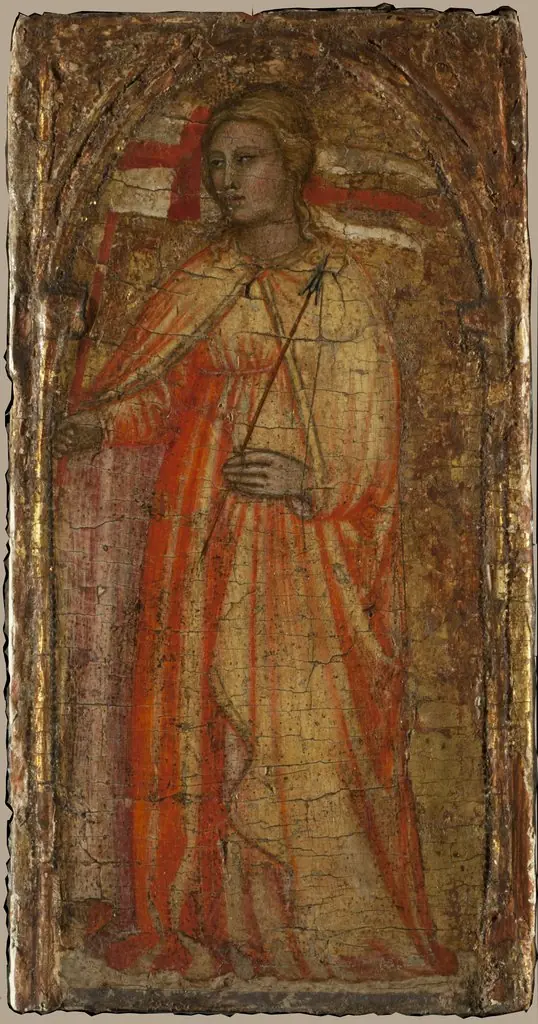 Saint Ursula
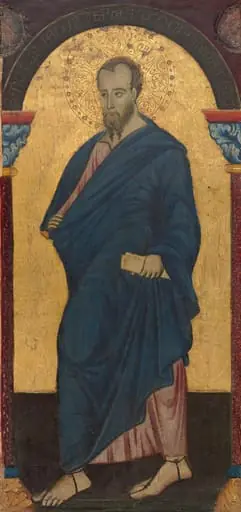 Saint James Minor
 Distressed man from Sant Climent de Taüll