Artwork
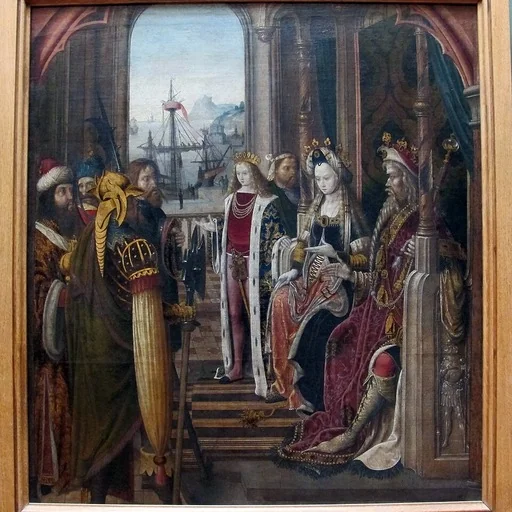
The Martyrdom of Saint Ursula and the 11,000 Virgins
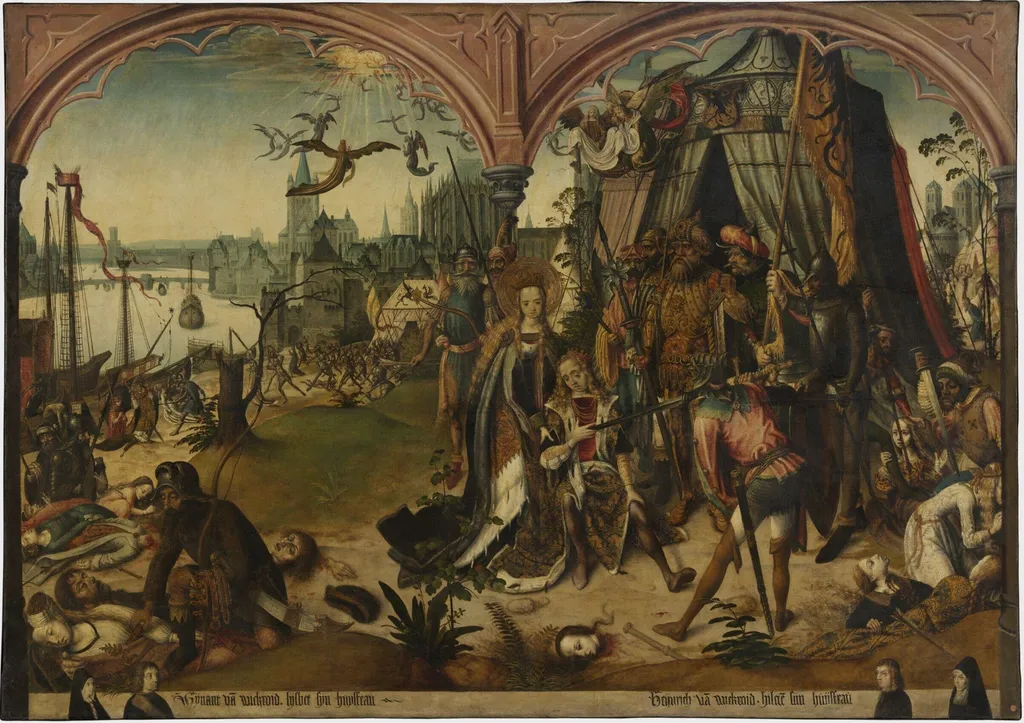
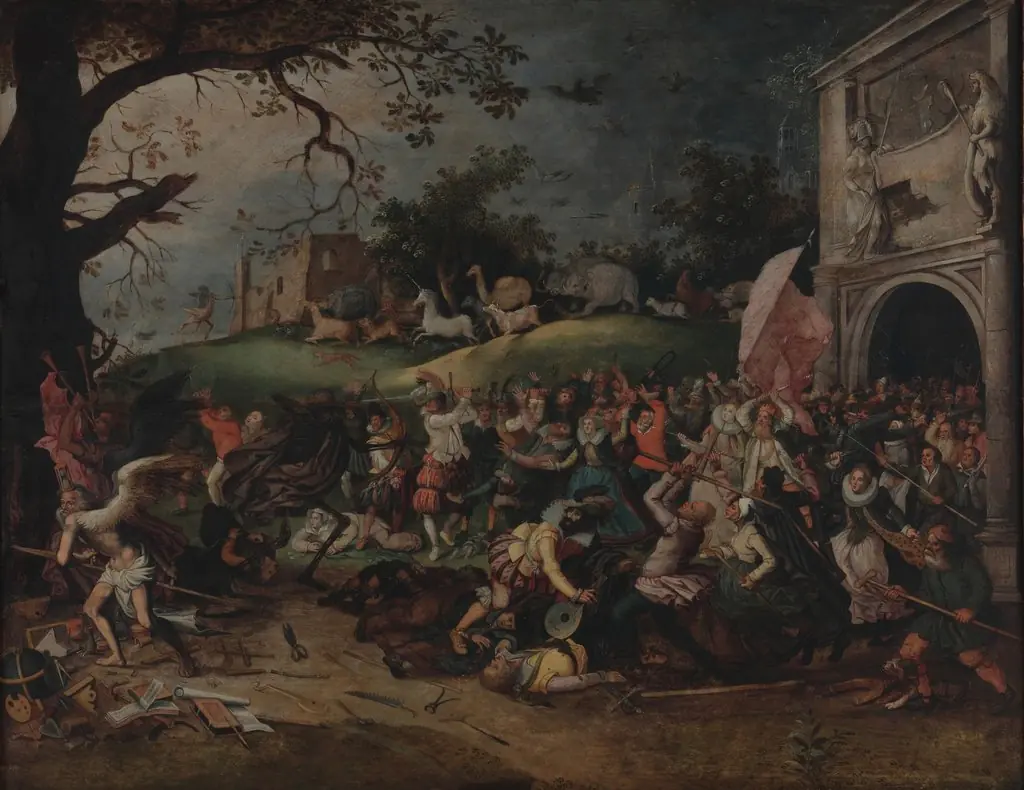
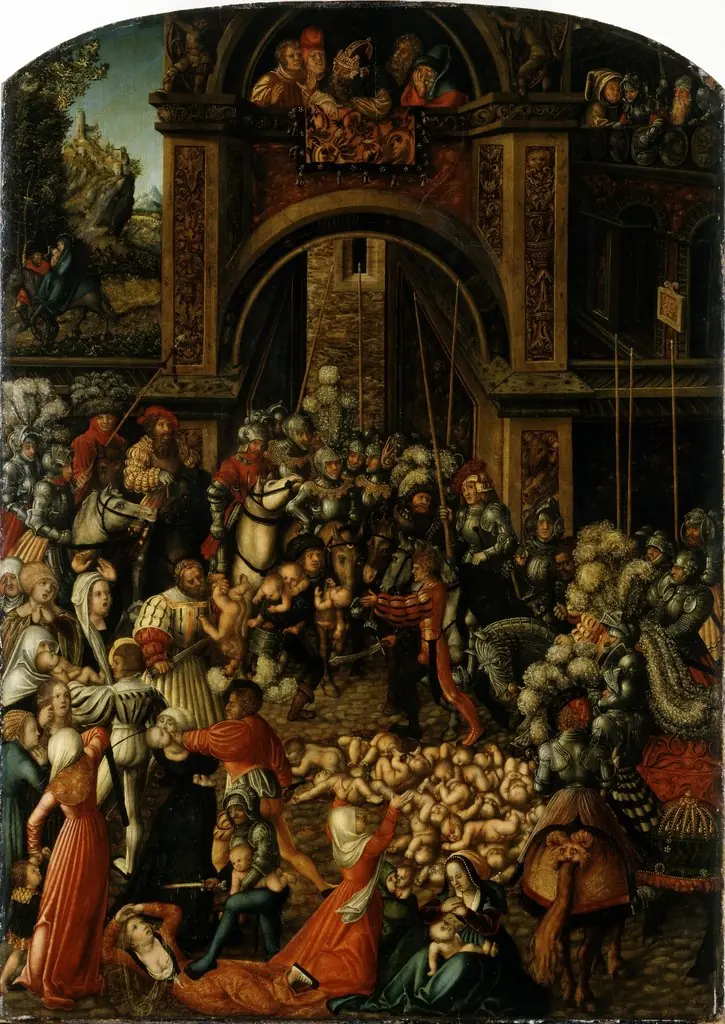
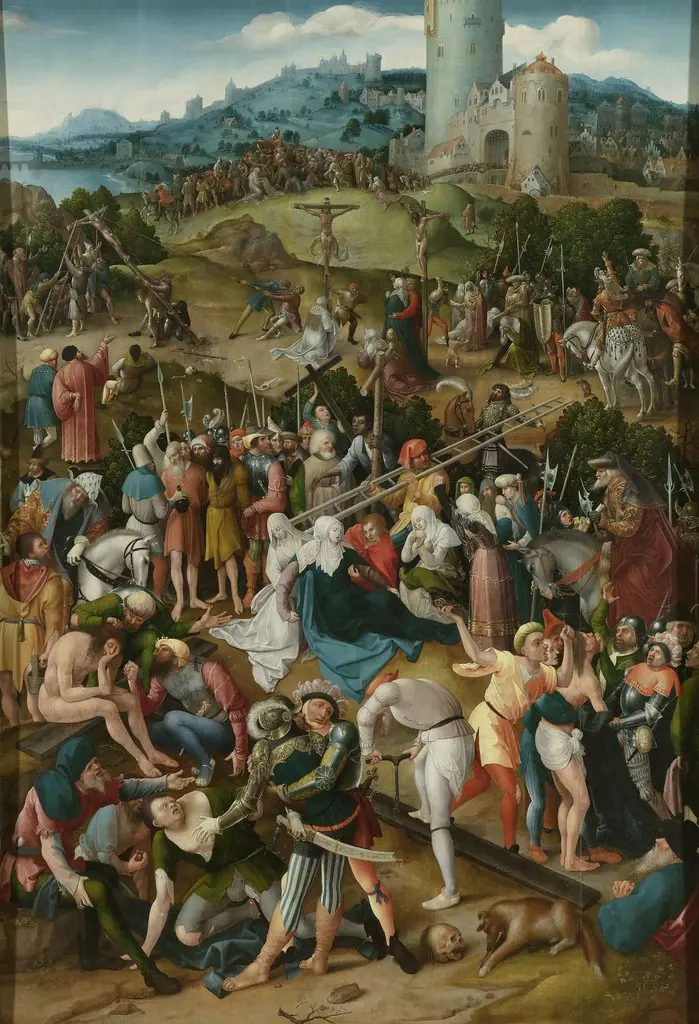
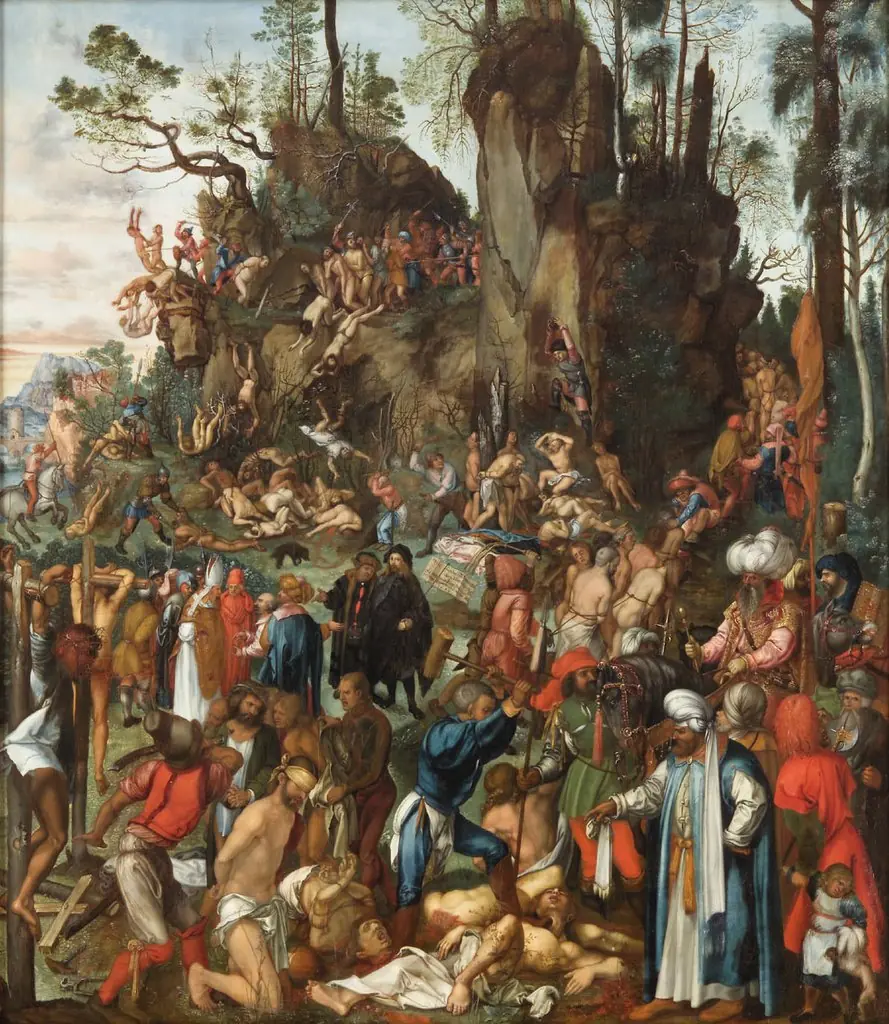
The Martyrdom of Saint Ursula and the 11,000 Virgins is an oil painting by the Northern Renaissance artist Master of the Cologne legend of St. Ursula. It dates from 1496 and is held in the collection of the Victoria and Albert Museum. Painted in 1496, this oil-on-panel work portrays the legendary martyrdom of Saint Ursula and her companions.
About this work
Overview
Painted in 1496, this oil-on-panel work portrays the legendary martyrdom of Saint Ursula and her companions.
Painted in 1496, this oil-on-panel work portrays the legendary martyrdom of Saint Ursula and her companions. Created by an anonymous German artist known as the Master of the Cologne Legend of St. Ursula, it reflects the devotional painting traditions of the Northern Renaissance. The piece is part of the Victoria and Albert Museum’s collection, where it remains a key example of late 15th-century religious narrative art from the Rhineland region.
Subject & Meaning
The scene illustrates the martyrdom of Saint Ursula and 11,000 virgin followers, according to medieval legend, who were killed by Huns near Cologne. The central figure, Ursula, is shown in a moment of solemnity amid chaos, surrounded by figures in various states of violence and surrender. The composition emphasizes collective sacrifice and faith under persecution, reinforcing the cult of virgin martyrs popular in late medieval piety.
Technique & Style
The artist employs fine brushwork and layered glazes to render textures in fabric, skin, and architecture. A restrained palette of earth tones, deep greens, and muted blues grounds the scene, while subtle contrasts of light and shadow heighten emotional tension. Figures are arranged in dense, overlapping groups, creating a sense of crowded urgency typical of Northern Renaissance narrative painting.
History & Provenance
The painting was likely commissioned for a religious institution in Cologne, where the cult of Saint Ursula was especially venerated. It remained in the region for centuries before entering the Victoria and Albert Museum’s collection in the 19th century. Its attribution to an anonymous master reflects the common practice of workshop production in late medieval Germany, where individual authorship was often secondary to devotional function.
Context
Created during a period of heightened religious devotion and pilgrimage, the painting responds to widespread interest in the legend of Saint Ursula, whose story was popularized through hagiographies and relics in the Rhineland. The detailed cityscape in the background may reference Cologne, reinforcing local identity and spiritual pride. Such works served both as altarpieces and tools for communal worship.
Legacy
Though the artist’s identity remains unknown, this painting exemplifies the narrative complexity and emotional restraint characteristic of late Gothic religious art in northern Europe. It preserves a visual record of how medieval legends were translated into devotional imagery, influencing later regional workshops and contributing to the enduring visual culture of saintly martyrdom in German-speaking lands.
Artist & collection
Artist
Master of the Cologne legend of St. Ursula
The Master of the Cologne Legend of St. Ursula (German: Meister der Kölner Ursula-Legende; active 1489–1515) was a German Renaissance painter.