Artwork
The Temptation of Saint Anthony
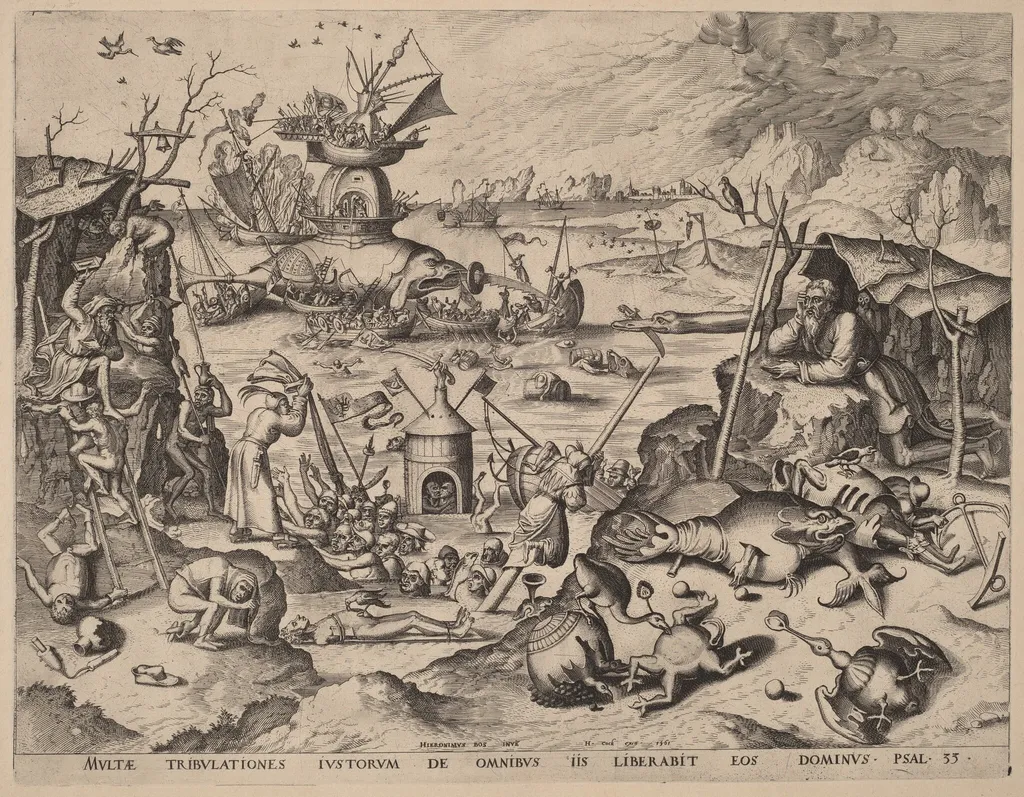
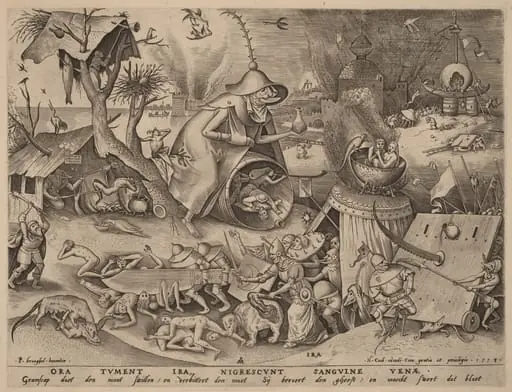
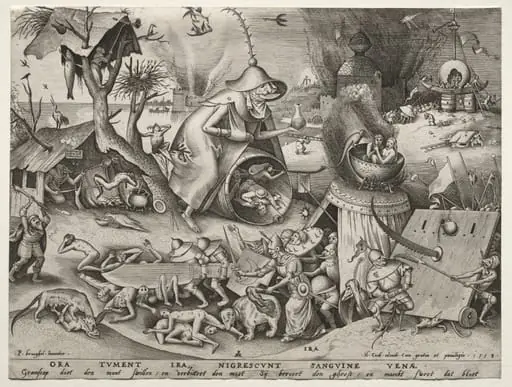
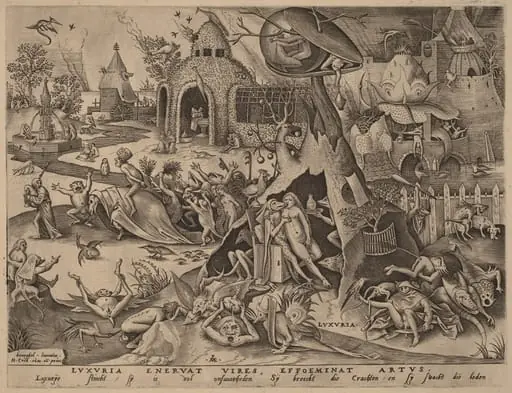
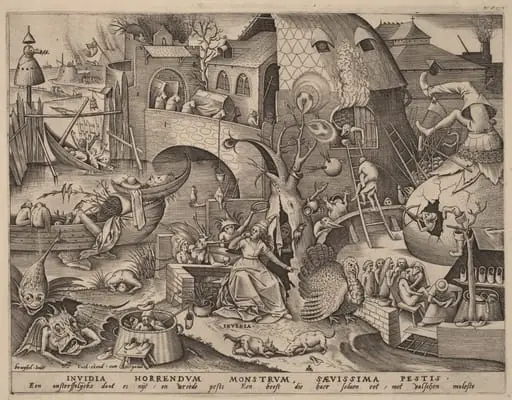
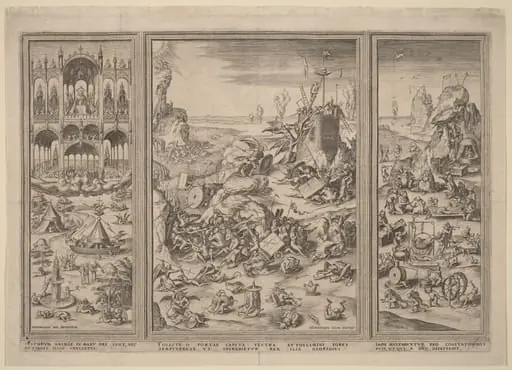
The Temptation of Saint Anthony is an ink print by the Renaissance artist Johannes van Doetechum the Elder. It dates from 1561 and is held in the collection of the National Gallery of Art. Created in 1561, this print presents the traditional subject of Saint Anthony’s trial, a common theme in Christian art.
About this work
Overview
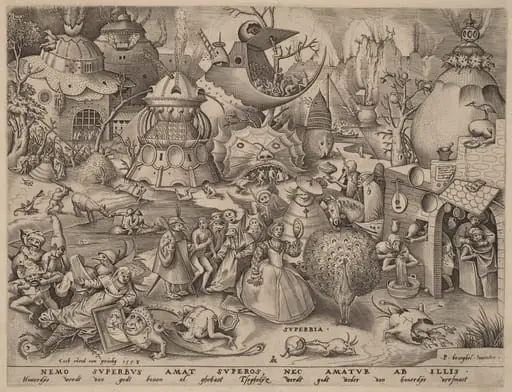
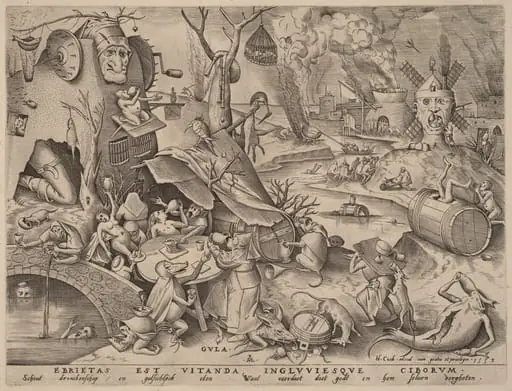
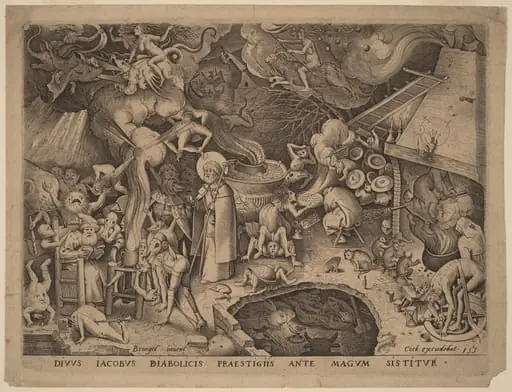
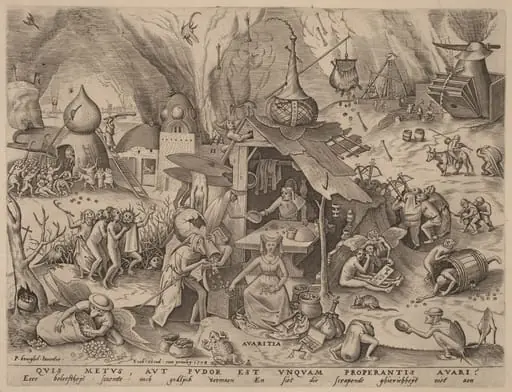
Created in 1561, this print presents the traditional subject of Saint Anthony’s trial, a common theme in Christian art. Executed as a combined etching and engraving on laid paper, the composition is densely populated with grotesque figures that assault the solitary saint at its centre, while a darkened sky looms over burning ships and a modest building.
Subject & Meaning
The work visualises the spiritual battle recounted in the life of Saint Anthony of Egypt, whose hermitage was said to be besieged by demonic forces. By surrounding the saint with a chaotic menagerie of monsters, hybrids and winged creatures, the artist underscores the intensity of temptation and the saint’s steadfast faith amid overwhelming adversity.
Technique & Style
Johannes van Doetecum the Elder employed both etching and engraving, allowing for fine line work alongside deeper, more forceful strokes. The use of laid paper gives the surface a subtle texture that enhances the contrast between the dense foreground and the muted background, while the intricate detailing reflects the Northern Renaissance’s interest in complex, narrative-driven imagery.
History & Provenance
Van Doetecum, a Dutch engraver‑cartographer active in the mid‑16th century, was known for reproducing genre scenes after Pieter Bruegel the Elder and for mapping Dutch cities. Based initially in Deventer, he later relocated to Haarlem in 1578. This particular print, belonging to the religious genre, reflects his engagement with popular devotional subjects of his time.
Context
The depiction aligns with a broader European tradition of illustrating Saint Anthony’s temptations, a motif that resonated during the Reformation and Counter‑Reformation periods as a symbol of spiritual resilience. The chaotic visual strategy mirrors contemporary concerns about moral corruption and the pervasive threat of evil in everyday life.
Artist & collection

Artist
Johannes van Doetechum the Elder
Joannes van Doetecum the Elder (1530 – 1605) was a Dutch engraver-cartographer known for his etched works after genre scenes by Pieter Bruegel the Elder and maps of various cities in the Netherlands.