Artwork
Die Heiligen Crispinus und Crispinianus in ihrer Schusterwerkstatt
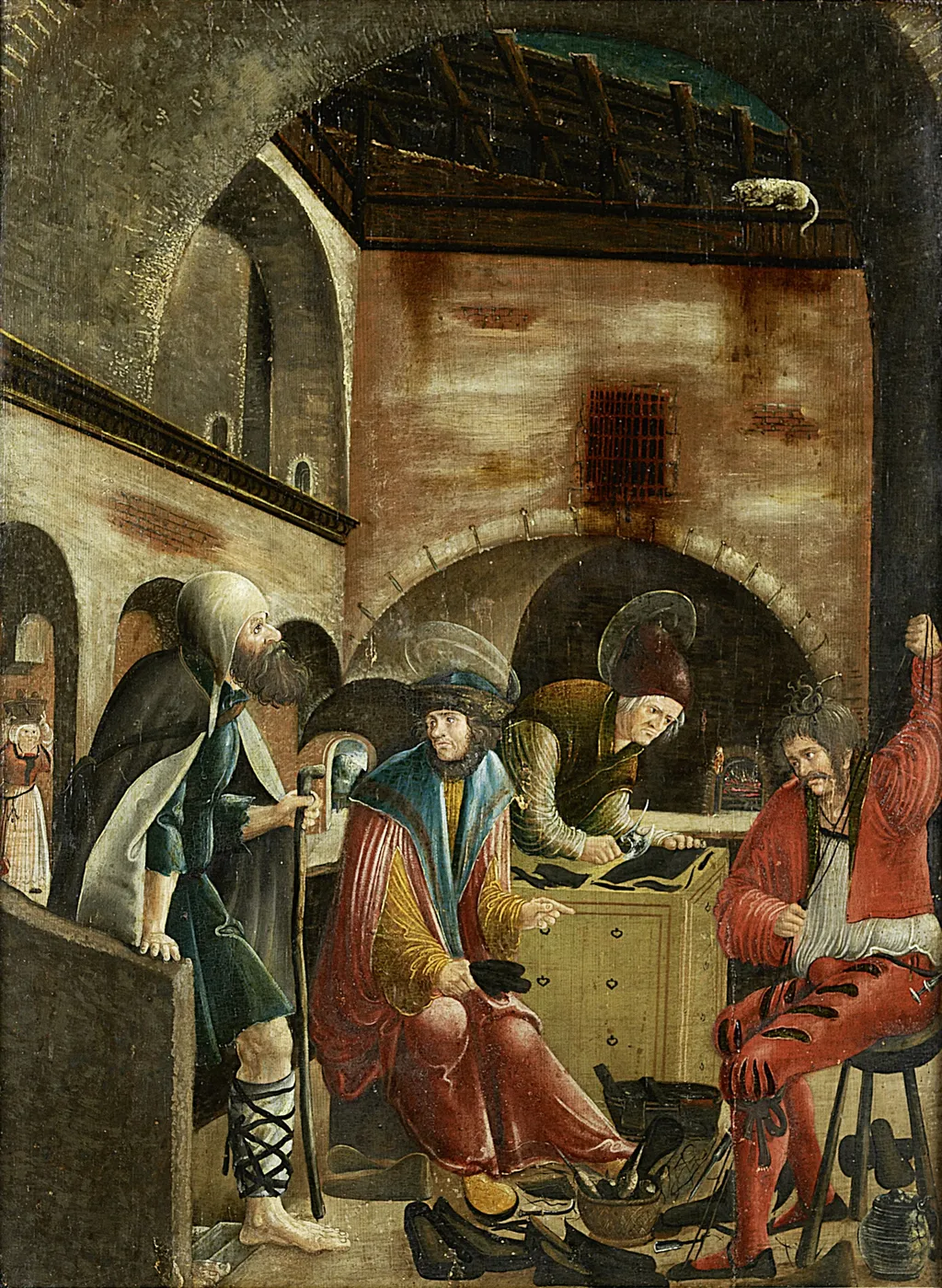
Die Heiligen Crispinus und Crispinianus in ihrer Schusterwerkstatt is an unspecified painting by the Northern Renaissance artist Master of the Crispin Legend. It dates from 1520 and is held in the collection of the Kunsthistorisches Museum.
About this work
Overview
Painted around 1520, this work by the anonymous Master of the Crispin Legend depicts the martyr saints Crispinus and Crispinianus engaged in their trade as shoemakers. It is one of a small group of devotional panels associated with their cult. The painting resides in the Kunsthistorisches Museum in Vienna, where it is preserved as an example of early 16th-century Netherlandish religious art.
Subject & Meaning
The scene portrays the saints working in their workshop, emphasizing their dual identity as humble craftsmen and Christian martyrs. Their labor is not merely domestic but sacred, reflecting the medieval ideal of sanctity found in daily work. The attentive figures surrounding them suggest a moment of spiritual revelation or instruction, reinforcing the narrative of divine purpose in ordinary life.
Technique & Style
Details in the stone architecture and wooden chest are rendered with careful observation, suggesting a preference for realism over idealization.
The artist employs muted earth tones—browns, ochres, and deep reds—to ground the scene in a tangible, intimate space. Accents of vivid blue and white in the garments draw focus to the central figures. The lighting is subdued, enhancing the sense of quiet concentration. Details in the stone architecture and wooden chest are rendered with careful observation, suggesting a preference for realism over idealization.
History & Provenance
The painting entered the Kunsthistorisches Museum’s collection as part of the Habsburg imperial holdings, likely acquired during the 16th or 17th century. Its attribution to the Master of the Crispin Legend stems from stylistic similarities to other panels depicting the same saints, though the artist’s true identity remains unknown. The work has remained in institutional custody since at least the 19th century.
Context
In early 16th-century Northern Europe, devotional imagery often highlighted saints engaged in trades, reinforcing the value of labor and humility. The cult of Crispinus and Crispinianus, patron saints of cobblers, was especially strong in the Low Countries. This painting reflects both local religious devotion and the broader trend of integrating secular work into sacred narratives for moral instruction.
Legacy
Though not widely known outside specialist circles, the painting contributes to the understanding of how religious identity was visually constructed through everyday settings. It stands as a quiet testament to the persistence of local saint cults in the decades before the Reformation, preserving a visual language that linked faith to the rhythms of artisanal life.
Own this work as a print
Artist & collection
Artist

 The Last Communion of Saint Jerome
 Jesus amongst the Doctors of the Law
 Panel of an altarpiece with Jesus disputing with the doctors in the Temple (inner wing) and Christ appearing to his mother (outer wing)
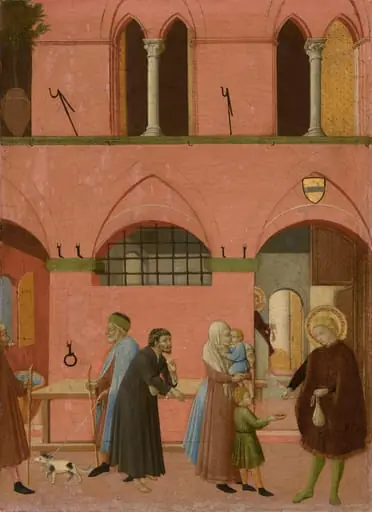 Saint Anthony Distributing His Wealth to the Poor
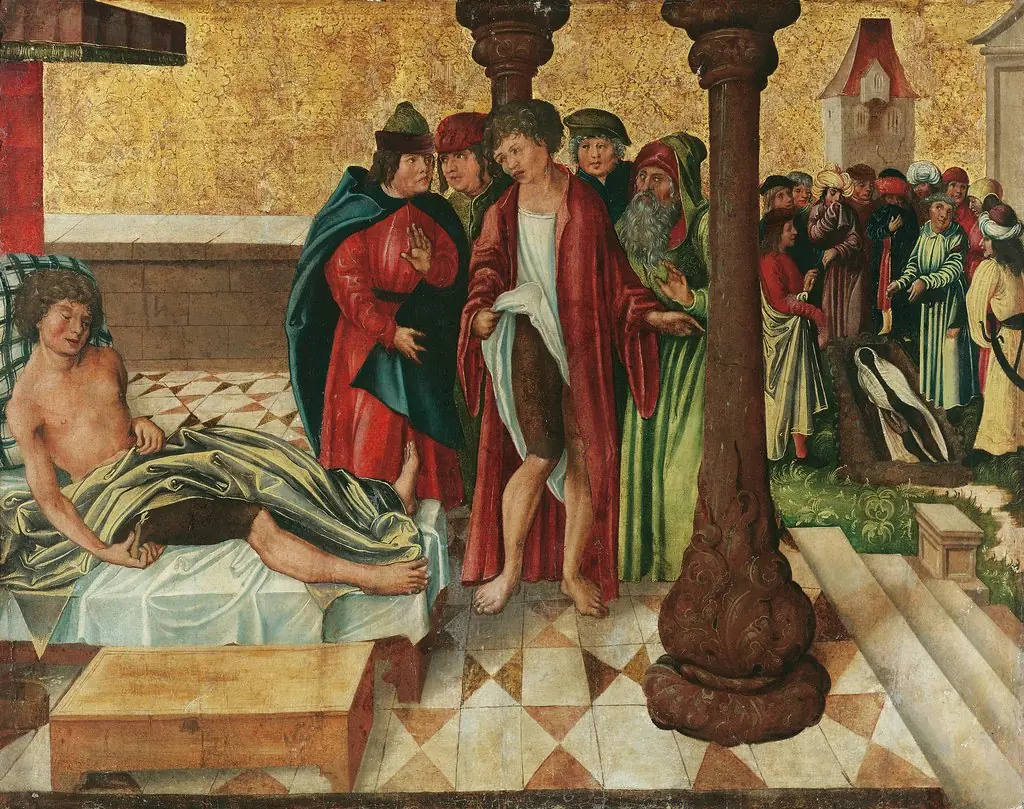 Miraculous Healing of the Leg by St Cosmas and Damian
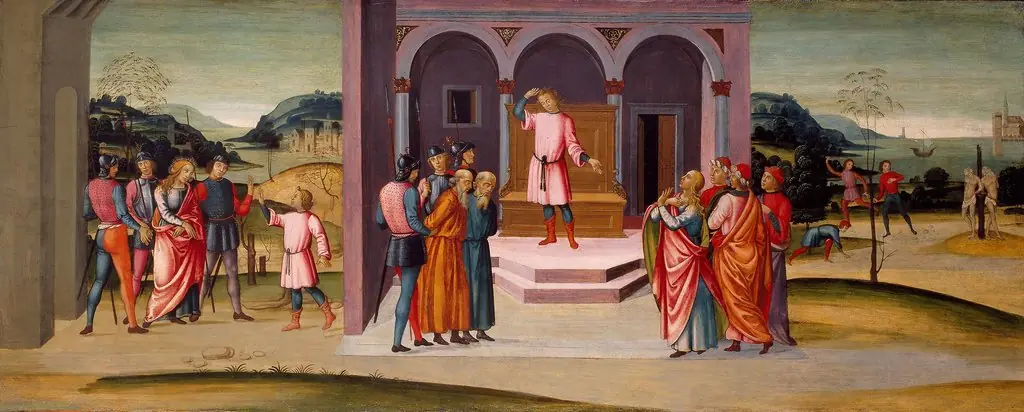 Daniel Saving Susanna, the Judgment of Daniel, and the Execution of the Elders
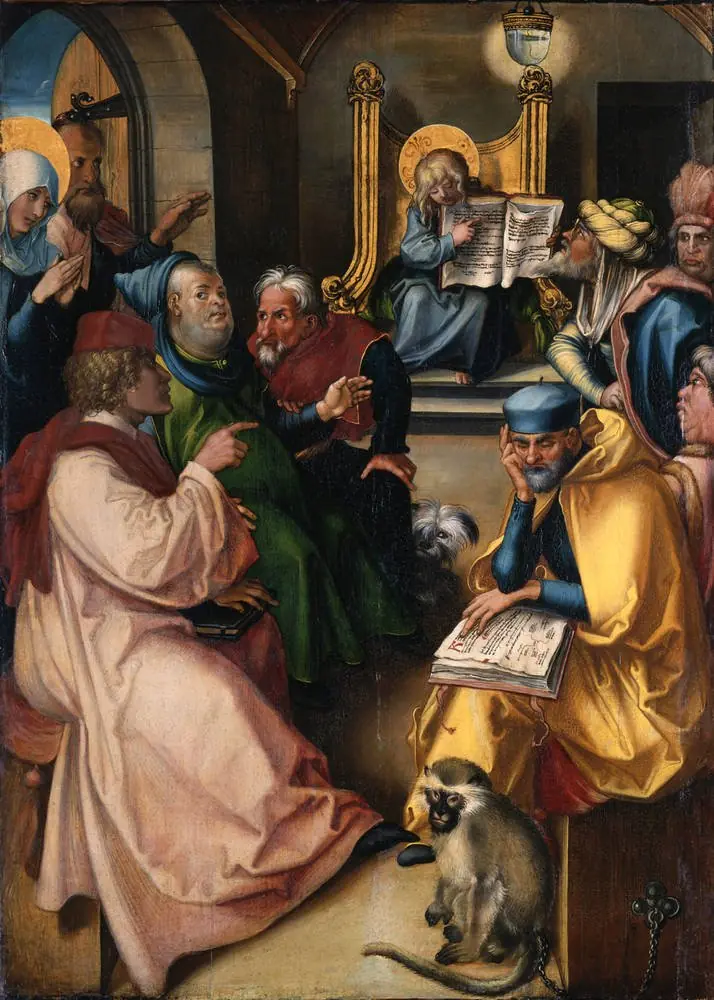 Seven Sorrows Polyptych: Christ among the Doctors
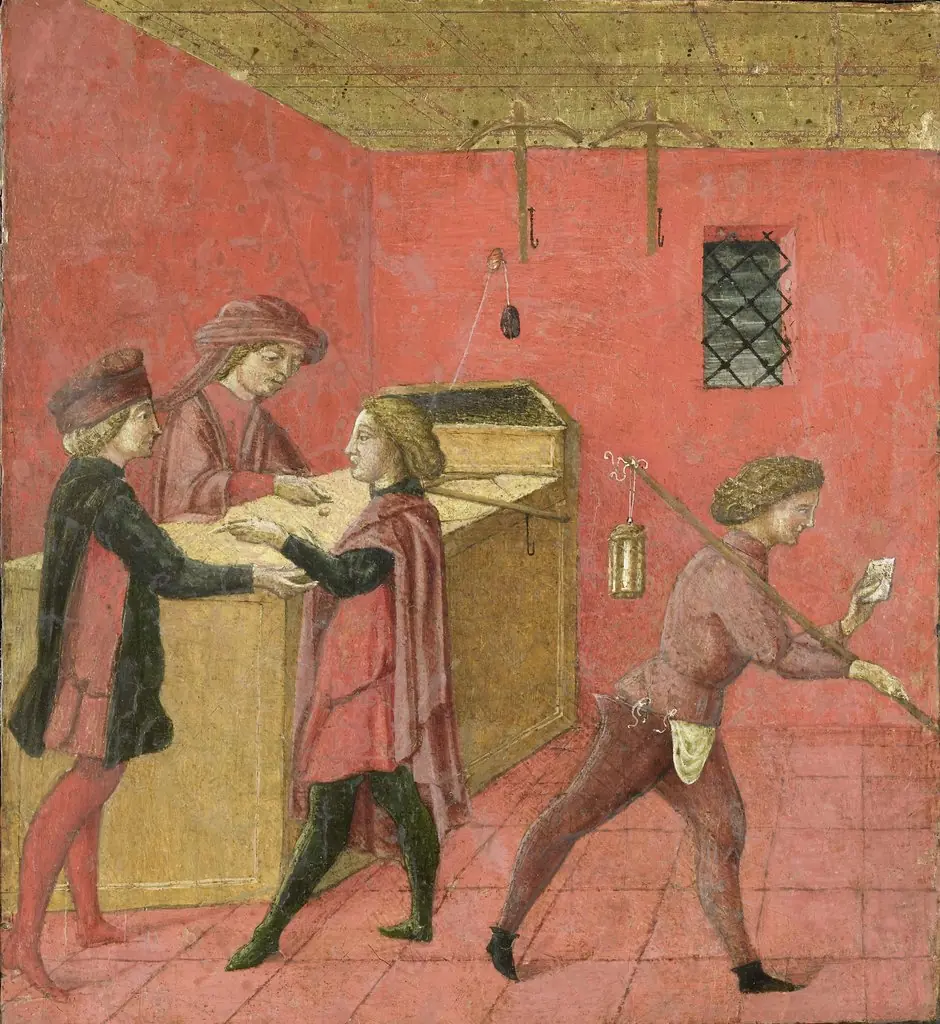 Payment of Salaries to the Night Watchmen in the Camera del Comune of Siena
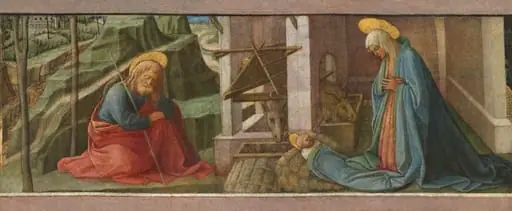 The Nativity
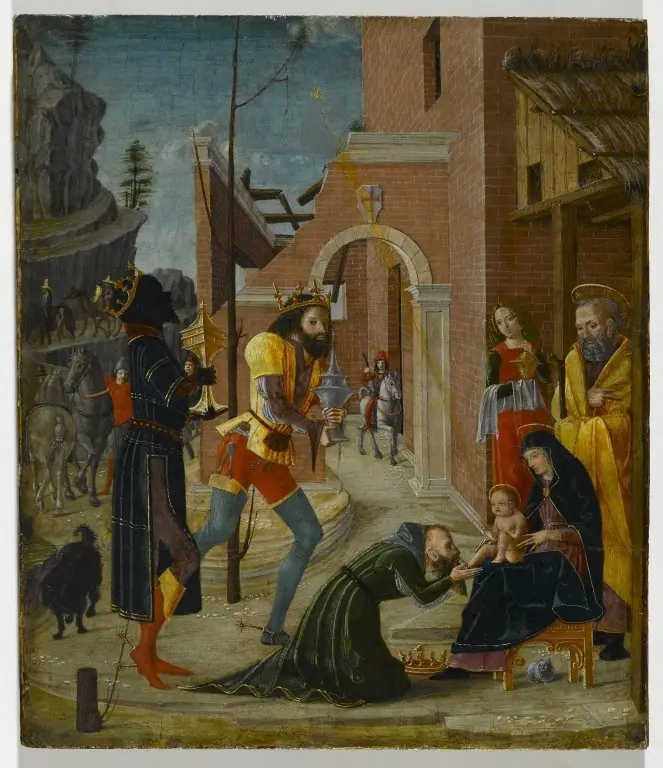 The Adoration of the Magi
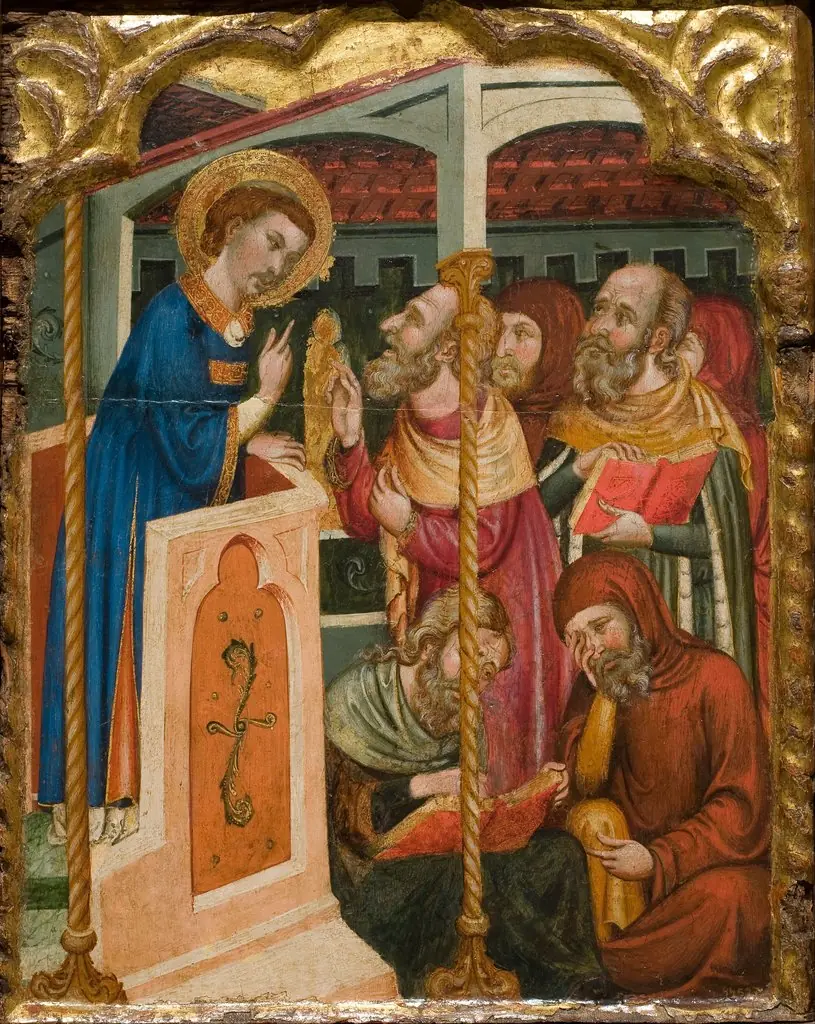 Saint Stephen's Dispute with the Jews
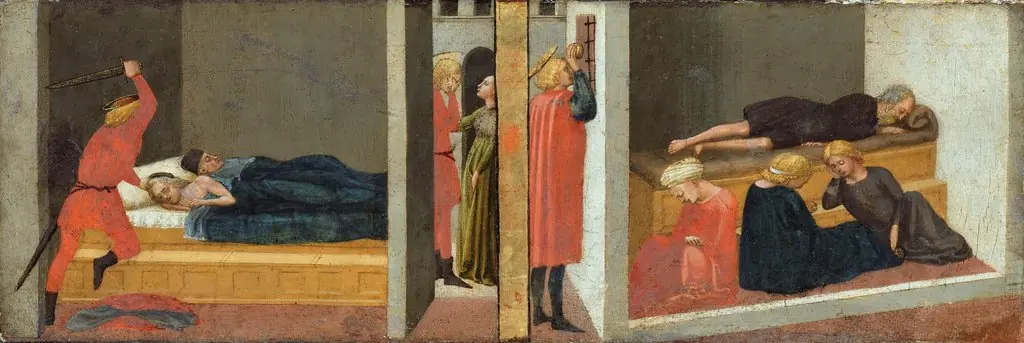 Altar predella; Right panel: The parricide of St. Julian - The miracle of St. Nicholas of Bari