Artwork
Caliope (Calliope)
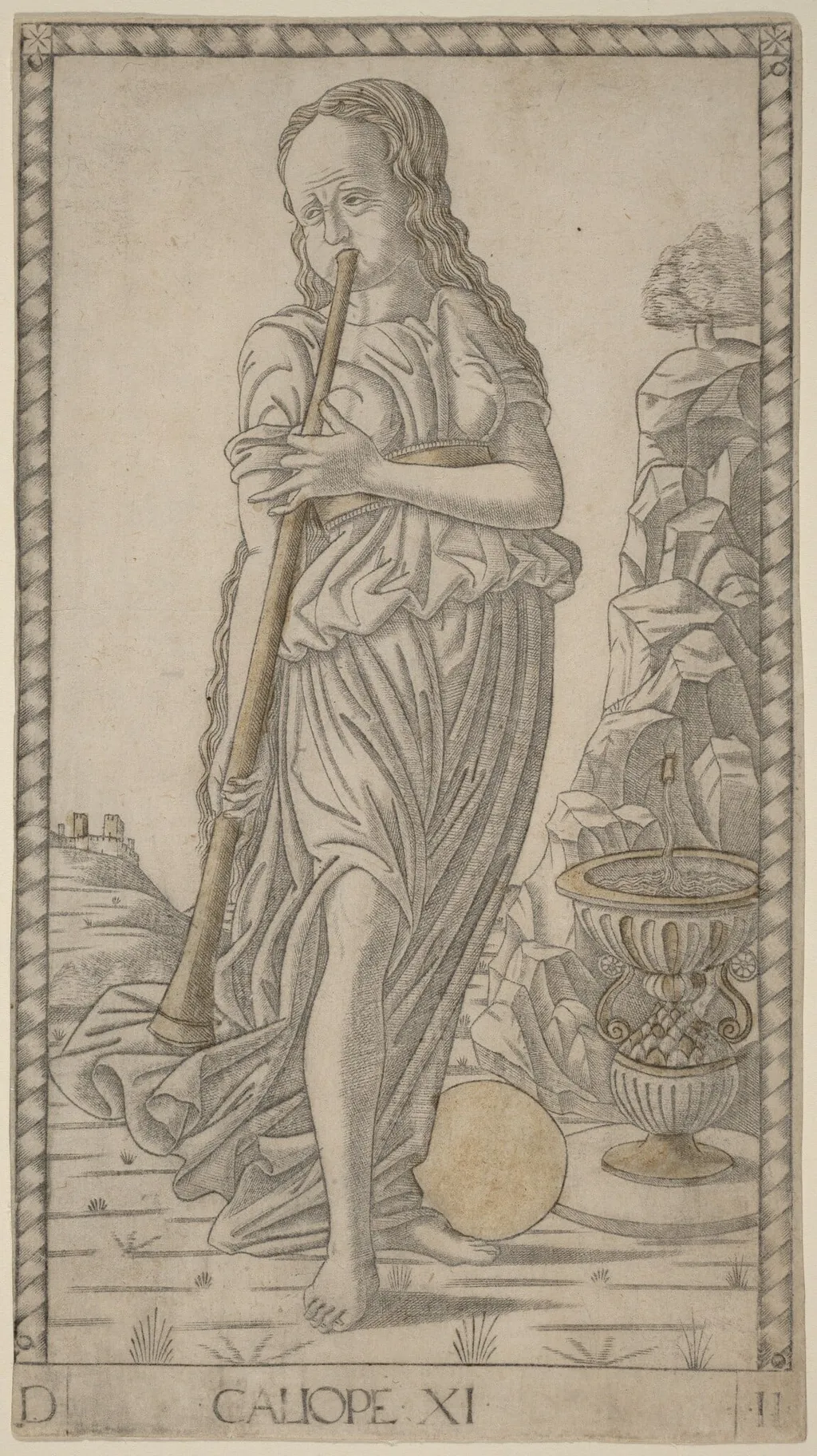
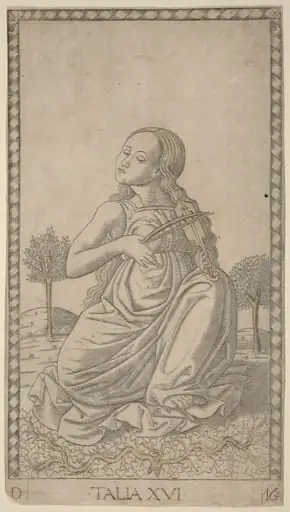
Caliope (Calliope) is an ink print by the Renaissance artist Master of the E-Series Tarocchi. It dates from 1465 and is held in the collection of the National Gallery of Art.
About this work
Overview
Created around 1465, this engraving with gilding is attributed to the Master of the E-Series Tarocchi, an anonymous artist active in northern Italy.
Created around 1465, this engraving with gilding is attributed to the Master of the E-Series Tarocchi, an anonymous artist active in northern Italy. The work belongs to a series of allegorical figures, likely intended as part of a larger decorative or educational ensemble. Its refined technique and use of gold leaf suggest it was produced for a wealthy patron, blending artistic skill with symbolic intent.
Subject & Meaning
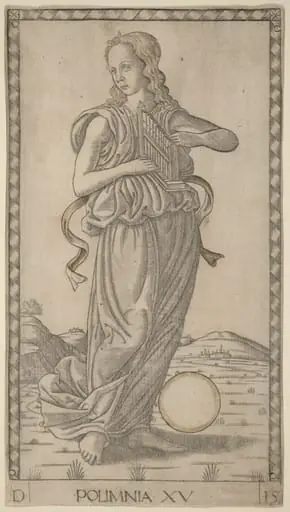
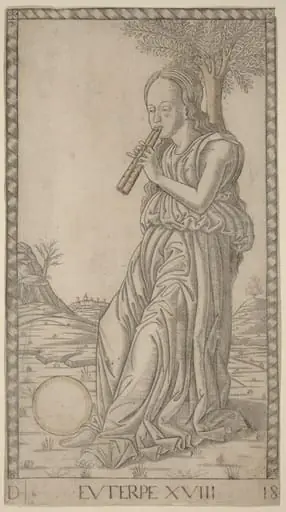
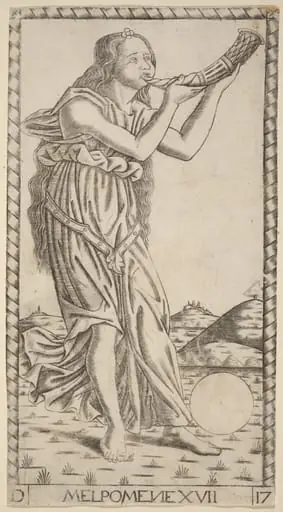
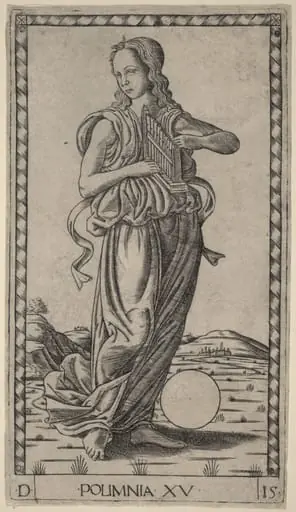
The figure represents Calliope, the Greek muse of epic poetry, identified by her attributes: a long, slender instrument, possibly a lyre or flute, held to her lips. She stands atop a raised platform beside a large urn, symbols of artistic inspiration and memory. The landscape and distant structure frame her as a contemplative presence, reinforcing her role as a divine source of poetic wisdom within Renaissance humanist ideals.
Technique & Style
The image is executed in fine engraving, with delicate lines defining form and texture, enhanced by selective gilding to highlight drapery, hair, and the urn. The contrast between the metallic sheen and the muted tones of the landscape adds visual depth. The composition is orderly and restrained, reflecting the precision of early engraving practices and the influence of contemporary manuscript illumination.
History & Provenance
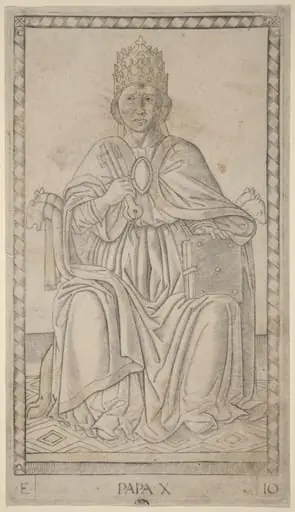
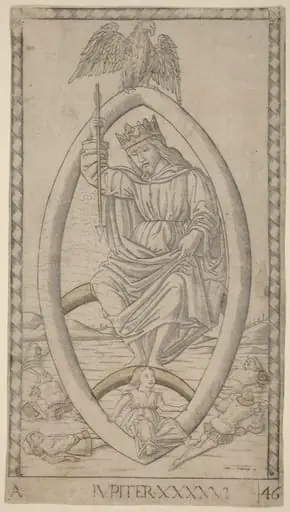
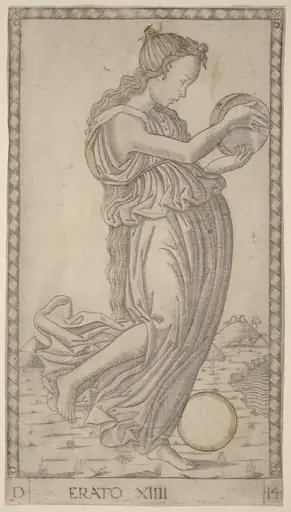
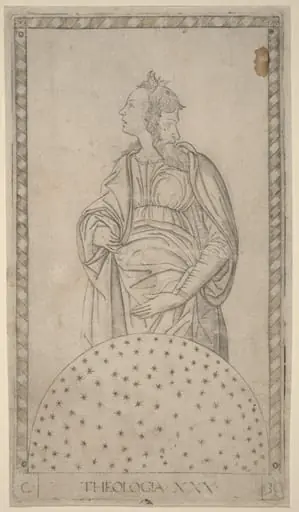
The work is part of a small group of prints known as the E-Series Tarocchi, likely produced in the 1460s in the Emilia-Romagna region. Its survival in limited numbers suggests it was never widely distributed. No definitive record of its original commission exists, but its craftsmanship points to a private, possibly aristocratic, collection rather than public display.
Context
This engraving emerged during a period when classical mythology was being revived in Italian art and literature. The depiction of the Muses aligned with humanist interests in education and the liberal arts. Similar imagery appeared in courtly decorations and playing cards, indicating a cultural fascination with allegory as both intellectual and decorative device.
Legacy
Though the artist remains anonymous, the E-Series Tarocchi prints, including this one, are recognized as early examples of engraved allegory in Italy. They influenced later developments in printmaking and the visual representation of abstract concepts. Their rarity and technical care have secured their place in scholarly studies of Renaissance graphic arts.
Artist & collection
Artist
Master of the E-Series Tarocchi
Master of the E-Series Tarocchi (b. 1400) was an Italian artist.