Artwork
Polimnia (Polyhymnia)
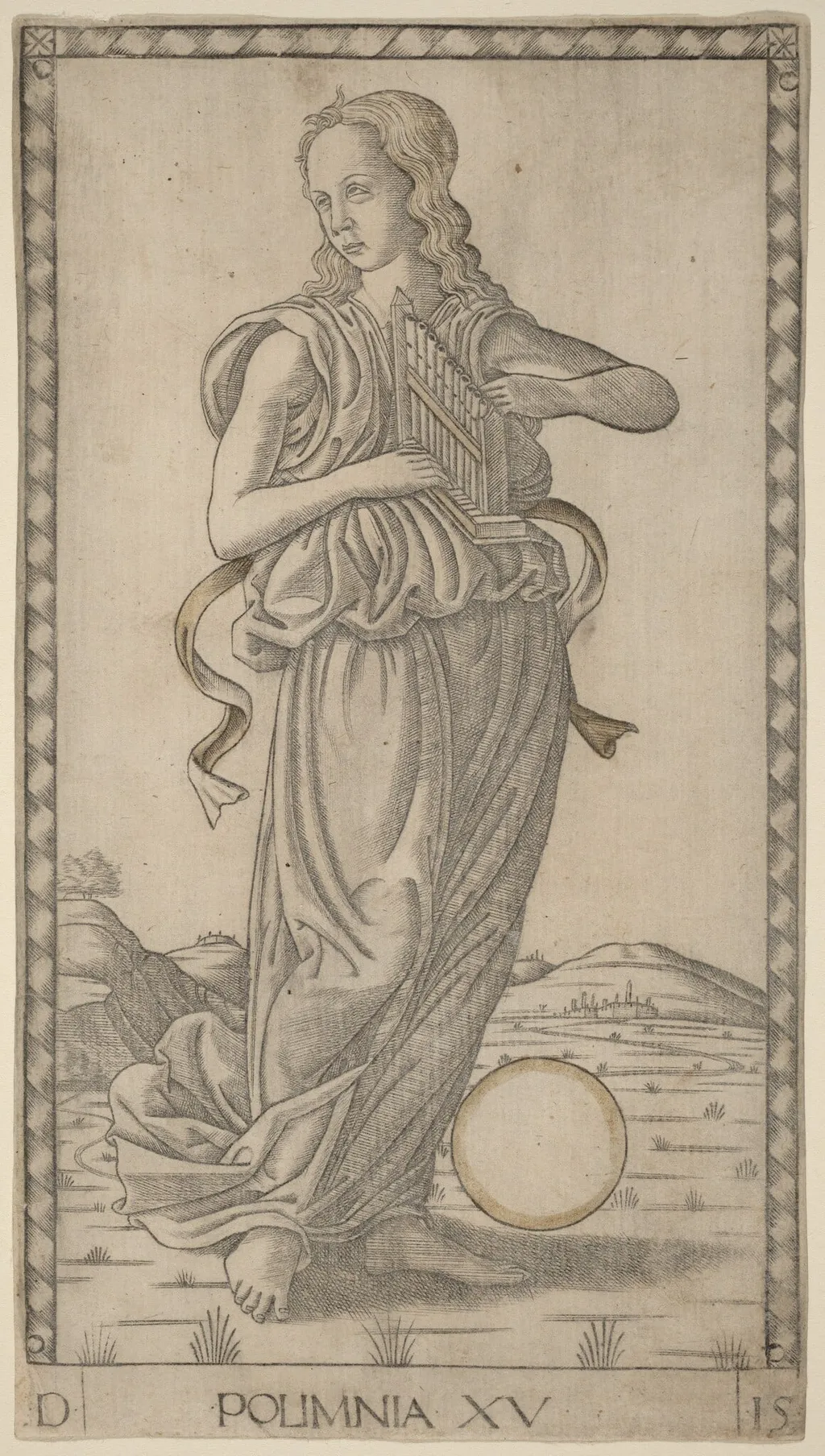
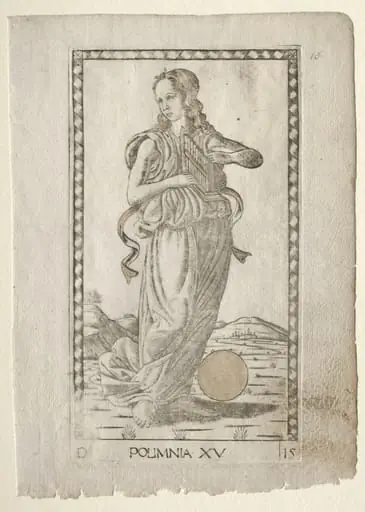
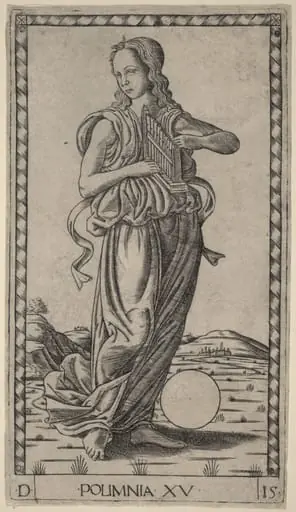
Polimnia (Polyhymnia) is an ink print by the Renaissance artist Master of the E-Series Tarocchi. It dates from 1465 and is held in the collection of the National Gallery of Art.
About this work
Overview
Polimnia (Polyhymnia) is an engraved print with gilding, produced around 1465 by the artist known as the Master of the E-Series Tarocchi.
Polimnia (Polyhymnia) is an engraved print with gilding, produced around 1465 by the artist known as the Master of the E-Series Tarocchi. It belongs to a small group of works associated with tarot-like imagery from mid-15th century Italy. The piece is notable for its refined line work and the delicate application of gold leaf, which enhances its devotional and intellectual tone without overt grandeur.
Subject & Meaning
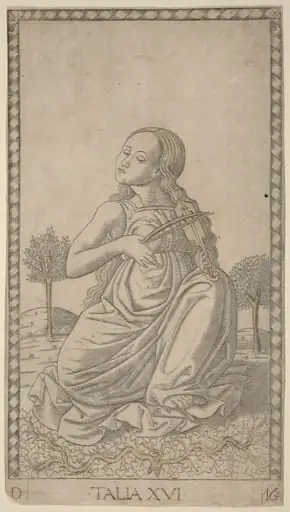
The figure represents Polyhymnia, one of the nine Muses from classical mythology, traditionally associated with sacred poetry and meditation. Depicted in quiet repose, she is surrounded by books, suggesting scholarly contemplation. Her attire, styled in archaic fashion, reinforces a timeless, reverent character, aligning her with ideals of intellectual devotion rather than theatrical display.
Technique & Style
The image is executed in fine engraving, with precise incised lines defining form and texture. Subtle gilding highlights elements of her garment and hair, adding luminosity without excess. The folds of fabric and the careful rendering of her coiffure reflect attention to detail typical of early Italian printmakers, emphasizing stillness and introspection over movement or drama.
History & Provenance
The print is part of a series attributed to the Master of the E-Series Tarocchi, a name given to an anonymous artist or workshop active in northern Italy during the 1460s. Few examples of this series survive, and Polimnia is among the better-preserved. Its early ownership is undocumented, but its craftsmanship suggests it was made for a learned or aristocratic patron interested in humanist themes.
Context
Created during the early Renaissance, this print reflects the revival of classical mythology among Italian elites, often blended with Christian contemplative ideals. Engraving was emerging as a medium for disseminating intellectual imagery, and this work aligns with broader trends in manuscript illumination and printed devotional cards that valued quiet dignity over spectacle.
Legacy
Polimnia remains a rare example of early Italian engraving that merges mythological subject matter with restrained aesthetic values. Though not widely circulated in its time, it contributes to understanding how classical themes were visually adapted for private, contemplative use. Its survival offers insight into the transition from manuscript to print culture in Renaissance Italy.
Artist & collection
Artist
Master of the E-Series Tarocchi
Master of the E-Series Tarocchi (b. 1400) was an Italian artist.