Artwork
Euterpe
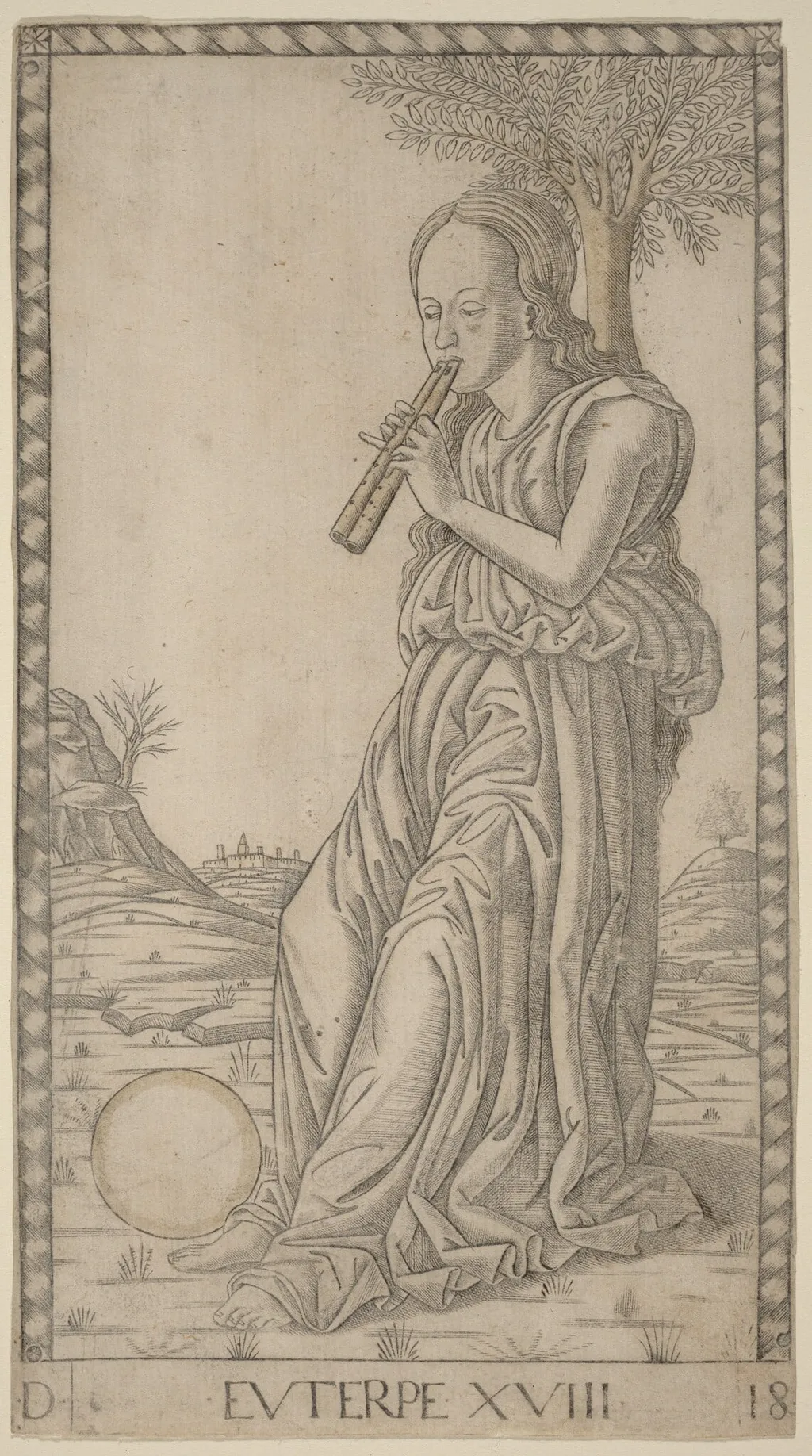
Euterpe is an ink print by the Renaissance artist Master of the E-Series Tarocchi. It dates from 1465 and is held in the collection of the National Gallery of Art.
About this work
Overview
Euterpa is an early printed engraving, executed with gilded accents, attributed to the anonymous Master of the E‑Series Tarocchi and dated to around 1465. The work presents a single figure seated beneath a tree, engaged in playing a long wooden flute, and is rendered on a metal plate typical of the period’s printmaking.
Subject & Meaning
The central figure represents Euterpe, the muse of music, depicted in a tranquil landscape. Her relaxed posture, the instrument, and the nearby shield suggest a harmonious blend of artistic inspiration and martial symbolism, reflecting the Renaissance interest in classical allegory and the integration of music within broader cultural narratives.
Technique & Style
The image is composed of fine, incised lines that model the folds of the woman's robe, the texture of foliage, and the distant terrain. Gilded highlights accentuate certain areas, adding a subtle sheen. This meticulous line work and limited use of gold are characteristic of mid‑15th‑century engravings, where artists carved detailed designs into copper plates for multiple impressions.
History & Provenance
Created circa 1465, the engraving belongs to a series associated with the Master of the E‑Series Tarocchi, a figure known for producing a set of allegorical prints. While the artist’s identity remains unknown, the work has been documented in several European collections and serves as a representative example of early printed art that circulated beyond its original workshop.
Artist & collection
Artist
Master of the E-Series Tarocchi
Master of the E-Series Tarocchi (b. 1400) was an Italian artist.

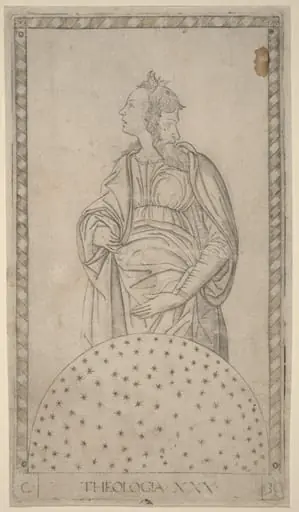
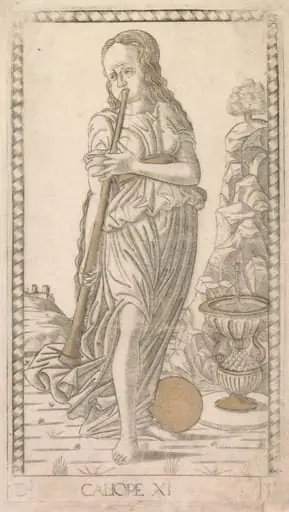 Calliope (from the Tarocchi series D: Apollo and the Muses, #11)
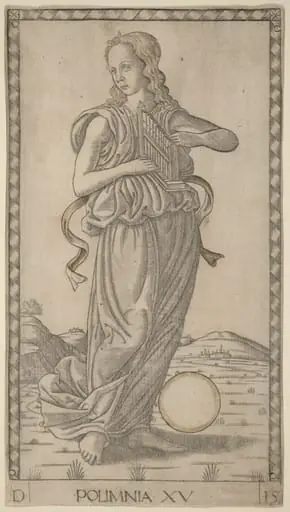 Polimnia (Polyhymnia)
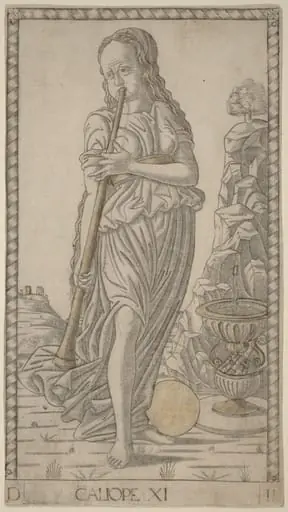 Caliope (Calliope)
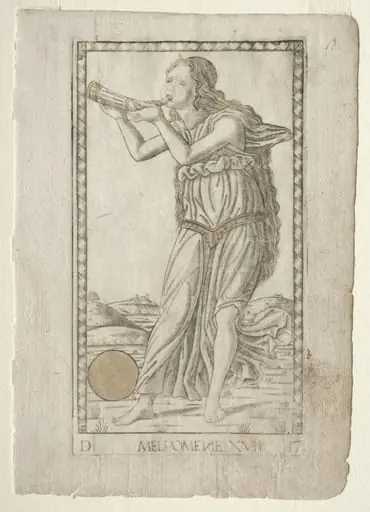 Melpomene (tragedy) (from the Tarocchi series D: Apollo and the Muses, #17)
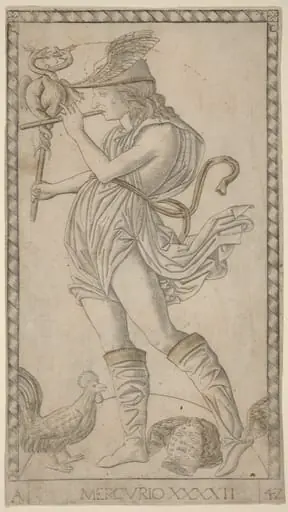 Mercurio (Mercury)
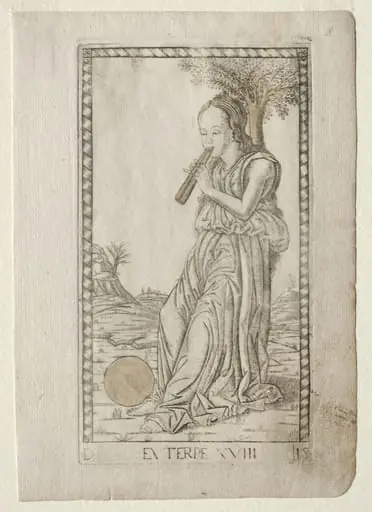 Euterpe (music, lyric poetry) (from the Tarocchi series D: Apollo and the Muses, #18)
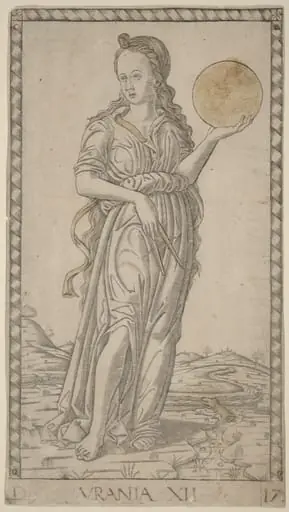 Urania
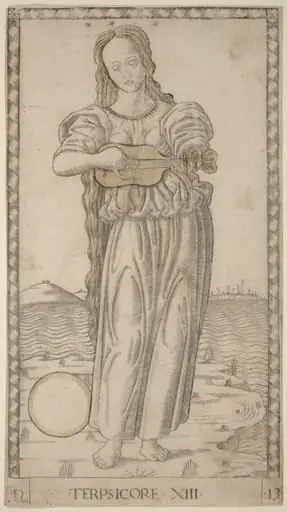 Terpsicore (Terpsichore)
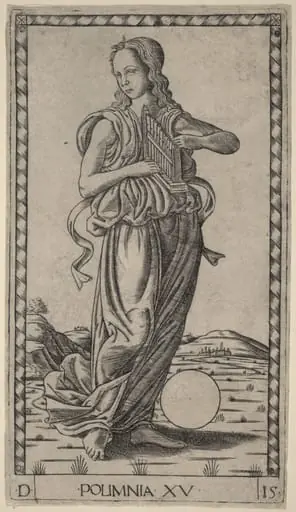 Polimnia (Polyhymnia)
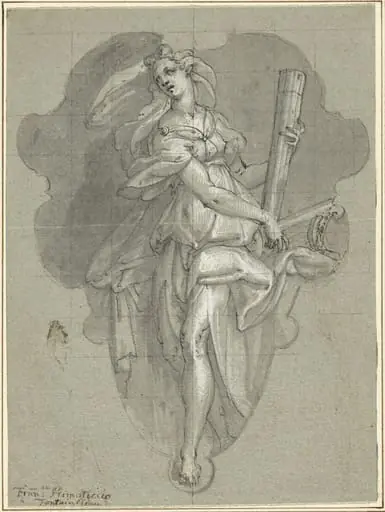 Euterpe (Personification of Music)