Artwork
Chavalier (Knight)
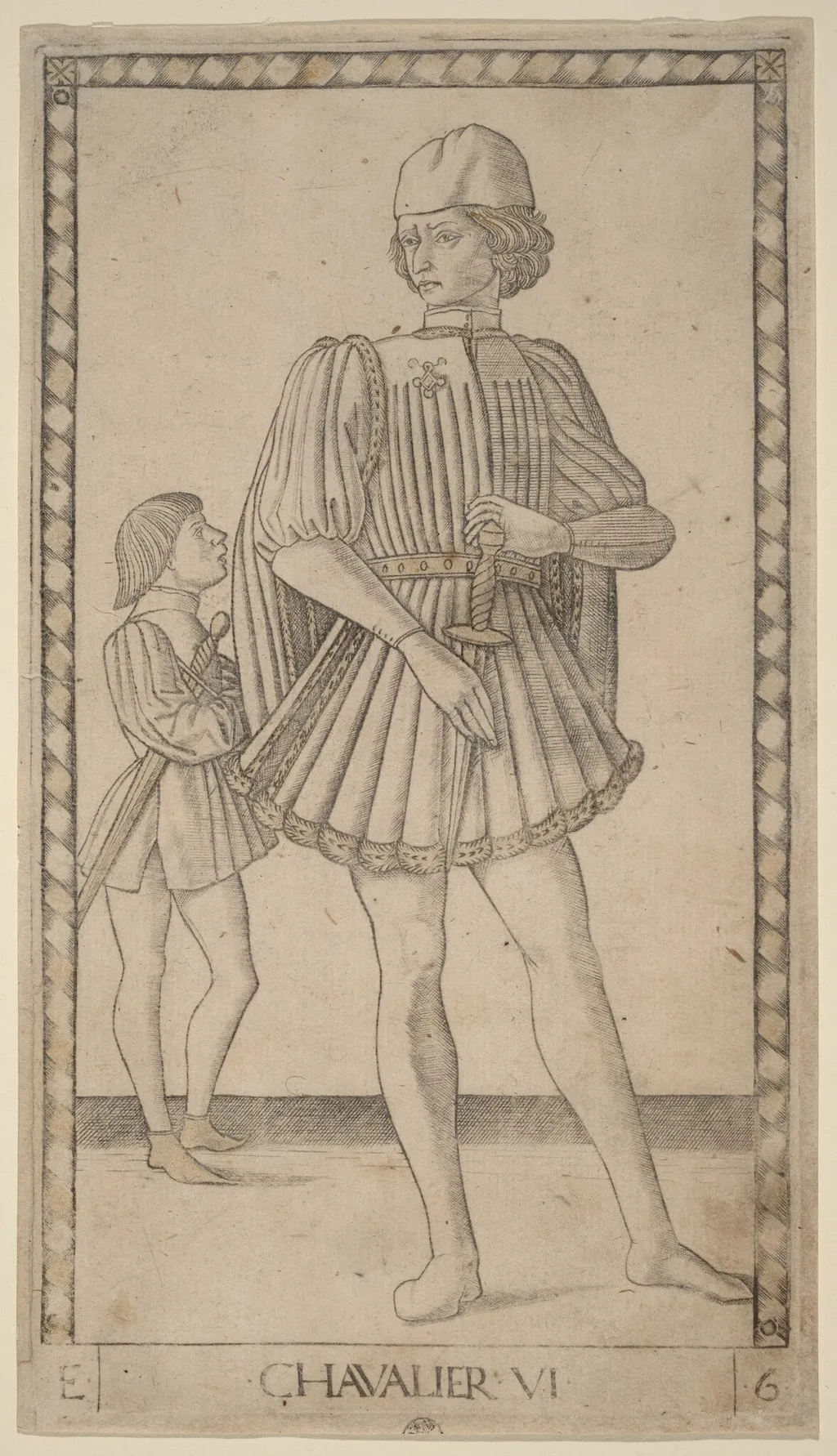
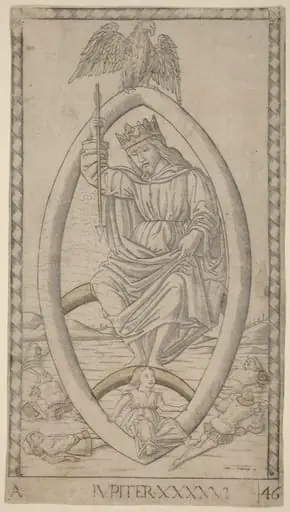
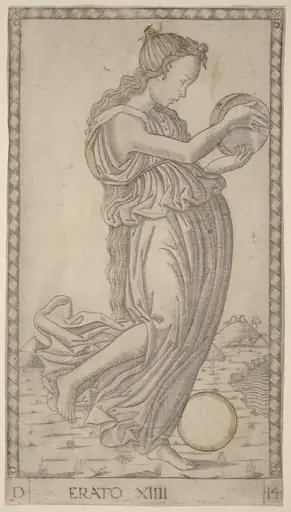
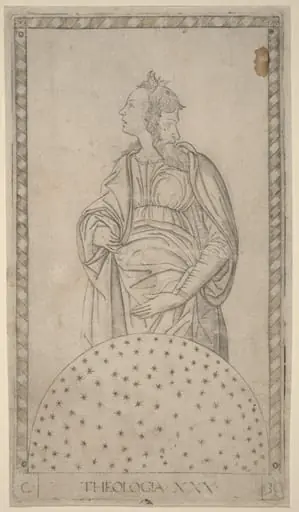
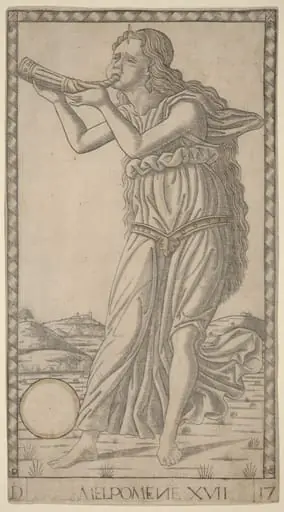
Chavalier (Knight) is an ink print by the Renaissance artist Master of the E-Series Tarocchi. It dates from 1465 and is held in the collection of the National Gallery of Art.
About this work
Overview
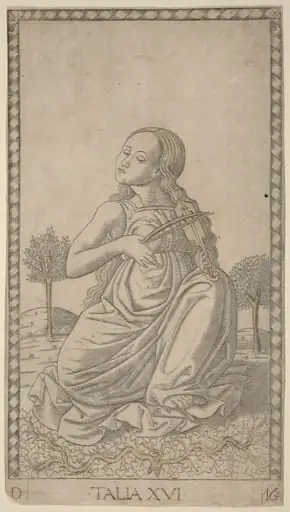
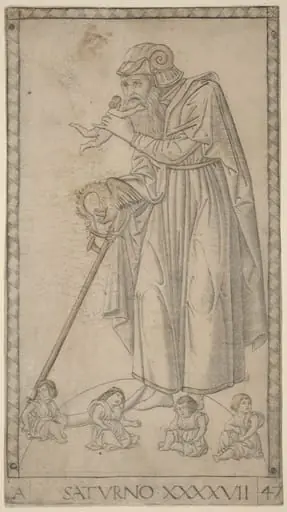
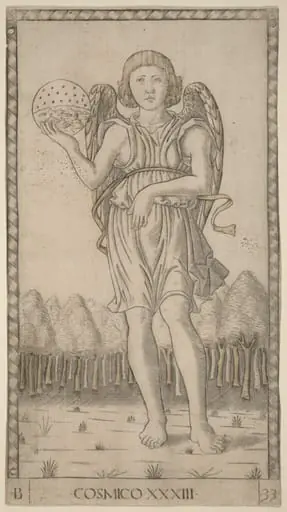
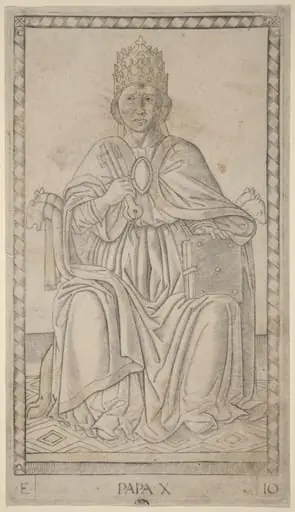
Executed on paper with fine incised lines and faint traces of gold leaf, it belongs to a series of figures likely intended for a tarot-like deck.
Chavalier (Knight) is an engraved print dating to around 1465, attributed to the anonymous artist known as the Master of the E-Series Tarocchi. Executed on paper with fine incised lines and faint traces of gold leaf, it belongs to a series of figures likely intended for a tarot-like deck. The image combines portraiture with symbolic intent, presenting a figure whose attire and posture suggest status rather than mere representation.
Subject & Meaning
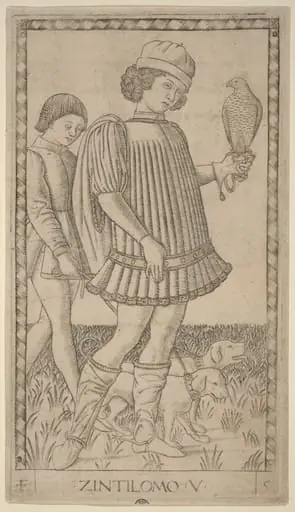
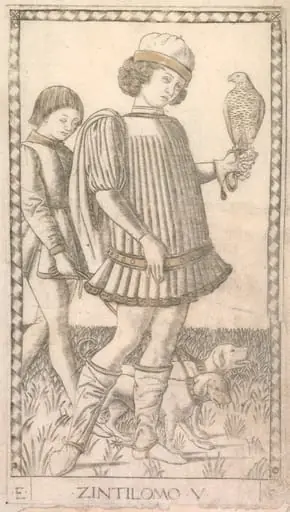
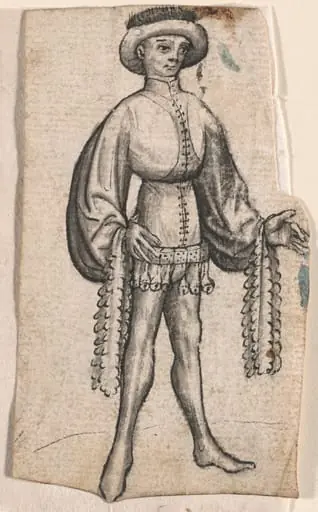
The central figure is a man dressed in elaborate late medieval garb, standing with composed authority, one hand resting on his belt. Beside him, a smaller boy leans inward, his gesture suggesting deference or apprenticeship. The label 'CHAVALIER' at the base implies the image functions as an archetype—perhaps representing chivalric ideals, social rank, or a card in a symbolic game—rather than a specific individual.
Technique & Style
The image was made using metal engraving, a technique involving incised lines carved into a copper plate. The precision of the contours and the delicate rendering of fabric folds reflect mastery of this demanding medium. Traces of gilding, now faded, once highlighted details such as embroidery or jewelry, adding luminosity to the printed impression and signaling the work’s original luxury context.
History & Provenance
The print is part of a small group of engravings linked to the E-Series Tarocchi, a set of cards produced in northern Italy during the mid-15th century. These images were likely used in card games or ritual practices, though their exact function remains uncertain. No definitive record of early ownership exists, but their survival in private and institutional collections suggests continued interest in their symbolic content.
Context
Created during a period when playing cards were evolving from simple pastimes to complex symbolic systems, Chavalier reflects the fusion of popular culture and elite iconography. The figure’s attire aligns with courtly fashion of the time, while the inclusion of a youthful attendant echoes medieval hierarchies. Such imagery resonated within humanist circles where allegory and social order were widely explored.
Legacy
Though the artist remains anonymous, the E-Series engravings, including Chavalier, influenced later developments in printmaking and tarot iconography. Their combination of detailed craftsmanship and layered symbolism contributed to the visual language of Renaissance allegory. Today, they are studied as artifacts of early printed culture and as windows into the symbolic imagination of 15th-century Europe.
Artist & collection
Artist
Master of the E-Series Tarocchi
Master of the E-Series Tarocchi (b. 1400) was an Italian artist.