Artwork
Ornament with a Cupid, a Satyr, and Grotesque Figures
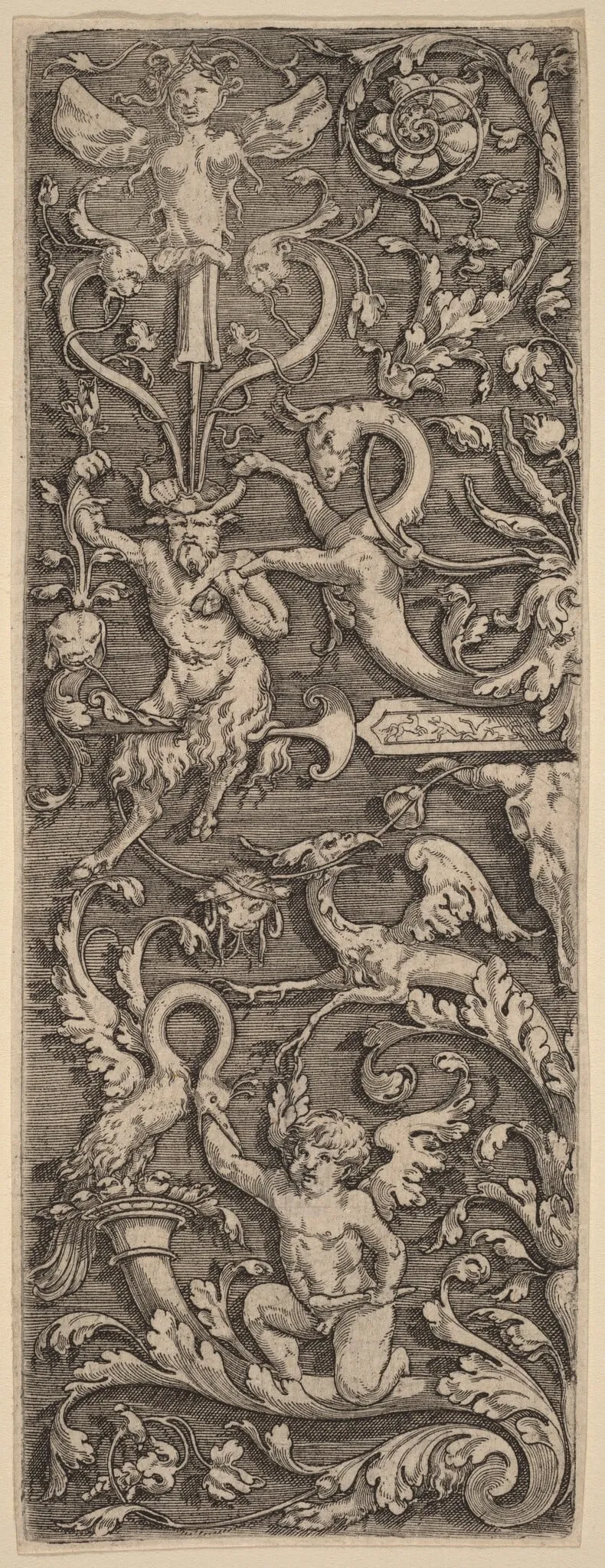
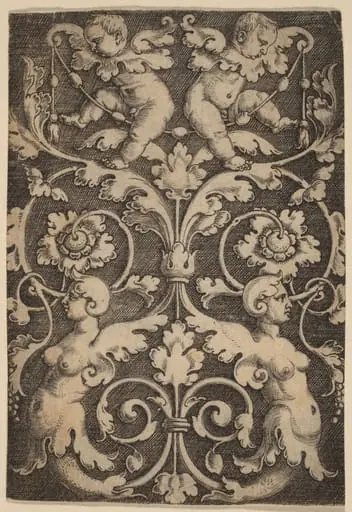
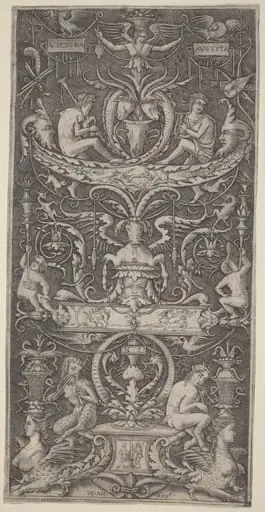
Ornament with a Cupid, a Satyr, and Grotesque Figures is an ink print by the Renaissance artist Master of the Horse Heads. It dates from 1506 and is held in the collection of the National Gallery of Art.
About this work
Overview
Ornament with a Cupid, a Satyr, and Grotesque Figures is an engraving on laid paper executed in 1506 by the anonymous printmaker known as the Master of the Horse Heads. The work presents a densely arranged decorative motif that intertwines mythological and fantastical elements within a single compositional field.
Subject & Meaning
The central group includes a diminutive winged child, identified as Cupid, positioned beneath a horned, wild‑faced satyr. Both figures are enmeshed in twisting vines and stylized foliage. Surrounding them are a series of grotesque creatures—monstrous heads with curled horns and leafy appendages—that frame the scene and emphasize the mingling of the natural and the supernatural.
Technique & Style
Rendered in black and white, the image was produced by incising lines into a metal plate, which was then inked and pressed onto laid paper. The engraving displays the intricate line work typical of early sixteenth‑century printmaking, with fine hatching used to model foliage and the complex surface of the grotesque forms.
History & Provenance
Created in the early Renaissance, the print is attributed to the Master of the Horse Heads, an artist whose oeuvre is known primarily through a handful of signed or documented works. The piece has survived in several collections, indicating its circulation among connoisseurs of ornamental prints during the period.
Context
The composition reflects the Renaissance fascination with ‘grotesque’ ornamentation, a decorative vocabulary revived from the discovery of Roman wall paintings in the Domus Aurea. Such hybrid motifs—combining human, animal, and vegetal forms—were widely employed in architectural friezes, book illustrations, and luxury objects of the time.
Artist & collection