Artwork
Children Playing with a Bitch and Three Young Dogs
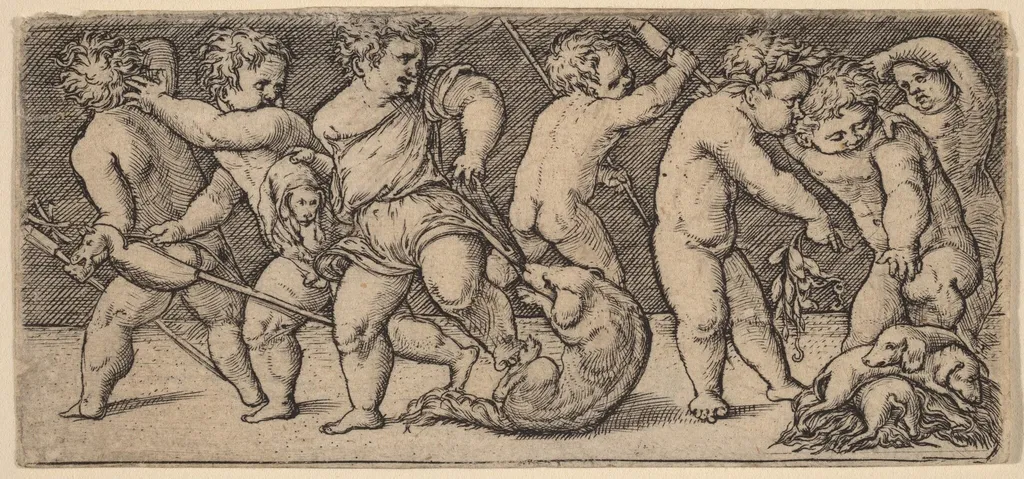
Children Playing with a Bitch and Three Young Dogs is an ink print by the Renaissance artist Master of the Horse Heads. It dates from 1506 and is held in the collection of the National Gallery of Art.
About this work
Overview
The work belongs to a small corpus of prints attributed to this anonymous Northern Renaissance artist, noted for dynamic animal and figure studies.
Created in 1506, this etching by the artist known as the Master of the Horse Heads depicts a lively outdoor scene of children interacting with a large dog and its three puppies. Rendered in fine linear detail, the print captures a moment of unstructured play, free from formal composition or idealized form. The work belongs to a small corpus of prints attributed to this anonymous Northern Renaissance artist, noted for dynamic animal and figure studies.
Subject & Meaning
The scene portrays children in naturalistic, unguarded motion—wrestling, climbing, and tugging at the animals—suggesting a celebration of childhood spontaneity. The presence of the mother dog and her pups introduces a layer of animal domesticity, contrasting with the children’s rough play. No religious or allegorical symbolism is evident; the focus remains on physical interaction and the raw energy of youth in a rural setting.
Technique & Style
The artist employed fine, incised lines to model form and texture, using hatching and cross-hatching to suggest the softness of skin and the shaggy volume of canine fur. The rocky terrain and sparse trees in the background are rendered with minimal but effective contouring, grounding the figures in a tangible landscape. The etching’s precision reflects a mastery of the medium’s capacity for delicate detail without reliance on tone or color.
History & Provenance
The print is one of several attributed to the Master of the Horse Heads, an anonymous Northern Renaissance printmaker active in the early 16th century. Its dating to 1506 is based on stylistic comparison with signed works of the period. No early ownership records are known; the image survives primarily through later collections of Old Master prints, where it was valued for its vitality and technical skill.
Context
Produced during a period of growing interest in secular and naturalistic subjects, the etching reflects broader Renaissance trends toward observing everyday life. Unlike religious or mythological prints common at the time, this work focuses on unidealized human and animal behavior, aligning with emerging humanist values that celebrated the physical world and unmediated experience.
Legacy
Though the artist’s identity remains unknown, this print contributed to the development of genre scenes in printmaking. Its emphasis on movement, texture, and informal interaction influenced later Northern artists who sought to capture the unvarnished rhythms of daily life. The work remains a rare example of early 16th-century etching devoted entirely to childhood and animal interaction.
Artist & collection


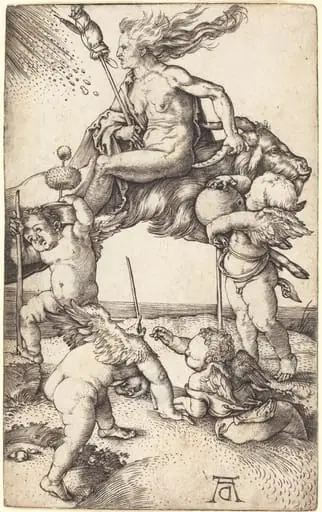 Witch Riding on a Goat
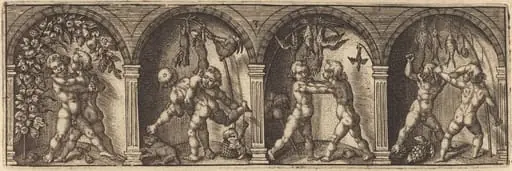 Les divers pourtraicts et figures III
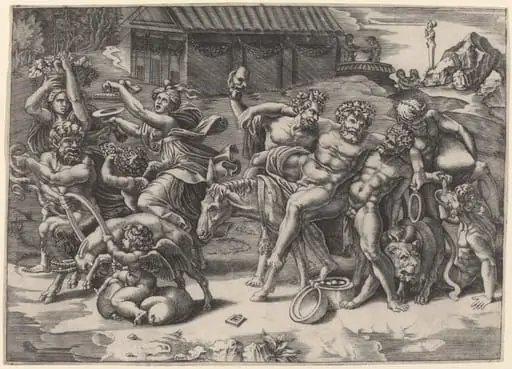 The March of Silenus
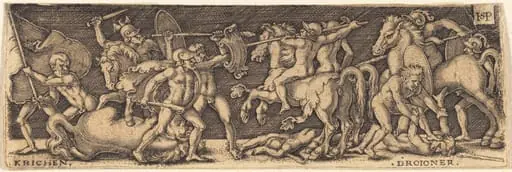 Greeks and Trojans
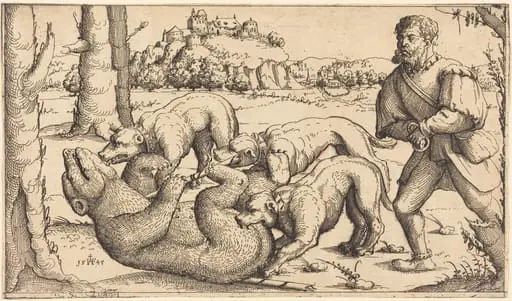 Bear Hunt
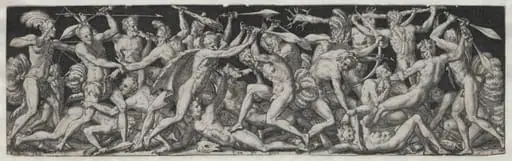 Combats and Triumphs No. 7
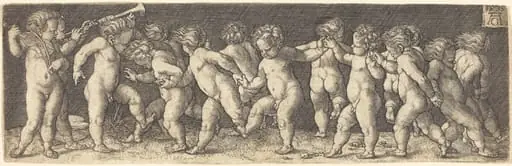 Dancing Children
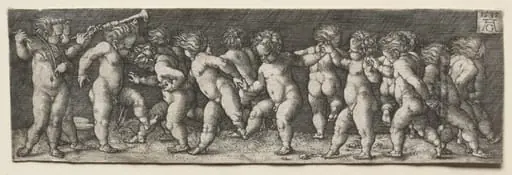 Fifteen Nude Children Dancing
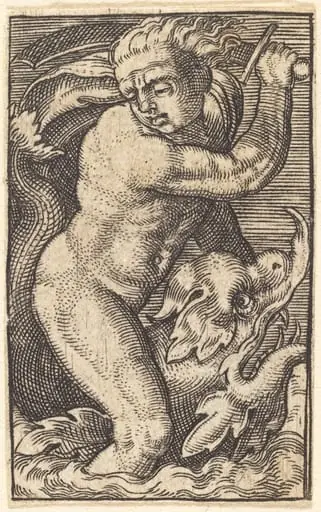 Sea-God on a Dolphin Riding to the Left
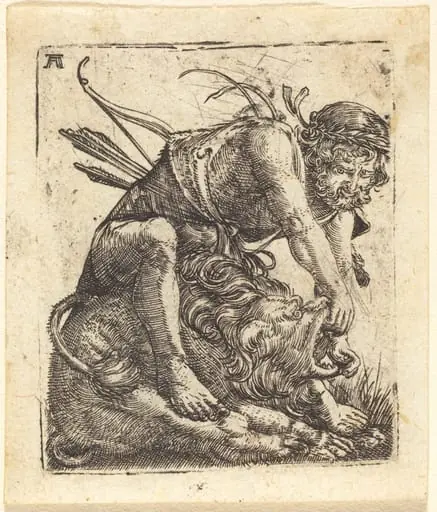 Hercules Overcoming the Nemean Lion
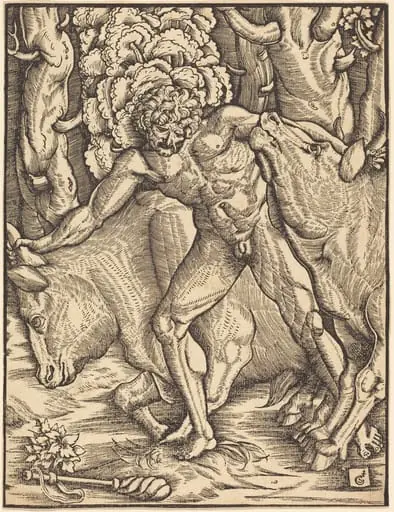 Hercules Carrying Off the Cattle of Geryon
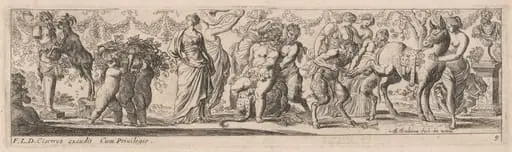 Drunken Silenus